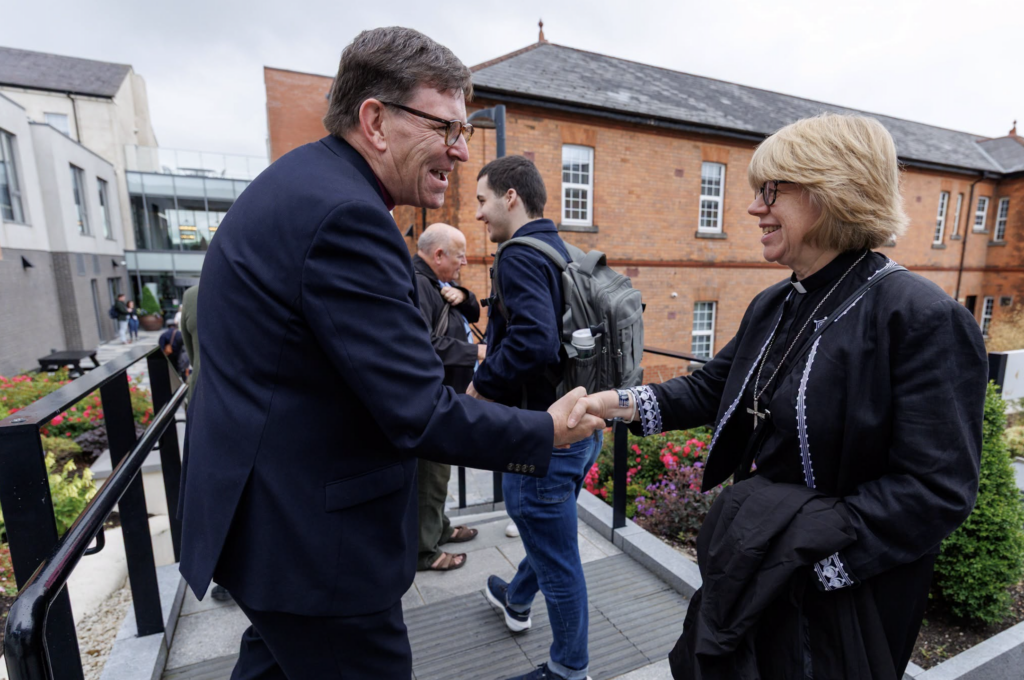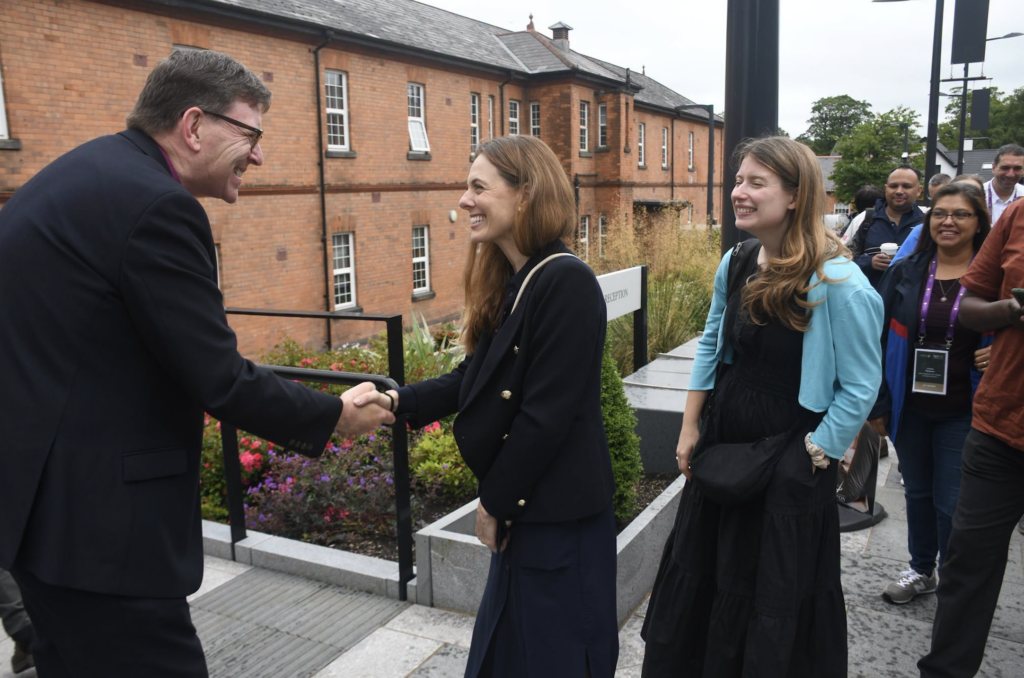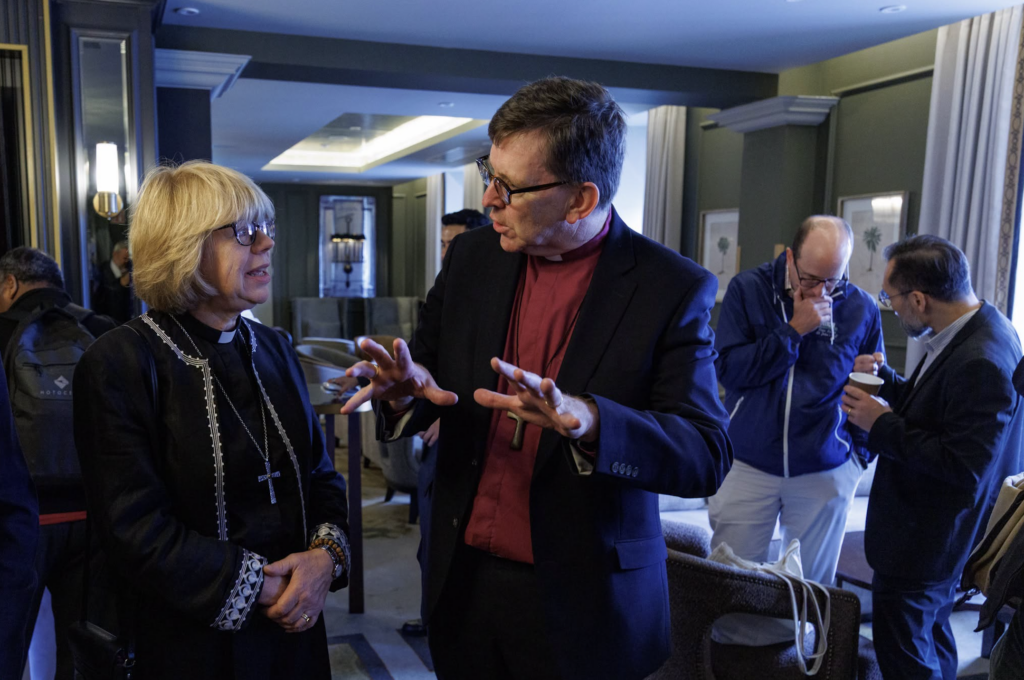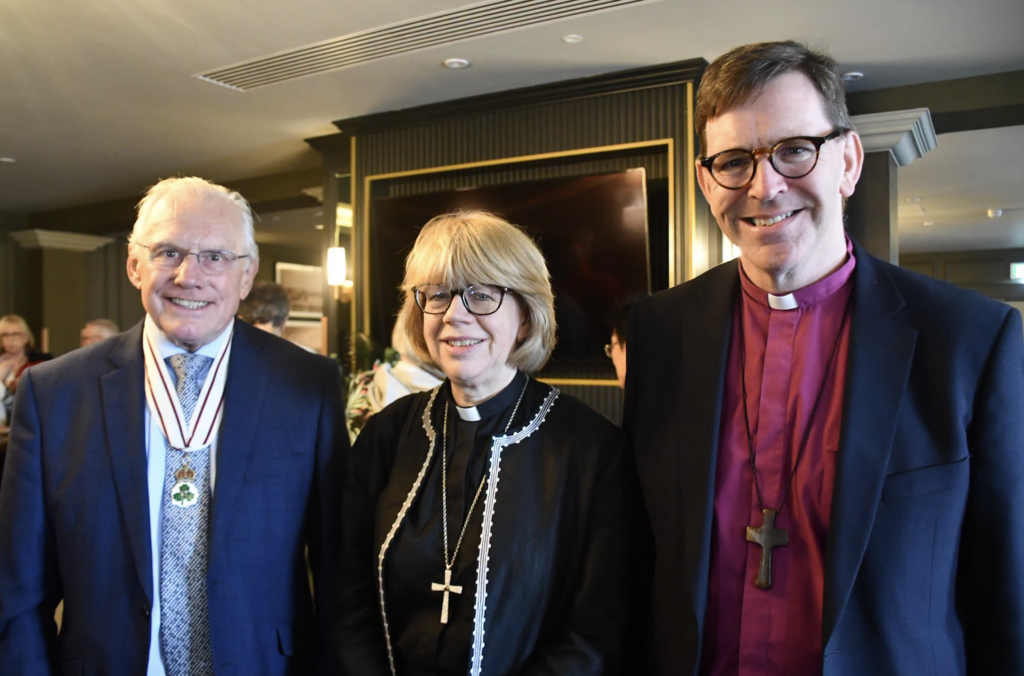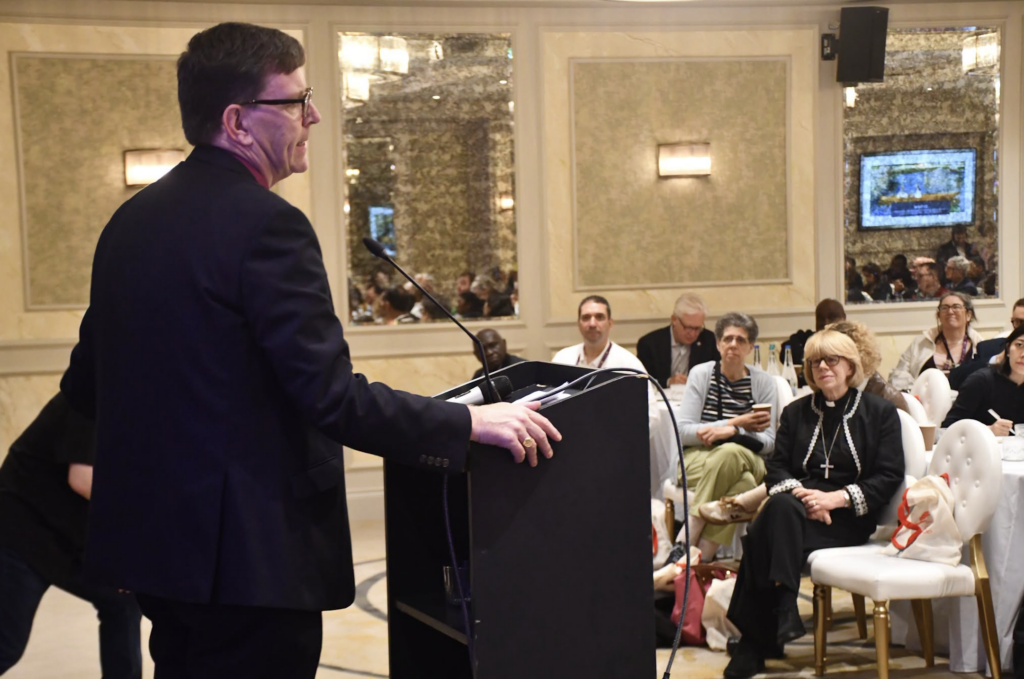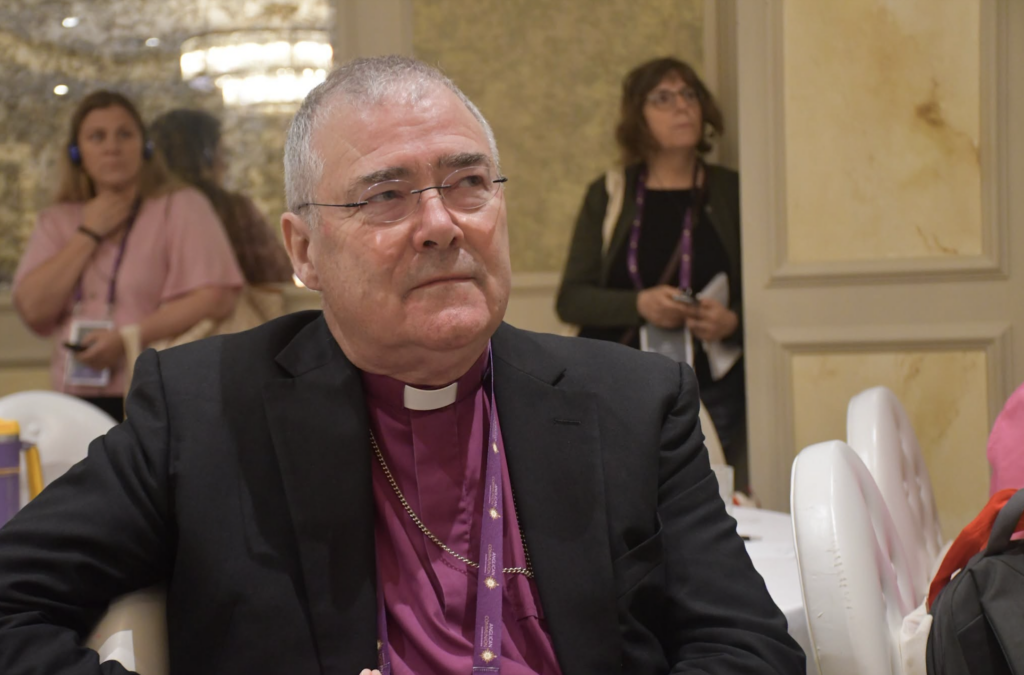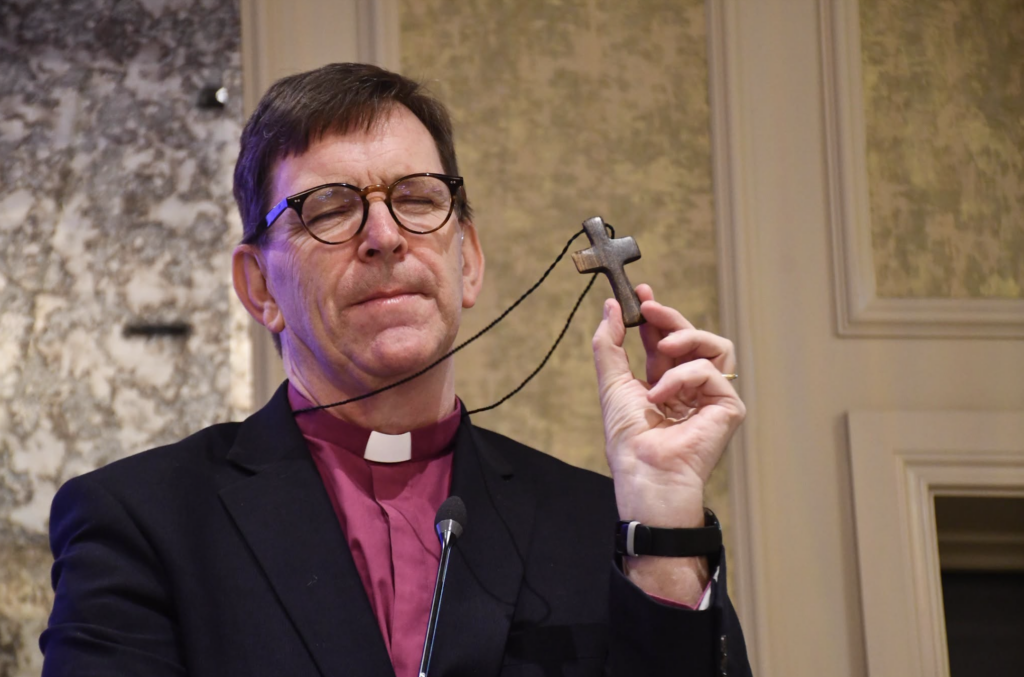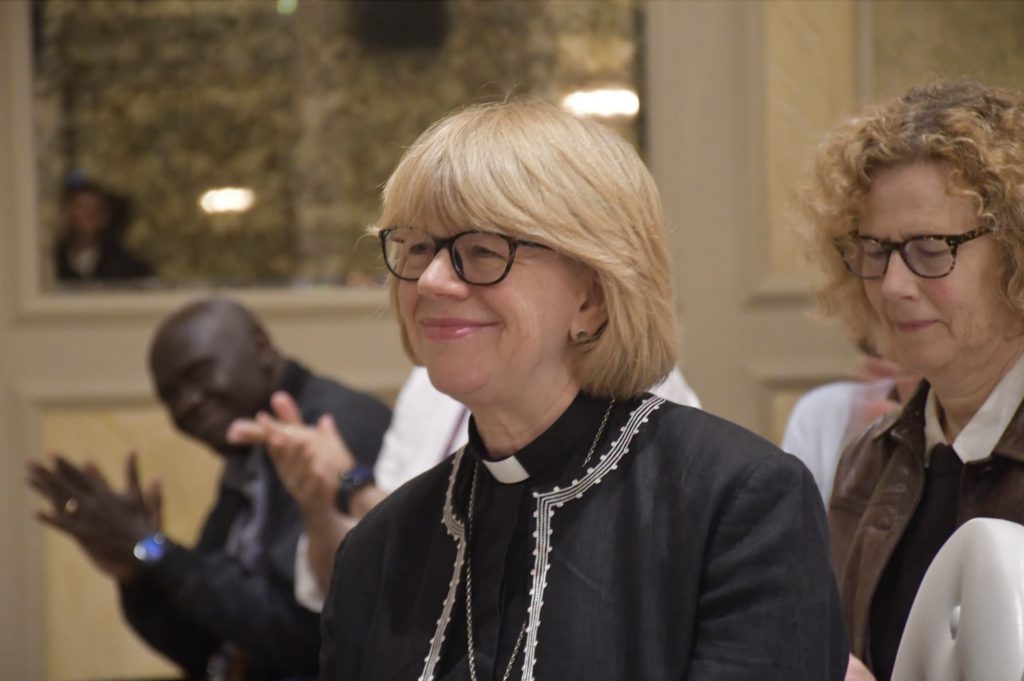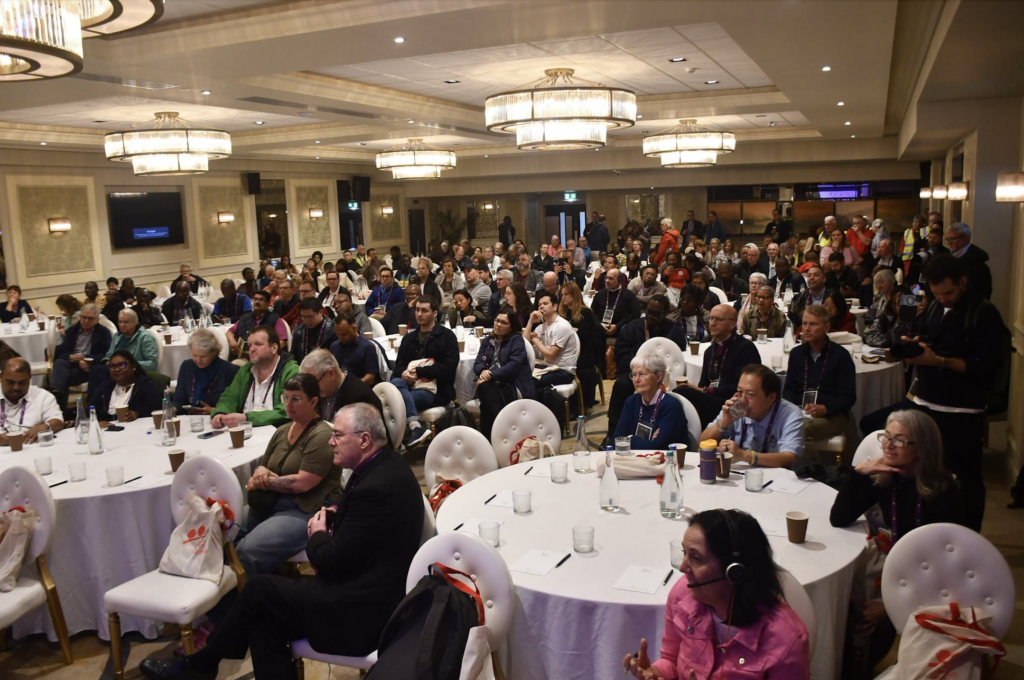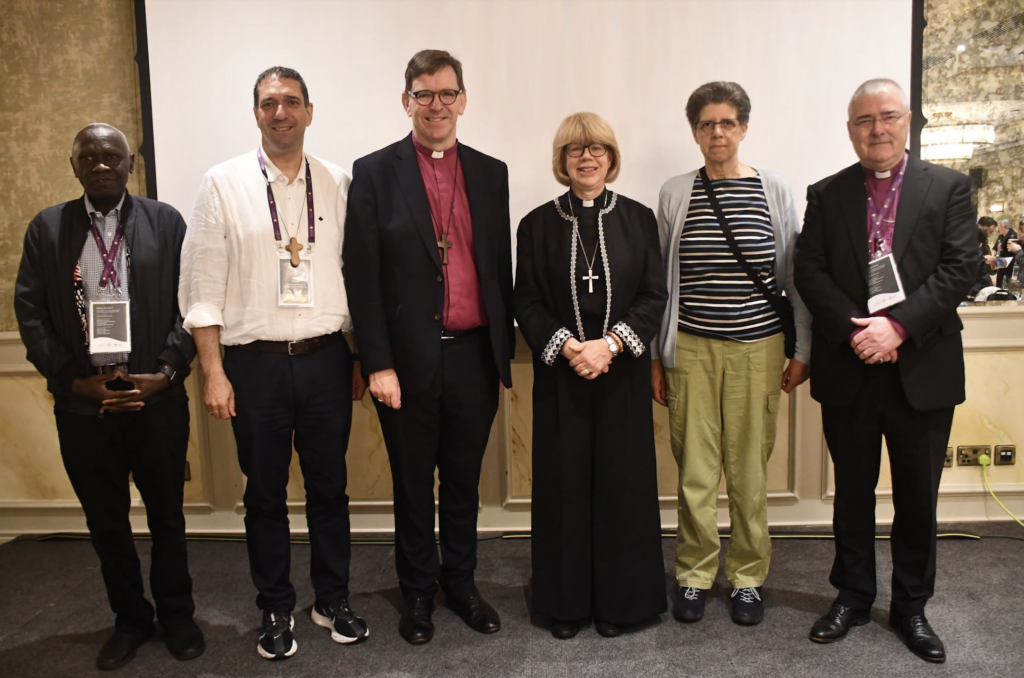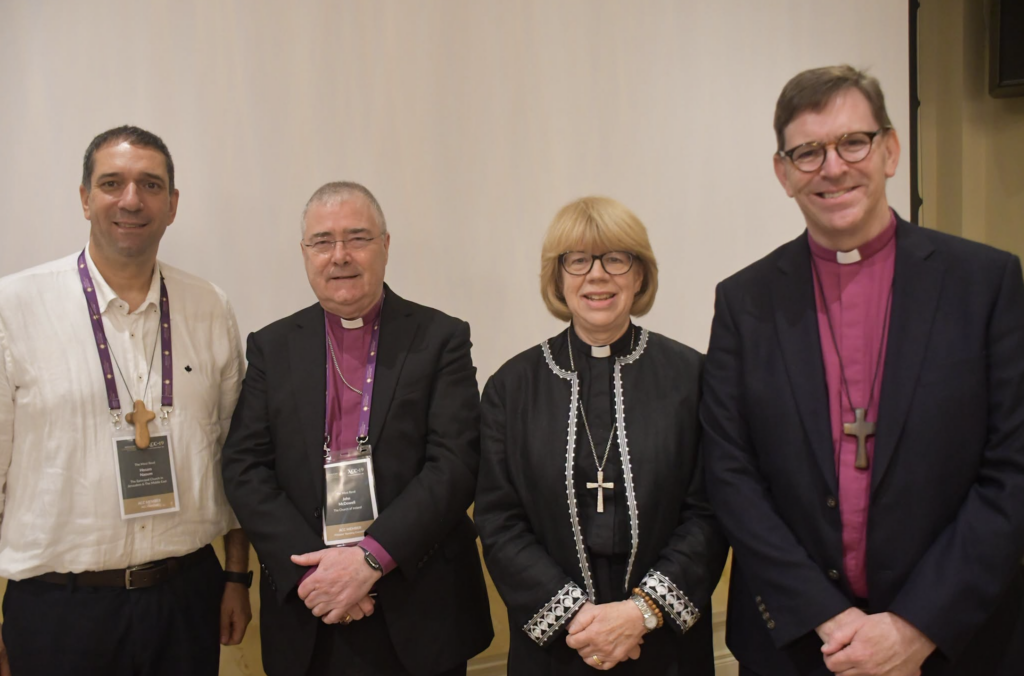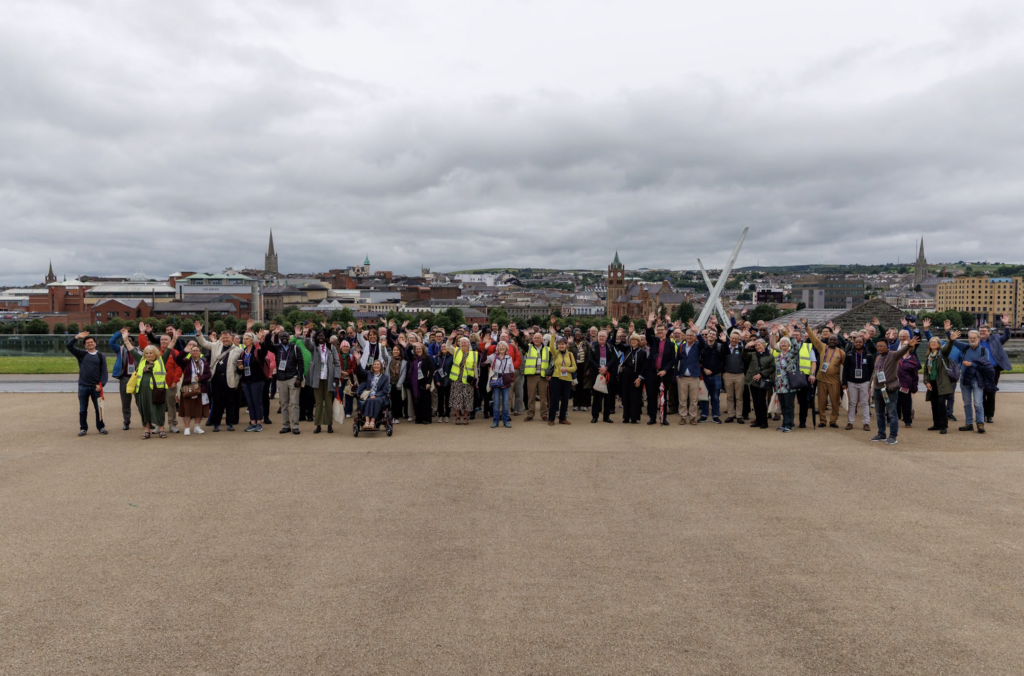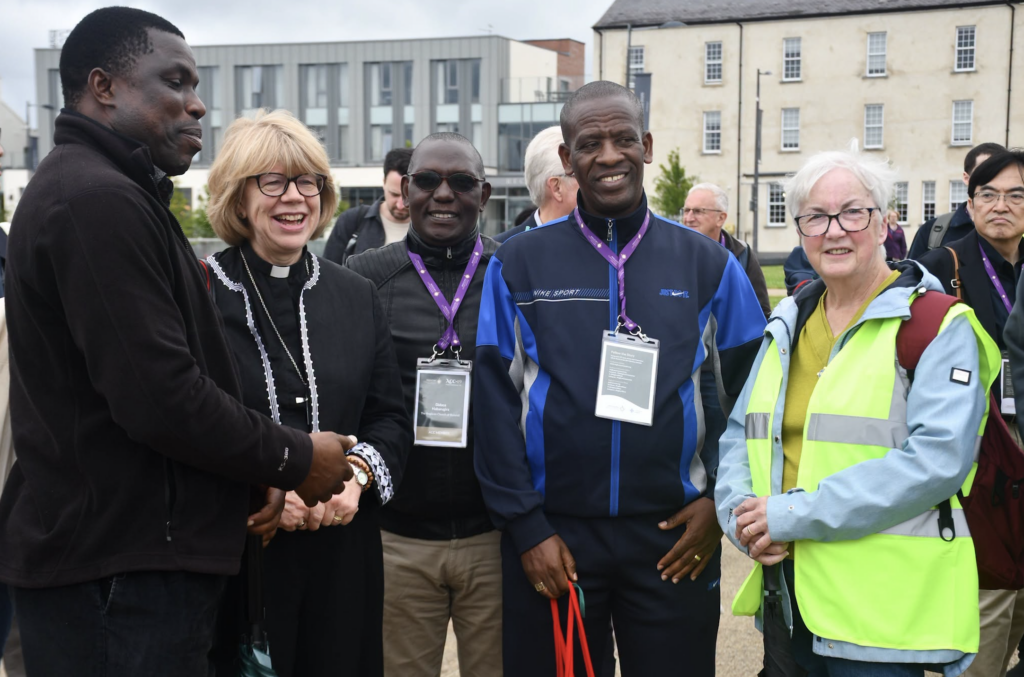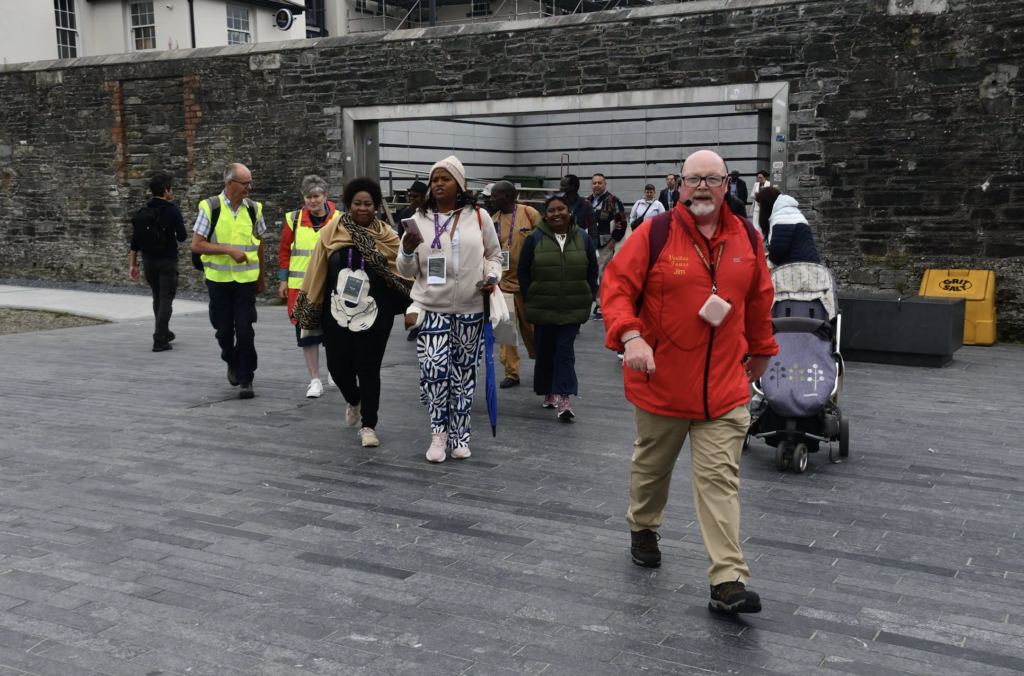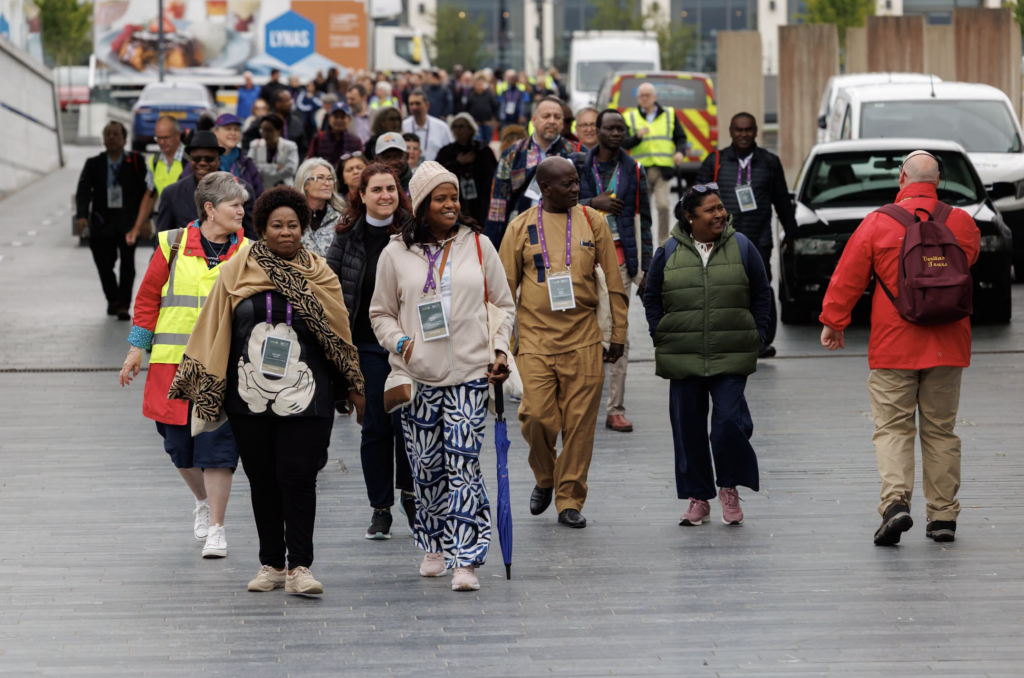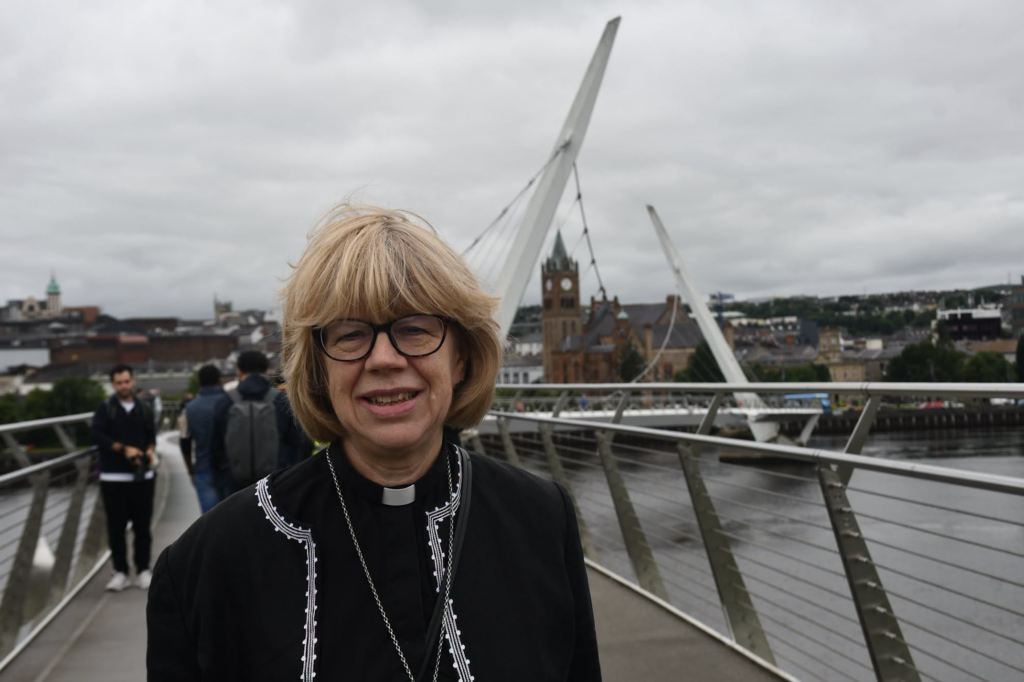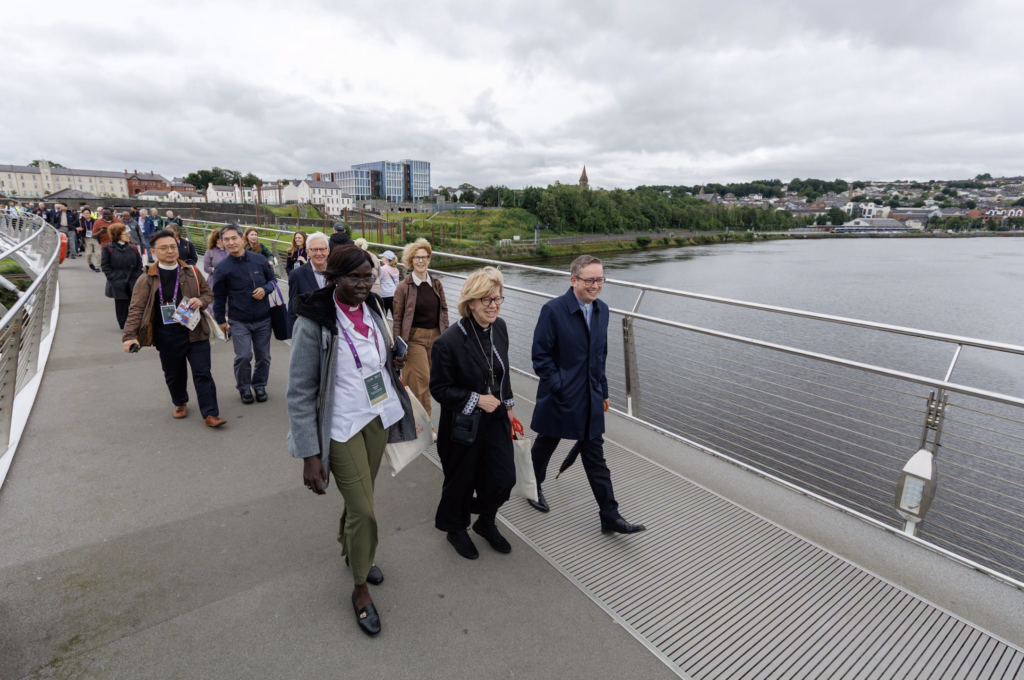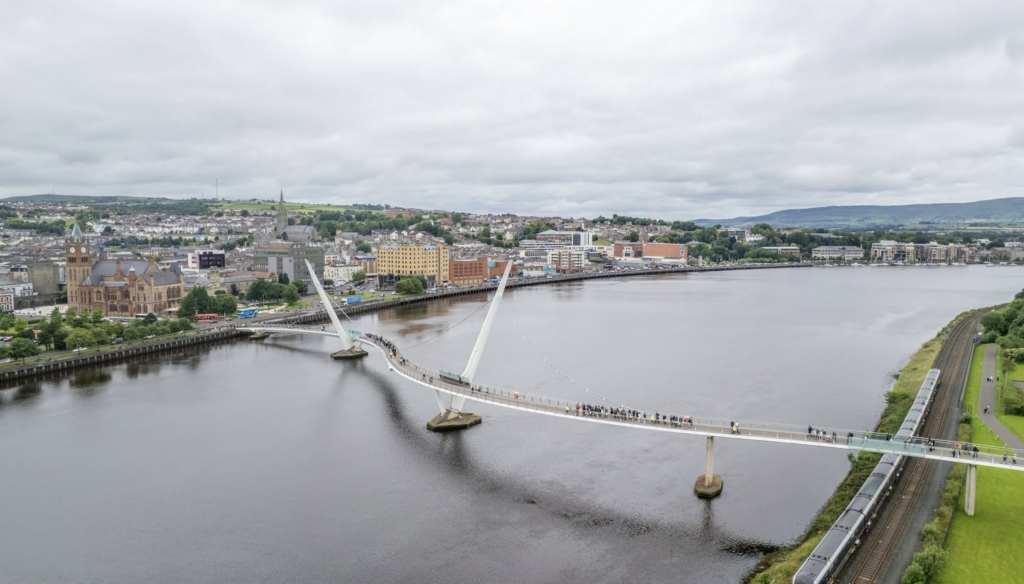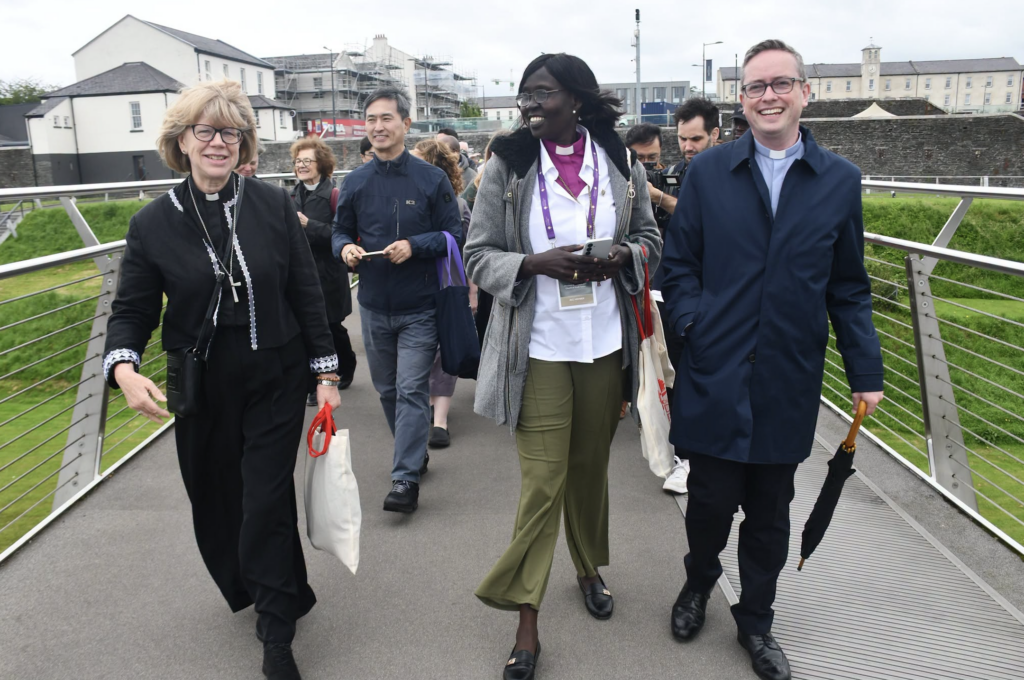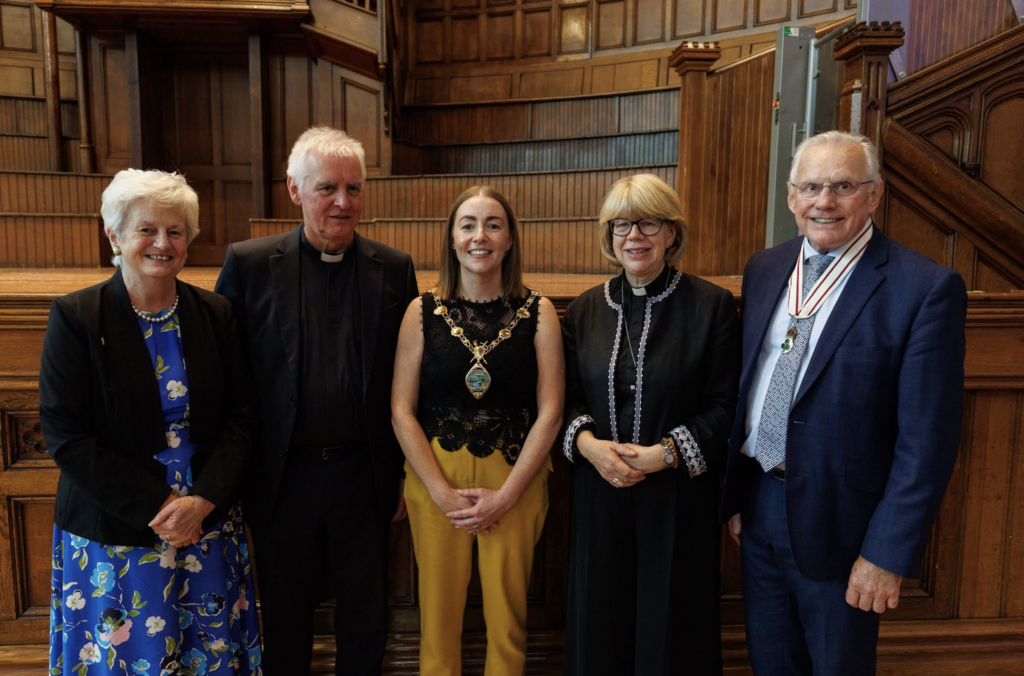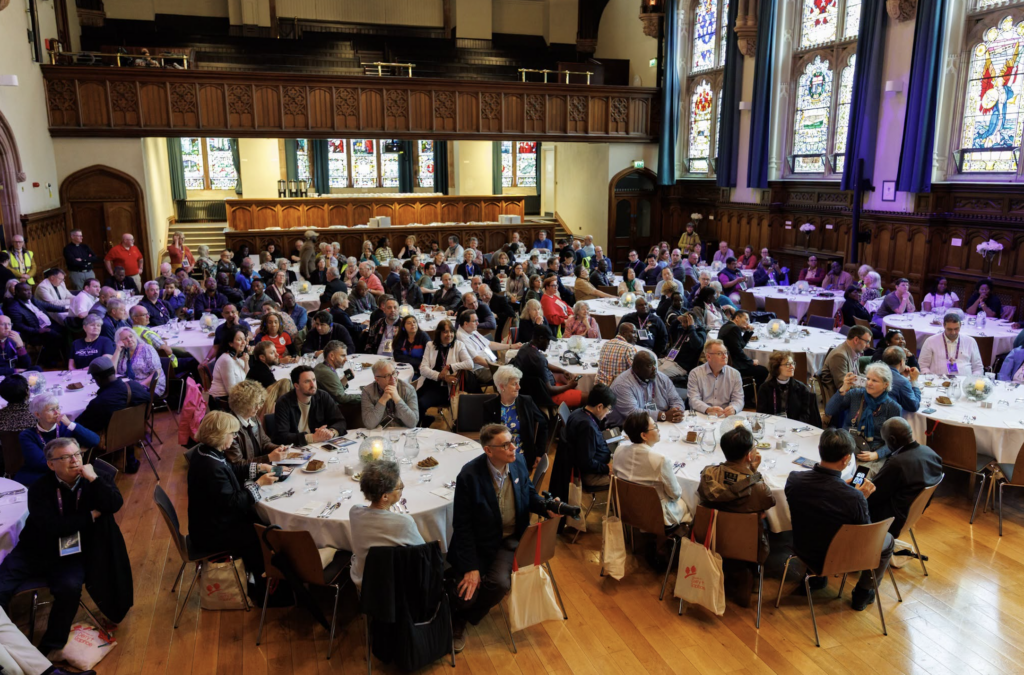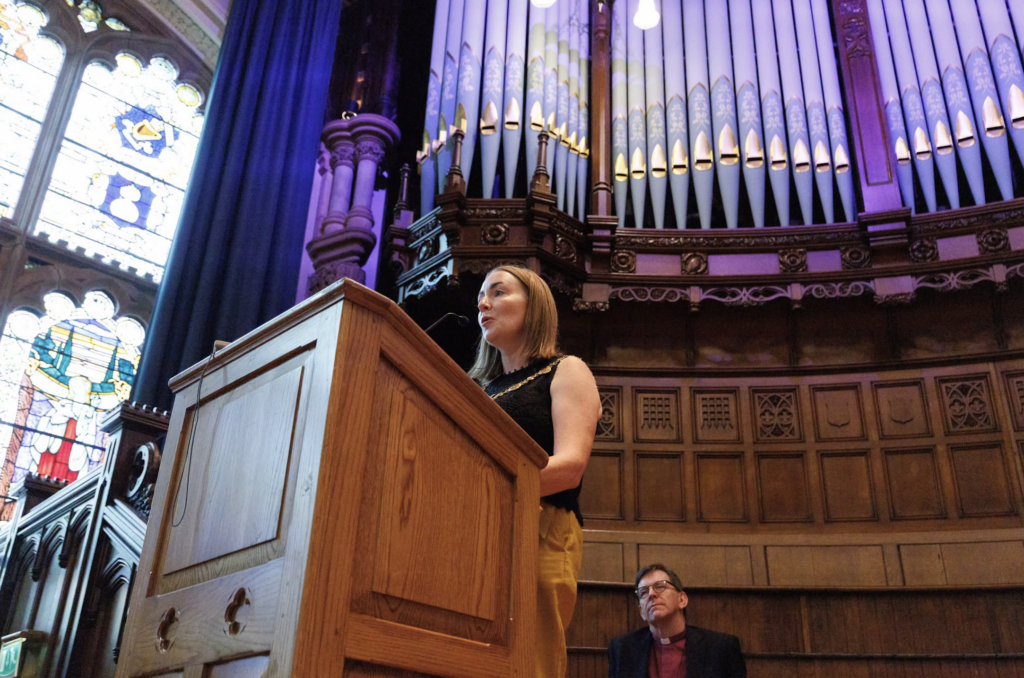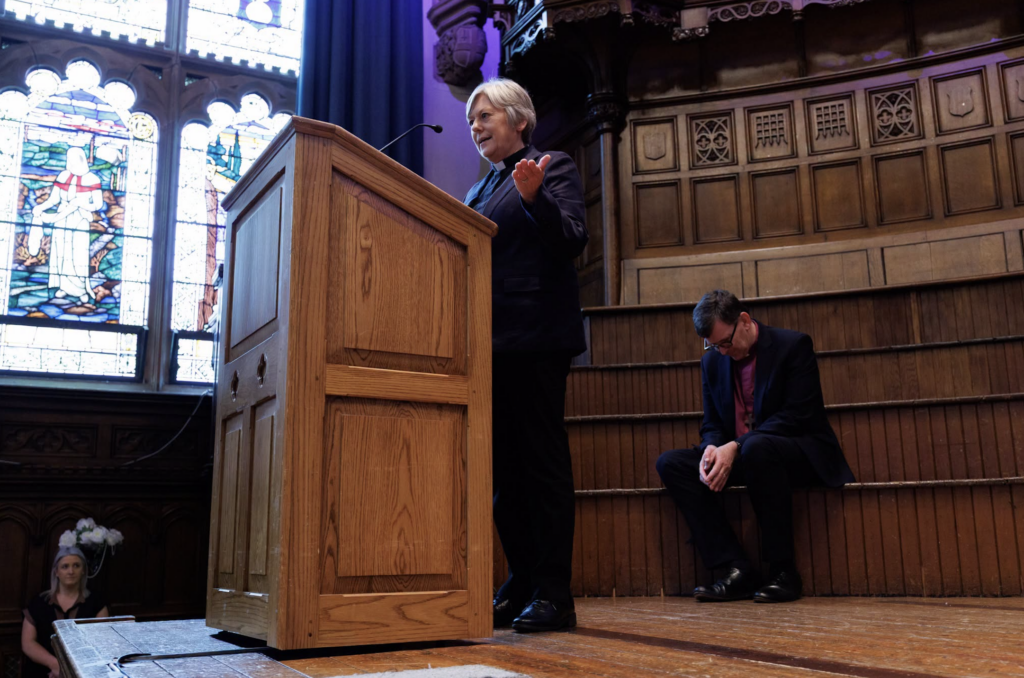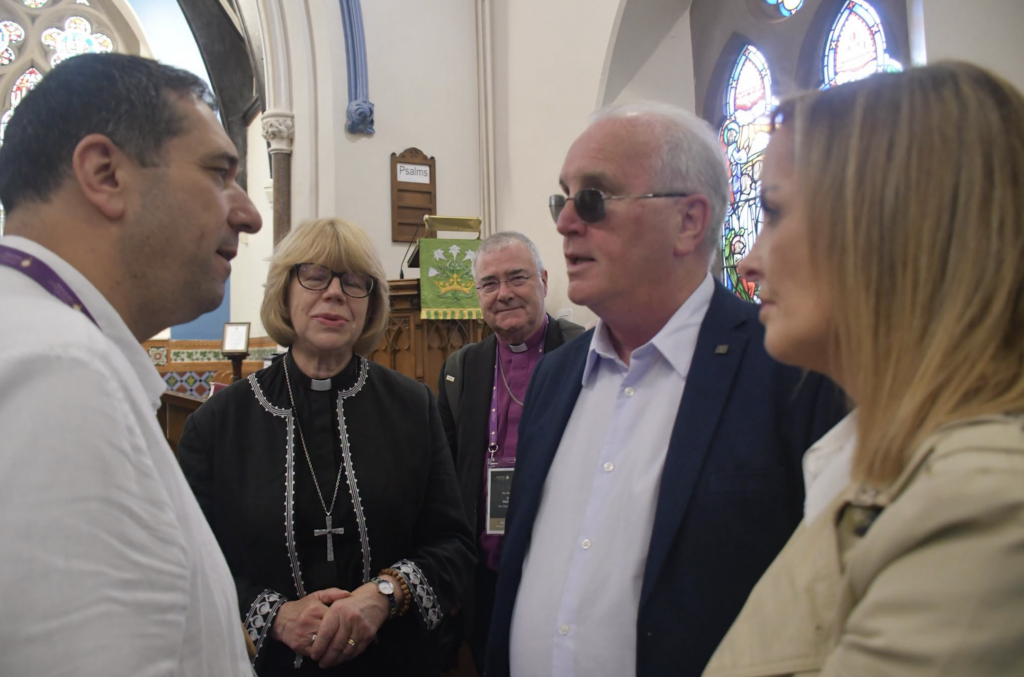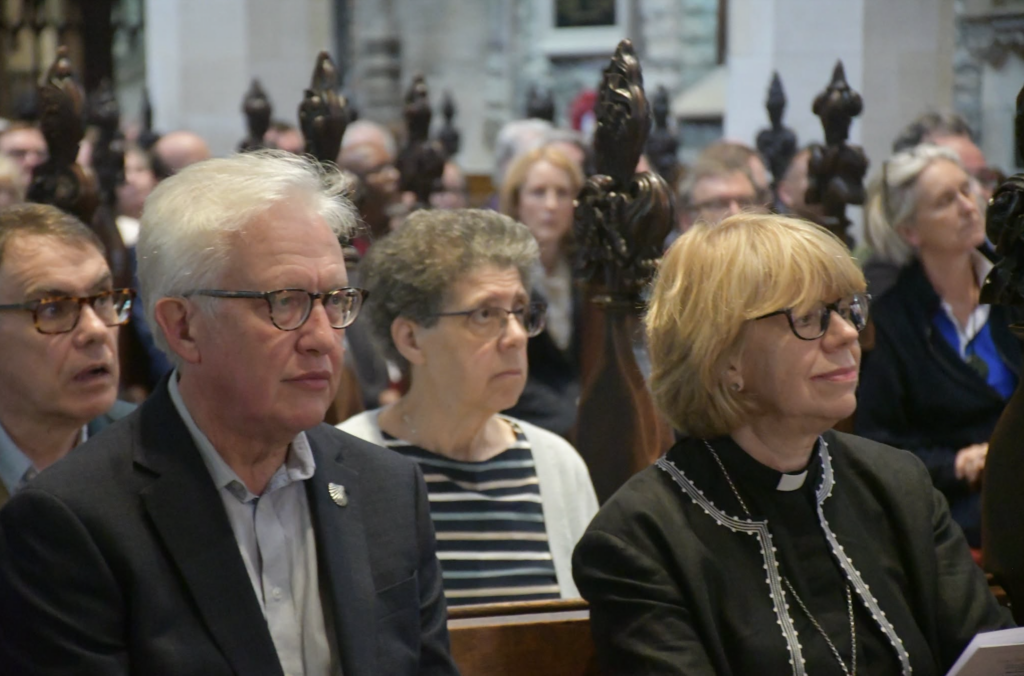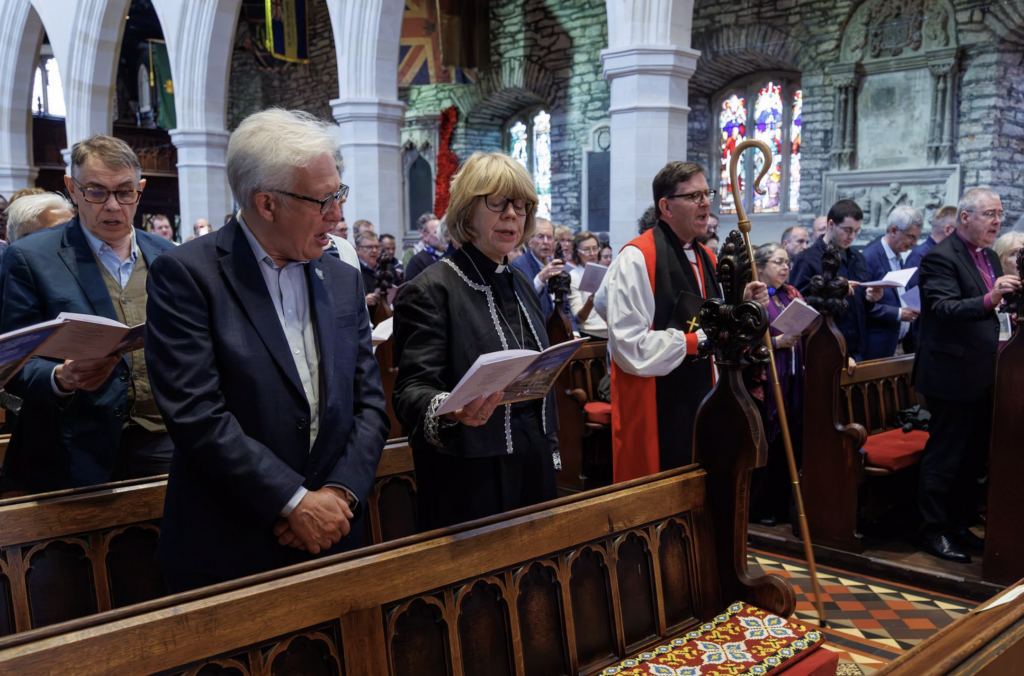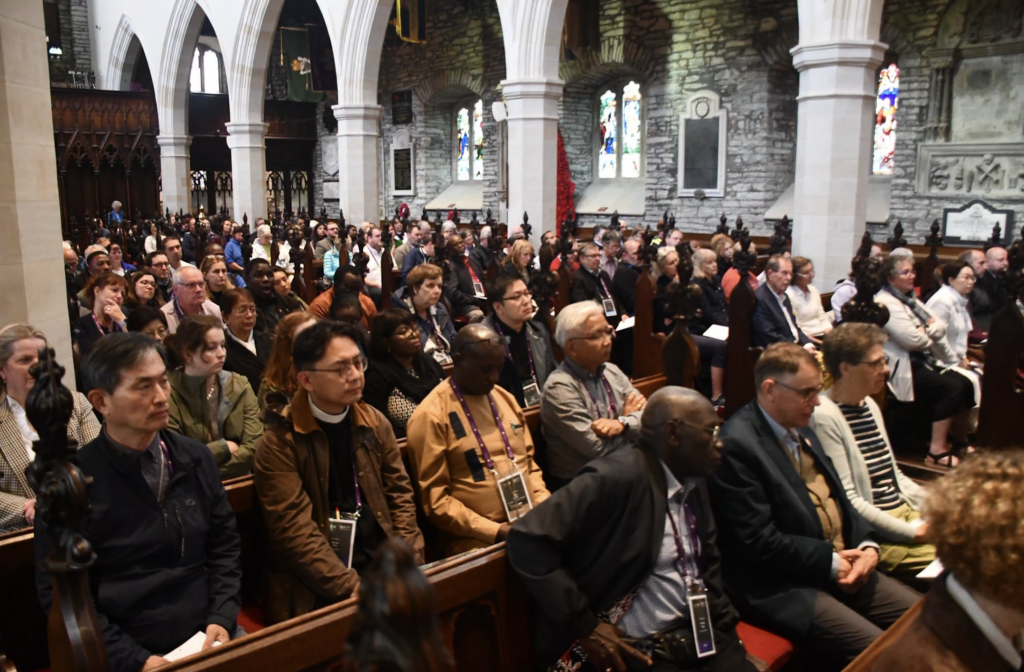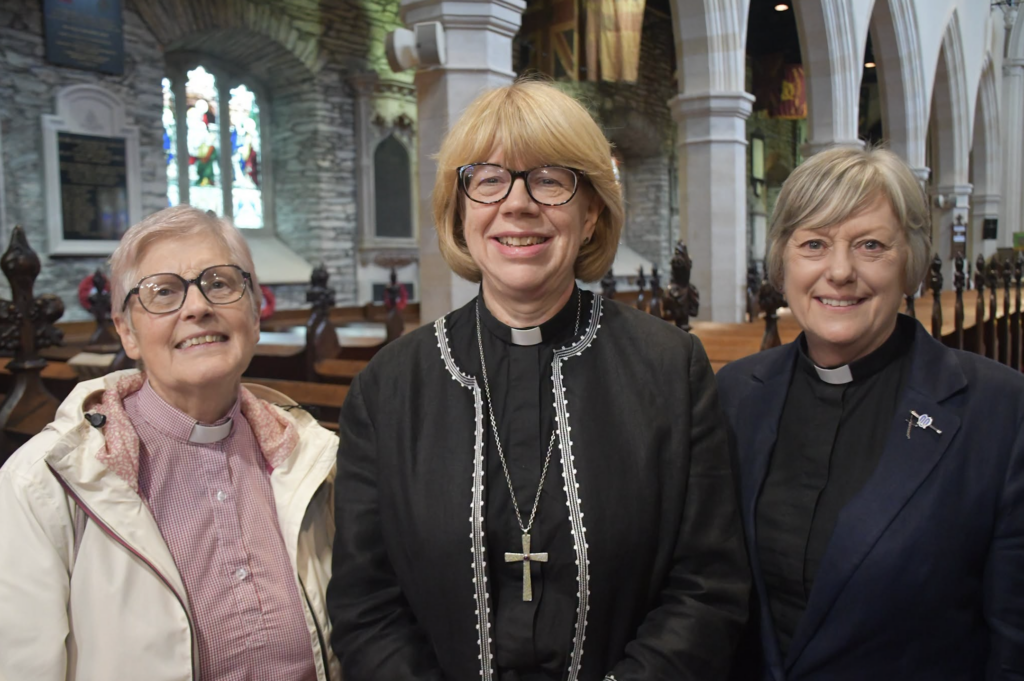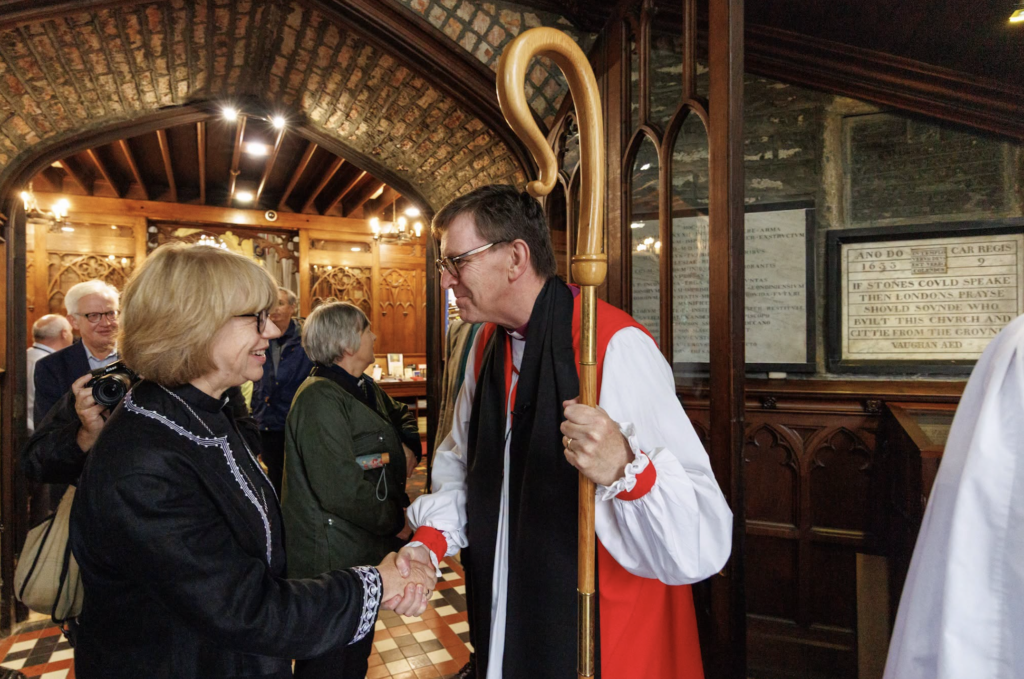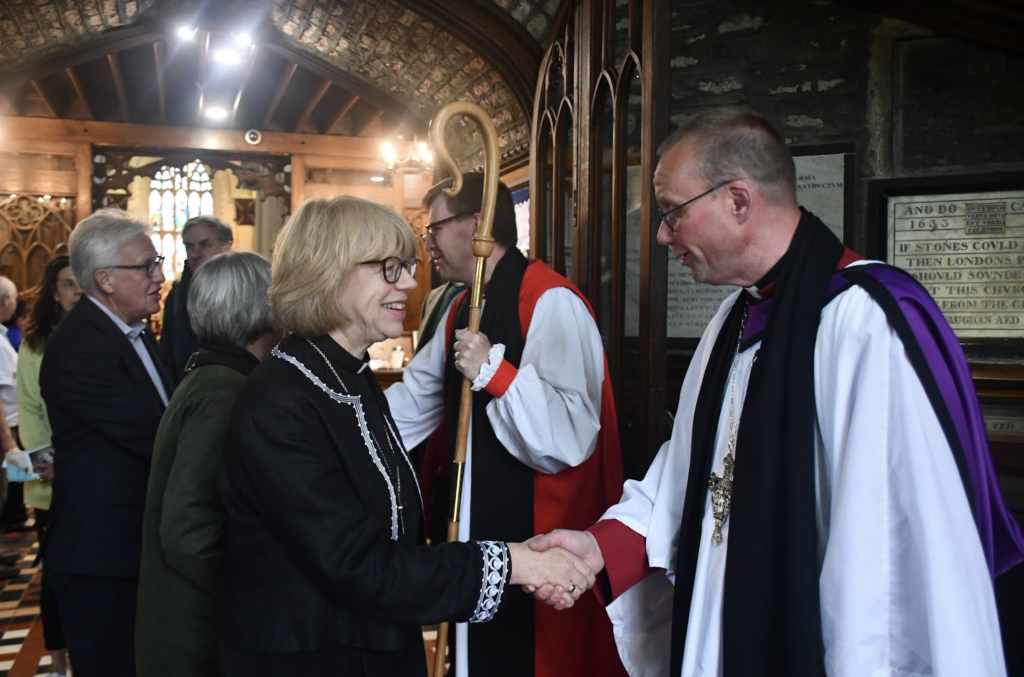
The Archbishop of Canterbury, the Most Revd and Rt Hon Dame Sarah Mullally DBE, paid her first visit to Londonderry as she led a high-powered group of more than 100 senior Anglican clergy and ecumenical guests on a one-day pilgrimage to the city. The international delegation was made up of bishops, clergy and laity from 38 Anglican provinces worldwide and included the Secretary General of the Anglican Communion (the Rt Revd Anthony Poggo), the Chair of the Anglican Consultative Council (ACC), Canon Maggie Swinson; and the Vice-Chair, the Most Revd Hosam Naoum, Archbishop in Jerusalem.
The group are in Northern Ireland for the 19th meeting of the Anglican Consultative Council which is taking place this year in Belfast. The organisers scheduled a one-day visit to Derry – hosted by Bishop Andrew Forster – during which delegates were invited to explore the theme of reconciliation.
The pilgrimage began at Ebrington Square, a former British military complex for over 160 years, which was closed and handed to the public in 2003 and has since been transformed into a vibrant, shared civic and cultural space.
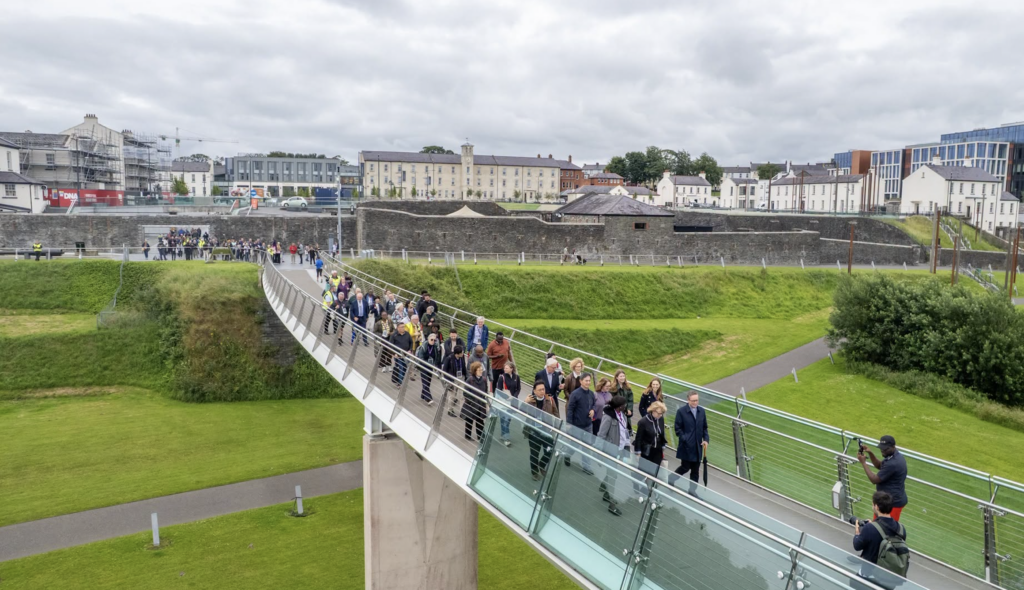
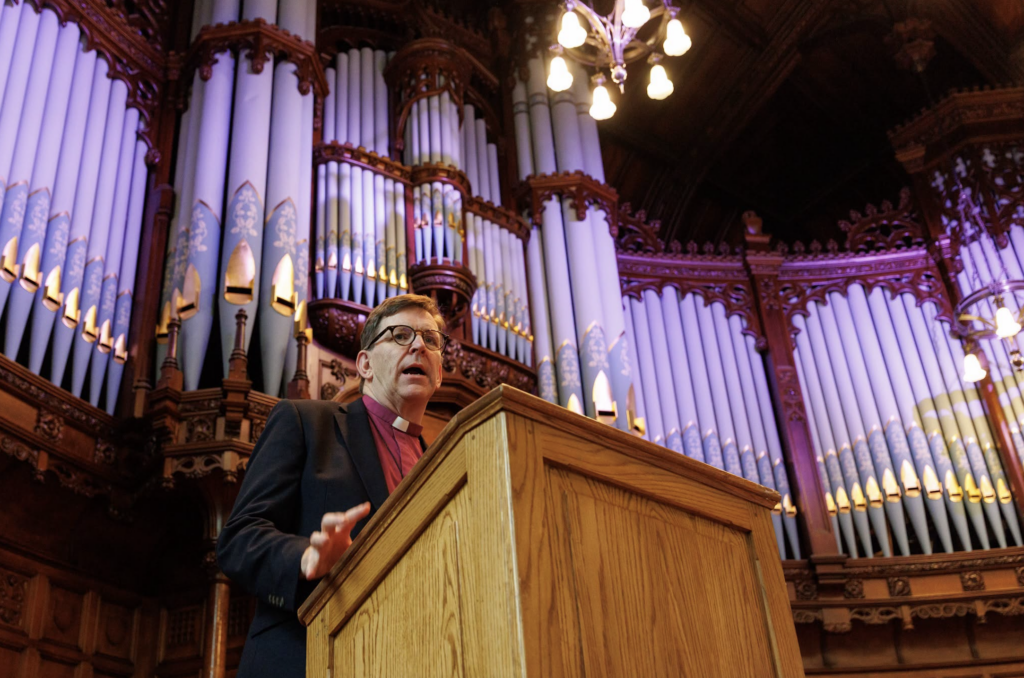
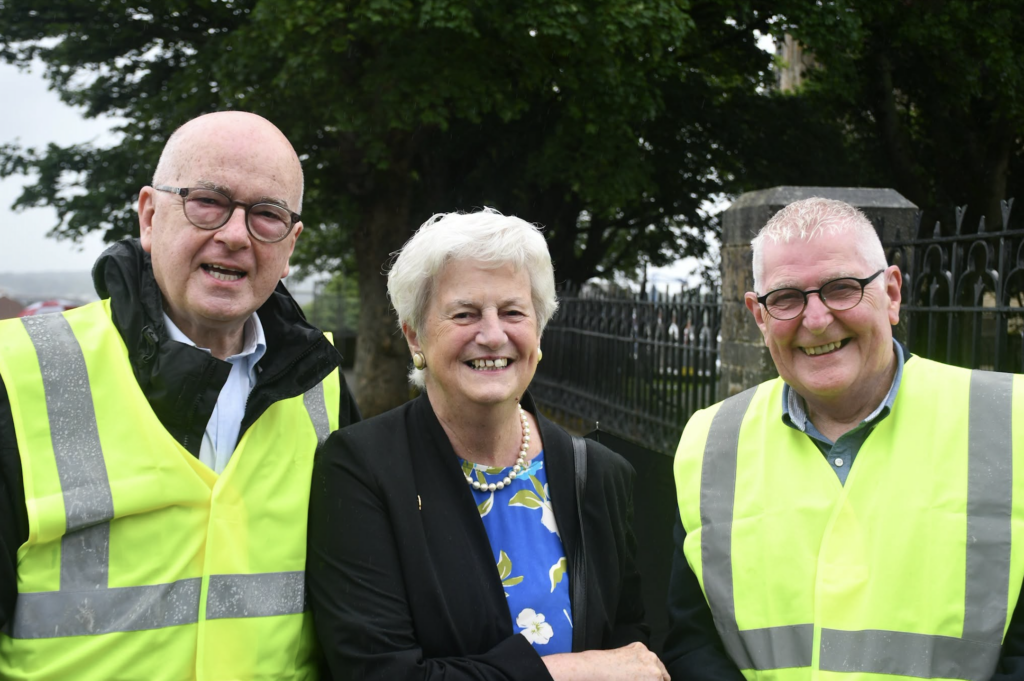
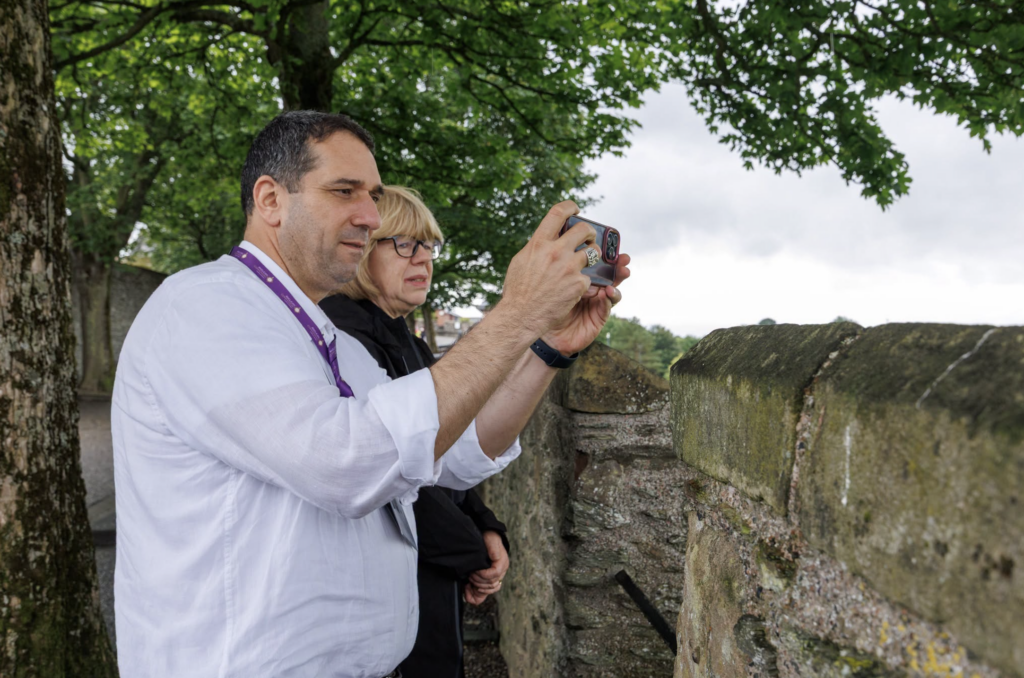
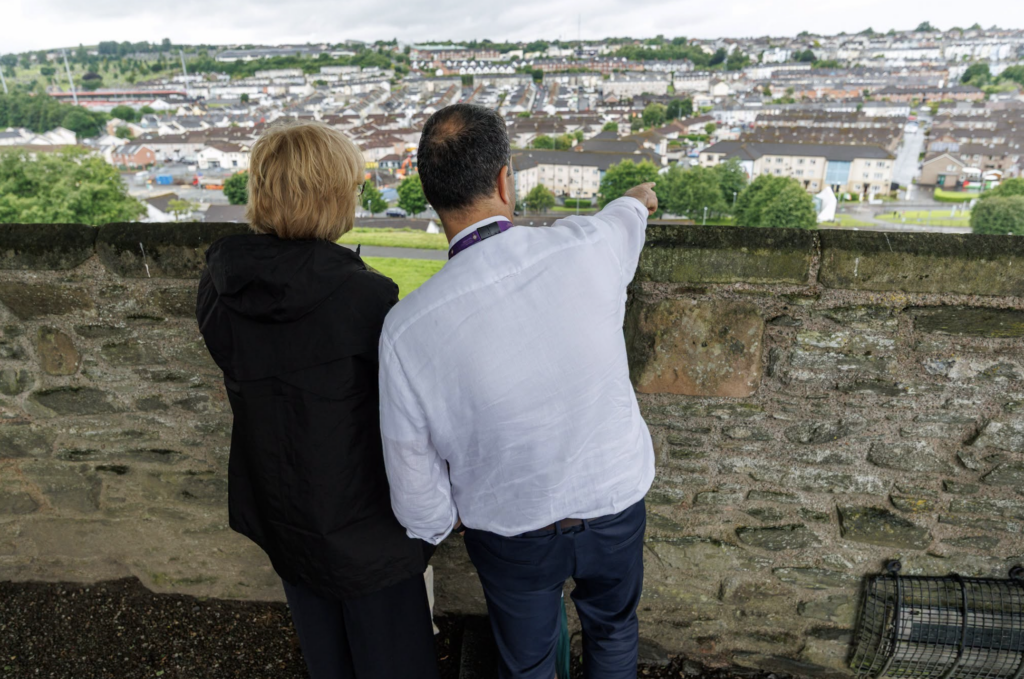
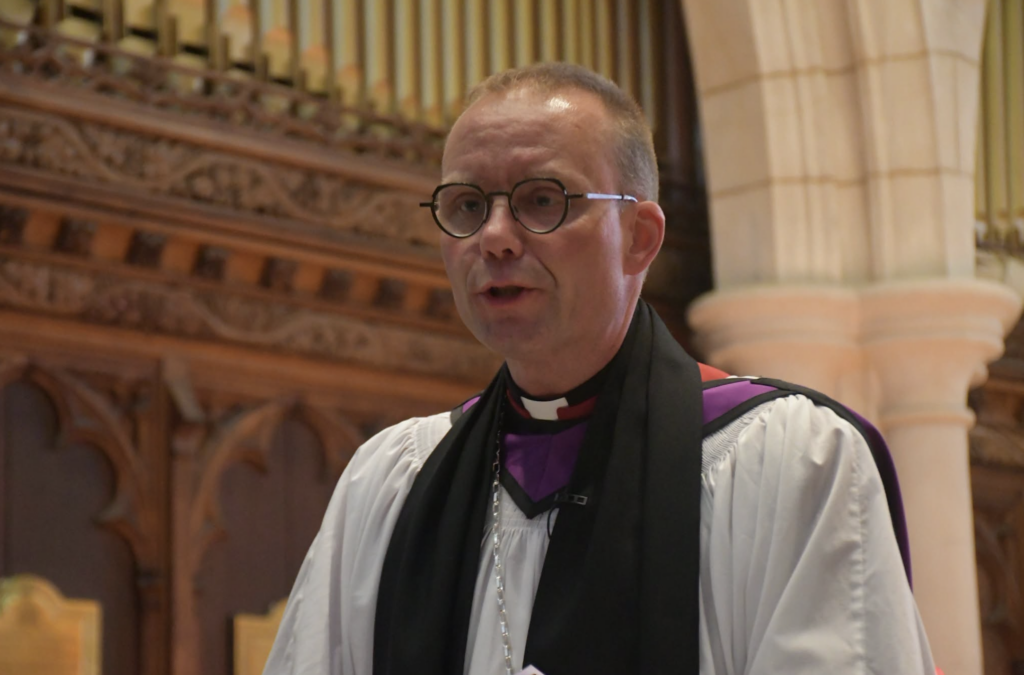
Setting the scene for the day, Bishop Andrew expressed his hope that the pilgrimage would be an opportunity to ‘journey further into the heart of God, journey further into the heart of other people’s experiences, and journey further into our own discipleship and journey of faith.’ Of the delicate work of peacebuilding in the city, he added: ‘Peace is always a fragile thing that must be handled with care — the more care we use, the more we value it and see it as precious.’ Delegates – accompanied by volunteers from local parishes – walked a path through sites of historic and symbolic significance, tracing Northern Ireland’s journey from conflict to peace.
The day had been designed as a living encounter with Irish history and the Church of Ireland’s ministry in the midst of sectarian conflict and Northern Ireland’s peace process. It provided an opportunity for the international delegation to learn from the host church’s experience and to reflect on how Anglicans can support peace and reconciliation work around the world.
The pilgrimage offered an important opportunity to understand the history of the region as well as providing a practical resource for the global Church in reconciliation ministry. Many delegates attending ACC-19 come from countries currently experiencing armed conflict, political instability or post-conflict transition. The Anglican Communion also advocates for peace and reconciliation about ongoing conflicts around the world, including in South Sudan, the Middle East, Sudan, Myanmar, and the Democratic Republic of Congo.
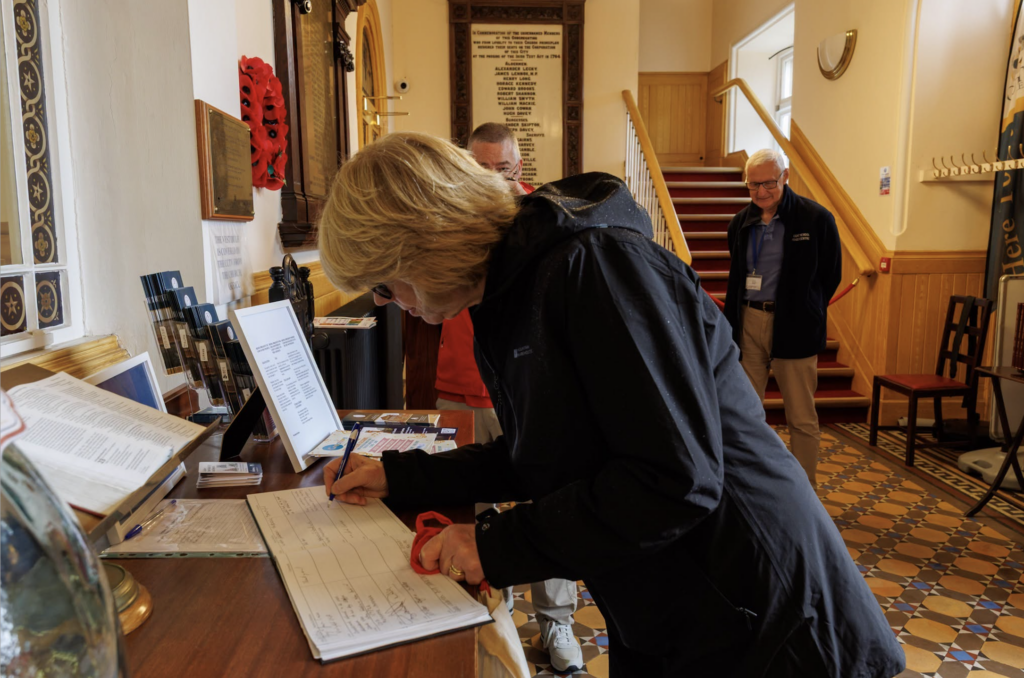
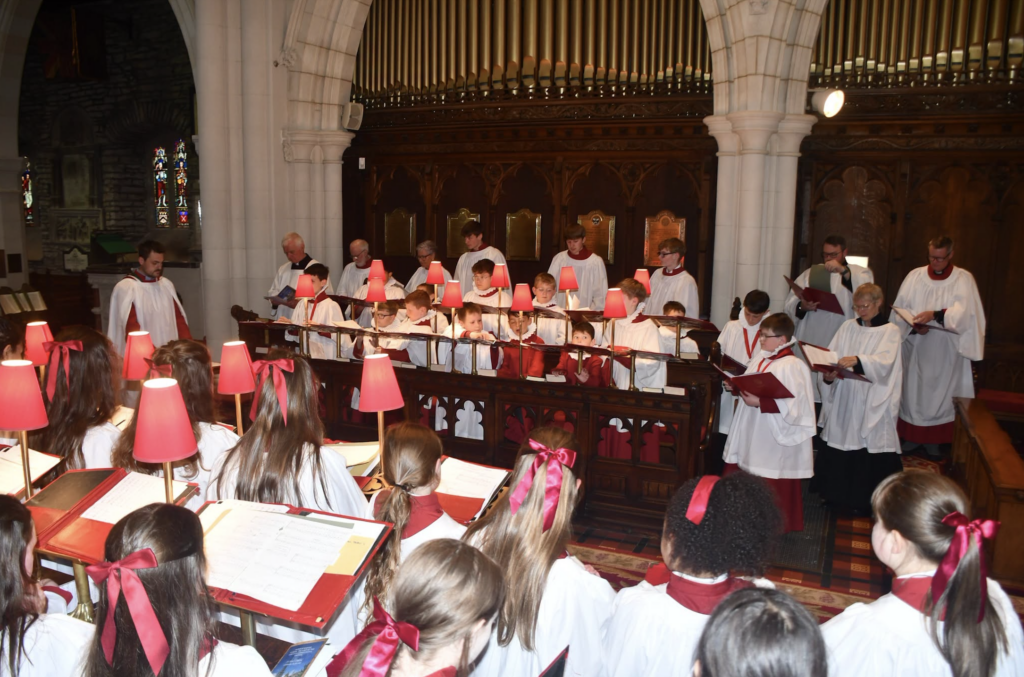
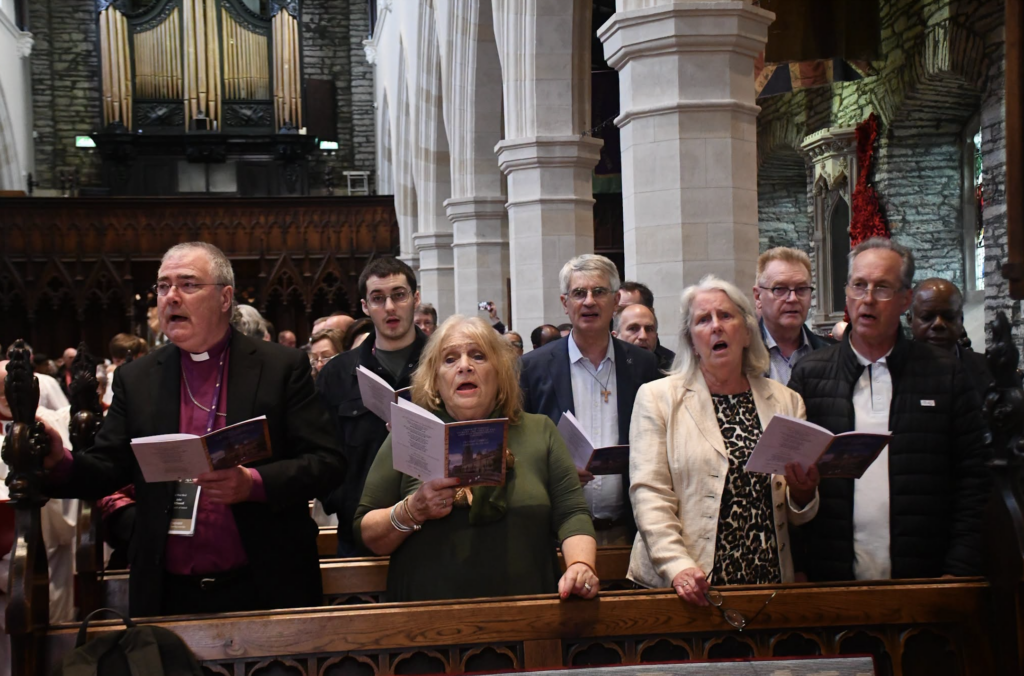
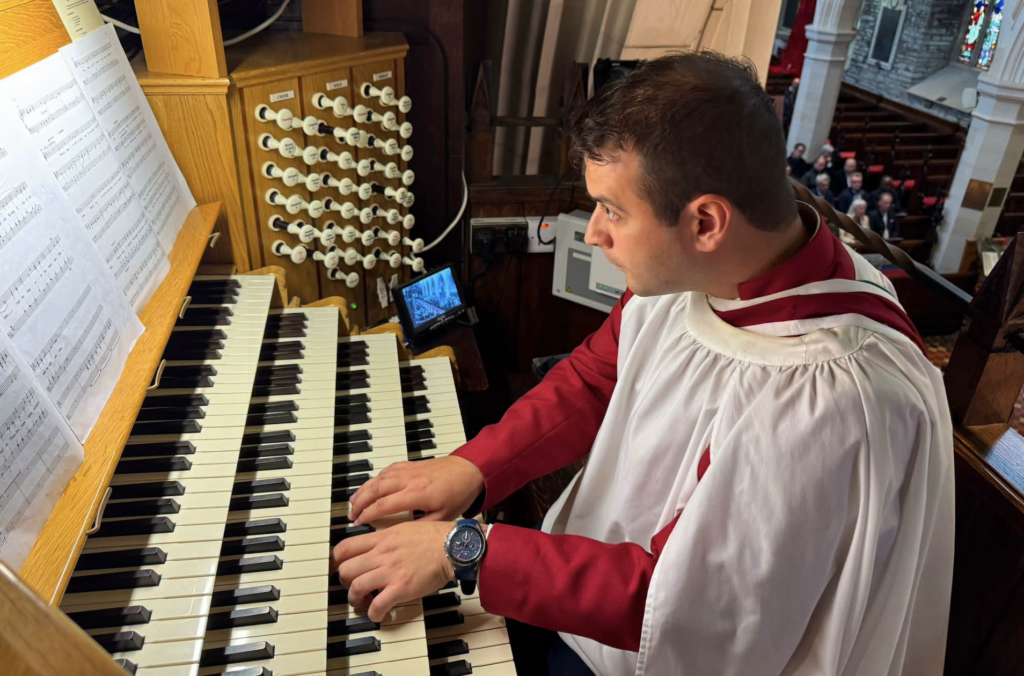
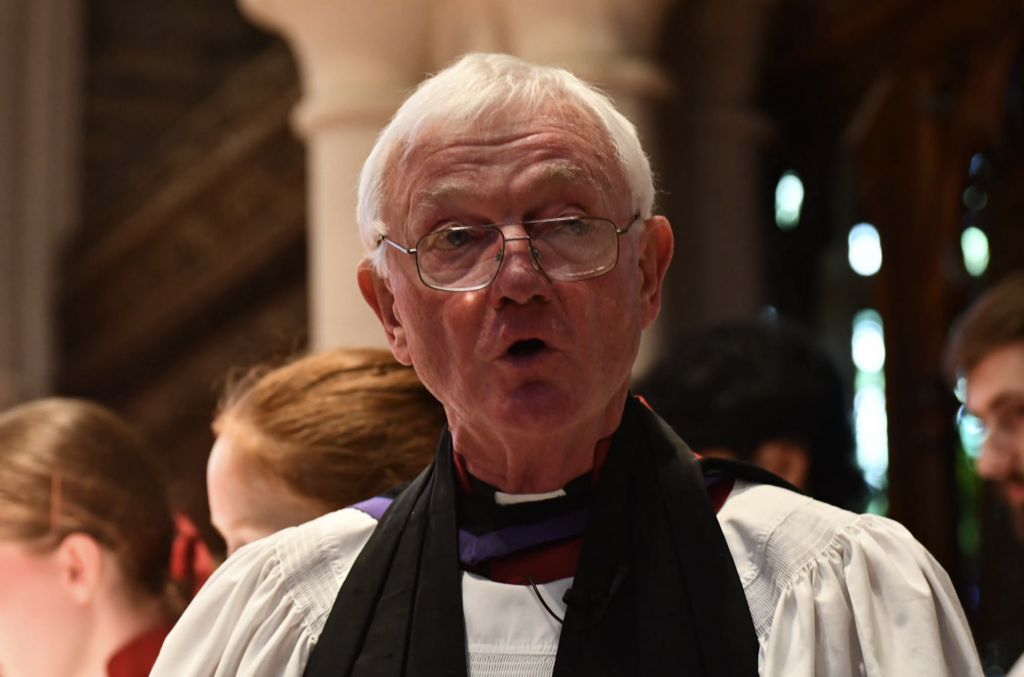
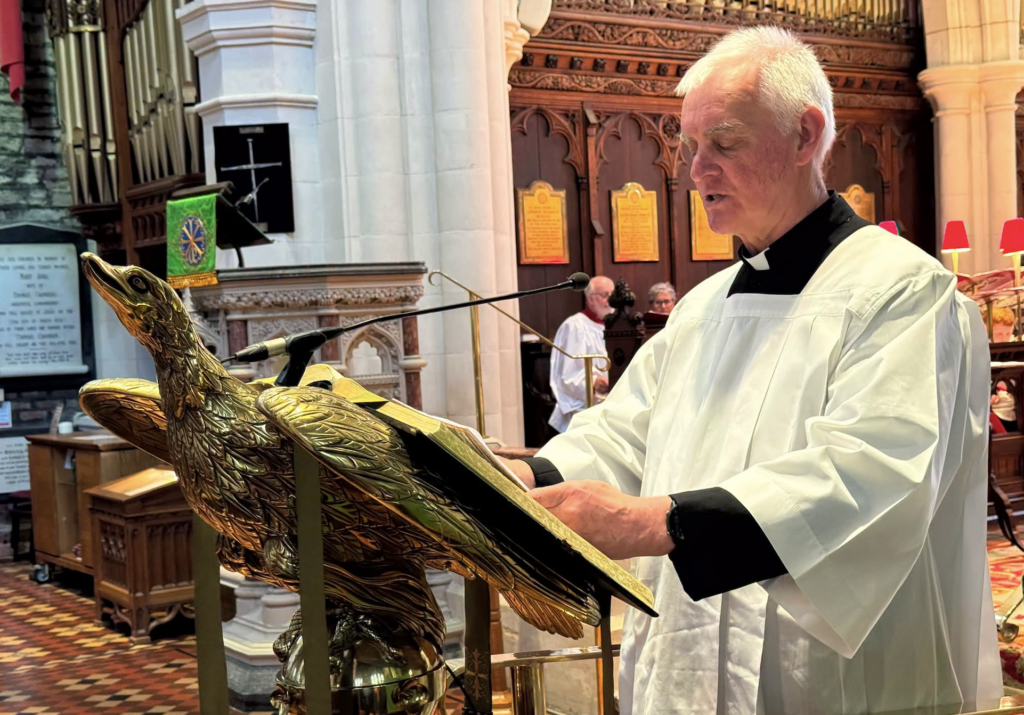
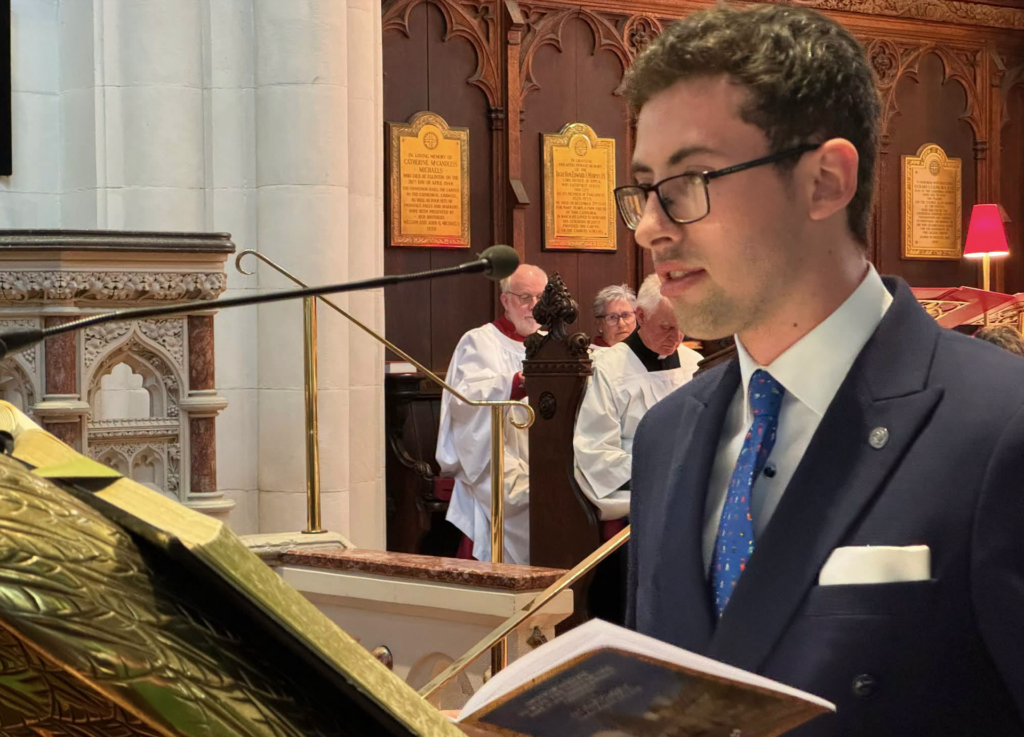
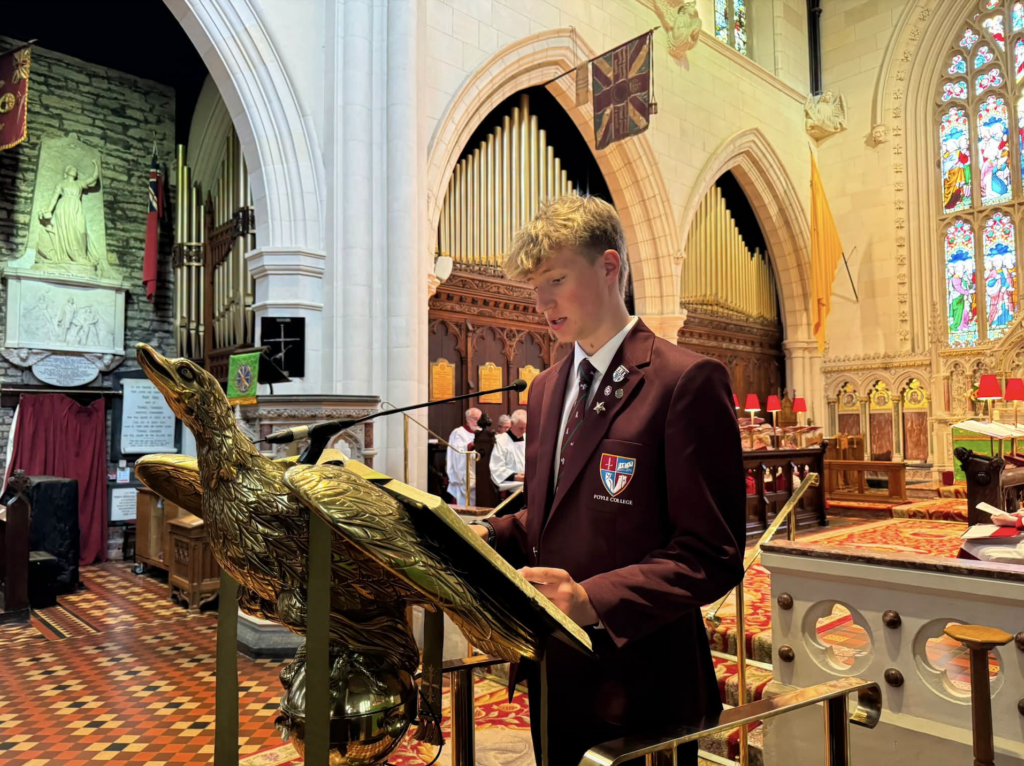
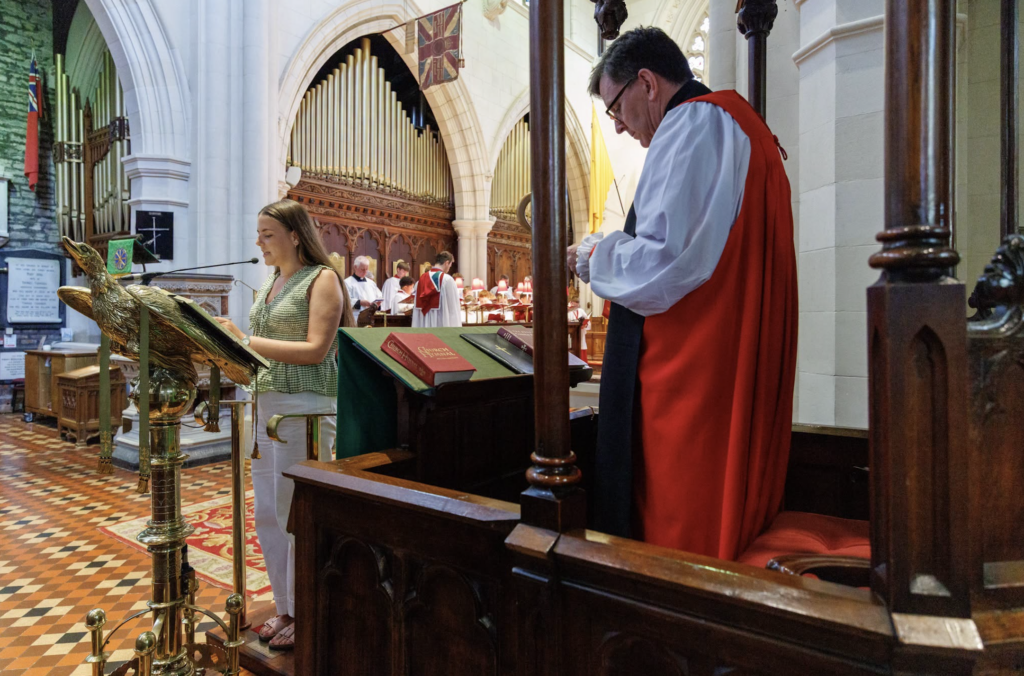
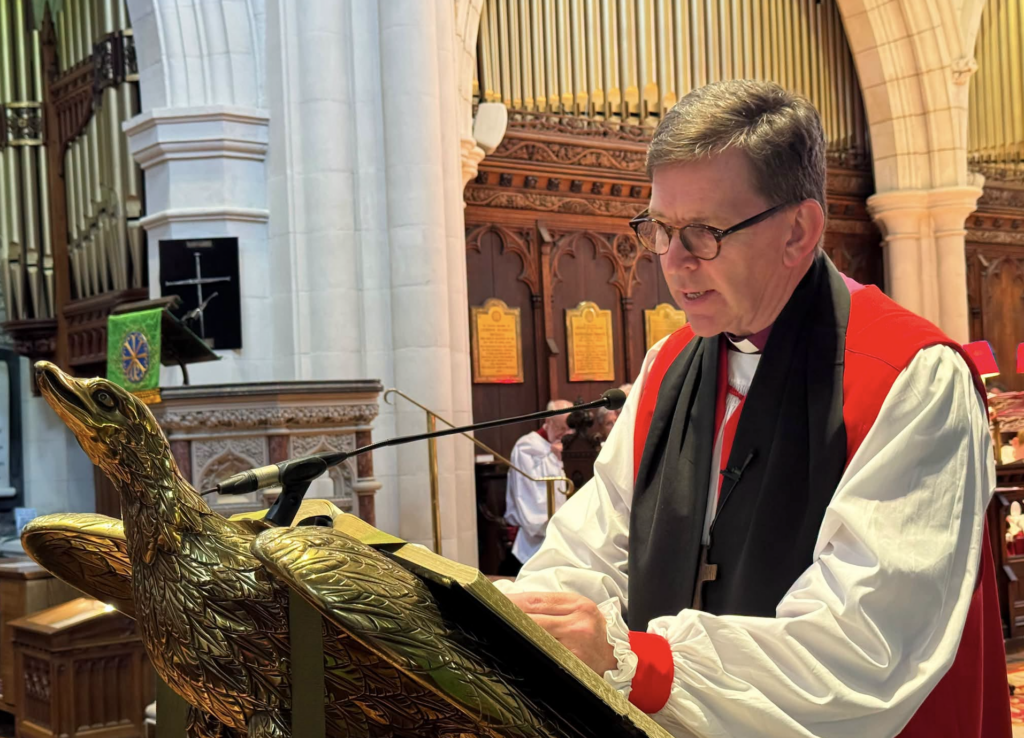
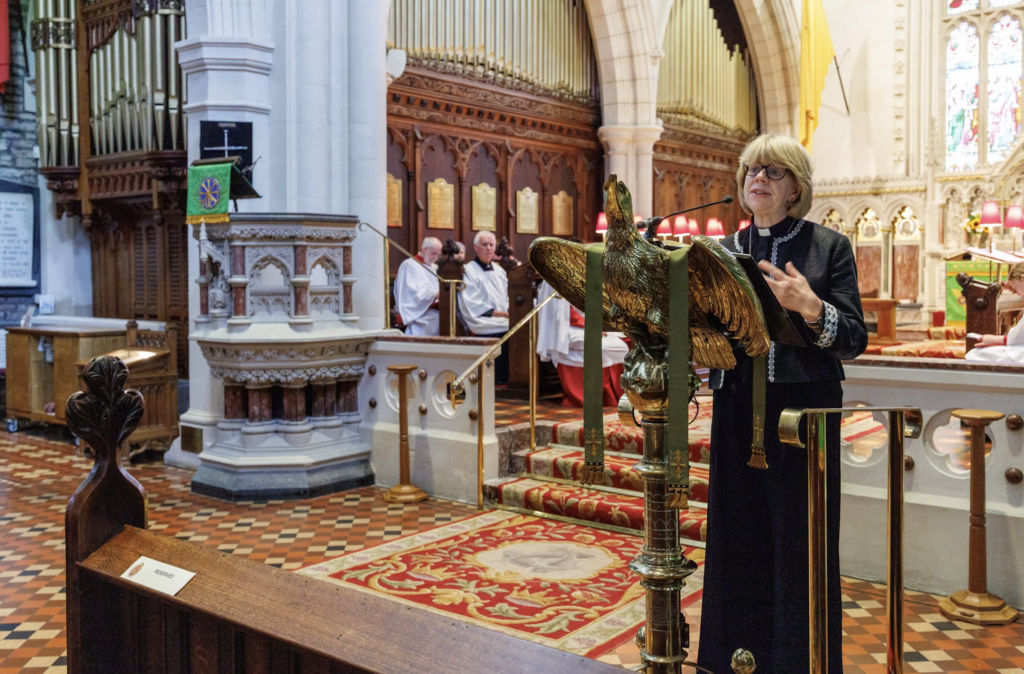
There were many moments throughout the day to send the visitors home with fond memories: a beautiful liturgy service at St Columb’s Cathedral, a walk across the iconic Peace Bridge; and a visit to the Guildhall to find out more about the city’s history and its journey towards peace.
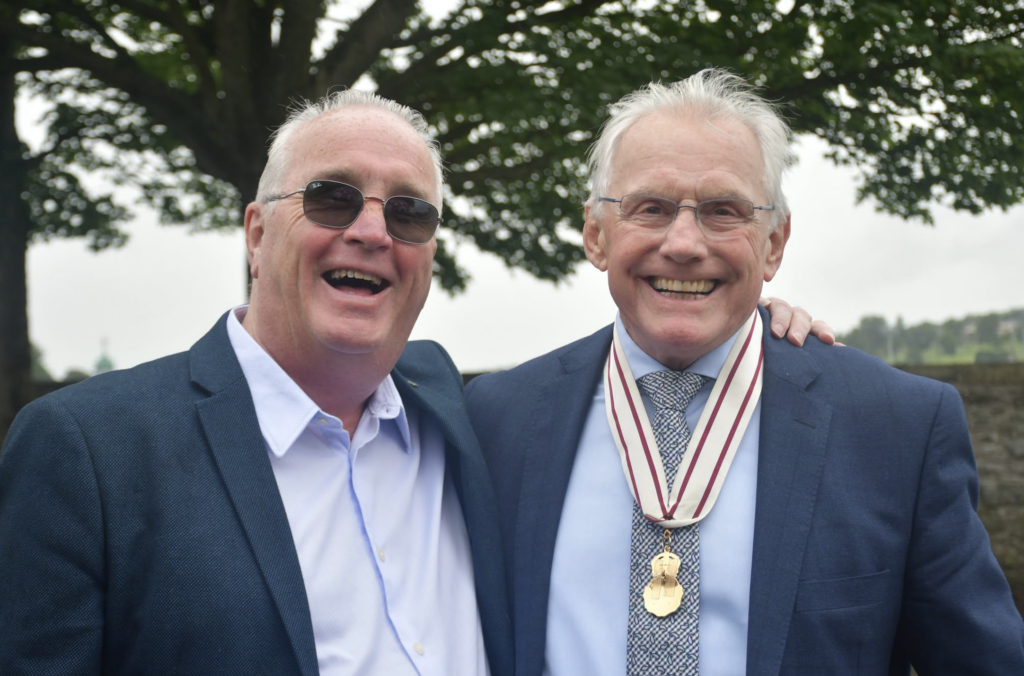
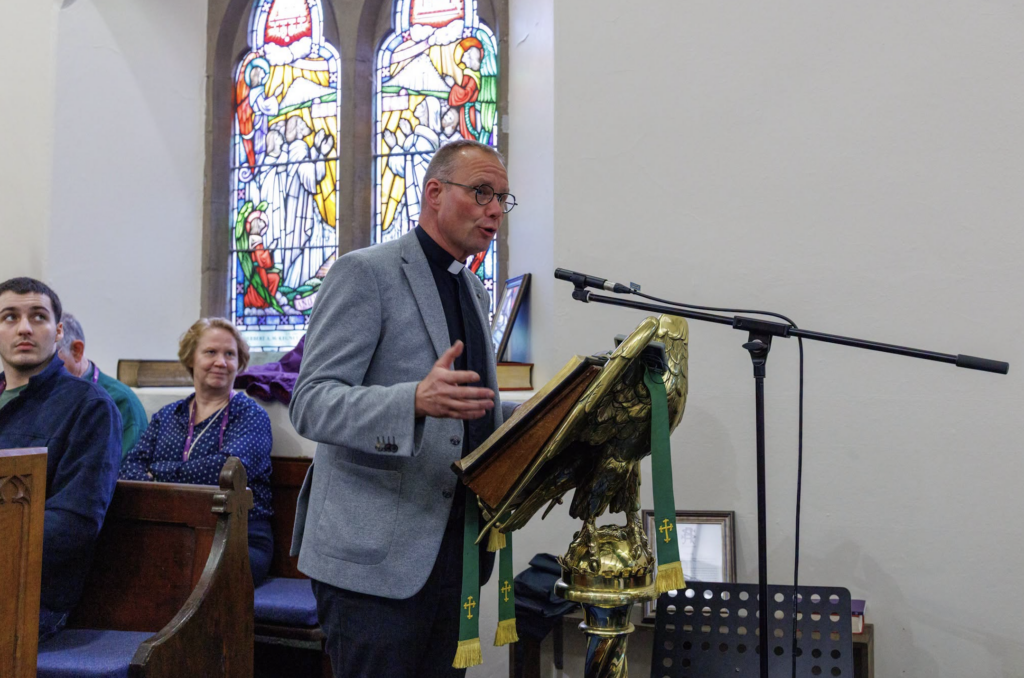
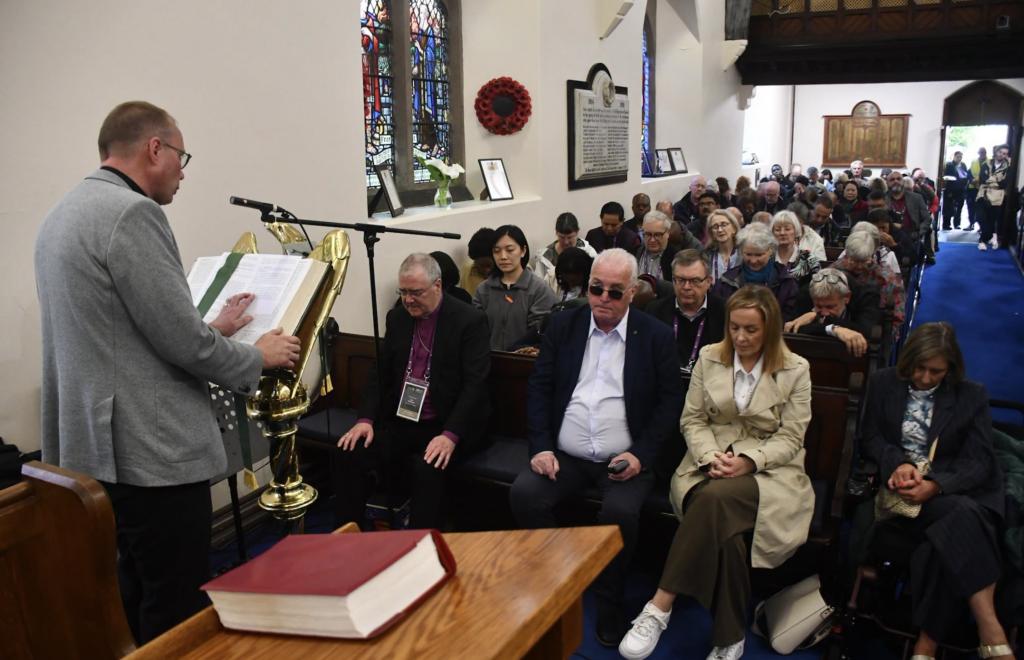
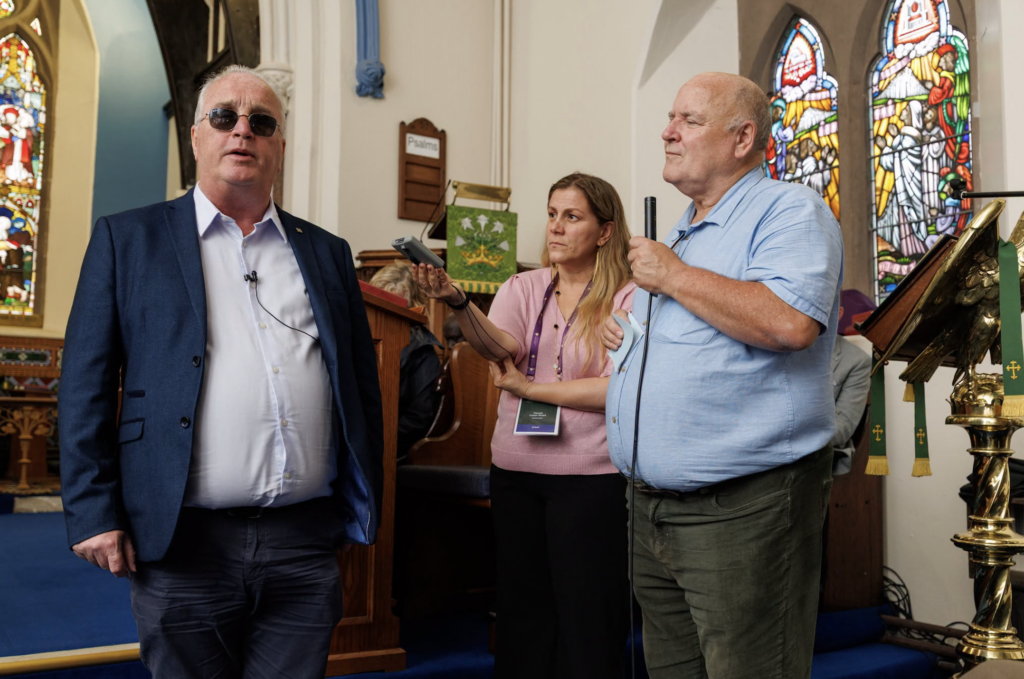
The highlight of the day for many came at St Augustine’s Church, where the delegation heard from Richard Moore who as a 10 year-old schoolboy was blinded when he was struck by a rubber bullet fired by a British soldier in May 1972. More than 30 years later, Richard sought out and met the soldier responsible – Charles Innes – an act of courage and grace that he described with honesty and humour. Reflecting on his initial hesitation, Richard recalled: ‘The man had hurt me, my mammy and daddy — he was a British soldier. Was I letting my own side down and other victims? But I wanted to meet him.’
Richard’s account of their encounter and of his own journey toward forgiveness moved the international congregation deeply. Speaking of the importance of striving for reconciliation, Richard said: ‘No matter how difficult the situation might seem, given the right level of support, love and compassion, you can contribute to the lives of other people and you can overcome the difficulties that you face and use them in a positive way. I believe that if you really want reconciliation, it has to begin within yourself. Forget everyone else. Begin in your own heart. Not Stormont. Not Westminster. Not with politicians. If you can reconcile your own heart, you can reach out to others.’
(Photo credits: Neil Turner and Diocese of Derry and Raphoe)