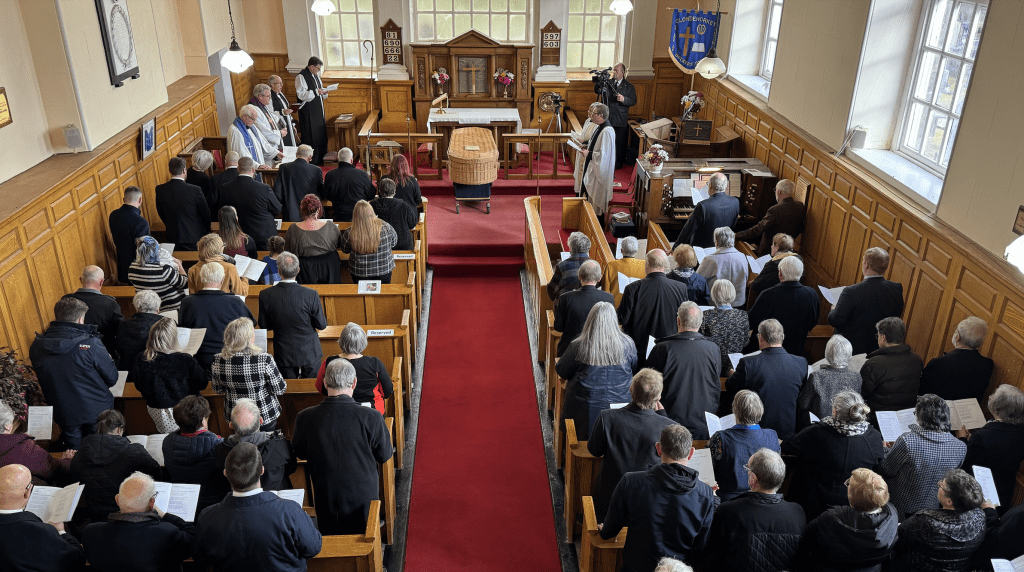
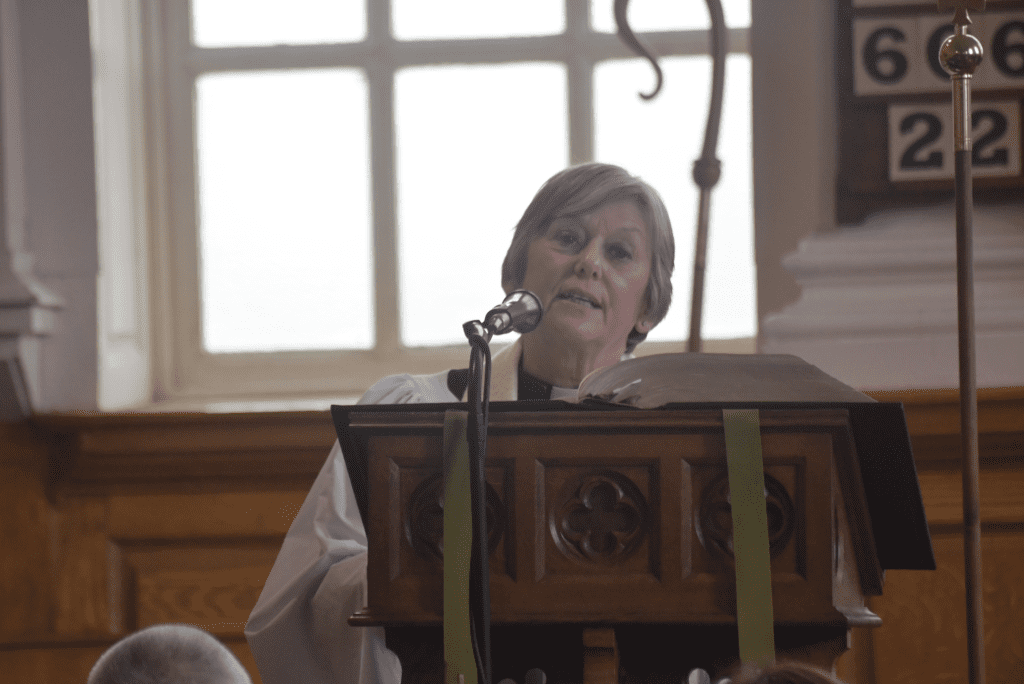
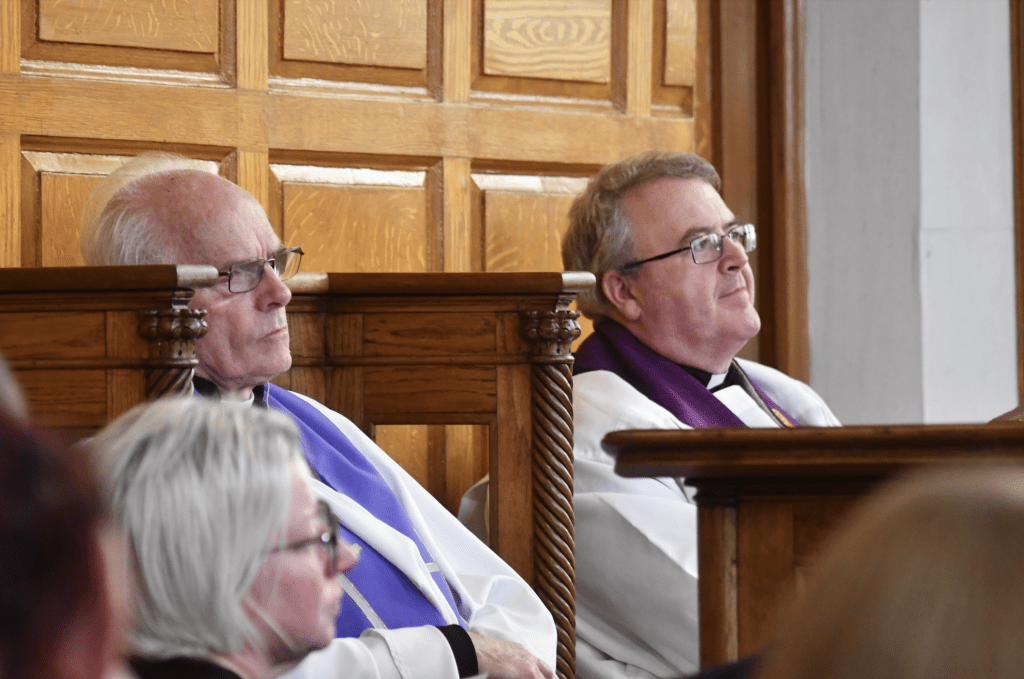
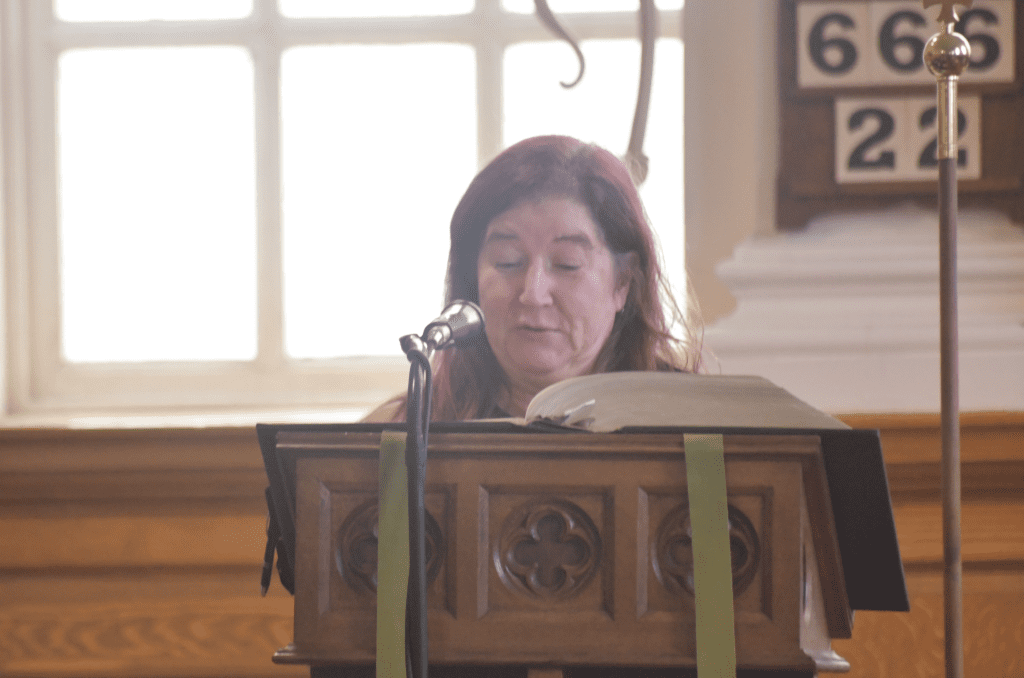
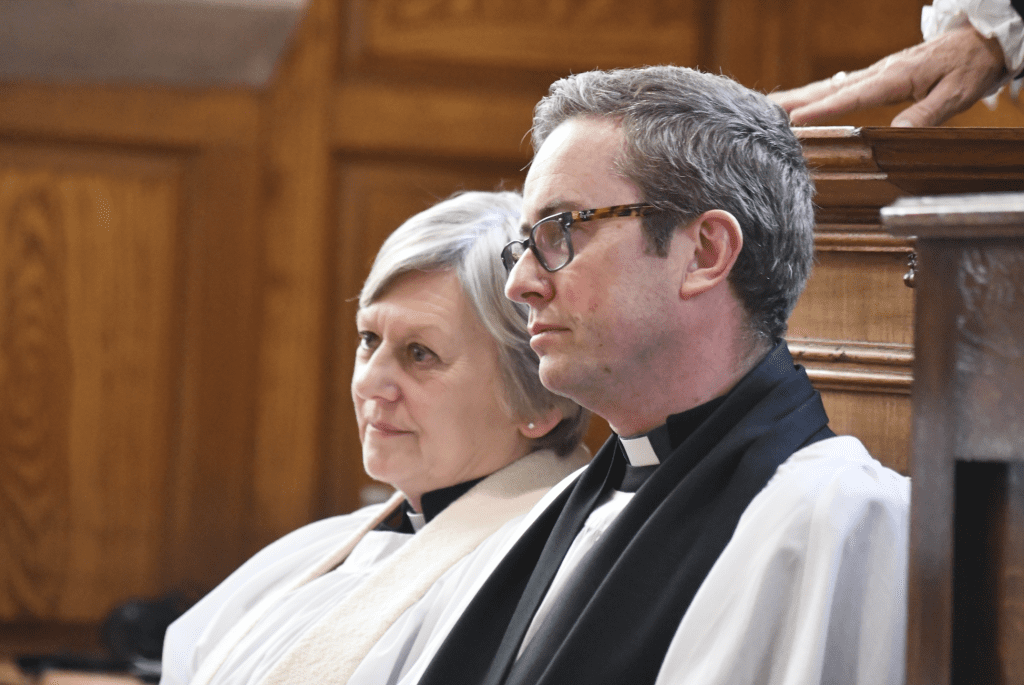
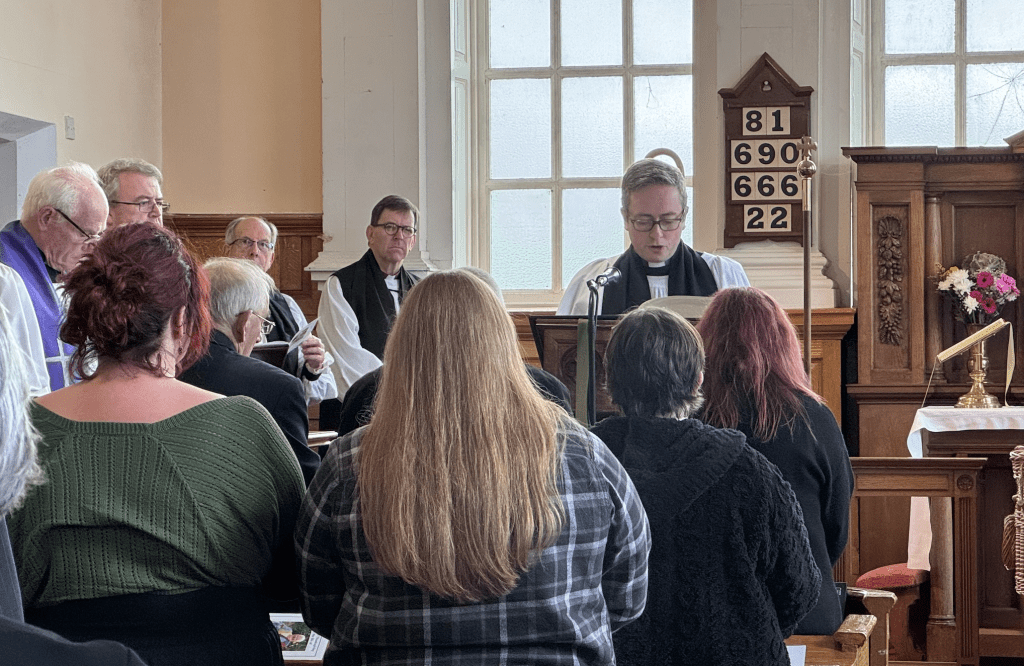
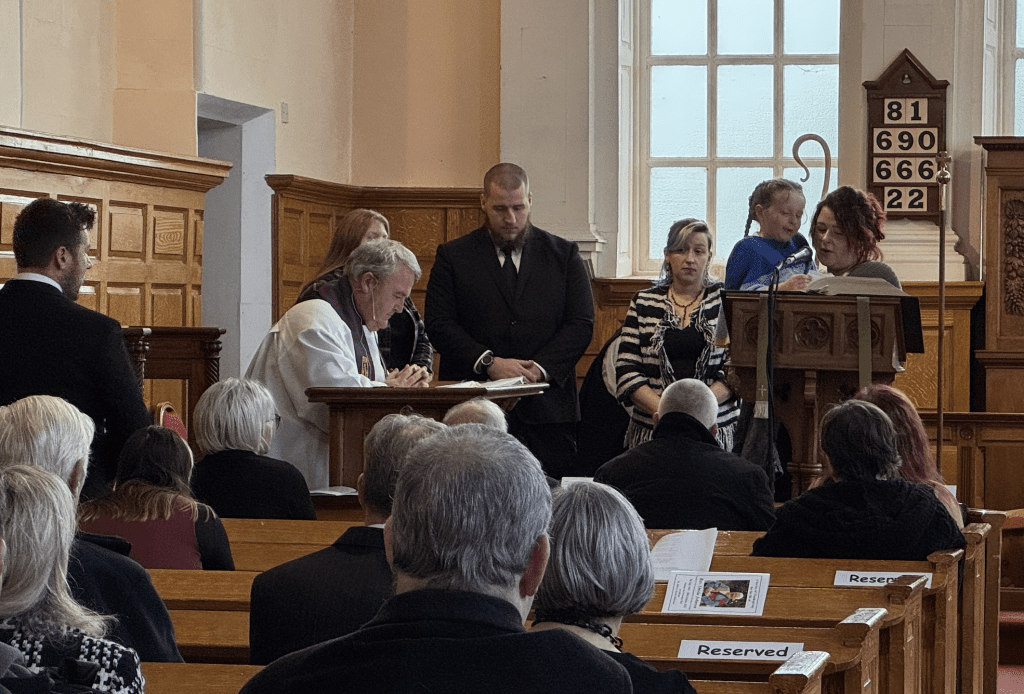
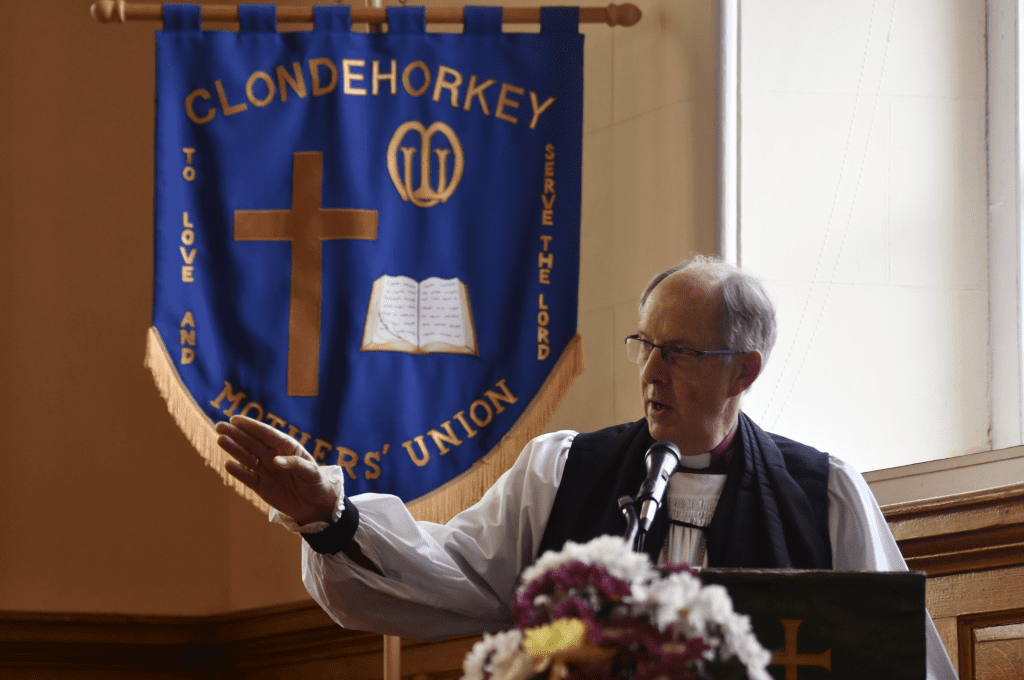
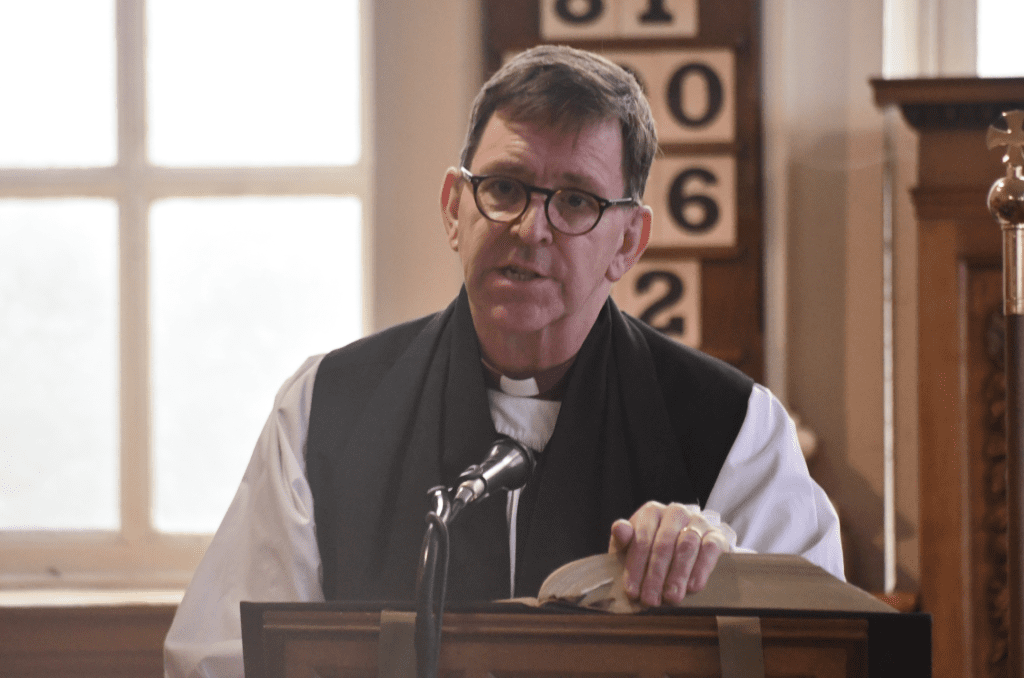
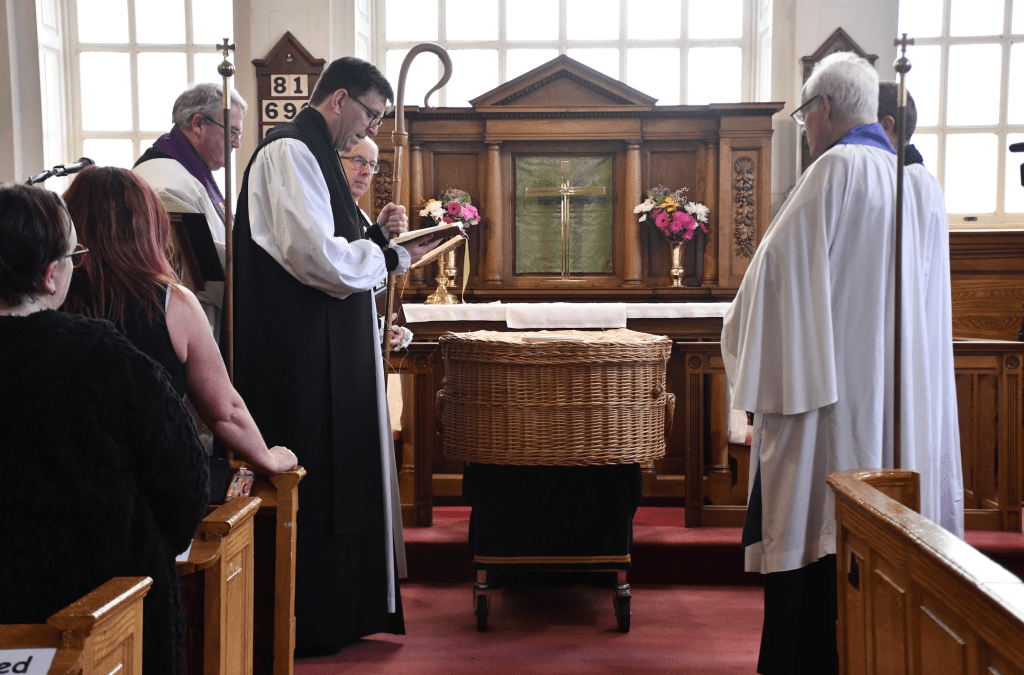
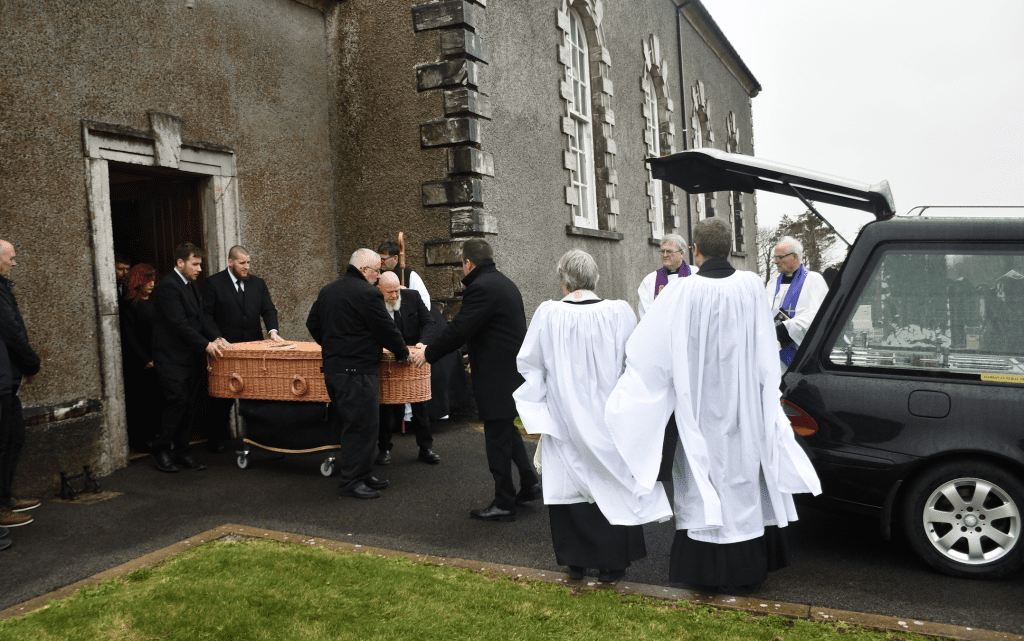
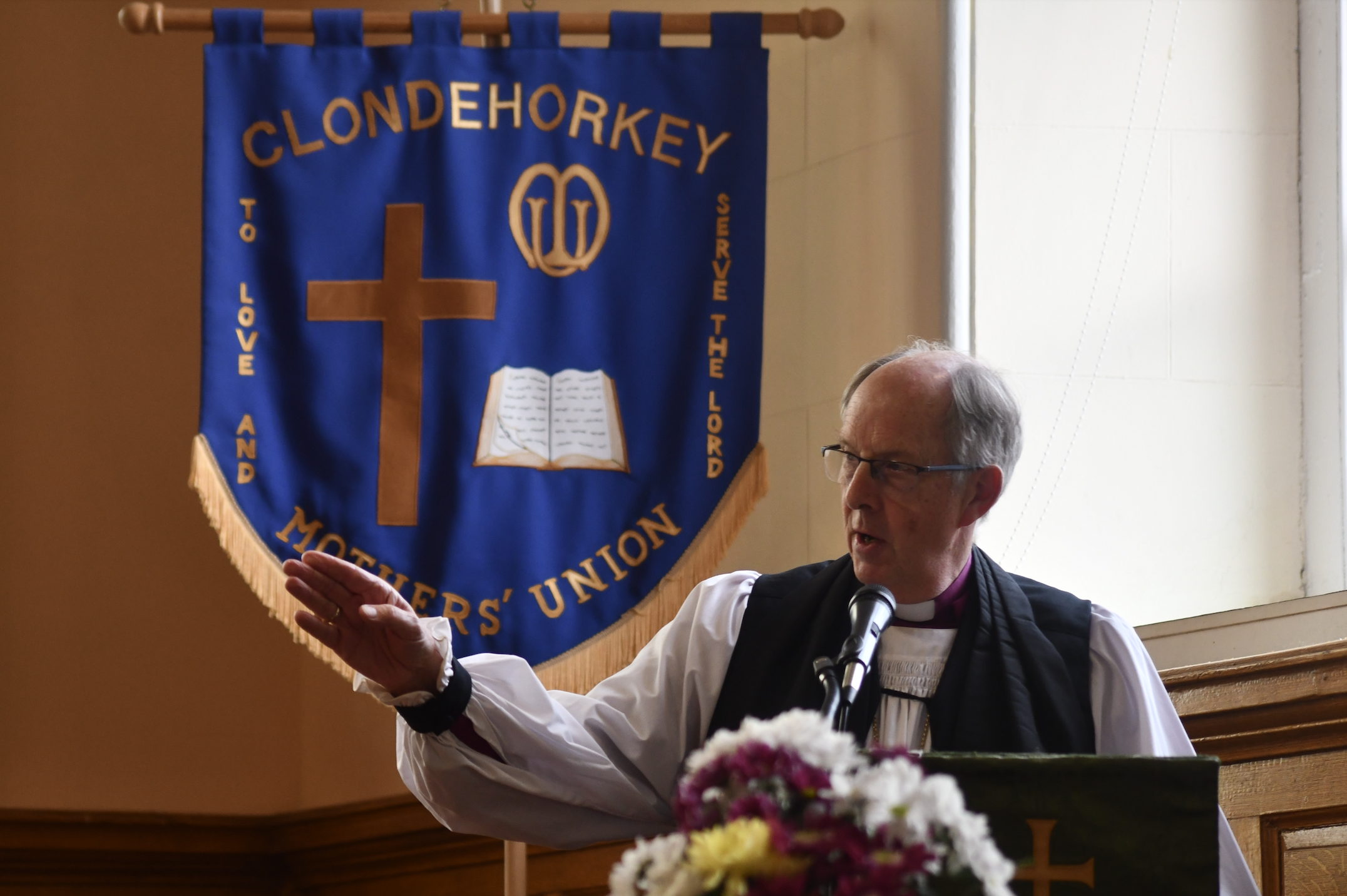
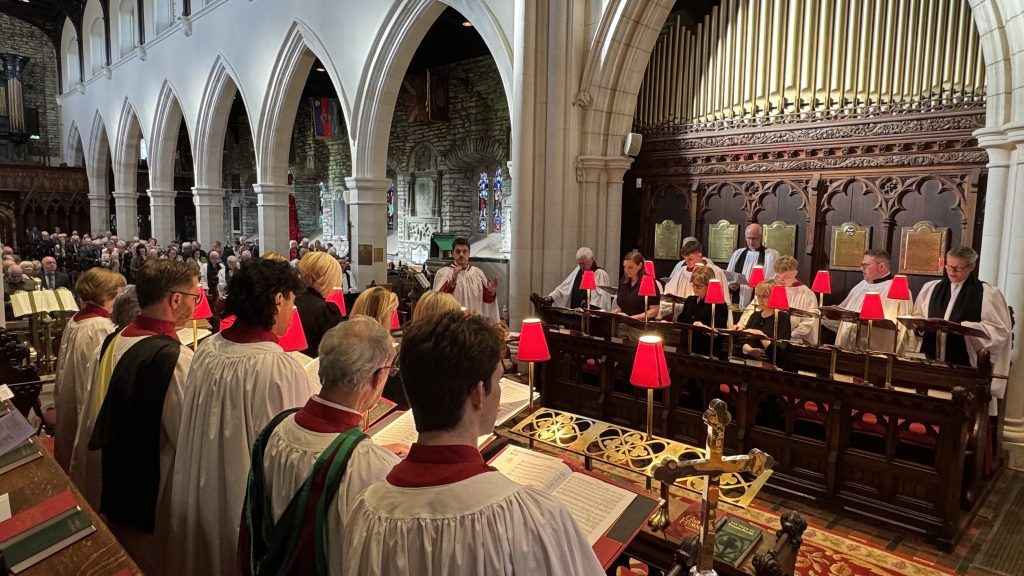
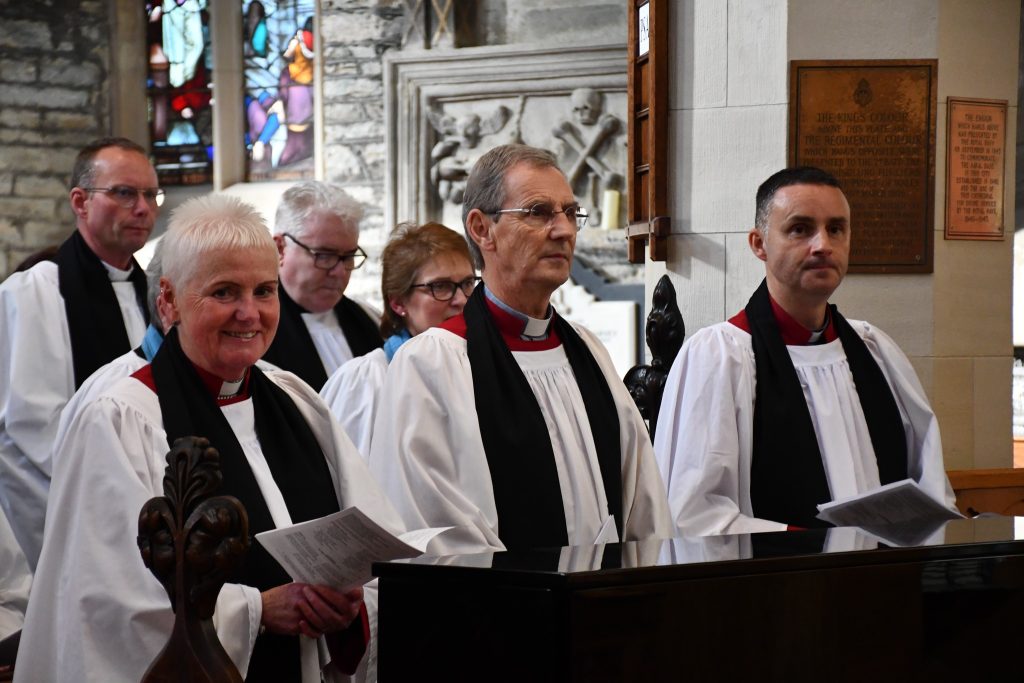
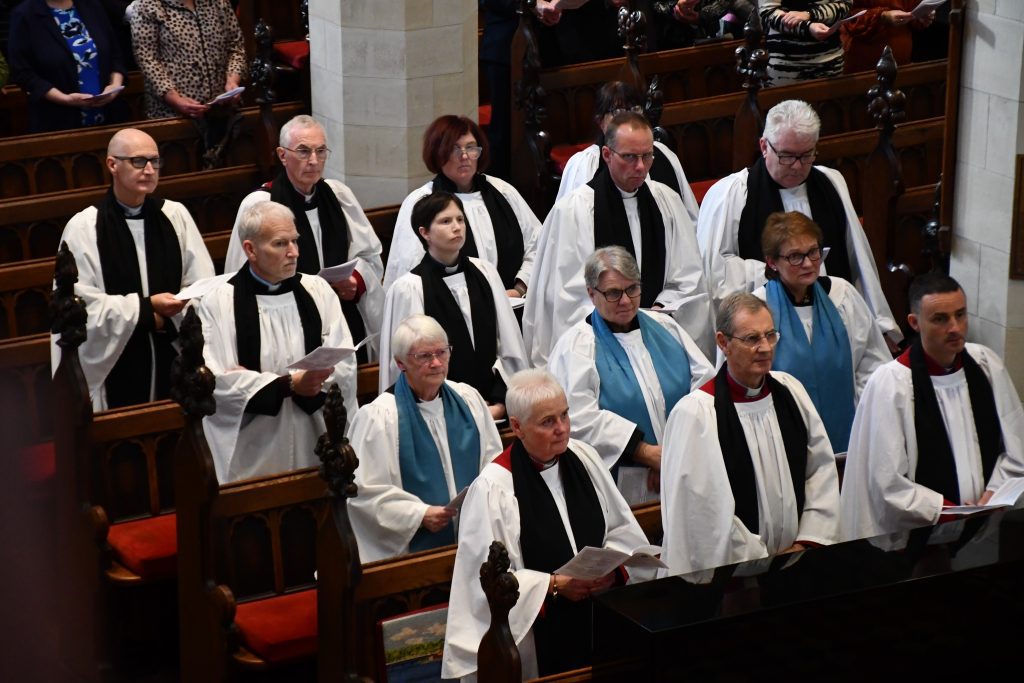
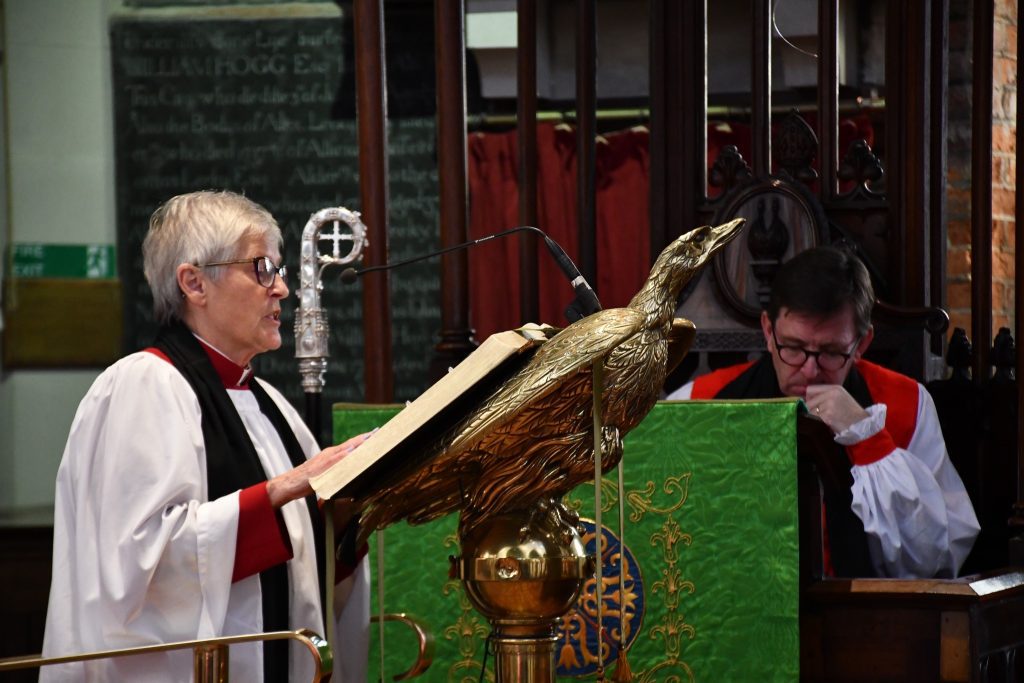
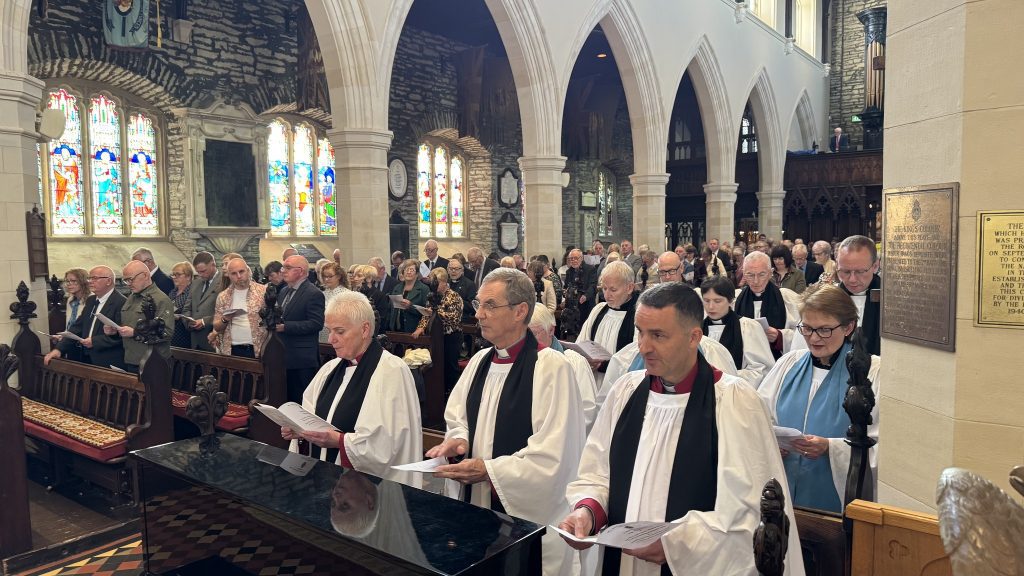
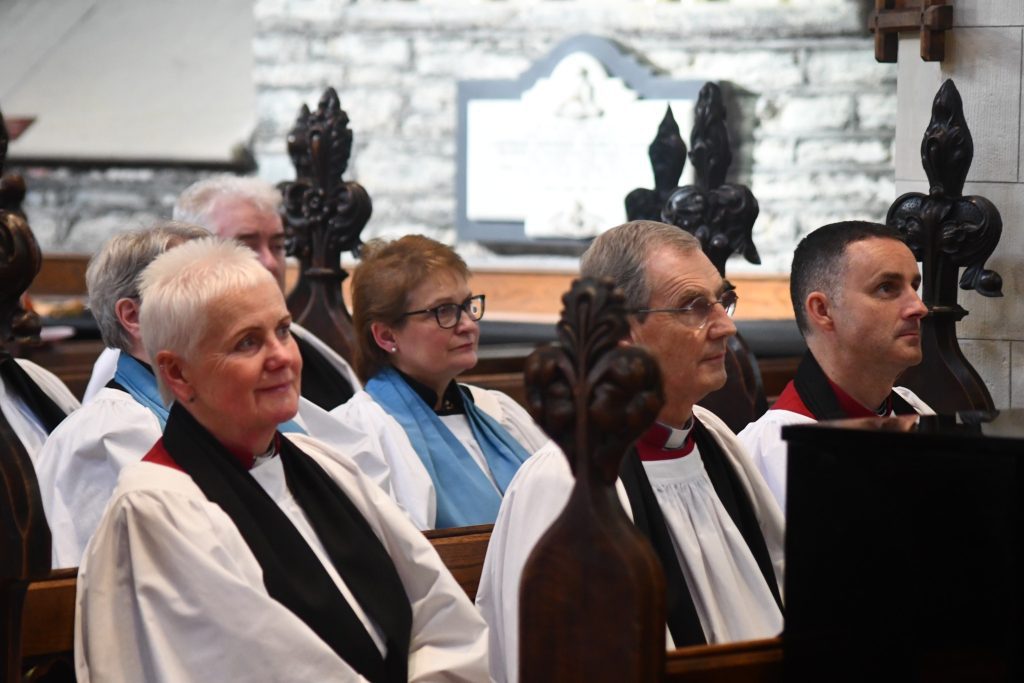
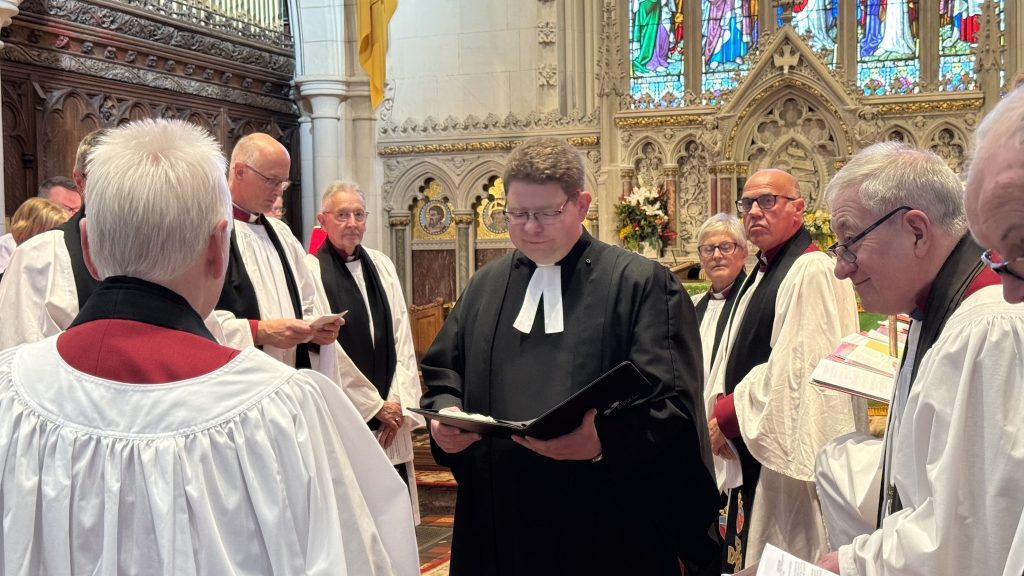
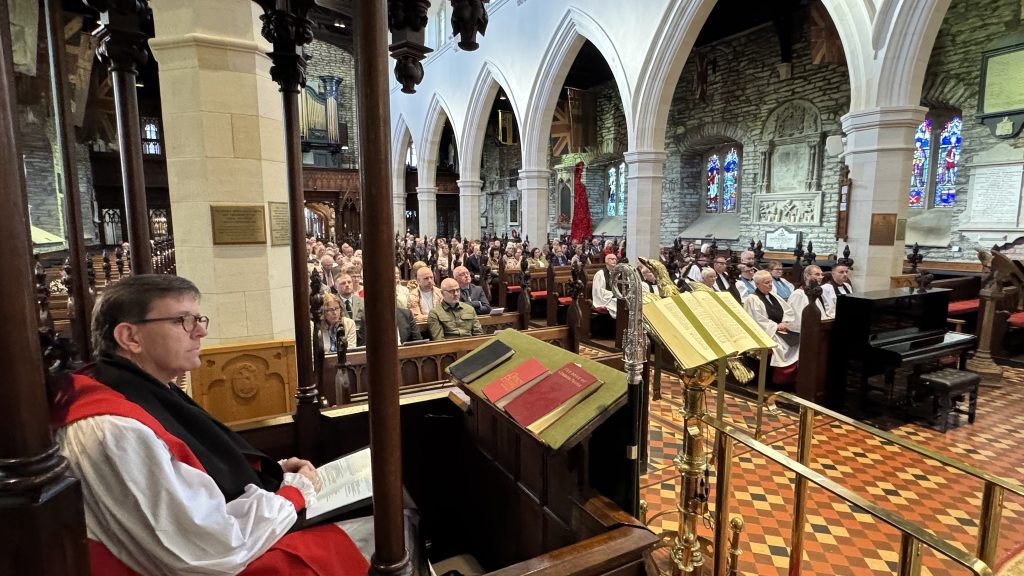
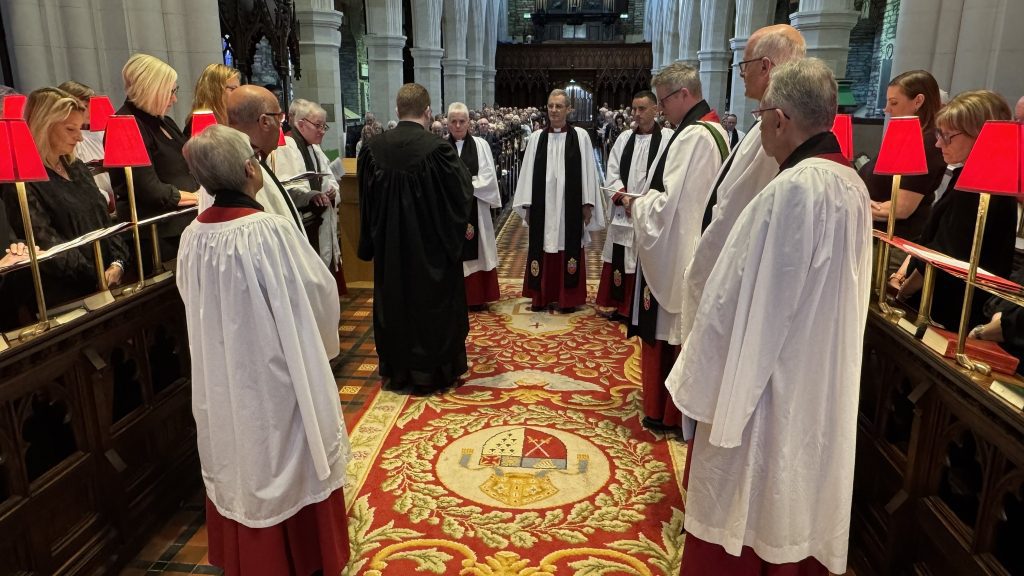
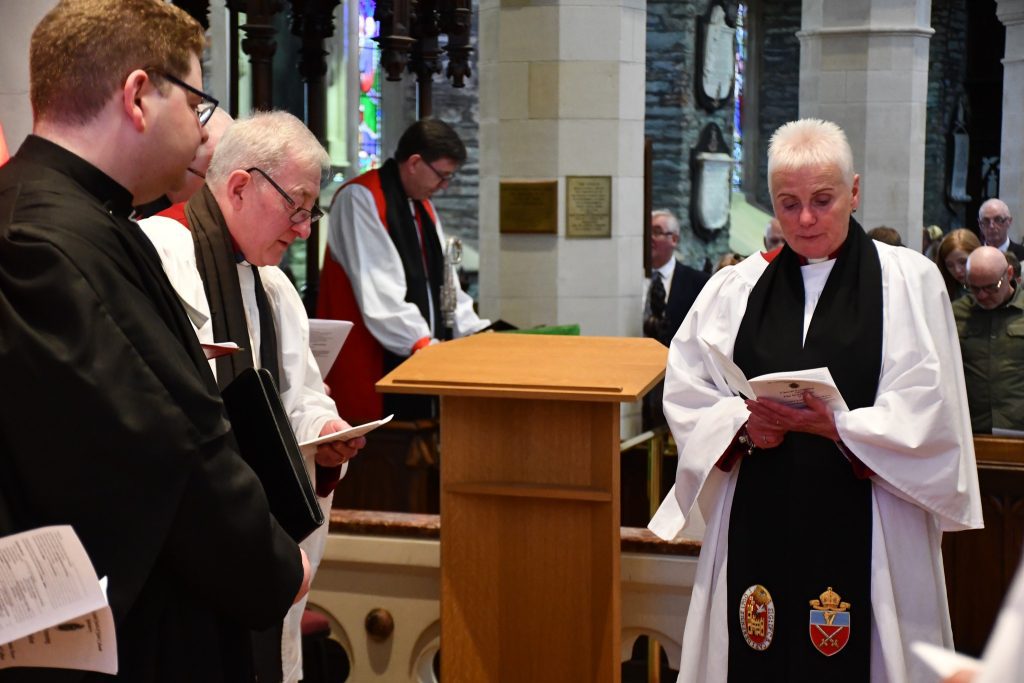
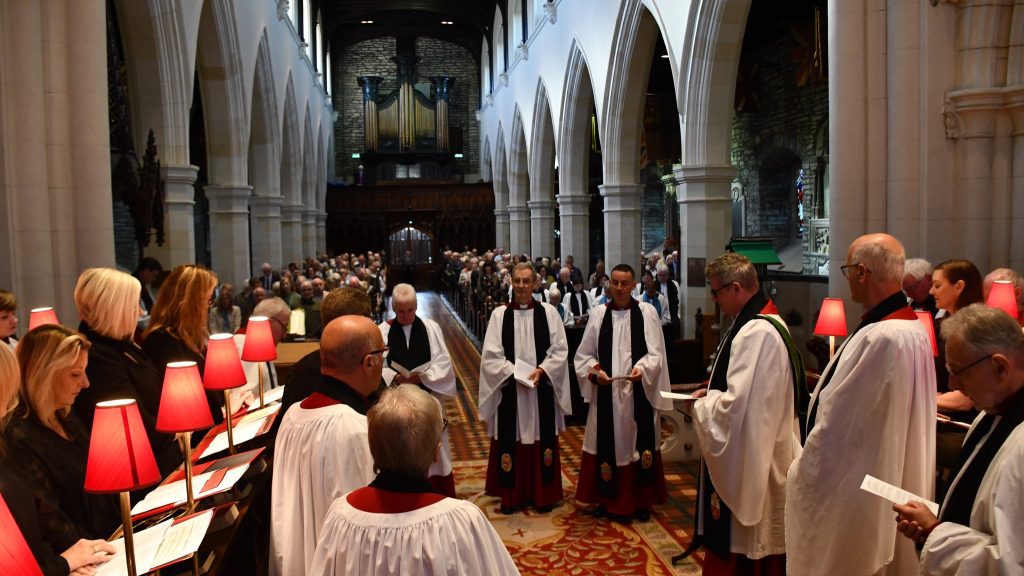
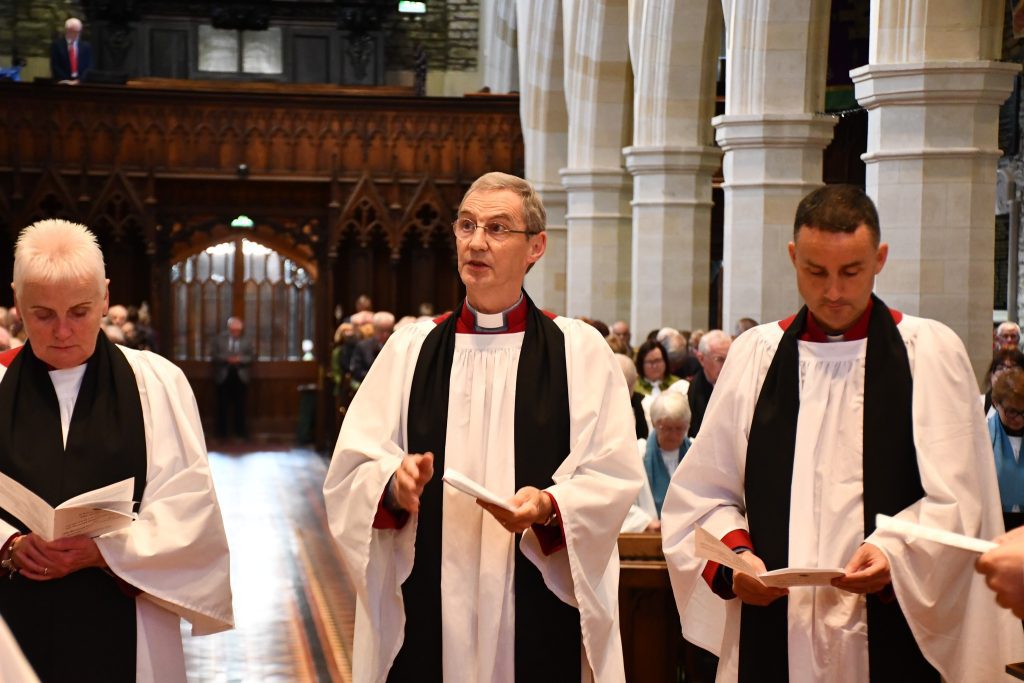
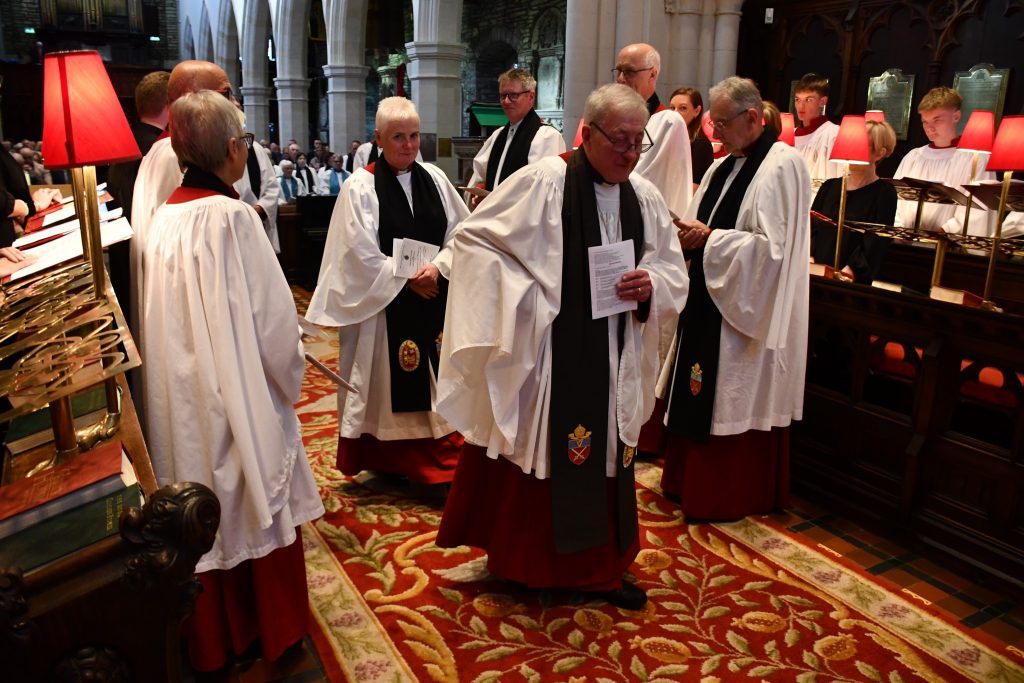
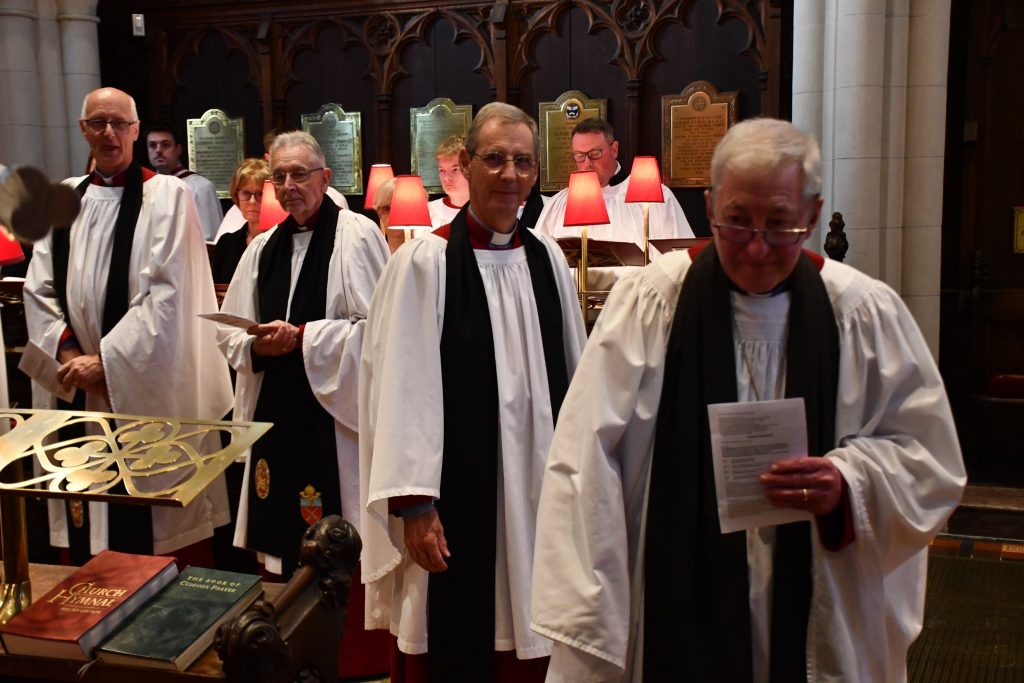
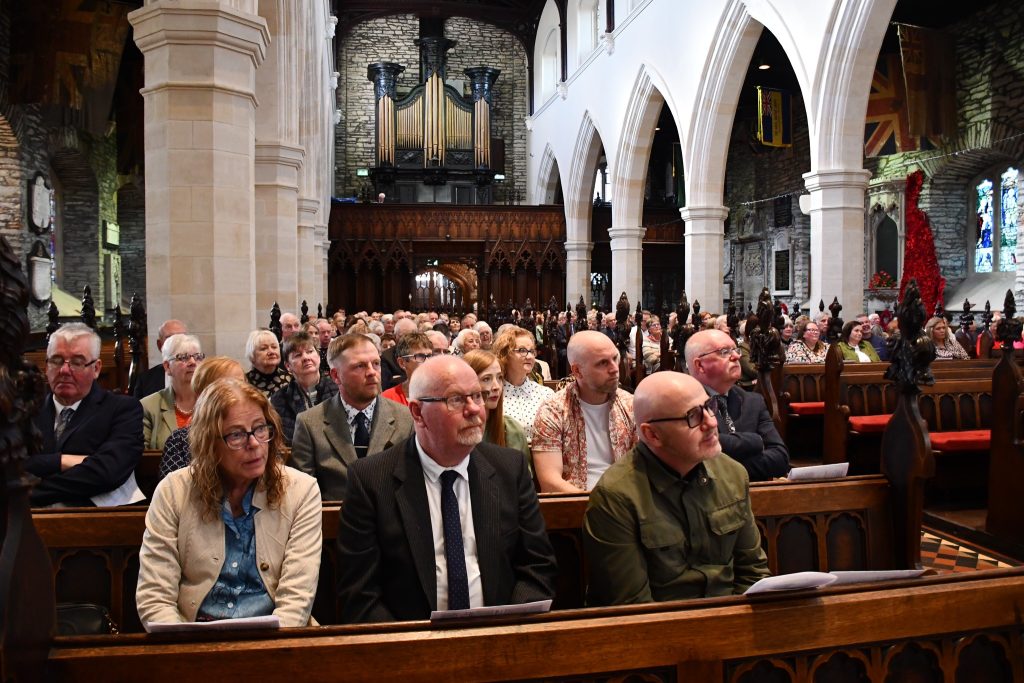
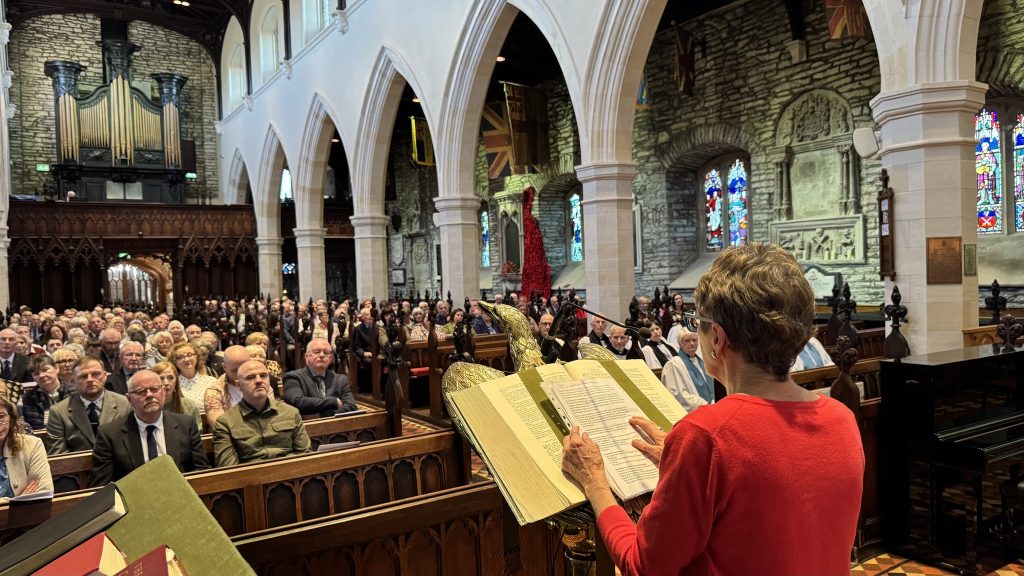
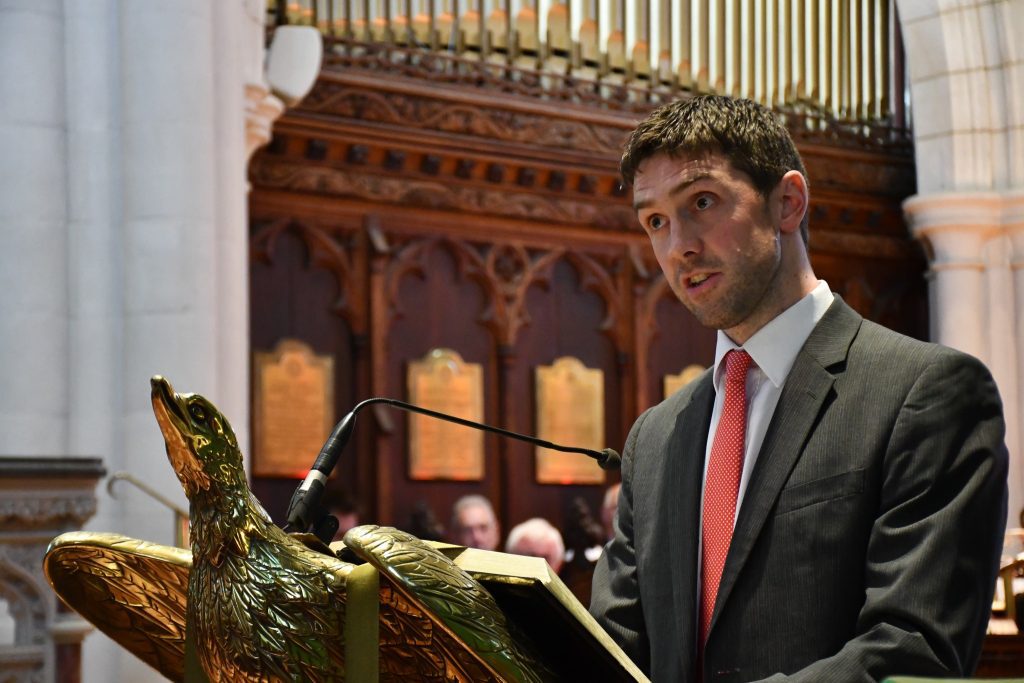
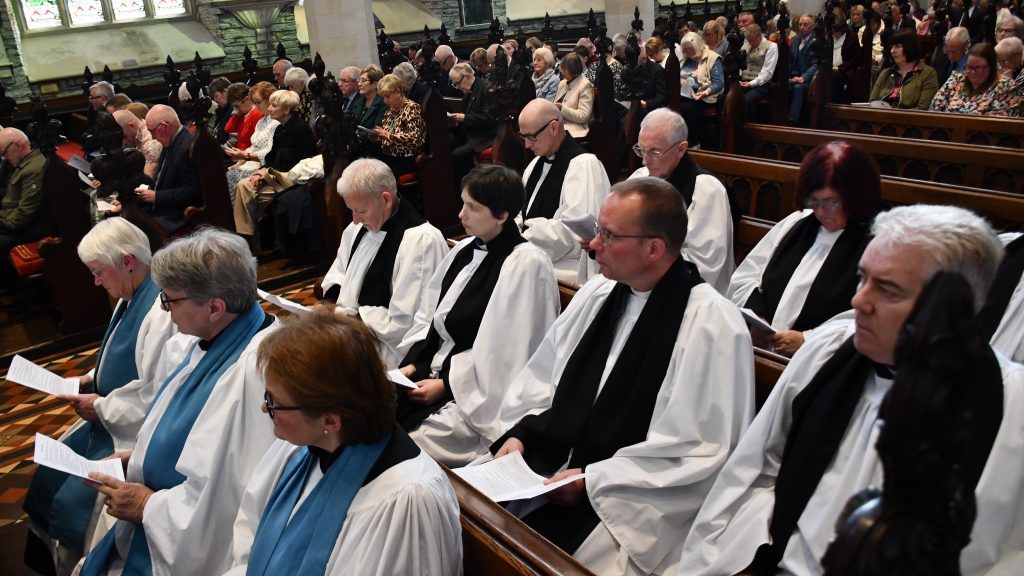
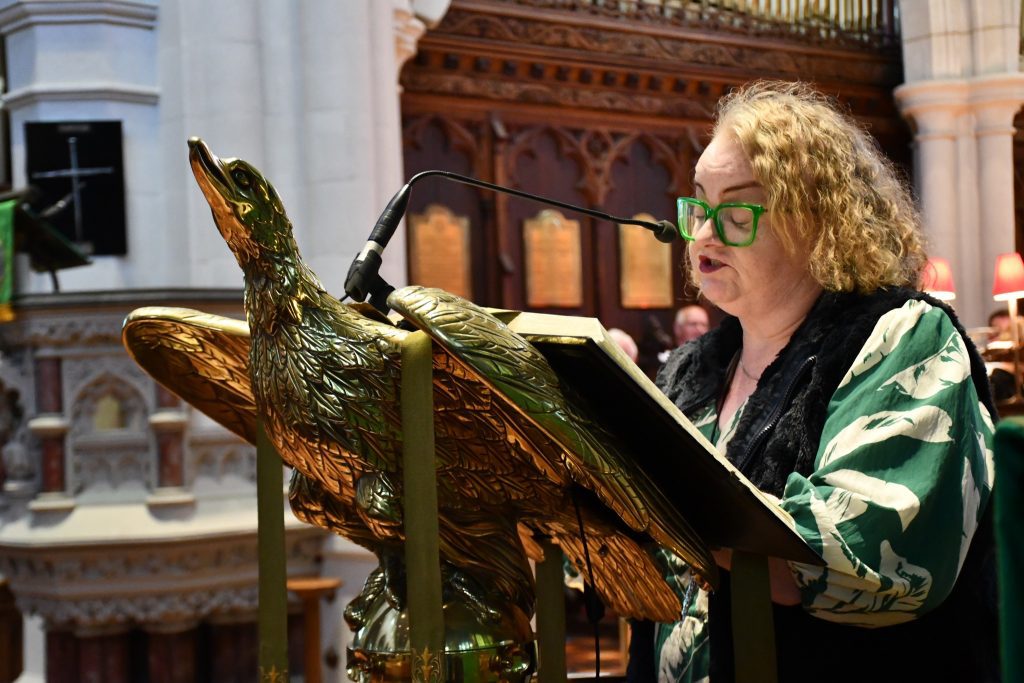
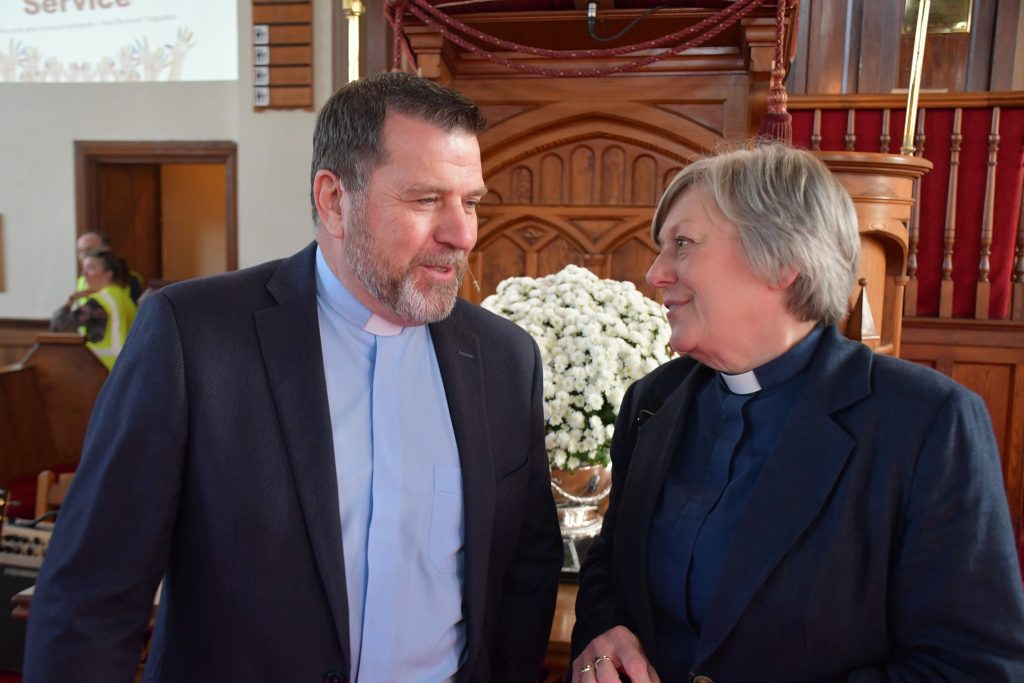
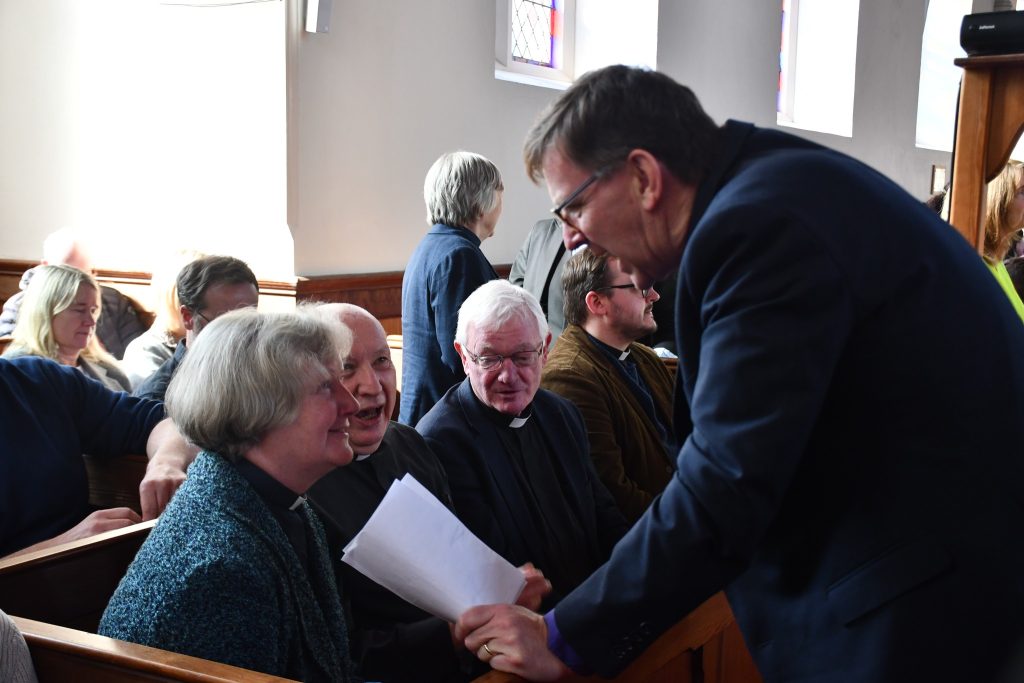
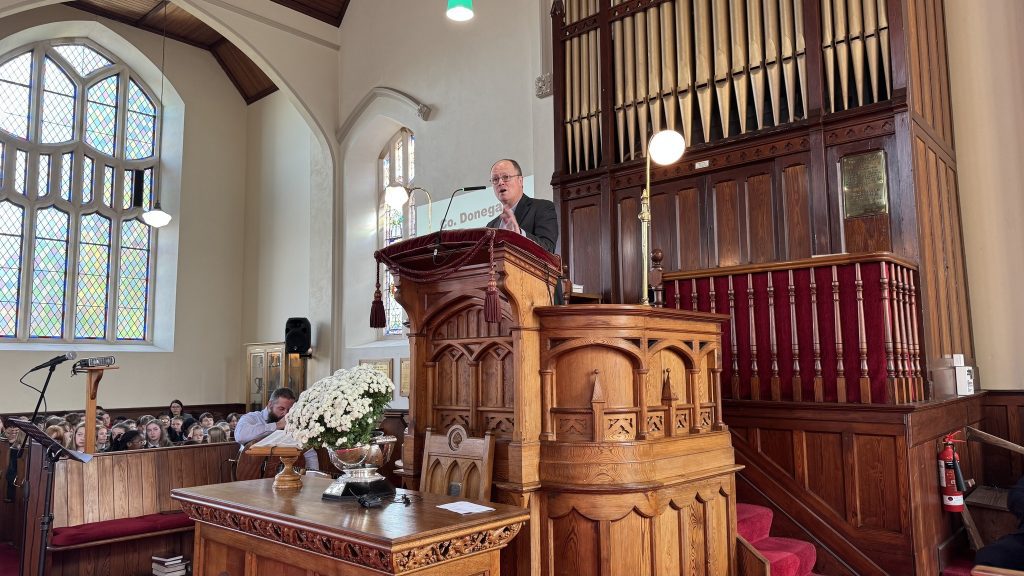
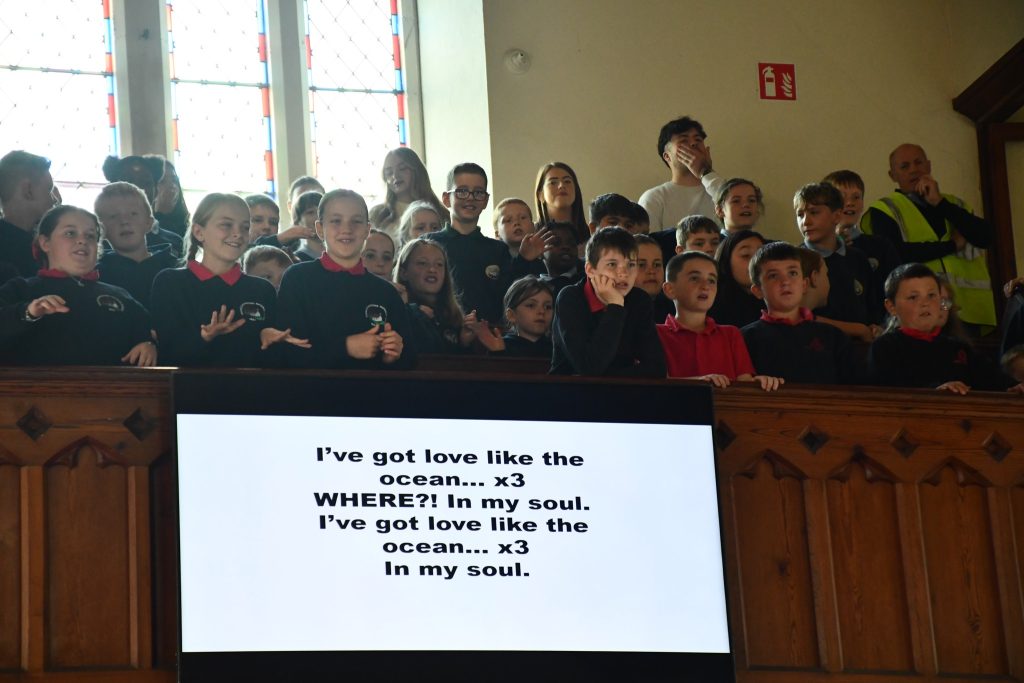
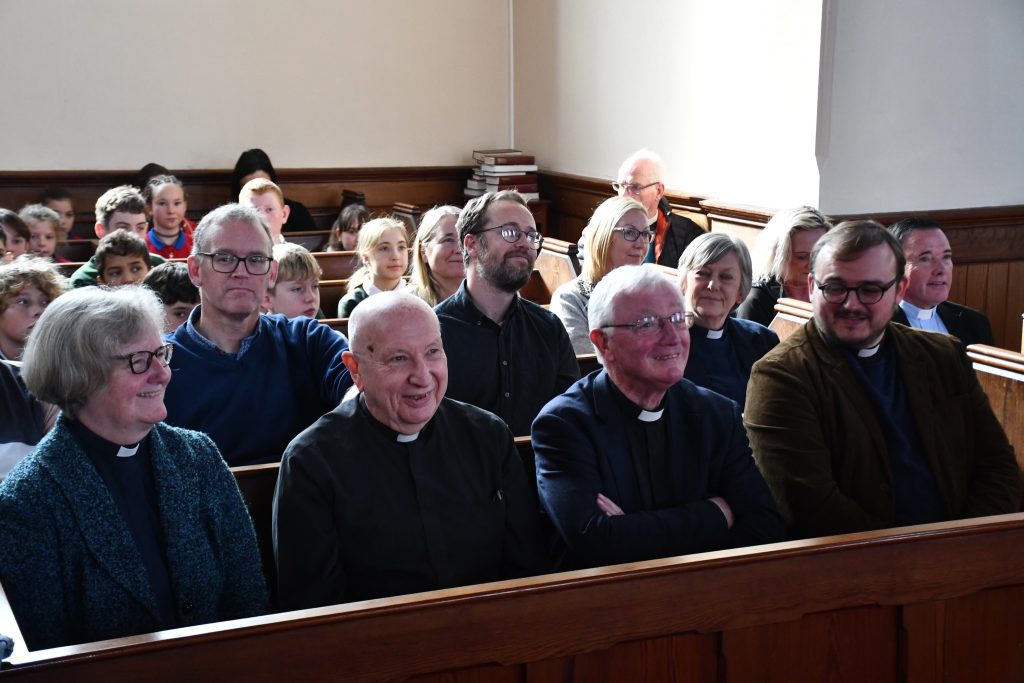
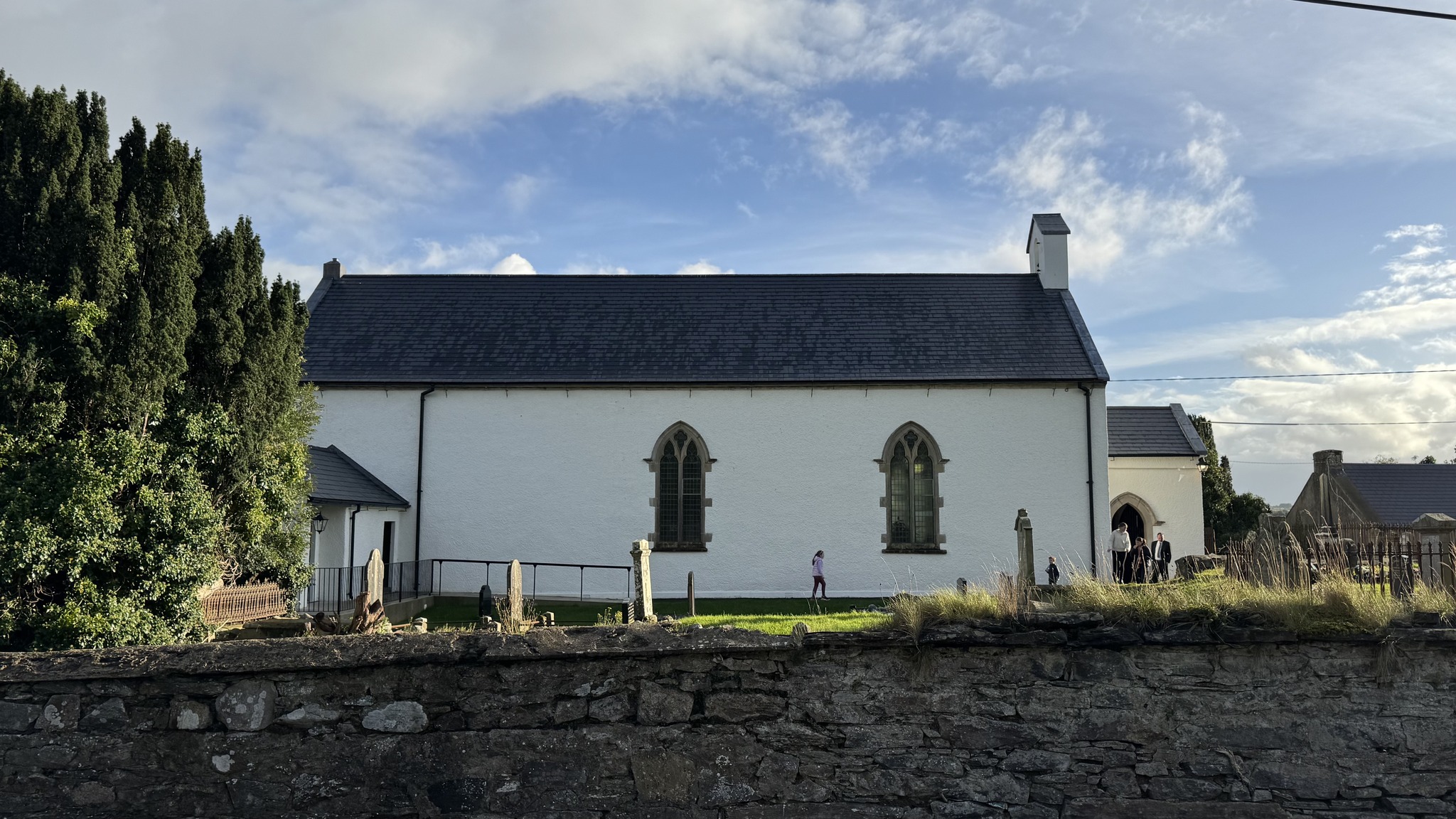
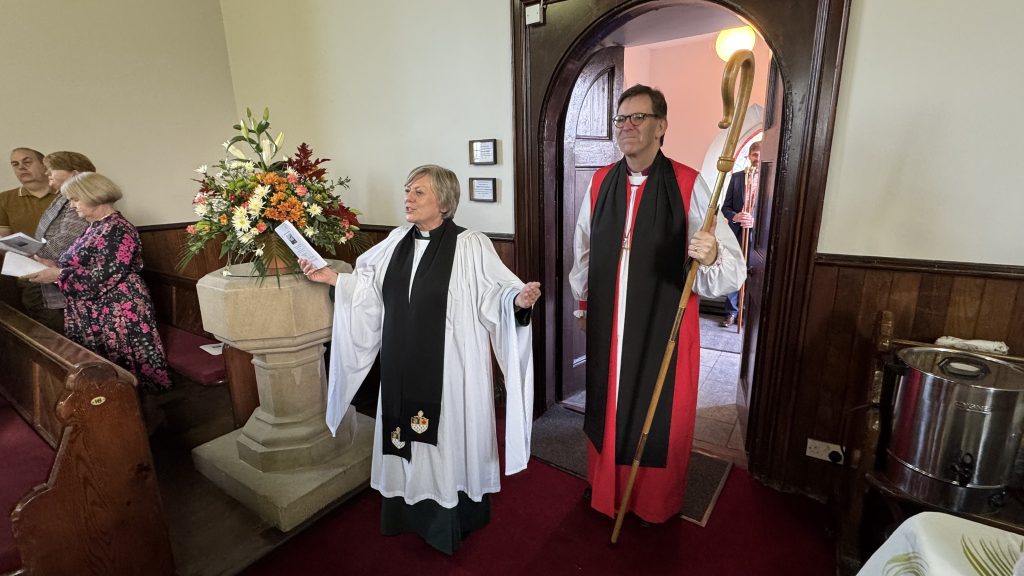
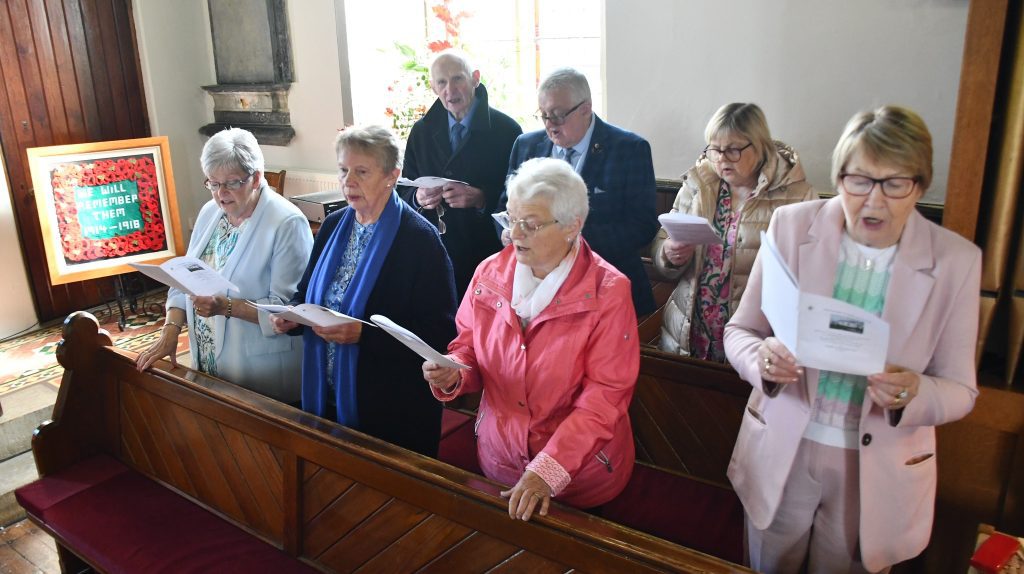
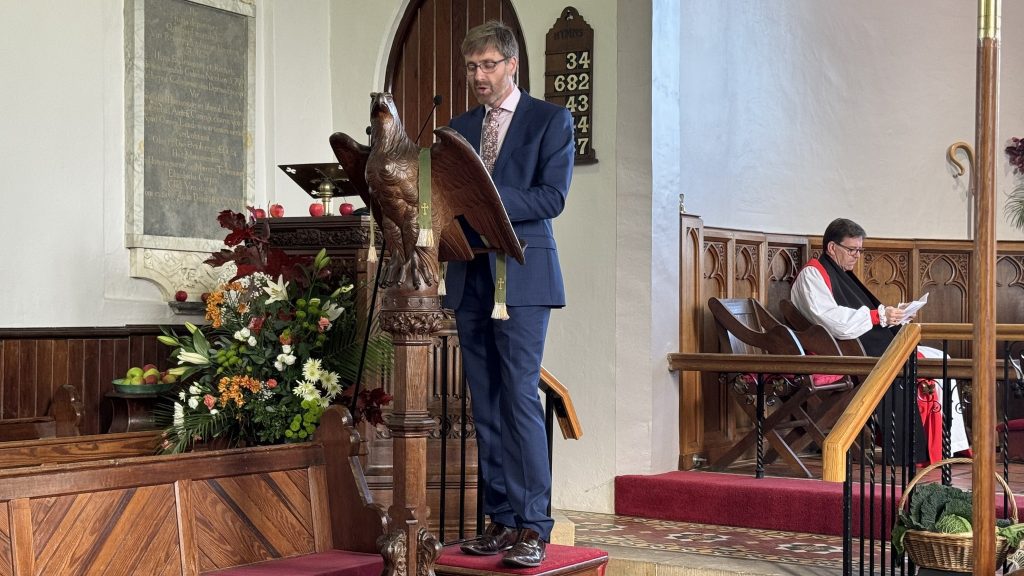
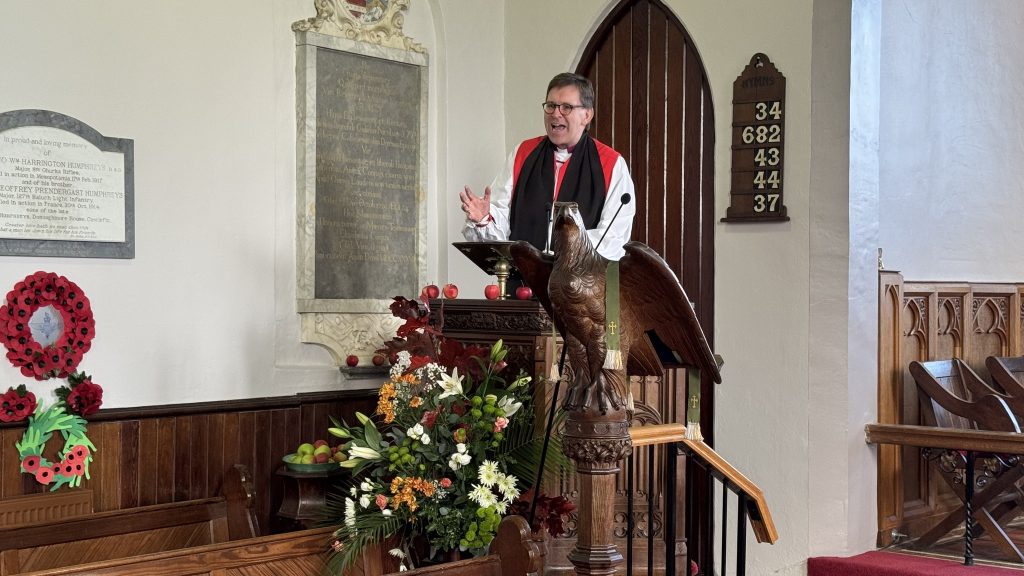
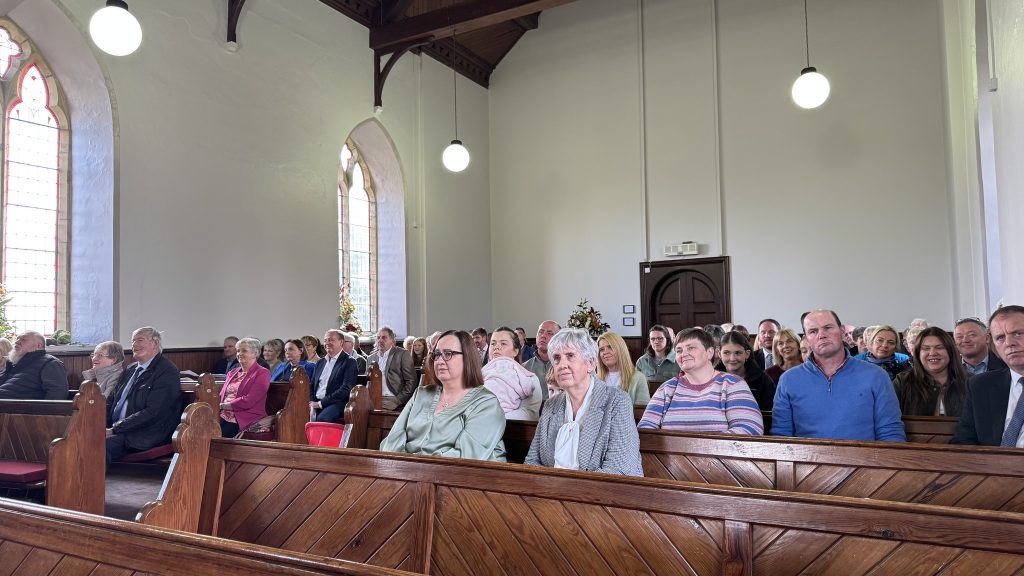
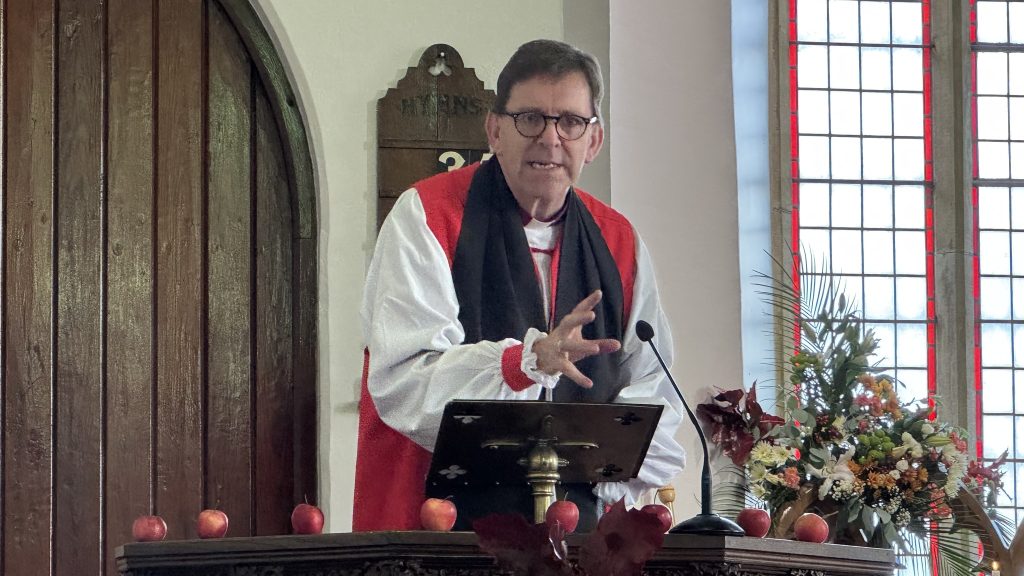
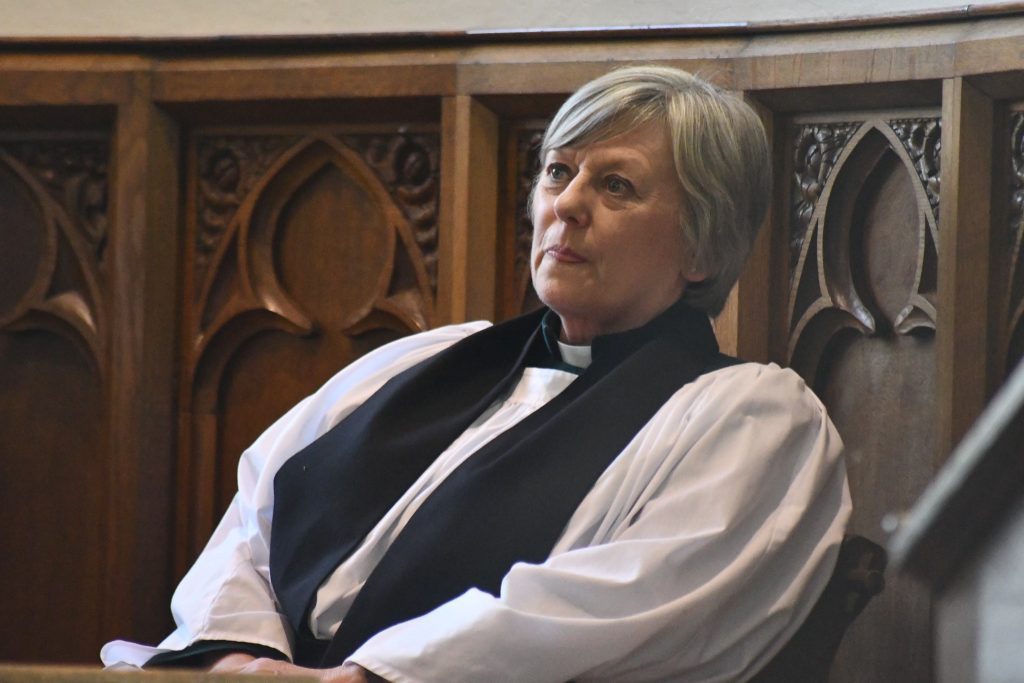
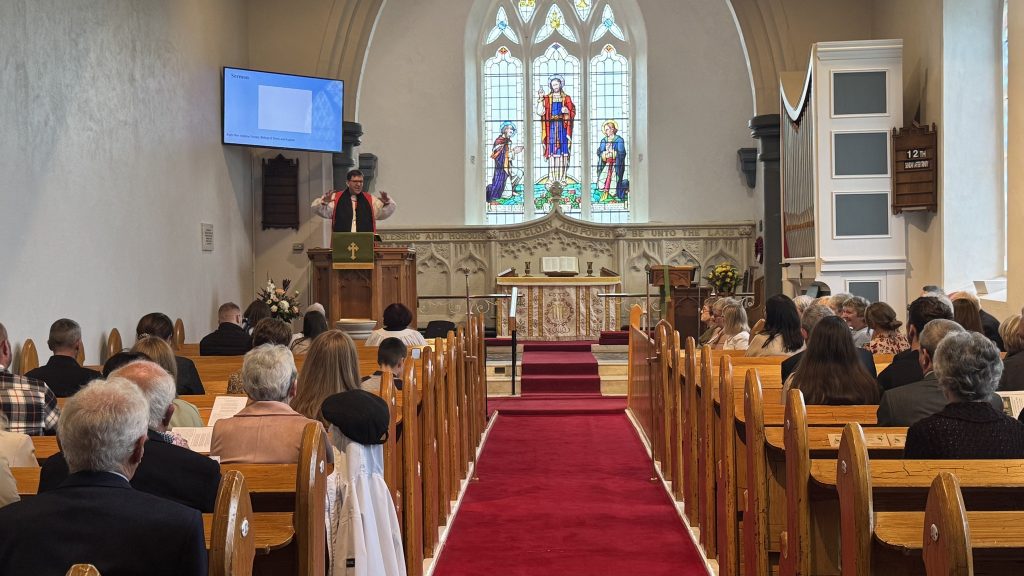
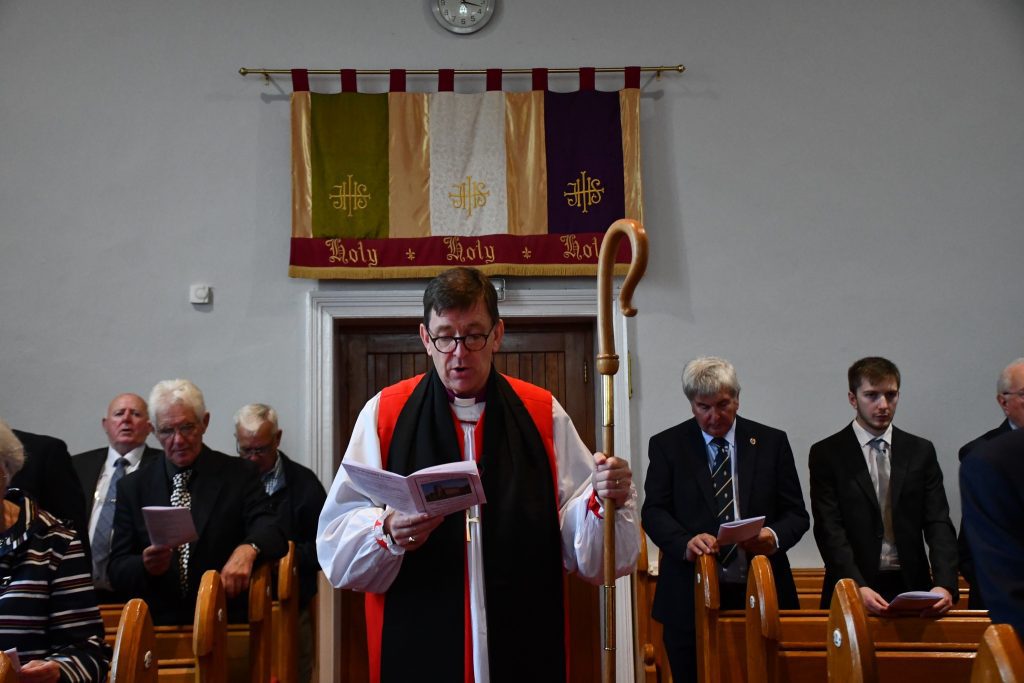
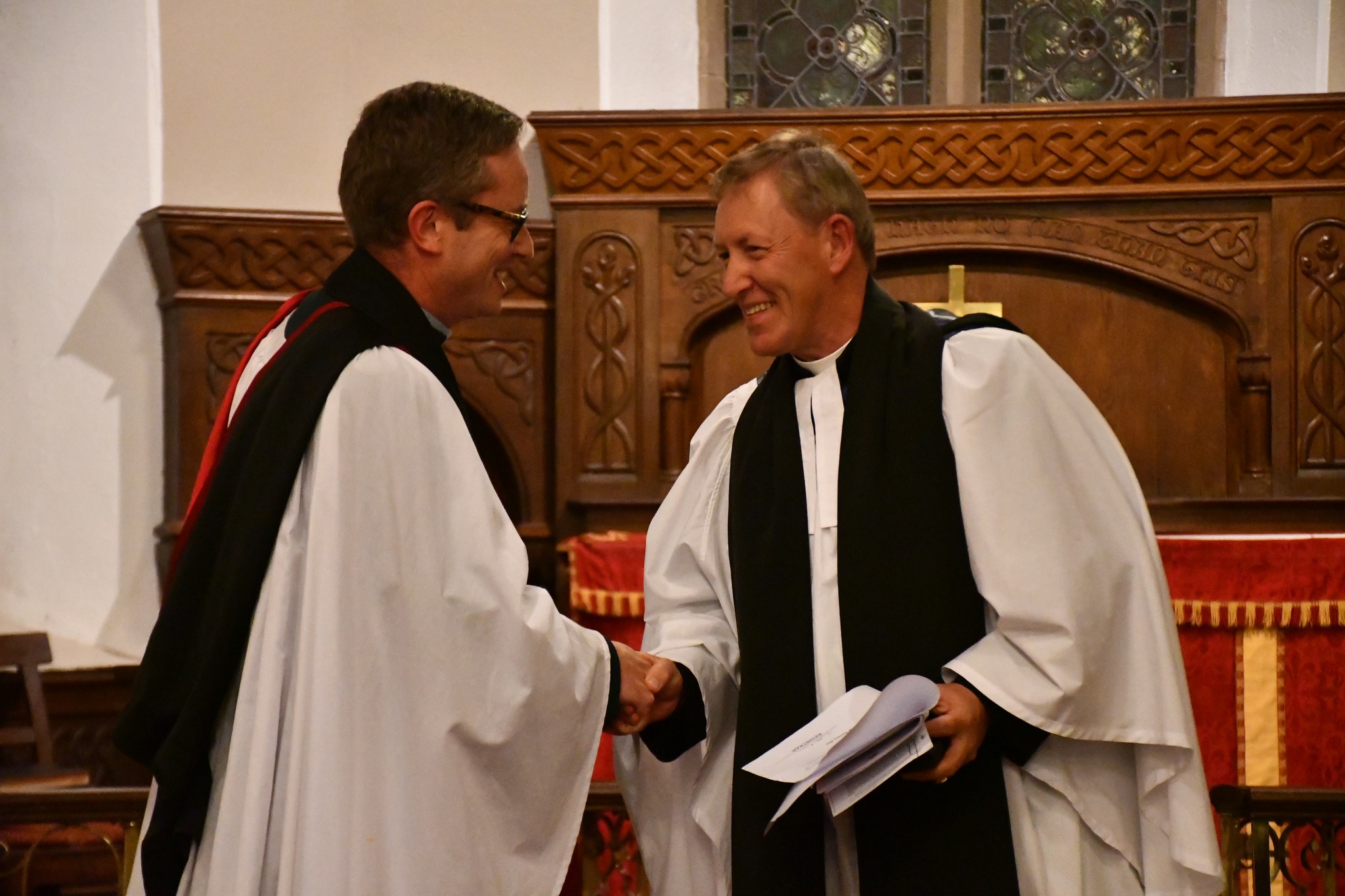
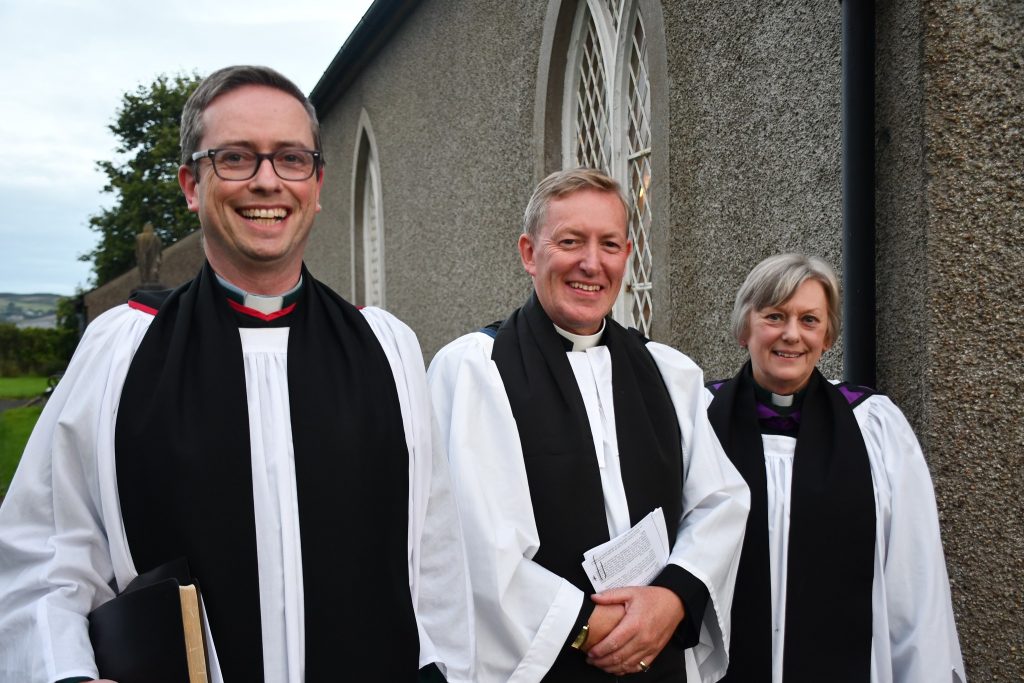
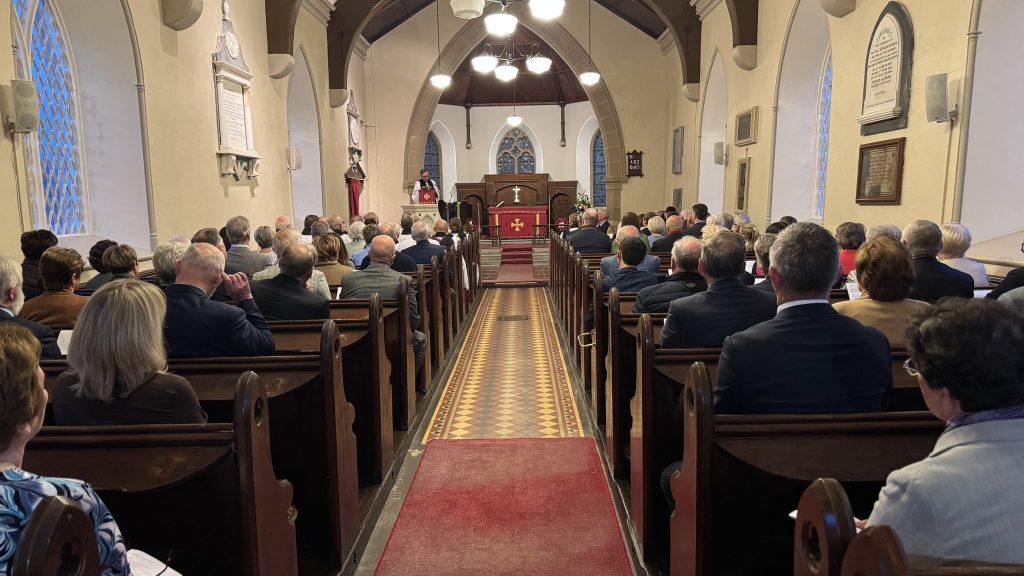
It was an afternoon of fluctuating emotions in the Parish of Ballymore, this afternoon, as the retired former Priest-in-charge of the Parish of Clondevaddock was remembered by family, friends and fellow clergy at her funeral service in St John’s Church. And it was a tribute to the impact the small but ebullient wife, mother, grandmother and great-grandmother had on those she met in life that there was standing room only – both in the main body of the church and in the gallery – at today’s Service of Thanksgiving for her life.
It was a measure of the respect in which she had been held, and the affection with she is remembered, that clergy and friends from far and wide made the journey on a squally Monday afternoon to join Rev Shiela’s grieving family, led by her husband, Rev Canon Stanley Johnson, and their children, Timothy, Melanie and Wendy.
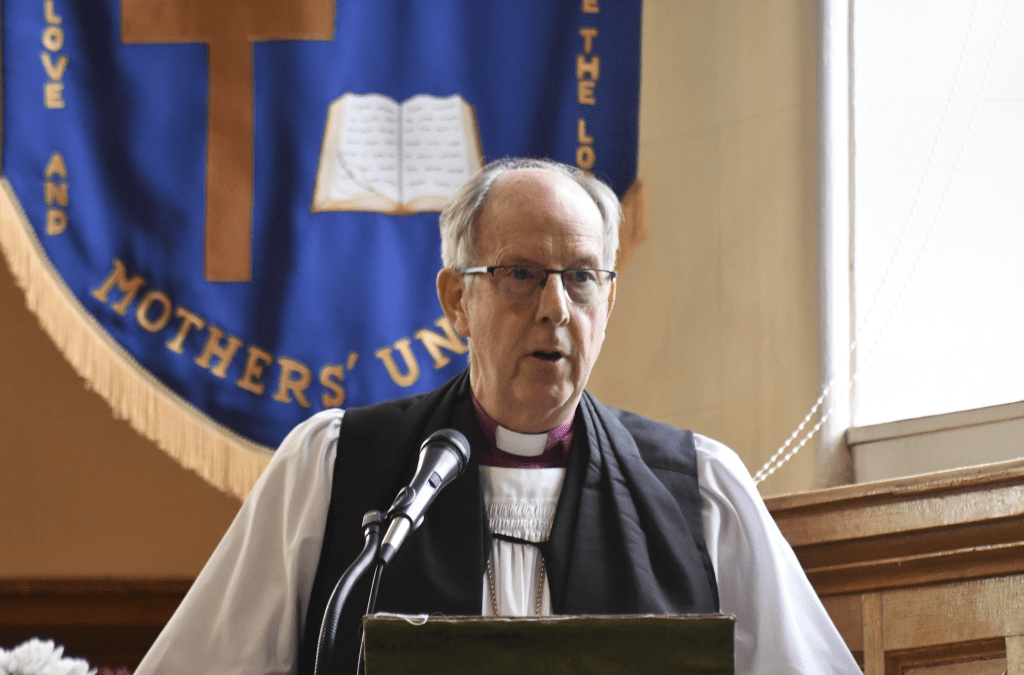
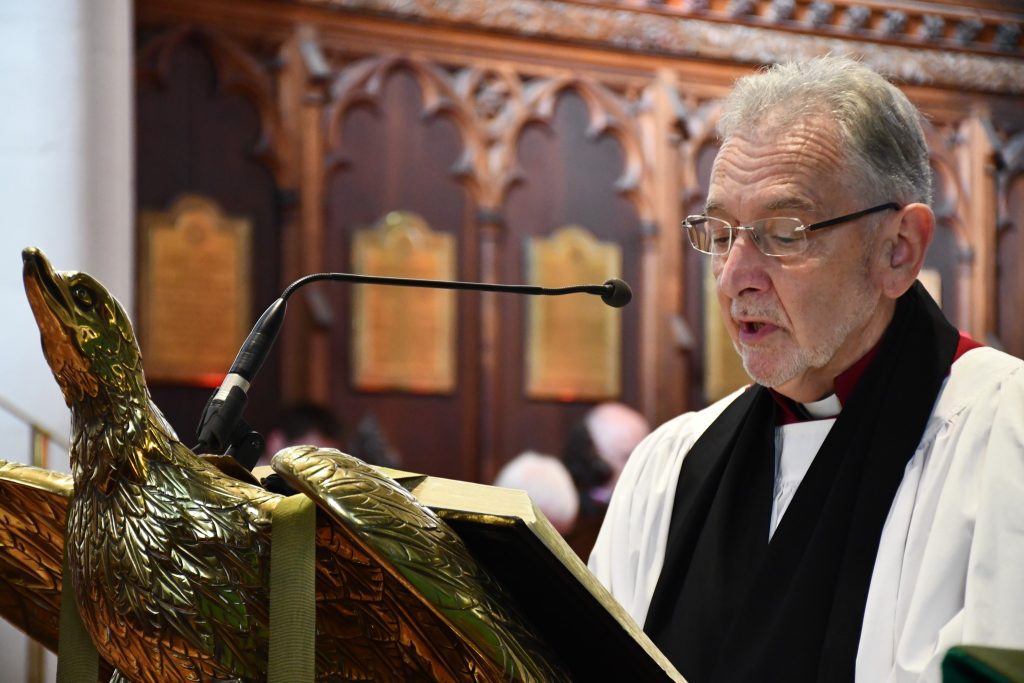
Rev Shiela was fatally injured in a road accident near Glenties, last Wednesday, in which Canon Stanley was also injured. It was in keeping with the couple’s generosity in life that, during the service, members of the emergency services, passers-by and hospital staff who responded to the accident were thanked by the preacher, Rt Rev Ken Good, at the request of Canon Johnson.
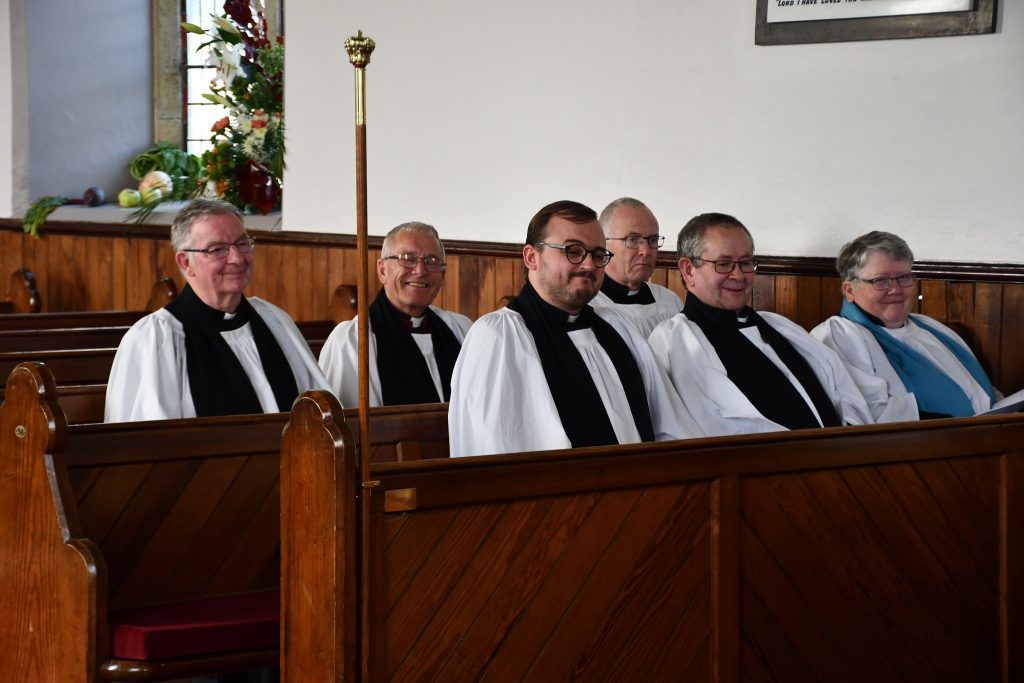
The service was led by the Rector of the Dunfanaghy Group, and long-time family friend, Rev Canon David Skuce, who described it as a privilege to be able to take Shiela’s funeral. “We go back a long time,” he said, adding, “Stanley and I started off in the training college together, along with a number of other clergy who are here this afternoon.”
During the service, the Johnsons’ daughter, Melanie, paid an emotional tribute to her mother. “She touched so many lives,” Melanie said, “it’s hard to know where to begin…three children, eight grandchildren and seven great-grandchildren made mum the happiest person ever. She loved her family dearly and she let us all live our lives how we thought best – but she kept us all close and encouraged us all the time.”
Melanie recounted how in work and in her private life her mother did so much for others, even providing a second home for children with disabilities. Her mother’s love for Canon Stanley was “absolutely unwavering and an example to all of us,” Melanie said. Her mother bore all her illnesses, aches and pains, “apart from her loss of hearing”, with great humour. “Her grandchildren called her ‘Transformer’ – because of all the removable bits.” Shiela’s clerical life became “her true calling”, her daughter said. “She was involved in Mothers’ Union for as long as I can remember and contributed to lots of charities – even donating all the money she received from putting pen to paper and writing her own book.”
Retirement brought time to watch tennis, cricket and rugby. “She was a bigger sports fan than dad was and when she was watching rugby there were plenty of texts over and back; and there was always a piece of fudge consumed every time an Irish try was scored.”
Melanie said her mother lived an incredibly full and fun life, and had given them memories that would be talked about for many years to come. “She was incredibly proud of her family and was so excited to be asked to be godmother to Ralph – the newest of her great-grandchildren. She had never been godmother before, so she was absolutely over the moon to be asked, and Ralph’s blanket is now with her in her coffin.”
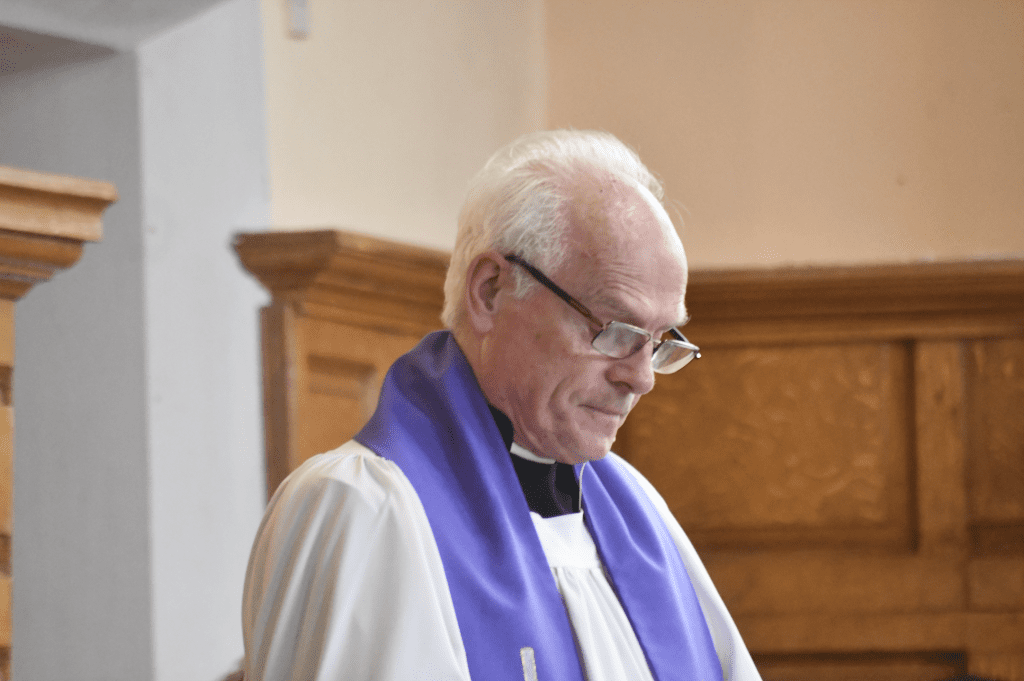
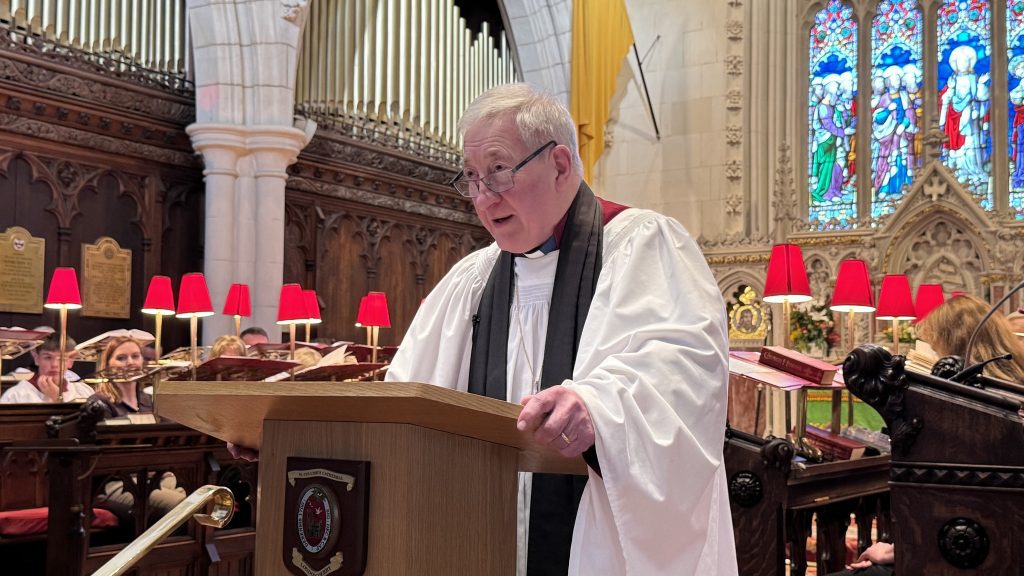
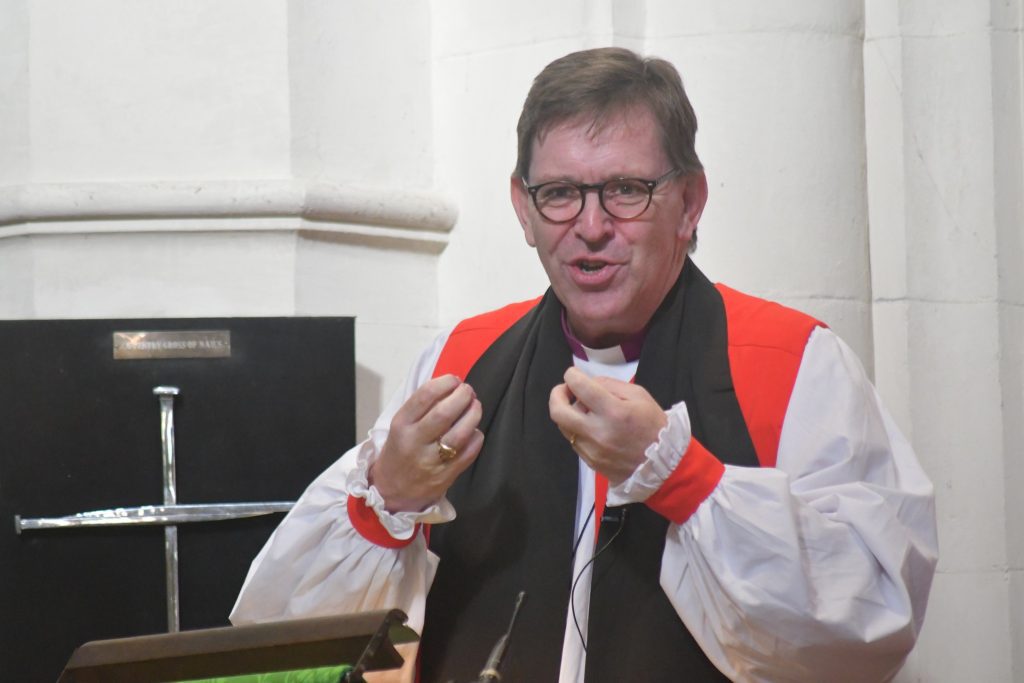
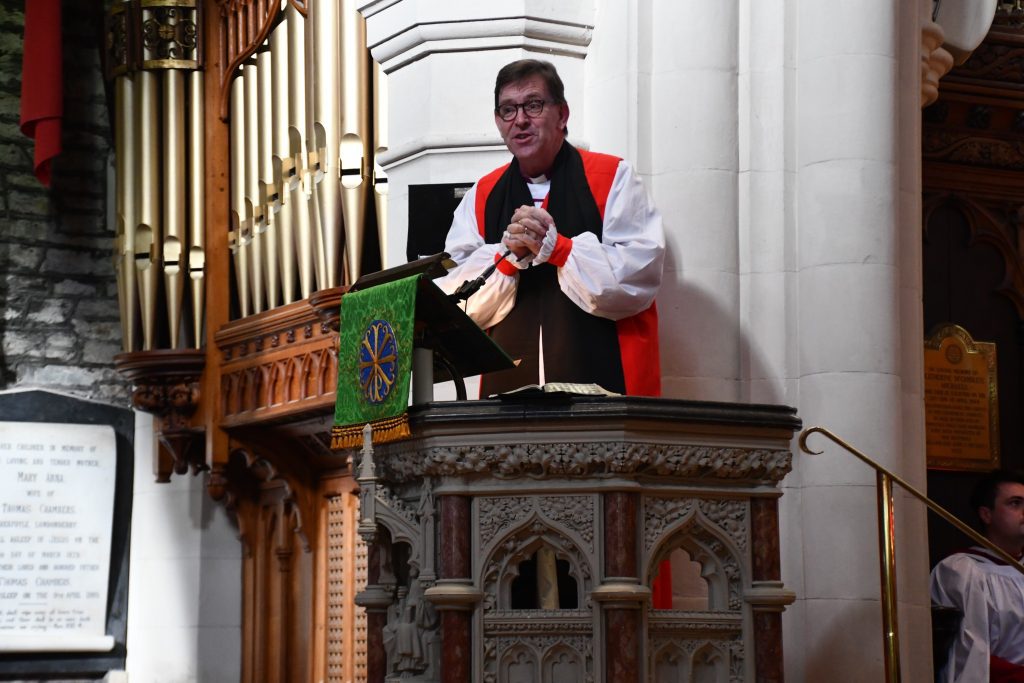
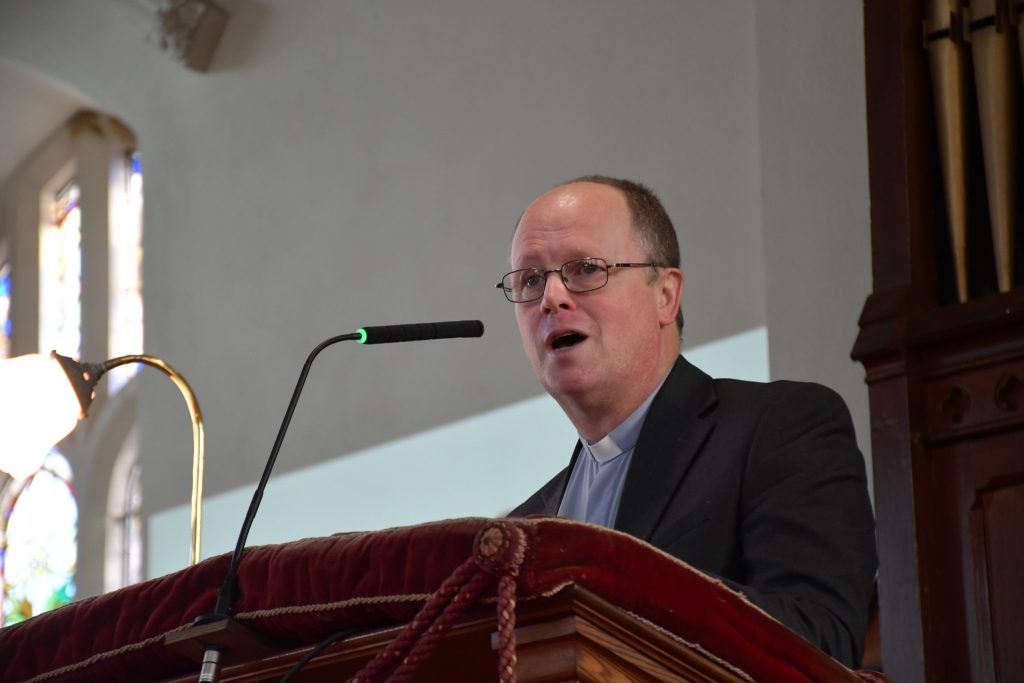
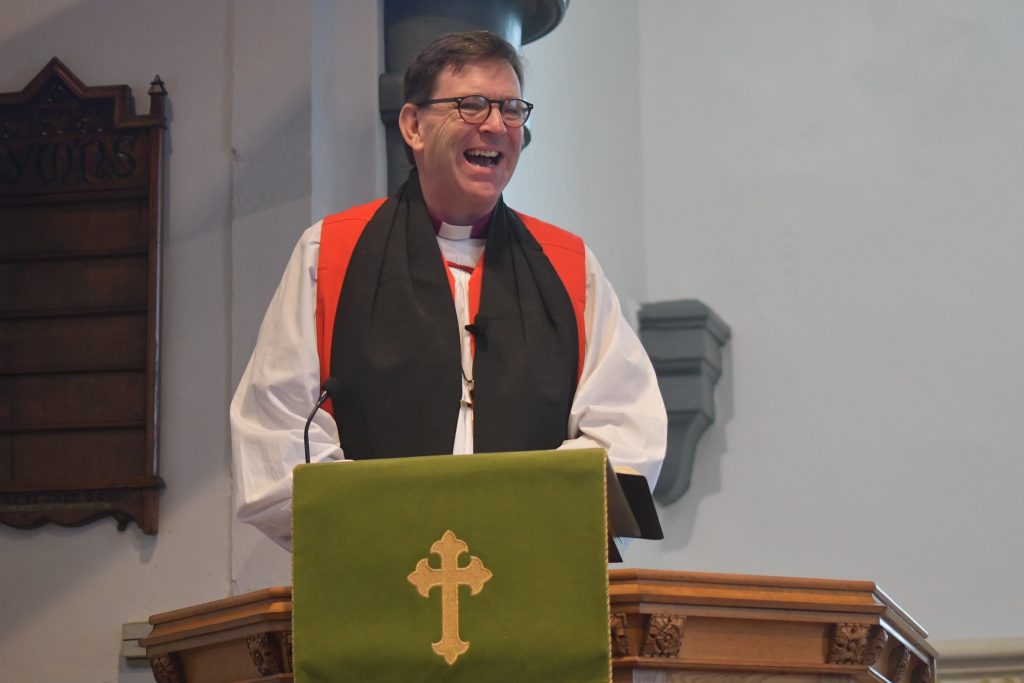
In his sermon, Bishop Good told the congregation that, “With Shiela there was something about her that was just that little bit different.” Her ministry, he said, and that of Stanley, “her dear husband, was greatly appreciated and highly valued”.
Bishop Good said the Johnsons became a formidable team – devoted to each other and supportive of each other at every stage of their married life. “Stanley has specifically asked that I express how deeply thankful he is to the Lord and to Shiela for [their] partnership of almost 60 years of marriage and the wonderful life and times they have shared together.” The Bishop also thanked, on Canon Johnson’s behalf, the emergency services, passers-by, hospital staff and the local GP for their care for the couple.
Bishop Good said there were four things he wanted to mention about Rev Shiela. Firstly, she knew how to live joyfully. “She has been described rightly as a very jolly woman…small in stature, yes, but with a big heart and a laugh that is memorable. Her laugh was infectious, wholehearted and loud.”
Secondly, Rev Shiela knew how to trust hopefully, despite considerable health difficulties in recent years. “I do believe that her faith in God’s grace and provision enabled her to accept the considerable challenges that she faced, day by day at times, because her confidence and faith and trust was in the Lord.”
Thirdly, the Bishop said, Rev Shiela knew how to serve wholeheartedly. “There were no airs and graces about her even in her ministry. She was down to earth, authentic, without pretence or affectation; she got on with her vocation.”
Lastly, Bishop Good said, Shiela knew how to encourage spiritually. “It is significant,” he said, that she was ordained on the 11th of June “because that is the Feast Day of St Barnabas, the encourager. I don’t think that thought missed her or escaped her mind. She fostered trust in and belief in God in people of all ages, and in people of all denominations and of none. Just as it says in the Ephesians passage (1: 15-21), her hope and her prayer in her ministry was that ‘God would give people the Spirit of wisdom and revelation, so that they would know him better.’ That’s what she was about, but in a gentle way, not a pushy way, not an offensive way.”
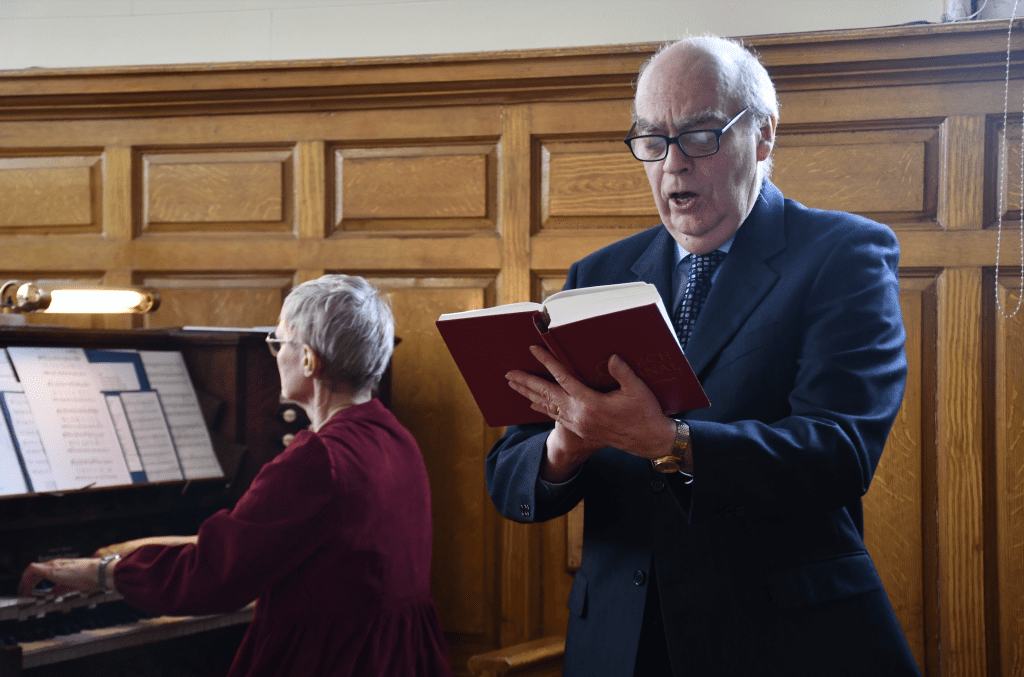
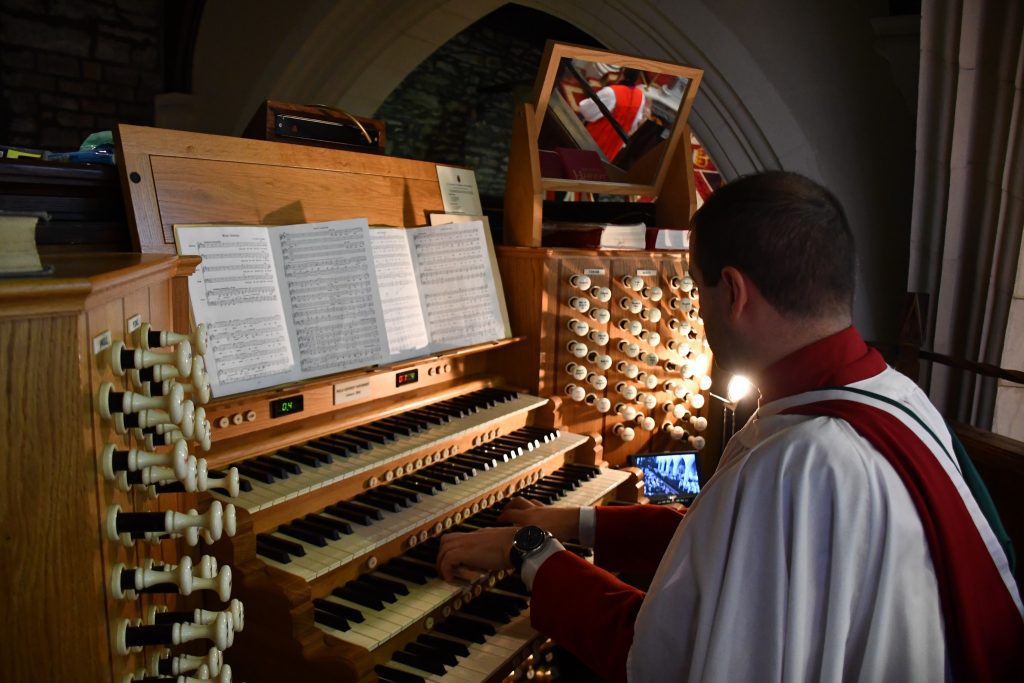
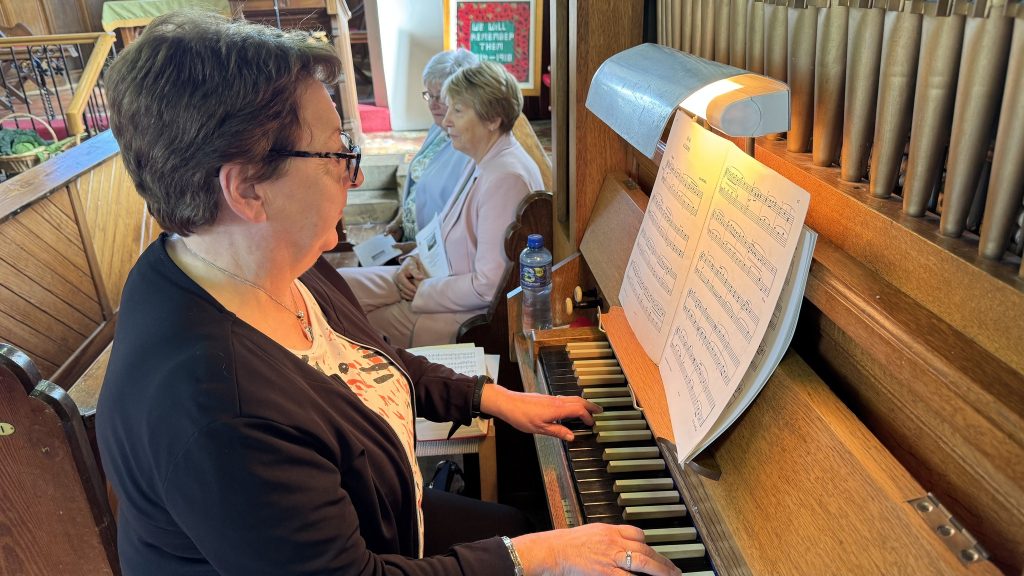
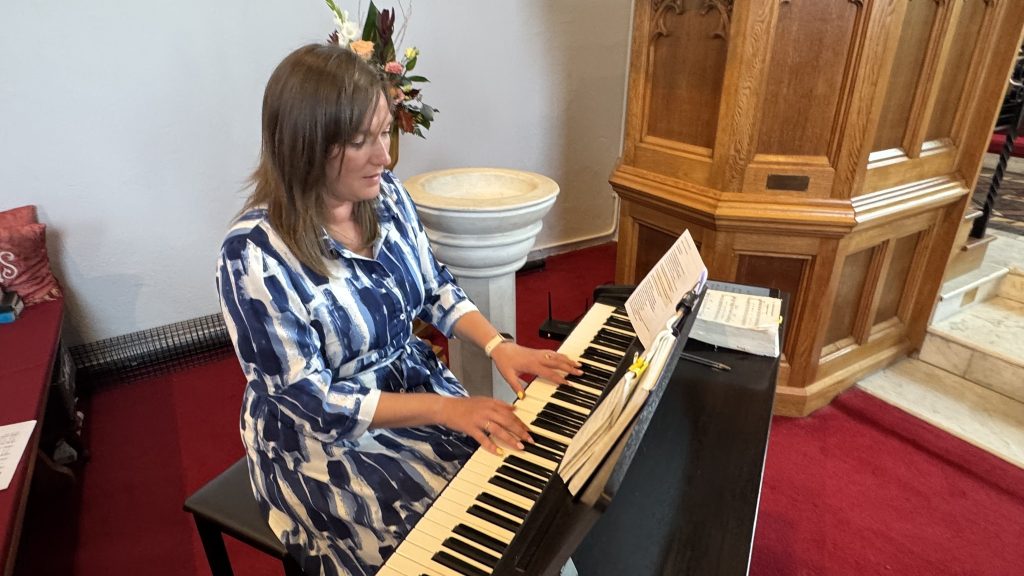
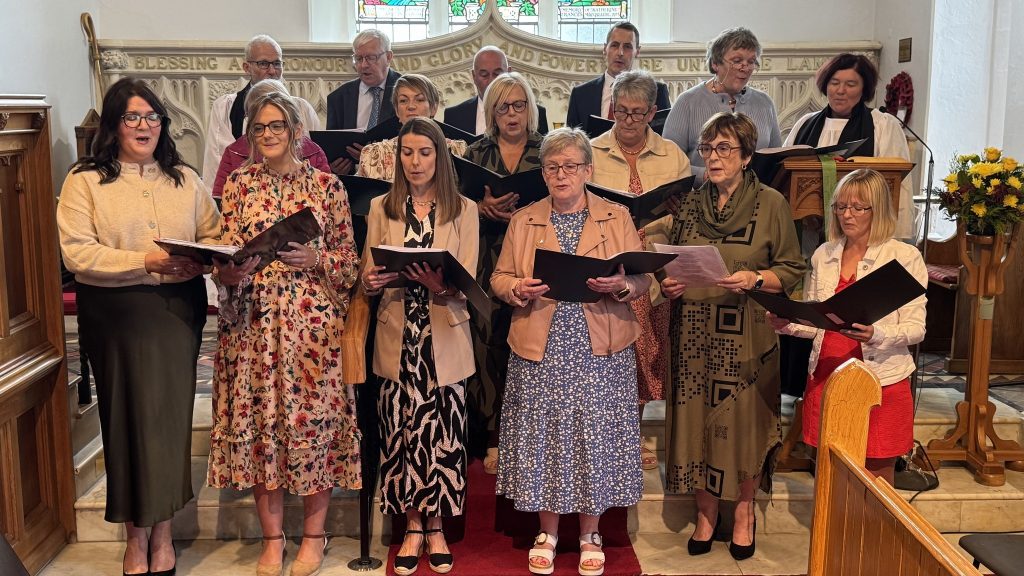
The Prayers of the People in today’s service were led by Fr John Joe Duffy, the priest in the Roman Catholic parishes of Dunfanaghy (Clondehorkey) and Creeslough, and by Rev Shiela’s grandchildren. The Epistle reading was delivered by the Dean of Raphoe, Very Rev Liz Fitzgerald, and the Gospel reading by the Archdeacon of Raphoe, Ven. David Huss. Music was provided by vocalist Brian McKeever accompanied by Jacqui Amstrong on the organ.
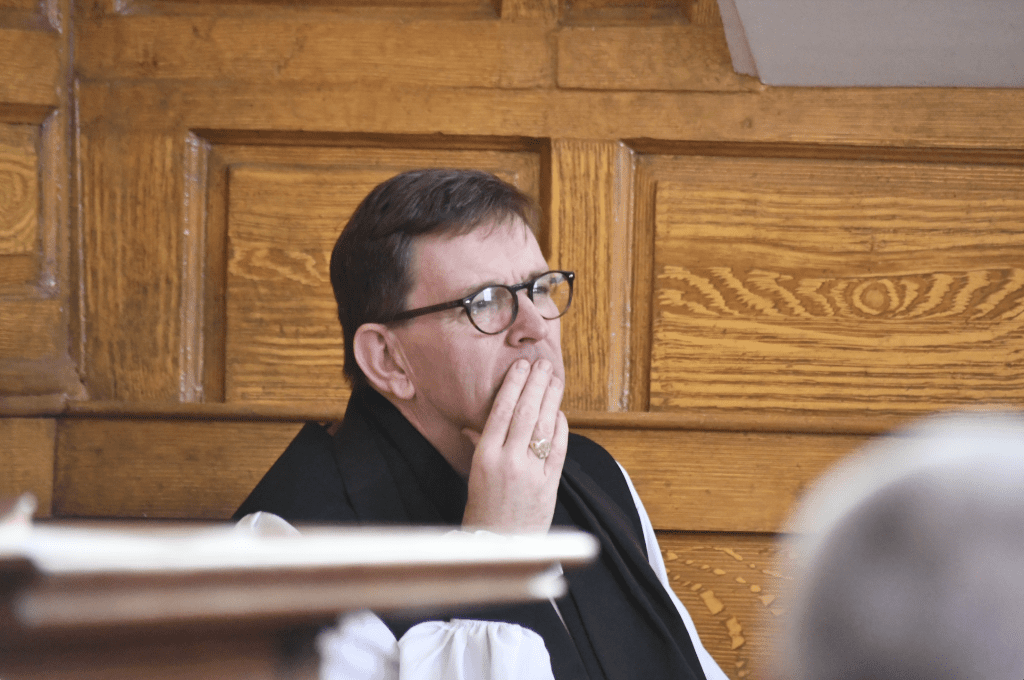
Before pronouncing the blessing at the end of the service, Bishop Andrew Forster – who spoke to Rev Shiela a matter of days before the fatal road accident – expressed to the Johnson family the sympathy of all in the Diocese of Derry and Raphoe. Although the wider Diocese were saddened by the tragic circumstances of the loss of Shiela, they felt a deep sense of thankfulness for having known her and experienced her godliness. “Every time I met Shiela, I left her feeling a little bit better. You felt blessed having spent time with her. Her goodness and love made you feel that little bit more positive, all on account of her close walk with God.”
“As we gather here to reflect and to give thanks for the life and the ministry of Shiela, and to leave her in God’s gracious keeping, we are here Stanley, and Melanie, Timothy and Wendy, to be with you, to support you, to pray with you, to pray for you, and to assure you of our love.
Like countless others, as Melanie has implied, and like all of you here, I would imagine, I have been a long-standing fan of Shiela Johnson. Now, it’s probably not a good thing – in fact it is definitely not a good thing – for a bishop to admit he has a favourite clergyperson, but for a retired bishop to do that is quite acceptable.
With Shiela there was something about her that was just that little bit different. Her ministry, and that of Stanley, her dear husband, was greatly appreciated and highly valued, and I respected them and valued them as supportive clergy when I was serving as Bishop.
And talking of bishops, may I thank this Bishop [Andrew] – the ‘real’ bishop – for his invitation to preach at this service, and to the rector, Canon David Skuce, for his help and wisdom in preparing for today. I know that David has been a long-time, good friend of Shiela and of Stanley and this is a difficult day for you, too, I’m sure.
Last Saturday was All Saints’ Day, when we are reminded of The Communion of Saints – the unity that is in Jesus Christ that binds those living here on earth in faith with those who have died in faith. And as we now face the death of a dearly-loved one – this is an appropriate and encouraging reality, and a reminder which can strengthen our faith, this Communion of Saints and All Saints’ tide.
Our first reading, which Dean Liz Fitzgerald read from Ephesians 1, is one of the appointed readings in the lectionary for All Saints’ Day, and it’s from that passage that these words in my text come.
‘I pray that the eyes of your heart may be enlightened in order that you may know the hope to which God has called you, the riches of his glorious inheritance in his holy people.’ (Ephesians 1:18)
As we reflect and give thanks for Shiela’s life and ministry, I have sensed that God may want to do something important in each of us, today, with ‘the eyes of our heart’. He wants us, as we reflect on Shiela, to be spiritually strengthened by the hope that she has had – the hope that only he can grant – and he wants us to be reminded that death is not the end, but the gateway to a glorious inheritance.
Shiela’s early years were spent in Aughnacloy, where she had three brothers and three sisters – including Kathleen and Teddy. She grew up and went to primary school there, in that village. Her secondary schooling was in Dungannon, after which she went to work in Belfast.
Now, we’ve heard about her first encounter and meeting with the handsome, youthful Stanley Johnson, and how it was orchestrated and how he was reluctant, and how his reluctance softened – thank the Lord it did – and they were married in Aughnacloy on 5th February 1966. This is the 60thyear of their marriage, a marvellous achievement.
Stanley and Shiela became a formidable team. The children – two of them – Timothy and Melanie were born in Belfast; and Wendy was born in Tubbercurry, [County Sligo]. This formidable team were devoted to each other and supportive of each other at every stage of their married life, and they made time for one another in an exemplary way, I believe.
Stanley has specifically asked that I express how deeply thankful he is to the Lord and to Shiela for the partnership of almost 60 years of marriage and the wonderful life and times they have shared together. Stanley, we hear your words of thanks.
He wants me to express his thanks to the emergency services who attended to him and to Shiela so professionally and so helpfully. He wants to acknowledge the passers-by who were very caring in recent days. He wants to thank the staff in the hospital, and he wants to thank their family for the remarkable attentiveness and care recently – but over a much longer period, too. And Dr Delap has been mentioned, their local GP, whose care of Shiela and Stanley has been exceptional.
So, as we give thanks for Shiela and reflect on her, I have prayed that the eyes of our hearts may be enlightened in order that we ‘may know more of the hope to which he has called us.’
There are four things I want to mention about Shiela. Firstly, Shiela knew how to live joyfully. She has been described rightly as a very jolly woman, and if you look at the front of your Order of Service you will see that there was something very colourful about her – and jolly. Small in stature, yes, but with a big heart and a laugh that is memorable. Her laugh was infectious, wholehearted and loud. She has been described as ‘a bundle of fun’, always smiling never complaining. She was at ease with people, it didn’t matter who they were, she treated people the same. The Bishop [Andrew] has said of her, she had ‘an adventurous spirit and was a friend to many’, and that’s right. Part of her ‘at ease-ness’ was with Christians of all denominations and I want to say how pleased I am, and we are, to see different Churches represented here today and taking part in the service, because inter-Church friendship was part of her DNA. So, outgoing, natural and authentic, Shiela knew how to live joyfully and purposefully.
Secondly, Shiela knew how to trust hopefully. All the jolliness and laughter that I’ve just described was despite what Melanie has mentioned – considerable health difficulties – in recent years, but Shiela somehow seemed to take these considerable setbacks in her stride with minimal complaining (maybe no complaining, only Stanley knows the answer to that). And I do believe that her faith in God’s grace and provision enabled her to accept the considerable challenges that she faced, day by day at times, because her confidence and faith and trust was in the Lord.
You could say it was because the eyes of her heart were enlightened to see a bigger picture of God’s grace and eternity, and how she fitted into it in the bigger picture. She knew that God had called her and she knew that her hope was not only for the present age but the age to come, as that passage said. So, Shiela knew how to trust hopefully.
Thirdly, Shiela knew how to serve wholeheartedly. I said that after secondary school in Dungannon she went to Belfast to work, and Melanie has already mentioned the work that she did caring for deaf and blind children, doing night duty in a nursing home, caring for disabled children in her own home, in their own home – regularly, frequently, long-term. She knitted Aran jumpers, in the meantime; she was a dressmaker of clothes for the family; and, as was said, in Tramore YWCA hostel she was the cook, the cleaner, the bedmaker, the paper worker, the organiser, the manager, the whole lot. She was not afraid of work.
And at that same time, she and Stanley together were actively involved in Waterford Cathedral, and both were getting involved in the ministry of lay reader. Boundless energy is what I saw in Shiela, total commitment, never afraid of hard work, giving of herself wholeheartedly, and when Stanley was selected for training for ordination, during that training Shiela managed home life as mother of, you could say, ‘active’ teenagers. But she coped, she did, she coped with parish life then after Stanley’s ordination in the two parishes in Kilmore, Elphin & Ardagh Diocese where he served, and then in this parish in this Diocese of Raphoe from 2001 where Stanley was the Rector. And then, Shiela herself was ordained on the 11th June 1996 and served first in Urney, then in Boyle, then in Roscommon Parishes – all in the Diocese of Kilmore, Elphin and Ardagh – and then as Priest-in-charge in the Parish of Clondevaddock, here in the Diocese of Raphoe.
There were no airs and graces about her even in her ministry. She was down to earth, authentic, without pretence or affectation; she got on with her vocation. In Mothers’ Union, she was heavily involved over the years and she knew how to serve wholeheartedly, and for that we are thankful.
The fourth thing, and the last one that I want to mention, is that Shiela knew how to encourage spiritually. Now, in case I’m painting too rosy a picture of her, she was described as ‘a thran woman’ on at least one occasion. Just when I arrived at the church I was told by another person – the new Canon [Skuce] by the way, the she almost caused an international incident in Petra on one of their trips because she refused to budge when she was told to by the tour guide, so, she was not a ‘walk-over’, she was not afraid to speak up when necessary, but she also – on the other side – knew how to encourage when encouragement was needed. People loved her down-to-earth way of talking, her way of communicating, her way of encouraging with faith and hope. She kept in touch with all sorts of people and conditions by writing notes, by phone calls, by messages, by words of encouragement.
It is significant, I do believe, that she was ordained on the 11th of June because that is the Feast Day of St Barnabas, the encourager. I don’t think that thought missed her or escaped her mind. She fostered trust in and belief in God in people of all ages, and in people of all denominations and of none. Just as it says in the Ephesians passage, her hope and her prayer in her ministry was that ‘God would give people the Spirit of wisdom and revelation, so that they would know him better.’That’s what she was about, but in a gentle way, not a pushy way, not an offensive way.
Clergy in their ministry, including Shiela and Stanley, have the privilege and the challenge of dealing closely with people at major points in their lives, including at times of crisis, of distress, of loss and of disappointment, times when people wonder deep down, ‘Where can I turn to at a time like this?’
And Shiela would at those times have sensitively and carefully reassured someone in that situation that there is no other reliable and trustworthy place to turn other than to faith in Jesus Christ. In a sensitive manner, she would, as appropriate, at a good time, share the words of today’s gospel reading from John 14, ‘Do not let your heart be troubled.’ Believe. Trust. Jesus has died; Jesus has risen; Jesus will come again. He is the one – the way and the truth and the life – who will hold you through this tough time.
Shiela knew how to encourage spiritually.
So, for these things and for many, many more, we say, ‘Thank you, Lord’ – for her personality, her friendship, her wisdom, her vocation, her encouragement, her patient trust in Christ.
As I’ve been reflecting and preparing for today, I have to admit to you that the eyes of my heart have been enlightened about something of the grace and mystery and truth and majesty of the hope we have in Christ. Shiela, and her life, have reminded me of these things in a fresh way, and so I say thank you, Lord, and I say thank you, Shiela. I pray that the same may be true for us here, individually and collectively, that your heart – the eyes of your heart – may be enlightened today, now, and as we reflect on her example.
I conclude with the words of the Collect for All Saints’ Day:
Grant us grace so to follow your blessed saints in all virtuous and godly living
That we may come to those inexpressible joys that you have prepared for those who truly love you,
Pioneer Ministry was launched in the Church of Ireland in February 2023, under the leadership and guidance of the director of the Church’s National Pioneer Ministry Team, Rev Rob Jones. It is an initiative that seeks to reach those with little or no connection with church or with the Good News of Jesus Christ.
Since its introduction, Bishop Andrew has been among its biggest advocates as the Church seeks new and effective ways of bring transformation to a needy and broken world.
Below, Bishop Andrew shares his vision for what Pioneer Ministry can do in the Diocese of Derry and Raphoe.
The Bishop of Derry and Raphoe, Rt Rev Andrew Forster, has told clergy and lay members of the Church that “God is stirring hearts again” and that he sees signs of hope all across our diocese.
In his Presidential Address to the 2025 Diocesan Synod, Bishop Andrew said God was “calling people to rediscover faith, meaning and hope”, and that we mustn’t be left behind in this. “This is a wave of the Spirit,” he told the Synod, “and this is a call for us to be open, to be welcoming, to be vocal about our faith – to see our churches as places of faith and hope and love, to realise we have a message to offer that is transformative.
“Too often,” the Bishop said, “we lament our falling numbers or the challenges of maintaining historic buildings. But what if we changed the narrative? What if we saw ourselves not as caretakers of decline but as people of hope?”
Bishop Andrew said he didn’t make his remarks lightly, but against a backdrop of a world in deep pain. “We have observed, with horror, the immense suffering caused by the ongoing conflict in Israel and Gaza, the continuing war in Ukraine, and the largely forgotten conflicts in Sudan and the Democratic Republic of Congo. Sadly, that is not an exhaustive list.
“We live in uncertain, unpredictable, indeed, volatile times. The political and social order that has shaped the world since the end of the Second World War seems to be crumbling before our eyes.” Many people had felt powerless in the face of what has been happening in the world in recent years, Bishop Andrew said, and yet we could imagine how different and how much better our world would be if we lived up to the commands and to the call of Jesus Christ.
Bishop Andrew said there was “a growing spiritual hunger – a restlessness with the emptiness of secularism”, and that churches were beginning to see new faces. “Dare I say, this is what we have been praying for, for years? People are searching once again for truth, for meaning, for something deeper than the soulless babble of modern life. This is particularly noticeable in young people whose parents – my generation – walked away from church, and their children are now perhaps seeing that the secularism their parents embraced simply doesn’t work.”
This year’s Synod heard an interim report from the diocese’s two Archdeacons which shared the results of an extensive consultation exercise undertaken as part of the ongoing Diocesan Review. Almost 1,200 people responded to an invitation to share their thoughts on the challenges and opportunities facing the diocese, as well as on diocesan values and identity, and on future church structures.
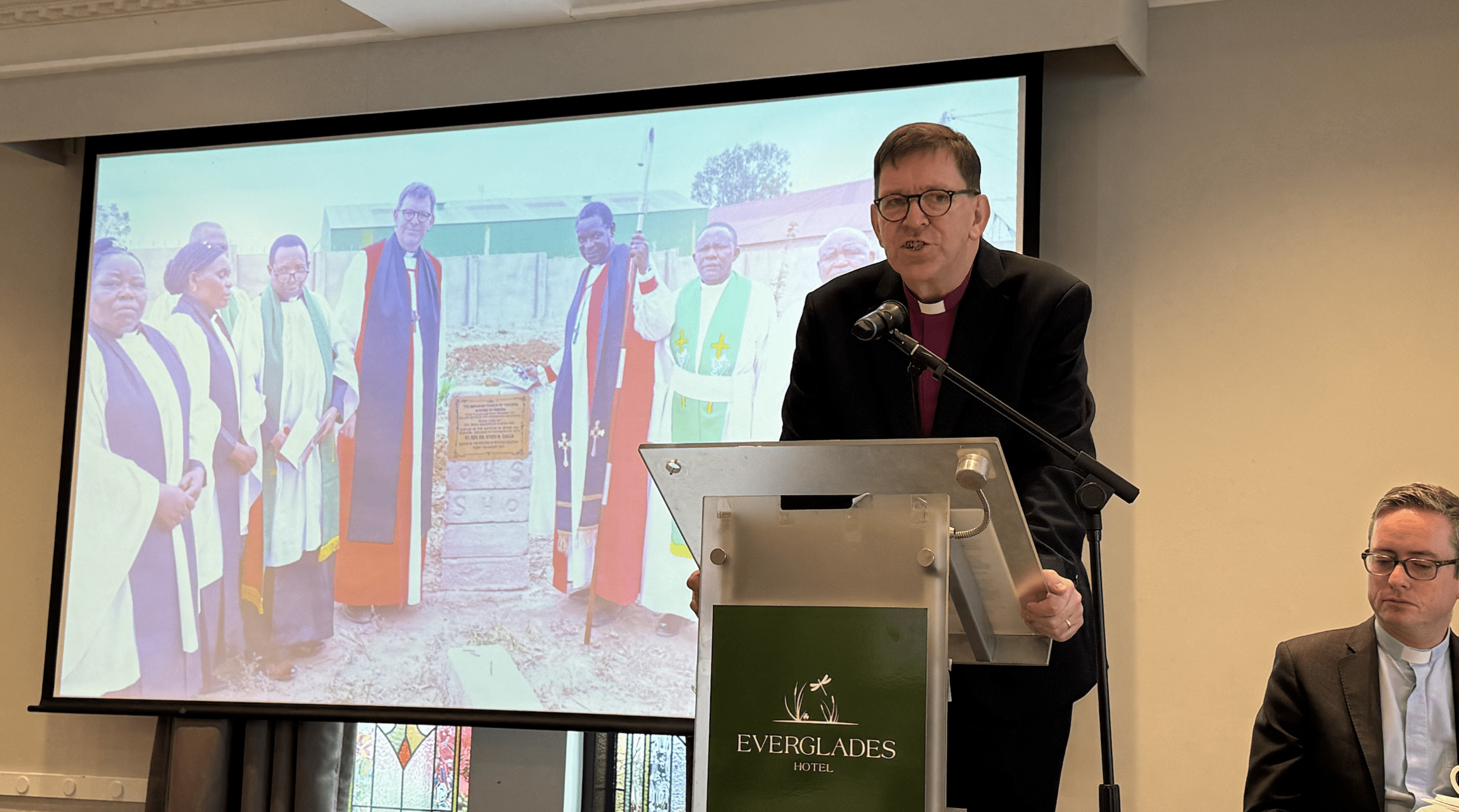
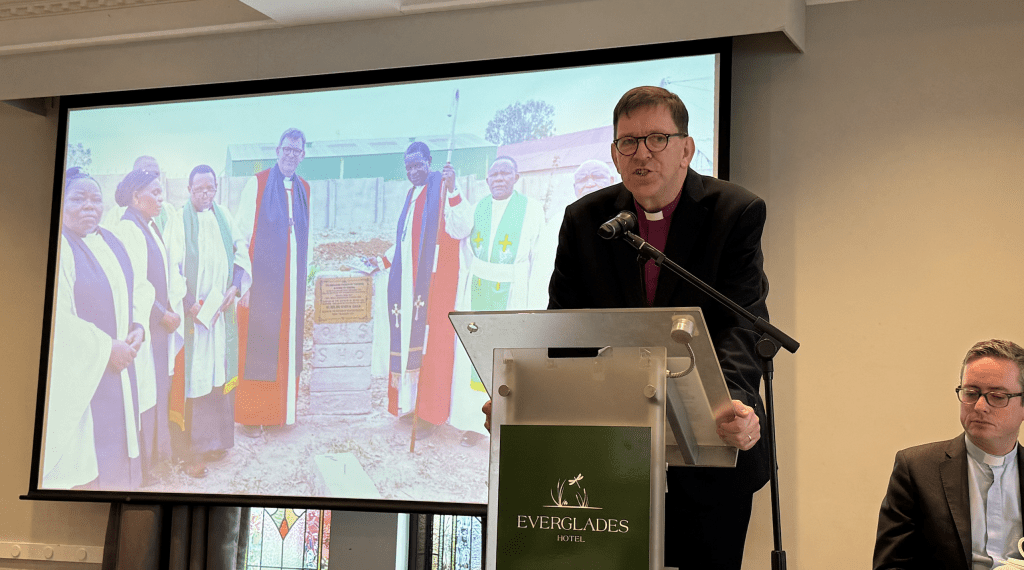
Synod delegates were updated, too, about the companion link with the Diocese of Kondoa in Tanzania, which was inaugurated at last year’s Diocesan Synod and is being facilitated by CMS Ireland. The diocese has agreed to support the building of a new diocesan centre in Kondoa to strengthen mission and ministry there, and a £30,000 fundraising target has been set. Bishop Andrew said he was delighted that several parishes and individuals had already begun to contribute through donations, coffee mornings, and breakfasts. “I would encourage every parish to consider getting involved – together we can make a real and lasting difference in the lives of our brothers and sisters in Christ. So, let’s get generous, let’s get giving, and thanks everyone for your support for that.”
Bishop Andrew’s full Presidential Address is reproduced below.
My brothers and sisters in Christ,
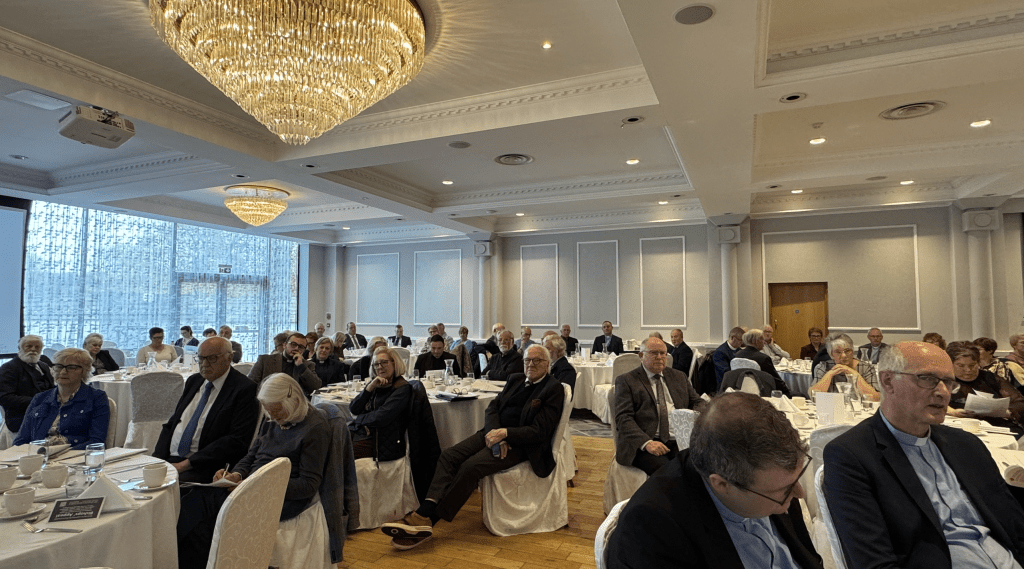
It is a joy and privilege to welcome you all – clergy, lay members, friends and guests – to this year’s Diocesan Synod. Each of you, in your different ways, represents the living, breathing Church in your local context – faithful people who give of your time, your gifts, and your hearts to serve Christ and his Church. Thank you for your dedication to your parishes, and for the countless ways in which you bless and enrich the life of this diocese.
We are, indeed, a wonderfully diverse diocese – stretching from the bustling streets of this city to the quieter rhythms of town and village; from the rugged beauty of our western and northern coastlines to the rich, rolling farmland of our rural heartland. We are unique, too, in being a thoroughly cross-border diocese – there are other cross-border dioceses as you know but we’re thoroughly cross-border, two-thirds in Northern Ireland and one-third in the Republic of Ireland. We live and work under different governmental jurisdictions, shaped by different political outlooks and traditions, and yet we gather today as one family, as brothers and sisters in Jesus Christ, as one family under God.
What binds us together is far stronger than anything that would ever seek to divide us. That must always be the truth of the church of Jesus Christ, that what binds us together is much stronger than what would ever seek to divide us. We gather in warm and genuine fellowship, united in purpose – witnessing through faith, hope and love – as we seek to serve God in this beautiful corner of Ireland. This unity in diversity is a gift to us and it’s a witness to the world: that what others might see as fragmentary, Christ’s love holds together.
We live in a climate of dissension, of dissembling and of disagreement, yet the church is called to live in a different way, living out the truth that when we agree – and even when we disagree – Christ’s love holds us together.
GRATITUDE AND APPRECIATION
All of us who are called to serve God and His church, and that’s everyone in this room, know that we cannot possibly rise to that enormous challenge in our own strength; we do so through God’s equipping power and grace. I feel, though, that I have been blessed by God with the wonderful support team in our diocese.
So, before delving more deeply into the business of Synod, I want to acknowledge my deep sense of gratitude to a few individuals who contribute so much to the life and work of our diocese.
To the staff in our Diocesan Office, thank you for your dedication and professionalism. To Kirsty McCartney, our Children’s Ministry Officer; Claire Hinchliff, our Diocesan Youth Officer; Jocelyn McKeown, our Safeguarding Compliance Officer; Gordon Robinson, our caretaker; and Paul McFadden, our Communications Officer – your energy, creativity, and commitment enrich the ministry we share and strengthen our work across every parish.
Huge appreciation must go to Gavin Harkin, for all the work he has done not just in organising today’s gathering, and for his ongoing commitment and expertise as Diocesan Secretary – we are deeply grateful for you, Gavin.
To Archdeacon Robert Miller and Archdeacon David Huss, thank you for the steadfast support and wise counsel you offer to me and to all across our diocese, and also for your gift of friendship. It is deeply appreciated.
To Joanne Miller, my wonderful secretary, who ensures I arrive at the right place at the right time – and does so much more behind the scenes to support my ministry – thank you so much for that.
I also want to acknowledge the huge contribution made by our Honorary Secretaries who do so much of the ‘heavy lifting’ in the day-to-day life of the diocese, and they do it with good humour, with great grace and with deep commitment.
And to all of you, all of the clergy, all of the laity gathered here, thank you for your service, for your prayers, for your care, for your faithfulness – thank you from the bottom of my heart.
I also think today it is worth noting that one of our own, Mrs Kay Clarke, has been elected to the important position of All Ireland President of the Mother’s Union. This is an important and influential role – at once a great honour and a tremendous responsibility – and Kay can be assured of our prayers and ongoing support as she leads the Mothers’ Union on this island.
THE WORK OF SYNOD
Today, we have an opportunity to share in the work of our diocesan family. We’ll hear reports, we’ll exchange ideas, we’ll listen to updates from some of our boards and committees – all this is vital to the life and witness of our diocese.
A particular highlight this year will be an important and eagerly anticipated update on our Diocesan Review. I want to express my heartfelt thanks to everyone who has contributed so thoughtfully to this process – at meetings, in conversations, by taking part in the online survey. I want to assure everyone who has contributed that your voices have been heard. Your insights and experiences will help chart our course as a diocese for the foreseeable future.
The review is of enormous strategic importance to us. It is looking at the culture of our diocese – who we are, what matters to us, what we want to look like and how we see ourselves in the future. As we contemplate these critical issues, our deliberations will help us to discern what our structures should look like – both parochial and diocesan – if we’re to be properly equipped for mission and ministry into the future.
Also, today we’ll be hearing from some of our visitors, and I encourage you to take some time during the breaks in synod business to browse among the stalls in the foyer here and visit the exhibitors’ stands. There’s a great deal of good work being done right across the Church and the wider community – and it’s always worth seeing, supporting and learning from it.
OUR LINK WITH KONDOA
Most of you will recall that at last year’s Synod we inaugurated our new companion link with the Diocese of Kondoa in Tanzania. We had the joy then of welcoming Bishop Given Gaula among us and, this summer, Heather and I were blessed to pay a return visit to Kondoa – and what a remarkable and rewarding experience it was.
We travelled through breathtaking countryside and were received everywhere we ventured with warmth and joy. We visited parishes, some still meeting under trees, and took part in a number of confirmation services. The shortest of those services lasted two and a half hours; the longest, four and a half hours. At one service I was even asked to make my sermon longer! That was a notable first for my ministry.
Kondoa is a young diocese, full of vitality and enthusiasm. By contrast, we are an ancient diocese, with deep roots and a long story of faith. So, there’s much we can learn from each other in partnership. And I want to thank CMS Ireland for facilitating that partnership so well and with such professionalism.
The growth of the Church in Kondoa has been extraordinary – from just three church buildings 14 years ago to 71 today (and still growing). Their faith is vibrant, exuberant, joyful, and deeply dependent on God. We can share with them something of the steadfastness and maturity that come with longevity, while they can remind us what it looks like to live with bold, expectant faith.
We have agreed as a diocese to support Kondoa in building a new diocesan centre to strengthen mission and ministry there.
Our target is to raise £30,000. I am delighted that several parishes and individuals have already begun to contribute through donations, coffee mornings, and breakfasts, and I would encourage every parish to consider getting involved – together we can make a real and lasting difference in the lives of our brothers and sisters in Christ. So, let’s get generous, let’s get giving, and thanks everyone for your support for that.
SIGNS OF RENEWAL
What we saw in Kondoa – that youthful energy of the Spirit – has parallels here at home. Across these islands there’s a sign of what is being called a quiet revival, especially among young people. I was talking to a schoolteacher in one of the schools in our diocese recently; they had to move the Scripture Union from a classroom to the assembly hall because there are so many young people wanting to attend. Churches are beginning to see new faces; there’s a growing spiritual hunger – a restlessness with the emptiness of secularism.
One recent report noted that sales of printed Bibles have increased by 41%, and downloads of Bible apps by 79%. Dare I say, this is what we have been praying for, for years? People are searching once again for truth, for meaning, for something deeper than the soulless babble of modern life. This is particularly noticeable in young people whose parents – my generation – walked away from church, and their children are now perhaps seeing that the secularism their parents embraced simply doesn’t work.
As St Augustine so beautifully put it: “You have made us for yourself, O Lord, and our hearts are restless until they find their rest in you.”
God is stirring hearts again. He is calling people to rediscover faith, meaning and hope, and we mustn’t be left behind in this. This is a wave of the Spirit, and this is a call for us to be open, to be welcoming, to be vocal about our faith – to see our churches as places of faith and hope and love, to realise we have a message to offer that is transformative.
Too often we lament our falling numbers or the challenges of maintaining historic buildings. But what if we changed the narrative? What if we saw ourselves not as caretakers of decline but as people of hope?
I see signs of hope all across our diocese – the encouragements that I feel week in, week out by visiting parishes, attending services, hearing about new projects – there is hope. Let’s be people of hope, not caretakers of decline. And let’s get behind those hopeful projects that are bubbling up around our diocese. Later on, we’ll hear about pioneering ministry and all that is happening. God is at work among us. Our parishes are places of rich community, deep compassion, and genuine care. They are outposts of the Kingdom, places of witness where faith is nurtured, hope is rekindled, and love is shared.
This is exactly what I hope our Diocesan Review will help us to rediscover – how we can best use the talents we have, imagine new possibilities, and step out in faith and faithfulness.
In this ancient diocese of ours, I sense the wind of the Spirit moving afresh – stirring new hope, breathing new life, revealing new opportunities to grow in faith and hope and love.
A FRAGILE WORLD
And yet, I don’t say this lightly. I say it against a backdrop of a world in deep pain. We have observed, with horror, the immense suffering caused by the ongoing conflict in Israel and Gaza, the continuing war in Ukraine, and the largely forgotten conflicts in Sudan and the Democratic Republic of Congo. Sadly, that is not an exhaustive list.
We live in uncertain, unpredictable, indeed, volatile times. The political and social order that has shaped the world since the end of the Second World War seems to be crumbling before our eyes.
I have been struck this past year by the frequent use of the word ‘disrupter’ to describe some of those who have come to the fore on the global stage. The term is bandied about as if the phenomenon was something new. It isn’t. Two thousand years ago, Jesus Christ came among us. He was a disrupter, but his motives were entirely different to some of those of politicians who are agitating for change now. Jesus came to serve. He sided not with the rich and the powerful, but with the poor, the weak and the marginalised. He challenged those in authority. He challenged the multitudes who heard him preaching during his ministry. And now, two millennia later, he challenges us – those of us who profess to follow him.
“Love the Lord your God with all your heart and with all your soul and with all your mind.” “Love your neighbour as yourself.” Feed the hungry. Welcome the stranger. Care for those who are sick. Visit those in prison. Those are ‘big asks’, but they are not optional extras for the people of God. There are no short cuts when we decide to walk with Jesus Christ.
Jesus’s message was radical two thousand years ago, and it is just as radical and just as relevant today. Many of us have known despair and felt powerless in the face of what has been happening in our world these last few years. And yet we can imagine how different and how much better our world would be if we lived up to the commands and to the call of Jesus Christ.
This onus is on all of us, not just on those in positions of power globally, this onus is on all of us to stand up for what is right, not just for what is profitable, not just for what is in our own strategic or economic interest – but to stand up for what is right, to do the right thing, because we’re followers of Jesus Christ.
We pray that leaders would grasp that, and we pray that we would grasp that truth as we live our lives, and that we would see swords turned into ploughshares; that we would see governance for all, not just for a few; and that we would see good stewardship of our world in its crises – both economic and environmental – and in the wars that we face.
In the Book of Proverbs we read these words: “When the foundations are shaking, what will the righteous do?”
The foundations are indeed shaking. And yet we are not without hope. We return to St Paul’s great words: “And now these three remain — faith, hope, and love. And the greatest of these is love.”
Our society, our society in Derry and Raphoe, let alone across the world, desperately needs hope, and we are called to be a community of hope. Hope fuels us to act, to serve, to give, and to reach out to those in need – both materially and spiritually.
Over all these things, however, stands the greatest of all: love – God’s unshakeable love for each one of us and for His world. It is love that brings forgiveness and healing; it is love – the love of God – that has transformed your life; it is love that renews; it’s his love that brings transformation; and his love that builds a foundation that no turmoil can destroy.
LOOKING AHEAD
We are a growing diocese (our census has actually shown that over the last two censuses). It’s modest growth, but it is real and tangible. I long to see more, not just numerical growth – though I pray for that – but deeper growth: growth in faith, growth in hope, and growth in love.
Today, as we gather in faith and fellowship, may God bless our conversations, our deliberations, our decisions and most of all our friendship and fellowship. May our synod be filled with faith to believe, hope to persevere, and love to serve.
“A new commandment I give you,” Jesus said. “Love one another. As I have loved you, so you must love one another. By this everyone will know that you are my disciples, if you love one another.” (John 13: 34-35)
I pray that whenever we go home today, we will go home strengthened in heart and in mind to love one another, and not just to proclaim but to model the good news of Jesus Christ in this city, in the towns and villages, across the hills and around the coasts of Derry and Raphoe. And to the glory of God, and the blessing of His people, we commit ourselves to this task.
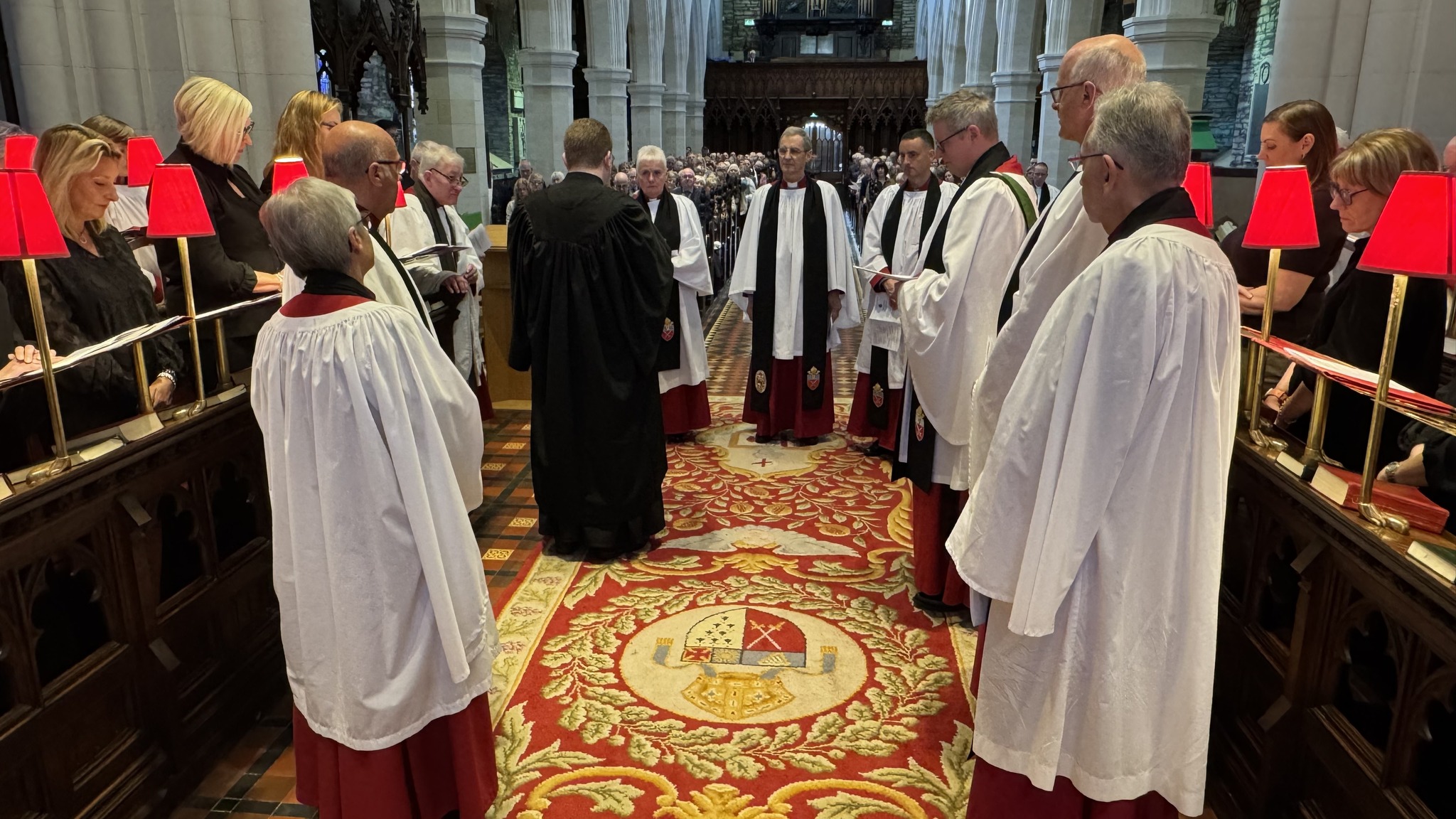
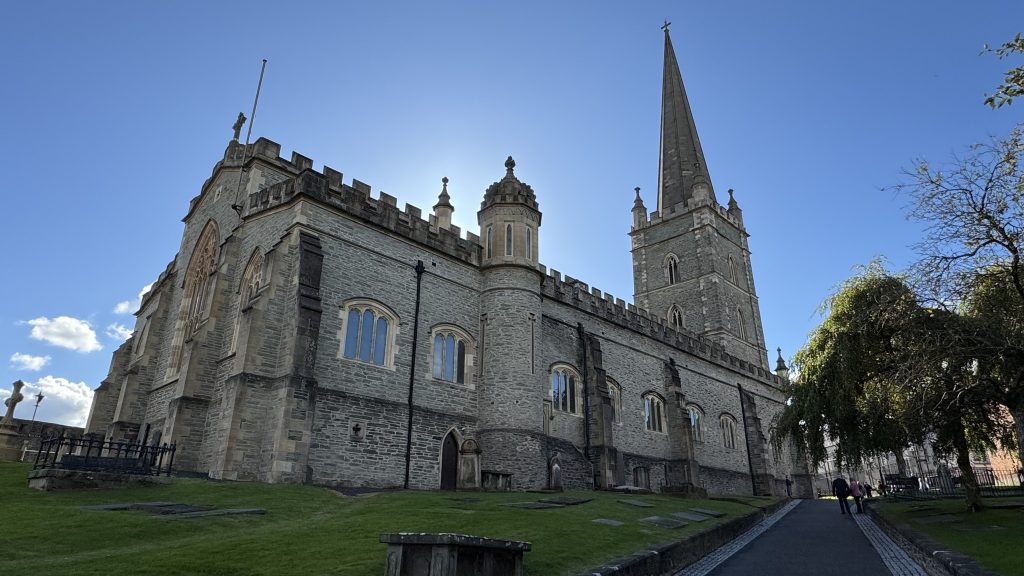
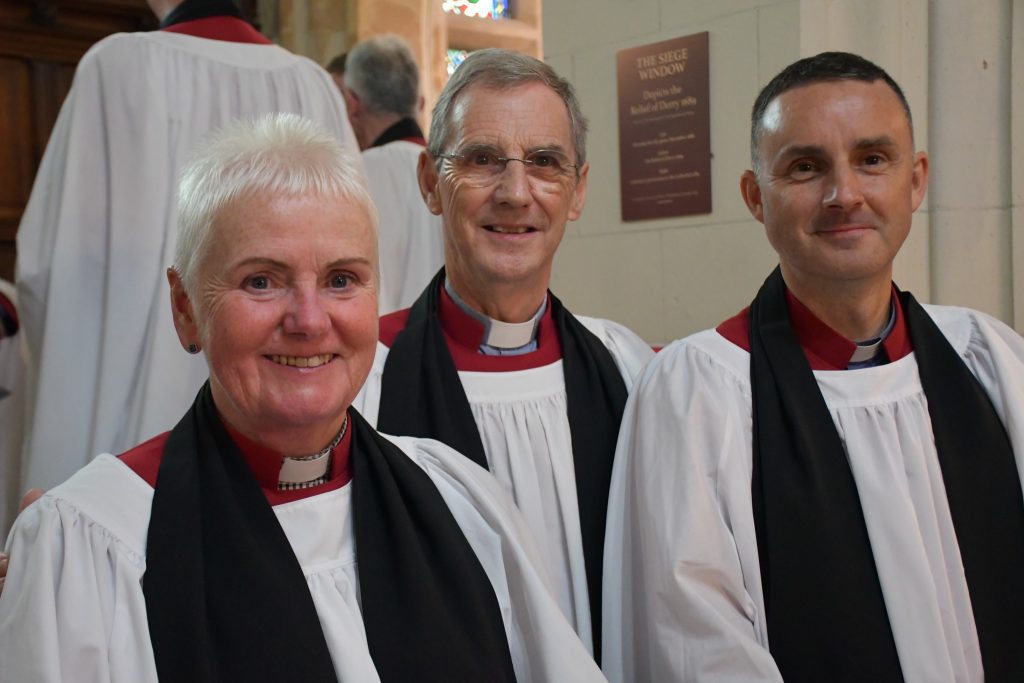
It was a day for the ages at St Columb’s Cathedral in Londonderry where the three newest members of the Cathedral Chapter – Rev Canon Carmen Hayes, Rev Canon Donard Collins and Rev Canon Peter Ferguson – were formally installed at a service on Sunday 28th September, 2025. “It’s the first time in a long time,” the Dean, Very Rev Raymond Stewart told the congregation, “that three Canons have all been installed at the one service.”
The Canons’ families were joined by members of the ministers’ parishes (Errigal and Desertoghill, Killowen, and Derg and Termonamongan, respectively) and regular worshippers from the Cathedral for what Bishop Andrew described as “a family occasion” not just for the relatives but for the Canons’ parishioners and for the Diocese as a whole. “Today, what we do is honour your discipleship,” he told the new Chapter members, “and honour your commitment to ministry.”
Today’s Installation was a colourful affair, befitting such a significant occasion in the Cathedral’s ancient history. Other members of the Cathedral Chapter, fellow clergy and lay readers from throughout the Diocese took part in the service.
Bishop Andrew used his sermon to explore what church should “really be about”. Historically, he said, Canons were responsible for preaching, teaching and praying for pilgrims who came to cathedrals. “It’s a beautiful thing to think about and I hope, as a Chapter, we see the importance of one of the roles of a Canon – to pray constantly for the life of the Diocese, and to pray constantly for those who come to this place.”
“Down through the years, Bishops have appointed Canons because their lives as pastors have incarnated what it actually means to be a pastor – to pray, to preach, to teach and to care for God’s people – and that’s what I see in Donard, in Carmen and in Peter, people who know the call to pray, to preach, to teach and to care for God’s people. And those who know them well will know that that is all too true in their parishes and in their daily lives.
“So,” the Bishop said, “what the Canons in history were called to live out, and what we’re called to live out, is actually the real purpose of the Church, and the Scriptures very clearly and simply tell us what that purpose is…the Bible tells us that the purpose of the Church can be summed up in three things – ministry to God, ministry to believers and ministry to the world.”
Ministry to God might seem a bit of a strange thing to say, the Bishop suggested – “We think of God ministering to us” – but actually “ministering to God is what worship is about, worship is about us showing God his worth in our lives and the Church’s purpose is to worship God.” That includes Sunday, Bishop Andrew said, but it’s also about 𝘦𝘷𝘦𝘳𝘺 day, living our lives as instruments of worship, living our lives to his praise and glory. “Wholehearted worship is what God deserves…the one who has given his all to us deserves our all”.
Bishop Andrew drew on the word ‘nurture’ to explore ministry to believers. “Parents know what it is to nurture and bring up a child. The Church has a responsibility to nurture those who are already believers and to build them up into the maturity of their faith…I am convinced that in today’s world that is drowning in a sea of relativism, stuck in the swamp of materialism and anesthetised by the shallow self-centeredness of individualism, that there is nothing more important for us to do than to nurture believers. Ministry to believers is vital, and our three new Canons are committed and convincing preachers who see the nurture of God’s people as paramount.”
The Bishop reminded the congregation that Our Lord’s Great Commission, to ‘…make disciples of all nations…’ (Matthew 28), was a primary ministry that the Church had to the world. “What about you as part of the Church? Are you nurturing yourself, are you growing in faith, is your discipleship growing – a wholehearted discipleship – are you nurturing yourself in God’s word, is your goal to be presented ‘perfect in Christ’? That should be the goal of every follower of Jesus Christ.”
Bishop Andrew said the new Canons had a real heart for the lost, and longed to share the Good News. “That Good News that they share is accompanied by a ministry of care for the poor and needy, a ministry of care for those who are struggling and alone, and a ministry of care that lives out the love of Jesus Christ, exemplified in the healing ministry of Jesus, of course, but lived out in Carmen and Donard and Peter.
“So, ministry to God in worship, ministry to believers in nurture, ministry to the world in evangelism and care – the three purposes of the Church as commanded in Scripture – all three are important and none can be neglected. A strong and effective parish, a strong and effective diocese, will have effective ministry in all three, and a good Canon is called to exemplify them.”
Bishop Andrew said it was a joy for him to minister with the three new Canons and a joy to see them installed.
The Old Testament reading was delivered by Rev Canon Katie McAteer, while Rev Canon Derek Quinn read from the Gospel according to St John. Music was provided by Nicky Morton, Cathedral Organist & Director of Music, Assistant Organist, Louis Fields and the Cathedral Chamber Choir.
The Offertory Hymn was ‘Come to Us, Creative Spirit’ and Dean Stewart said he looked forward over the new few weeks and months to finding out “which of our Canons is the poet, which is the painter, which is the music-maker, which is the craftsman, which is the actor and which is the graceful dancer. They all have gifts and talents and I know that they’ll be used extensively in the work of this Cathedral”.
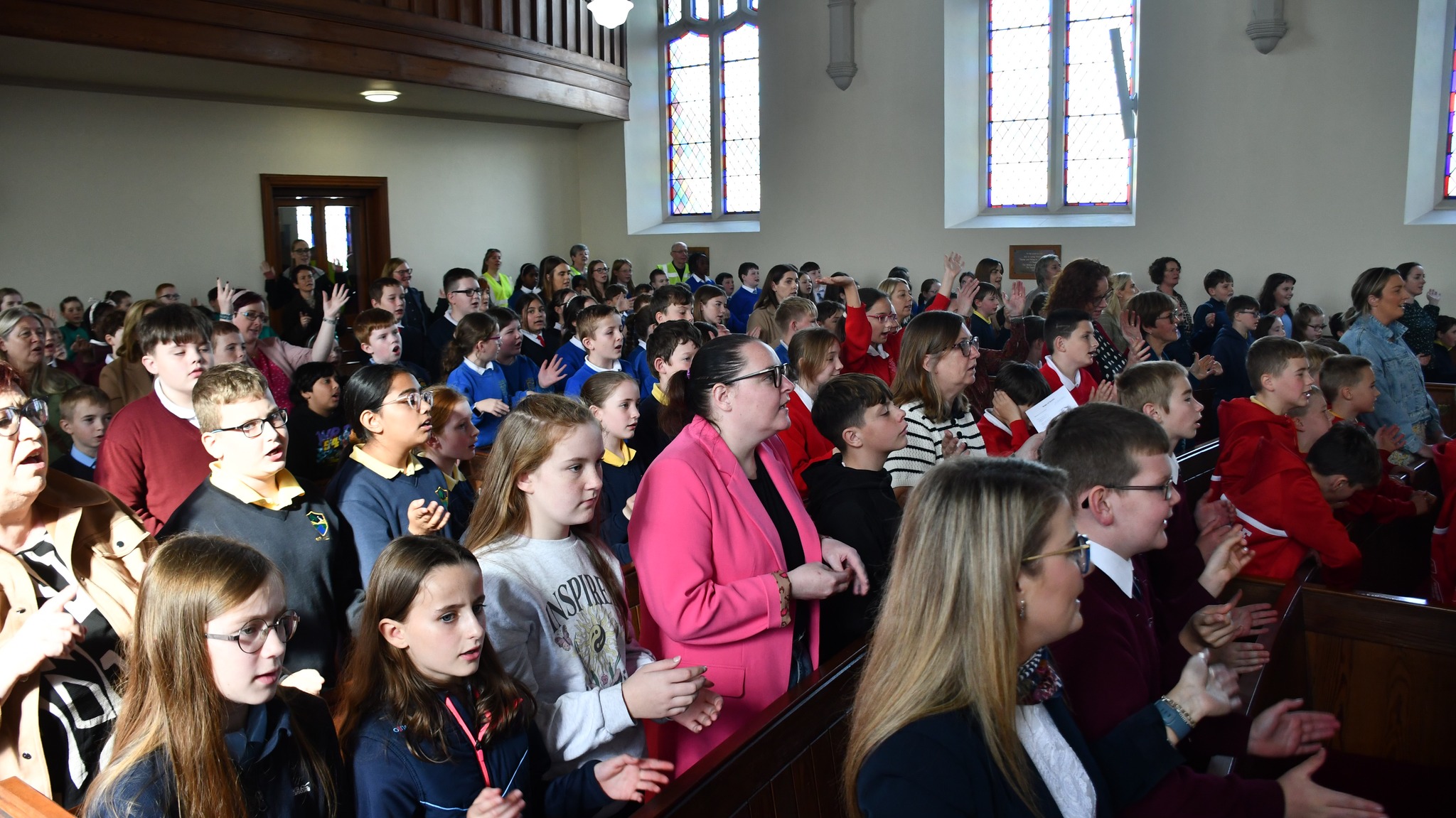
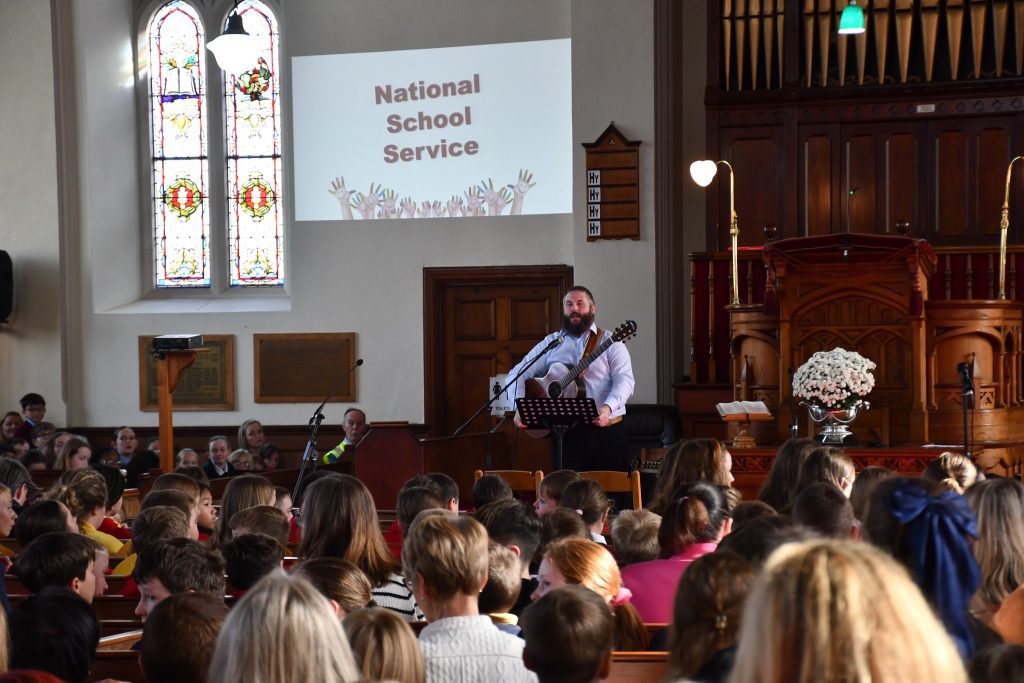
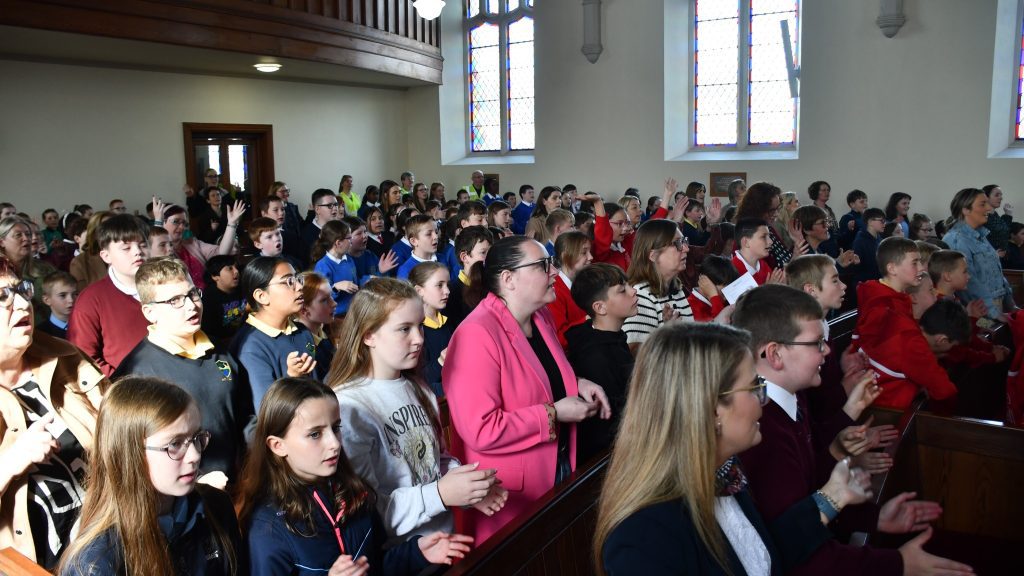
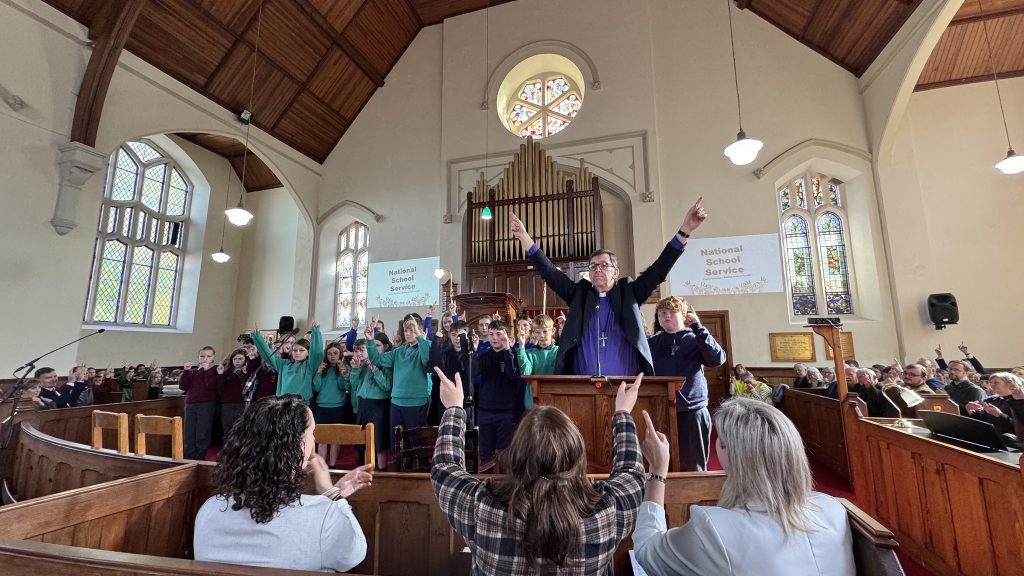
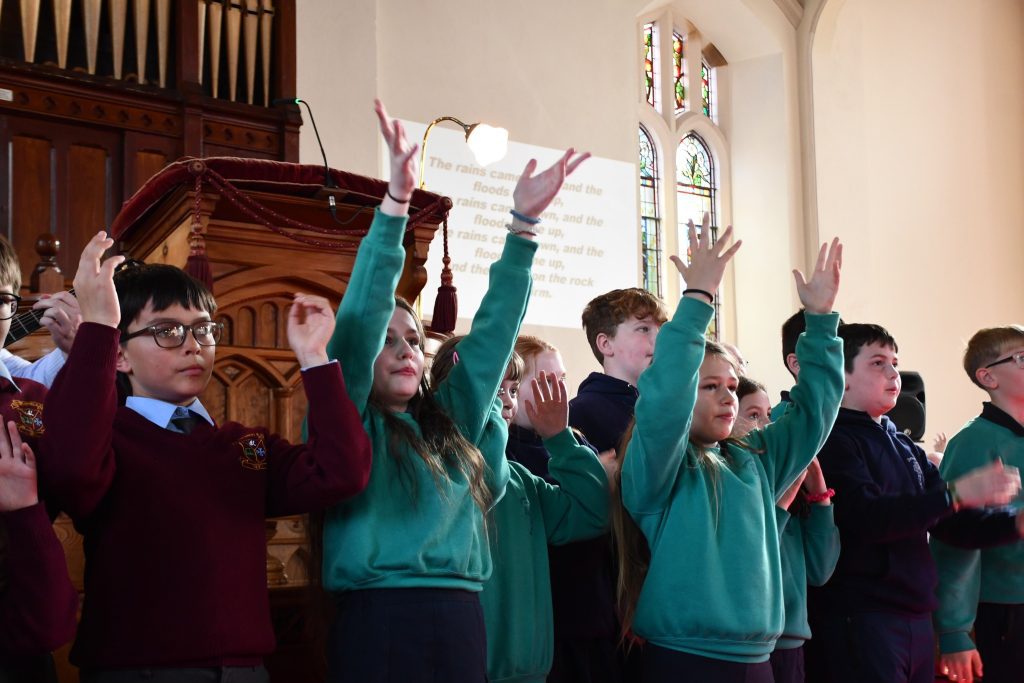
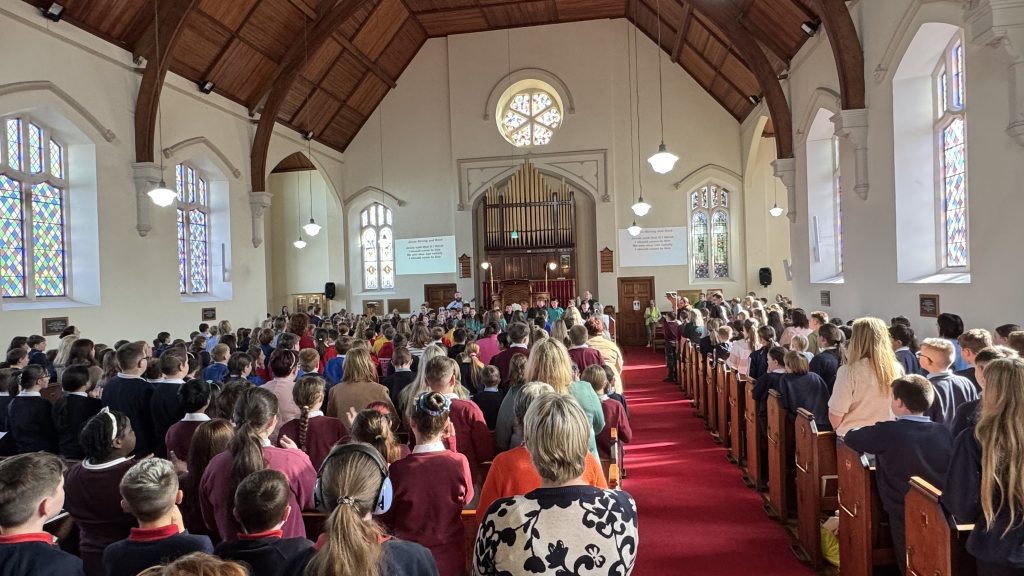
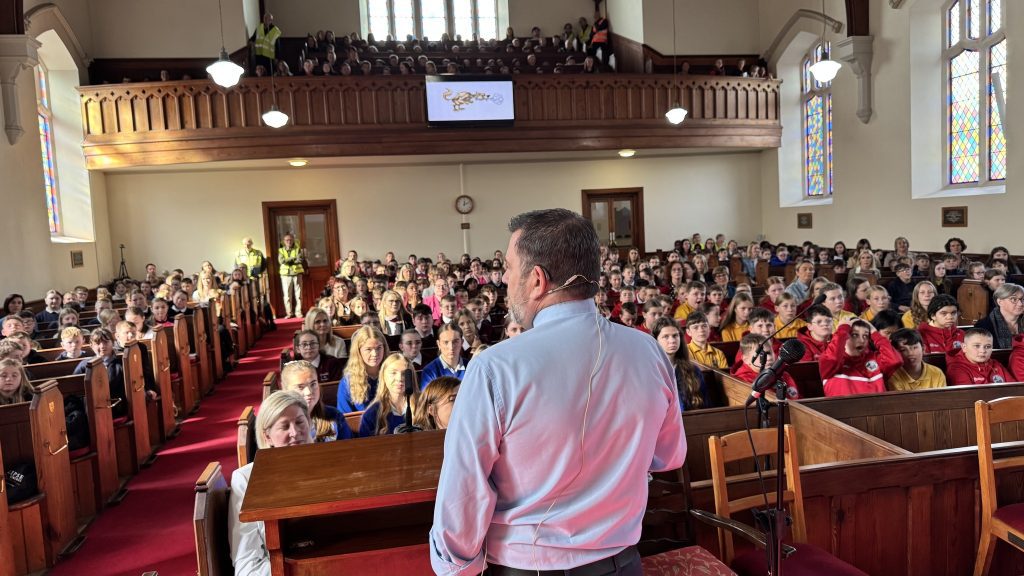
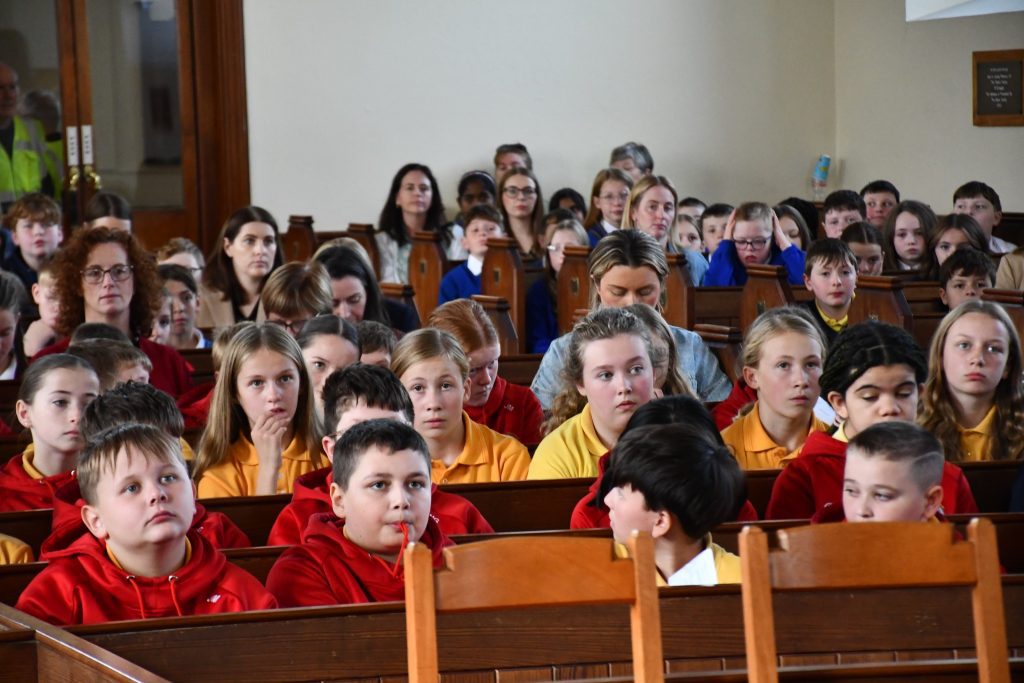
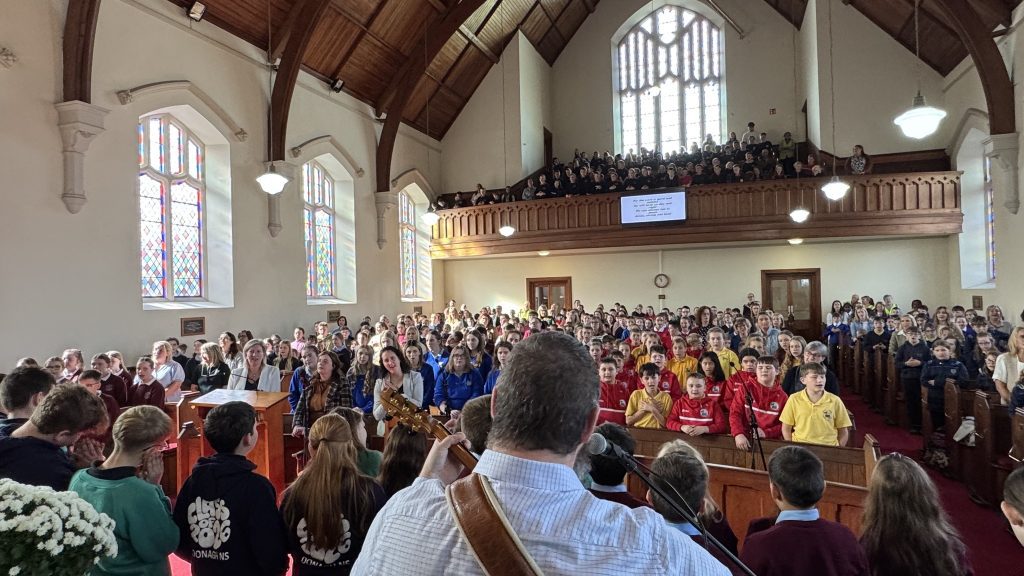
Around 500 pupils from 30 different schools throughout the county were in Ramelton Presbyterian Church on Wednesday 24th September for the 2025 incarnation of the County Donegal Schools’ Service.
The service, which is now in its 10th year, is for schools in Donegal under Protestant church patronage, and clergy from the three main Protestant denominations attended the service.
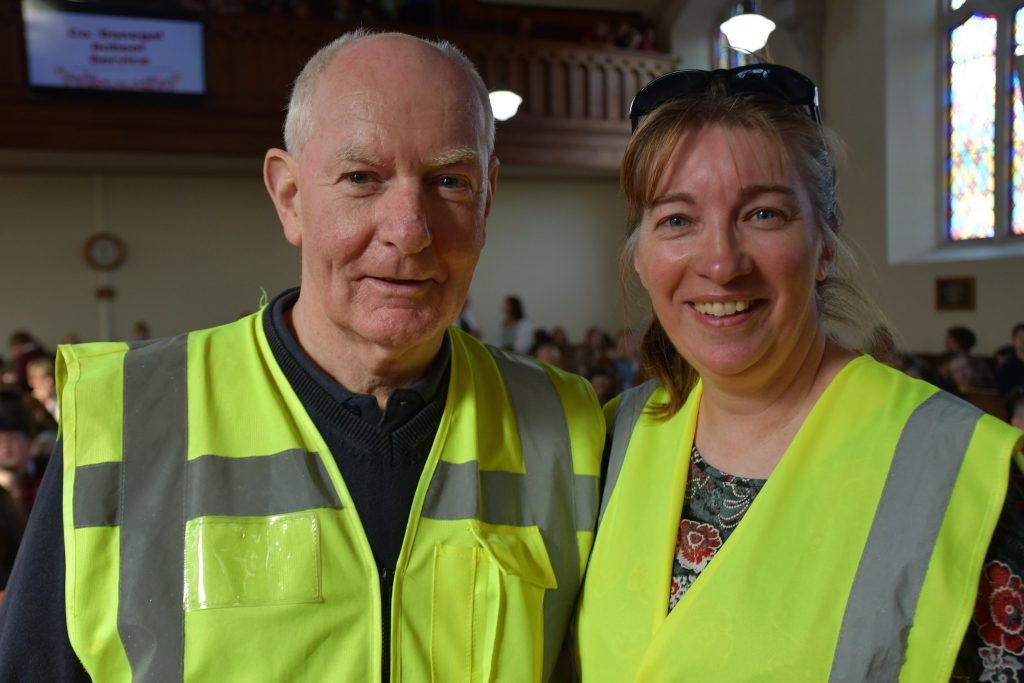
As usual, the 70 teachers and staff, and a host of stewards, rose to the logistical challenge of organising and running the huge event, with a fleet of buses ferrying the children from schools in every corner of the county and back to their communities again.
The weather for the day was benign – bright and sunny, if a little cool – but the minister at Ramelton & Kilmacrennan Presbyterian Churches, Rev Richard Tregaskis, offered his guests, young and old, a very warm welcome.
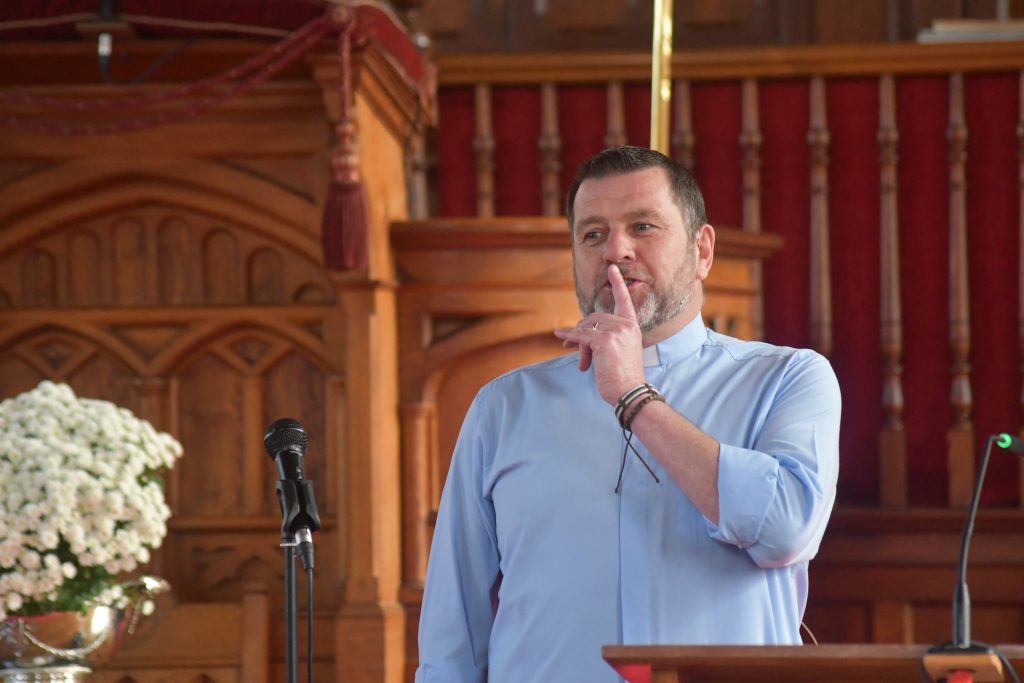
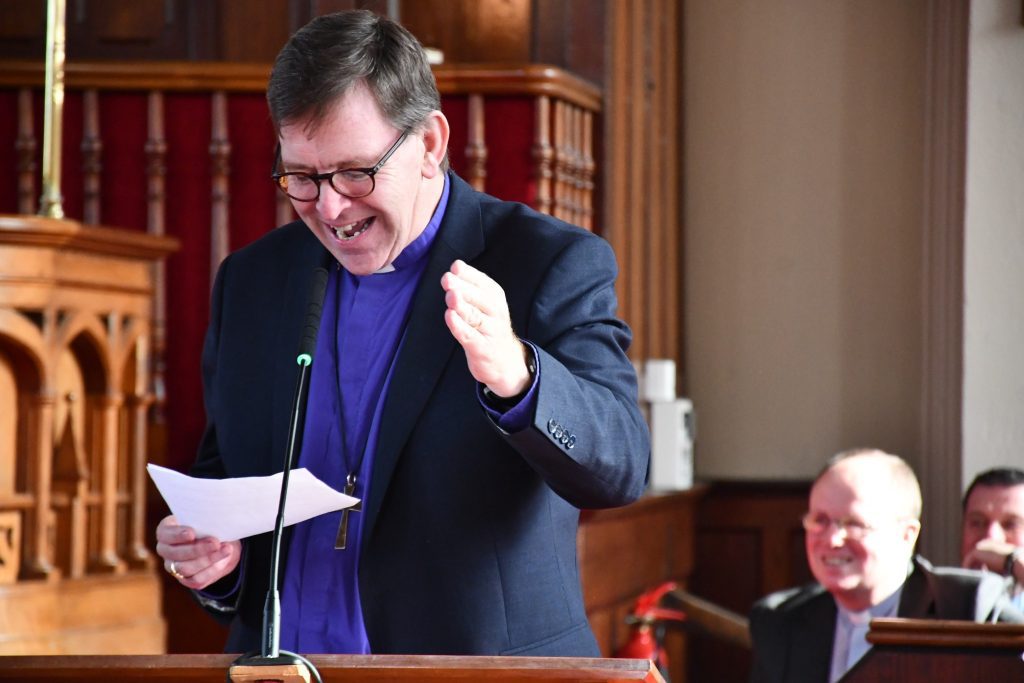
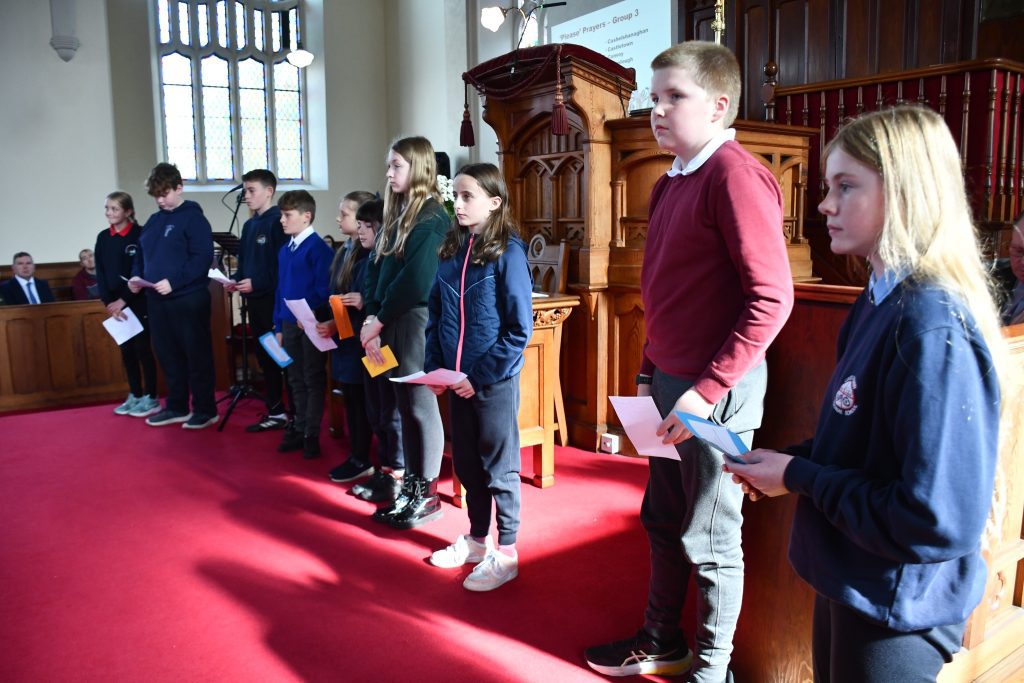
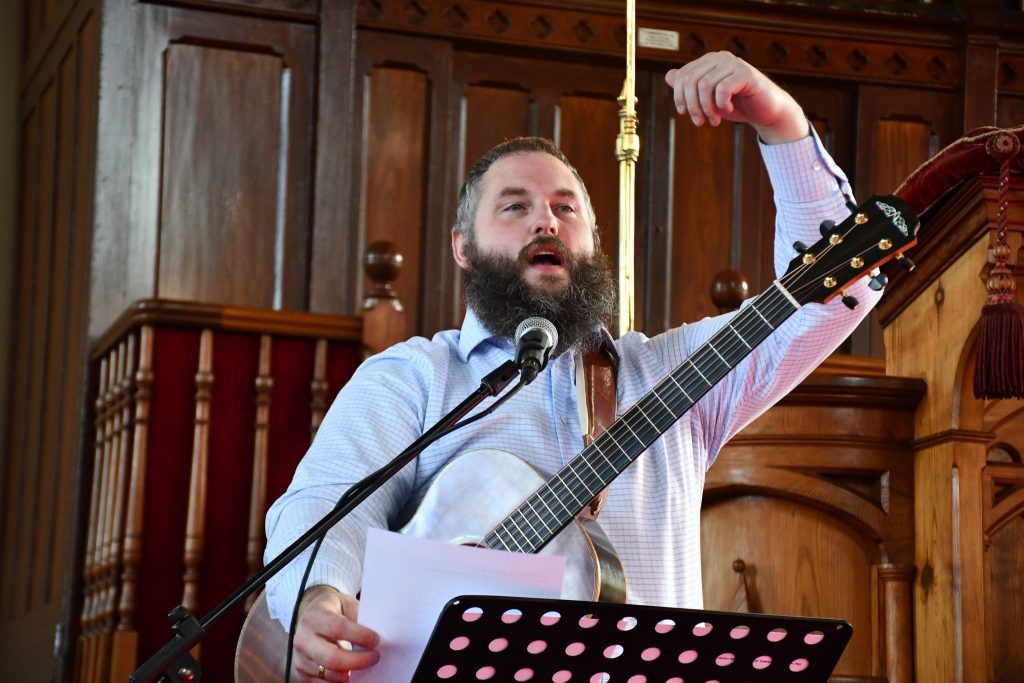
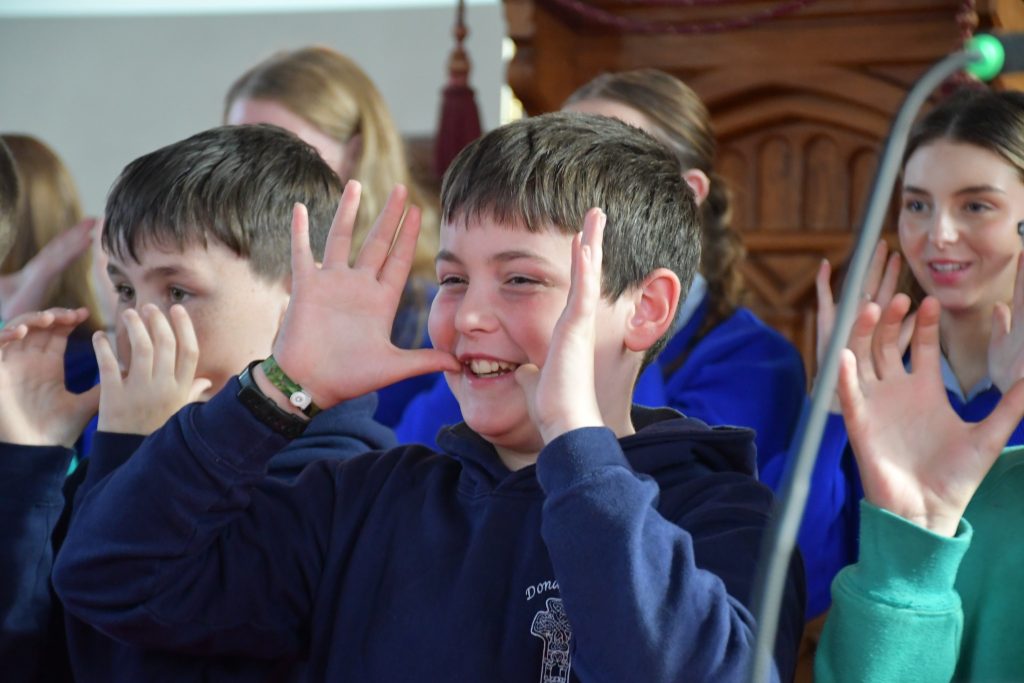
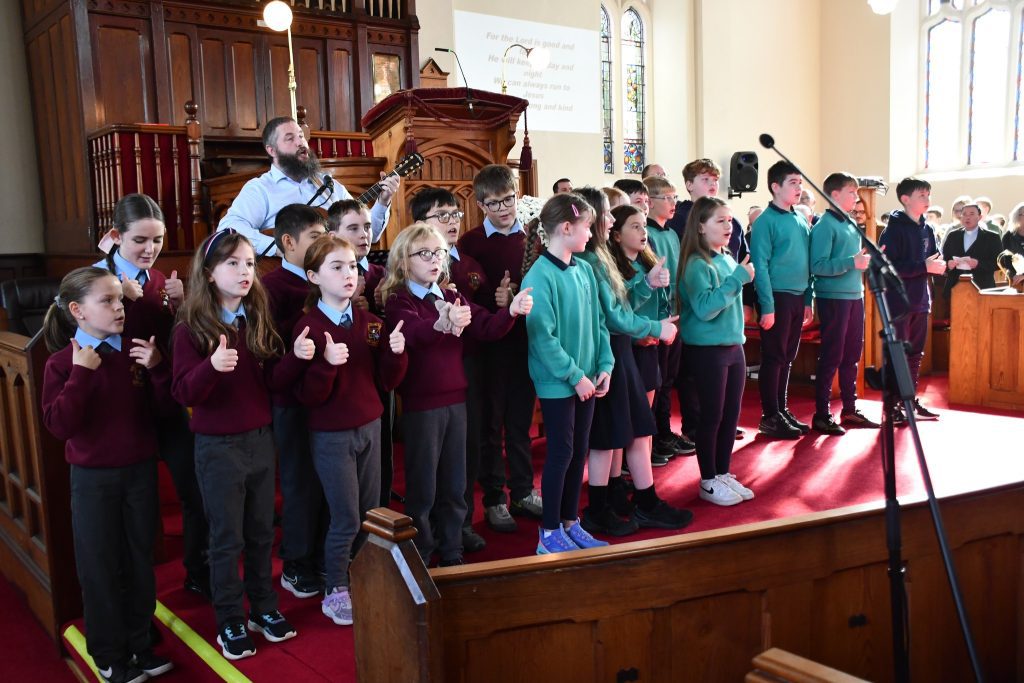
Worship was led by the Bishop of Derry and Raphoe, Rt Rev Andrew Forster, who got the children to interact with a number of prayer drills, and pupils from all the schools present read prayers. Rev Philip Poots from the ‘Inishowen Four’ – the name given to the joint charge of Greenbank, Moville, Carndonagh and Malin Presbyterian Churches – led the singing, which, as usual, was loud and boisterous.
The theme for this year was ‘Foundation for the Future’. The Gospel reading, the Parable of the Wise and Foolish Builders from Matthew 7: 24-29, was read by a pupil from Ballymore National School.
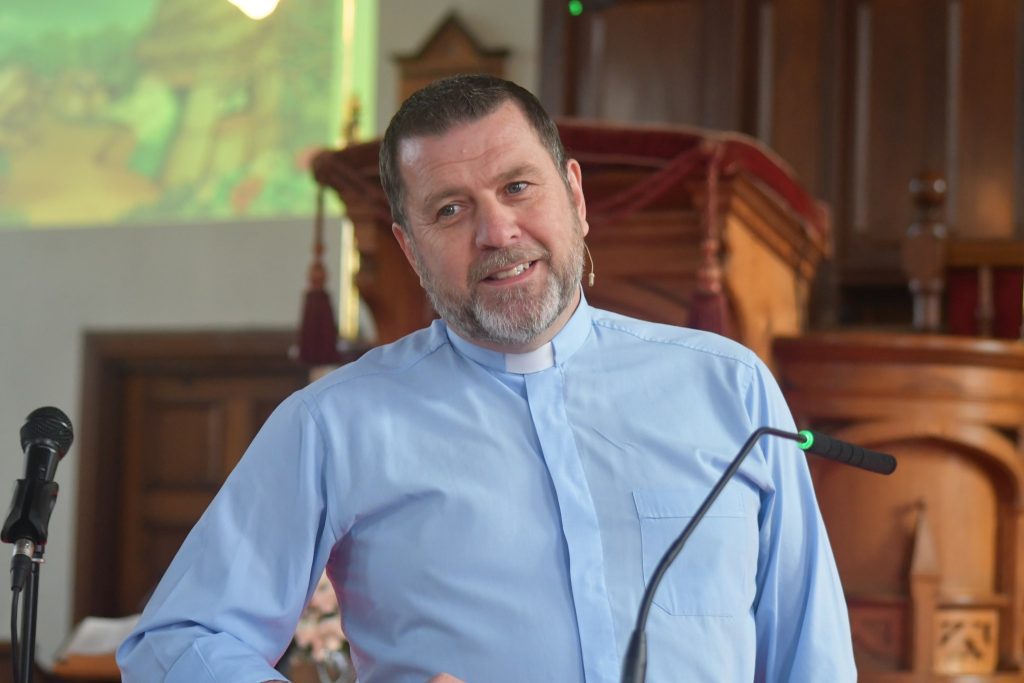
The Moderator of Derry & Donegal Presbytery, Rev Stephen Hibbert, used the story of the Three Little Pigs to help illustrate the significance of the parable for his young congregation. “What Jesus is telling us here in this parable is that when those tough times in life, those problems that we face, come along, that’s when the cracks from the foolishness of what we trusted in really shows.” The good news, he said, is that Jesus provides us with some principles here to help us.
“It’s a pretty straightforward message. The first truth is that every single one of us will experience hard times and difficulties in life. It means even if we’re followers of Jesus it doesn’t give us immunity to the difficulties that we will inevitably face….But it’s worth noticing that [in the Gospel] Jesus doesn’t focus on the cause of the storms. He wants us to focus on building the right foundation so that when those tough times come, we are prepared. Instead of wondering why bad things can happen, Jesus is more concerned that we take the proper steps to make sure that we’re prepared for when they do come along and, of course, that means building on the right foundations.”
After the service, as pupils filed out of the building, their teachers were given ‘goody bags’ to share with the children on their homeward journeys.
Good things come in threes, according to an old adage, and for the parishioners of St Patrick’s Church in Donaghmore, Castlefin, Sunday 21st September 2025 was a day of triple celebration, as they marked 300 years of worship in the church, the dedication of the recent works of renovation to the building, and what the local Rural Dean Very Rev Liz Fitzgerald called “the glorious celebration of Harvest Thanksgiving”. Indeed, evoking the name of the parish, it was described as “a great Sunday”, by Bishop Andrew Forster, in his sermon.
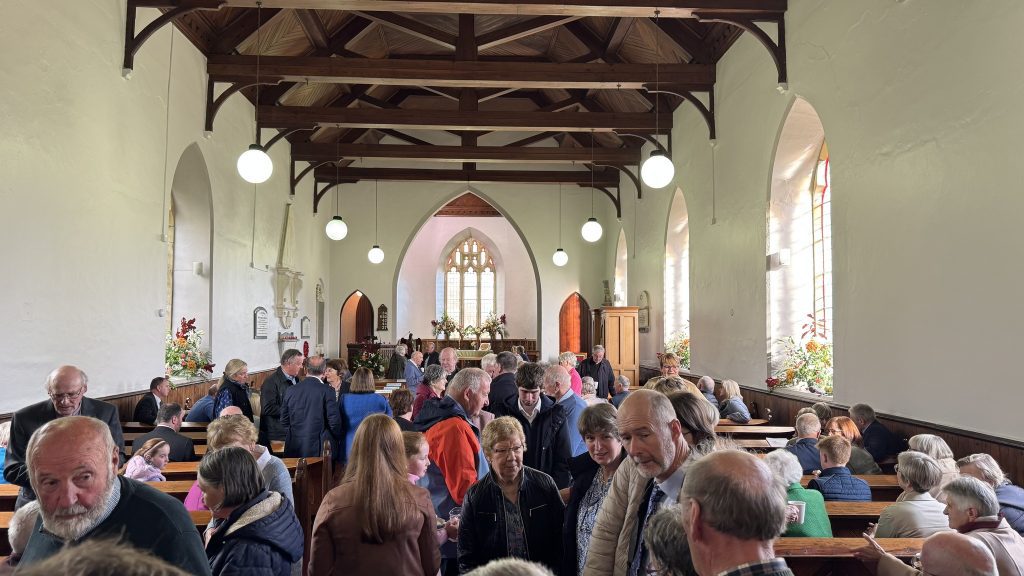
For the congregation, today’s Service of Evening Prayer and Harvest Thanksgiving was an opportunity to see their beloved church at its splendid best after almost two years of building work. During that time, the parishioners worshipped at their sister church, St Anne’s, in Killygordon.
At the beginning of today’s service, churchwarden Kenneth Witherow outlined the extent of the renovation works: the building got a new roof and toilet block; the exterior wall was completed; new pathways were built, and drainage and guttering replaced; internally, a new heating system was installed, along with new wiring; plaster repairs were carried out; the church was painted – inside and outside – new flooring was put down in the porch and a new carpet was laid in the main part of the church. In his remarks, Mr Witherow remembered the beneficence of brothers Victor and Jim Harron whose generous bequest had, he said, enabled the work. “If it wasn’t for their kind donation, it wouldn’t have taken place.”
Bishop Andrew remarked on the success of the renovation during his sermon. “Here we are, in this beautiful building – absolutely stunning the workmanship, such a credit to you as a parish, a credit to the contractors, a credit to the architect. It really does look remarkable, and I have to say two things, very simply: thank you and well done.”
Among those listening to the Bishop were the Diocesan architect, Karl Pedersen, and building contractor Richard Gamble, whose companies had worked on the renovation.
The Bishop confessed that growing up in Holywood, in County Down, he had learned no Irish. “But I’m reliably informed that Donaghmore, in Irish, means ‘great Sunday’. Isn’t this a great Sunday?,” he said. “This is a wonderful Sunday, because we’re gathered in this beautiful place to give thanks to God for 300 years of history, and to give thanks to God for a bright present and a hopeful future, because of generosity, because of hard work and because of commitment. It is wonderful on this great Sunday to be in this great Sunday church of Donaghmore.
“Three hundred years ago, men and women of faith gathered here with vision and with courage. They laid foundations, they raised walls, they built a house of prayer and praise. But more than that, much more than that, they planted something living – a community of believers, rooted in Jesus Christ – and today, three centuries later, can you believe that, three centuries later, we stand on their shoulders. We give thanks for their courage and commitment. We look around this beautiful church, freshly renovated, and give thanks for the care and generosity that has breathed new life into ancient stones and timbers, and we celebrate harvest – the ancient reminder that your God is a god of provision and abundance.
“So, today is not just an anniversary, it’s harvest of faith, a thanksgiving for renewal, a call to trust God for the future. This is a great Sunday for a great Sunday church, and today we give thanks to God for it.”
Bishop Andrew congratulated young members of the congregation who brought Harvest gifts to the front of the church during today’s service. “Whenever we were in Sunday School,” he recalled, “we would’ve been told that church wasn’t just about the building – it’s the people – and we all know that to be true. And I can imagine that the good parishioners of Donaghmore, today, are sitting thinking of generations who have gone before, and whom our wonderful floral displays today are dedicated to. You’re thinking of past generations who blessed you, who passed the faith on to you in a wonderful way. And, yes the church is about people, but we remember the people in the building – the people who loved the building. And, yes we can say it’s just a building but a church becomes so much more than stone and lime, bricks and mortar, timber and slate, it’s so much more than that, because it is the story of the faithfulness of God to people through 300 years. For 300 years this has been a place where people gathered in joy and in sorrow, in times of peace and in times of trouble, in seasons of plenty and in seasons of want. Think of all the baptisms that have taken place in the fonts of this church. How many children have been welcomed into the family of God over 300 years? Think of the weddings, the promises made, the joy of celebration. Think, too, of the funerals, the tears shed, the comfort shared. Every generation has brought its prayers here, every generation has sung its hymns here, and through it all God has been faithful.”
The Bishop turned to the Harvest theme to speak to today’s generation of worshippers. “The good news is that at Harvest time we are so thankful that we are in partnership with God – the farmers, the gardeners – in partnership with God, who gives us the seeds and the plants but they’re nurtured by the resourceful toil of men and women. We’re in partnership with God. And we’re in partnership with God not just on the land, we’re in partnership with God day by day, making his world a better place, in partnership with God in his ongoing, wonderful work of creation, to see his glory grow around the world.”
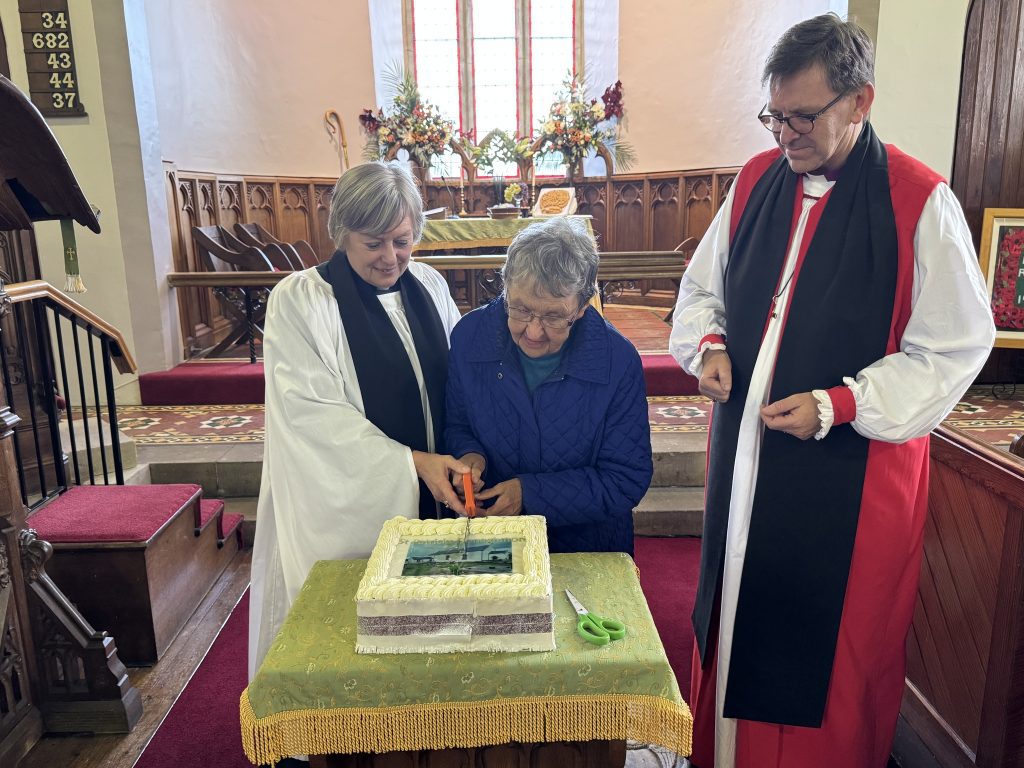
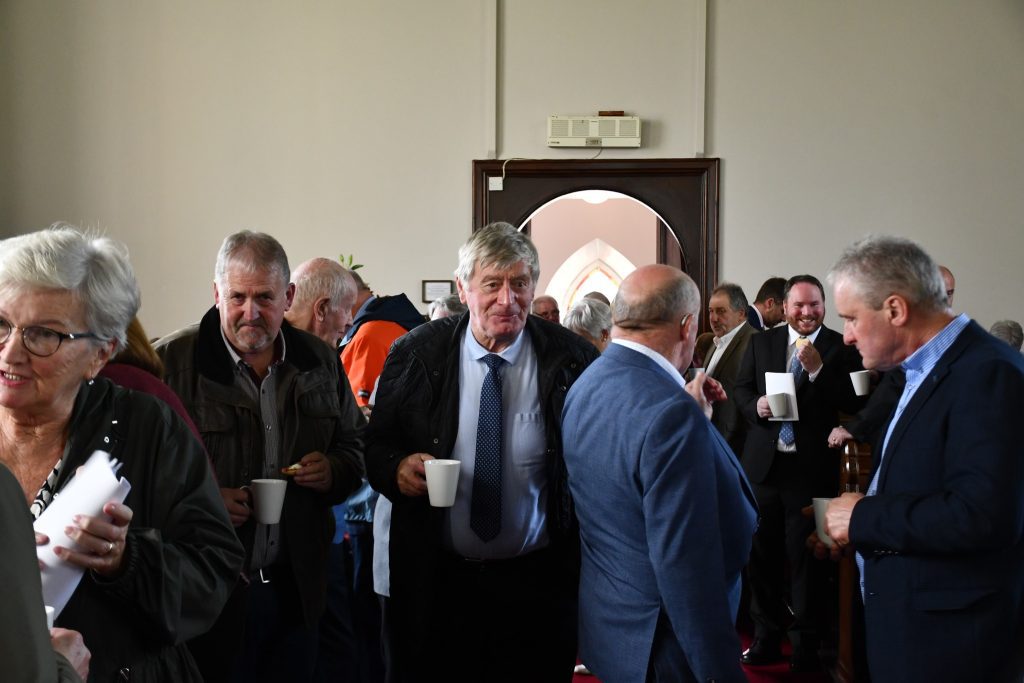
After the service ended, a celebratory cake, decorated with the image of St Patrick’s Church, was produced at the front of the church and the honour of cutting it fell to Mrs Betty Beattie who, as well as being a churchwarden, has been sexton in Donaghmore for over 50 years. The cake was then shared among the congregation as they enjoyed refreshments and fellowship at the back of the church.
Today’s service was led by Dean Fitzgerald. Music was provided by the church choir, under the direction of organist Heather Doherty. The readings from Scripture were delivered by Mrs Pearl Barnett and Kenneth Witherow.
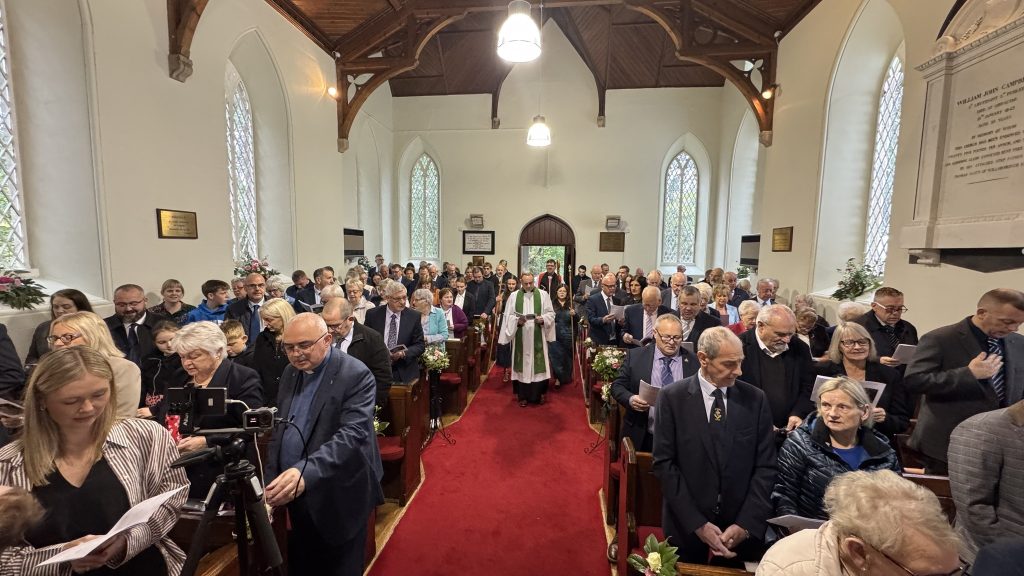
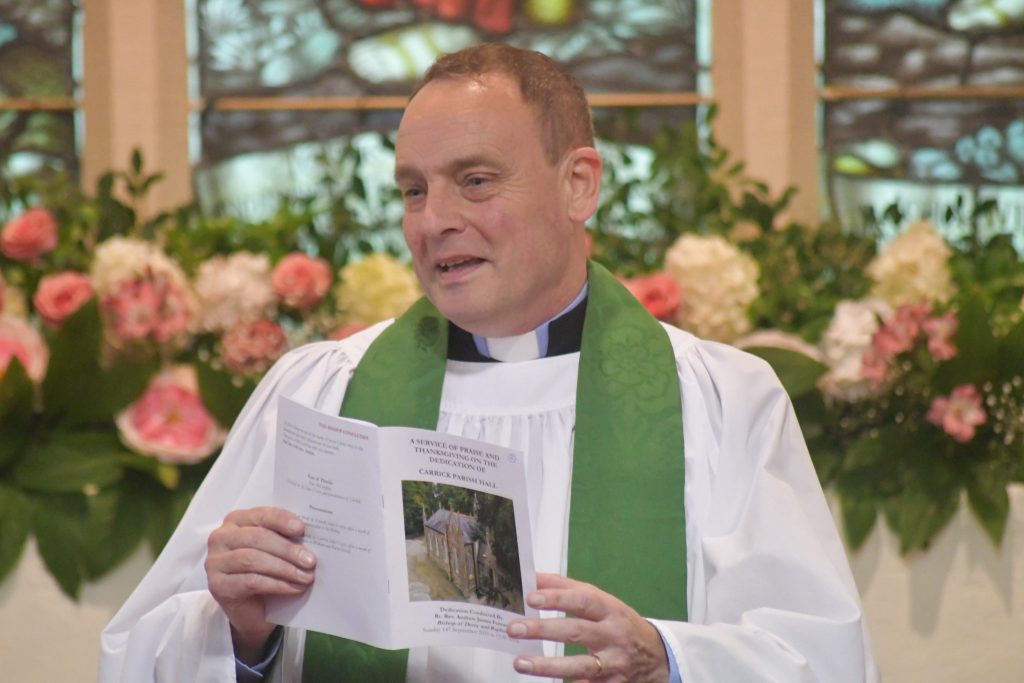
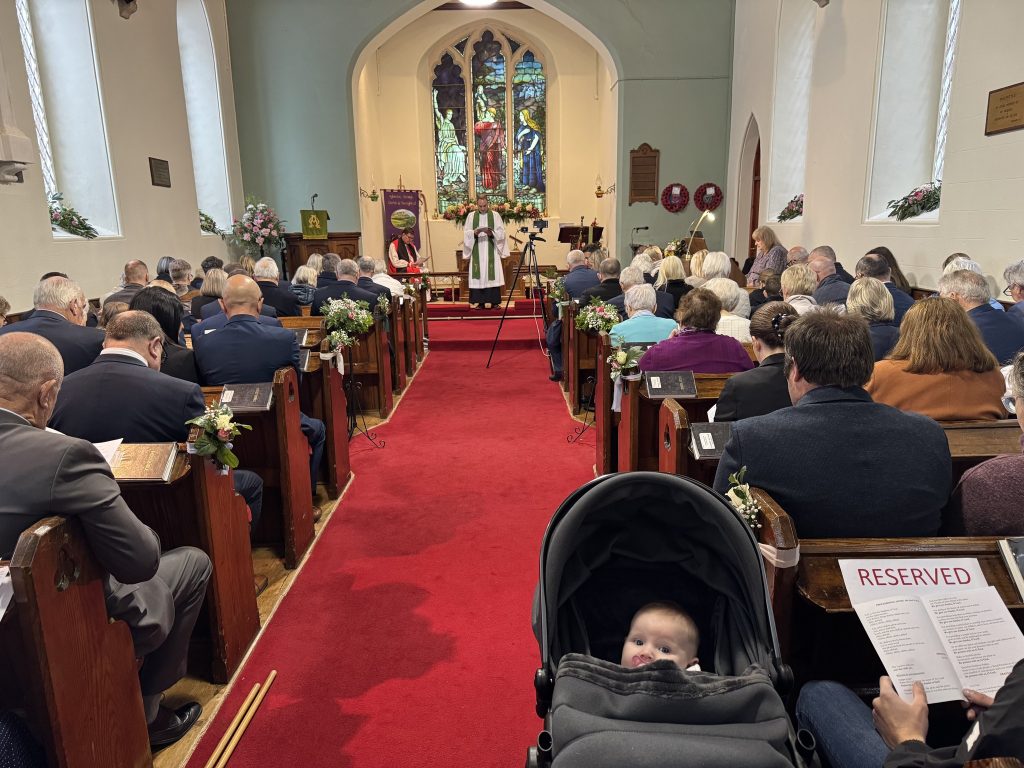
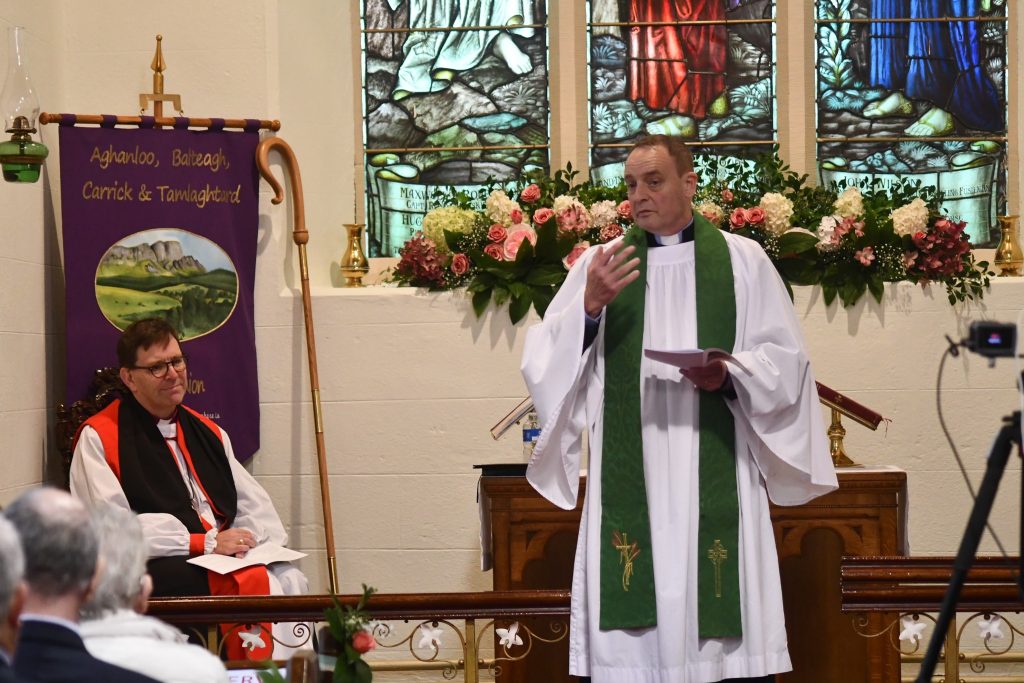
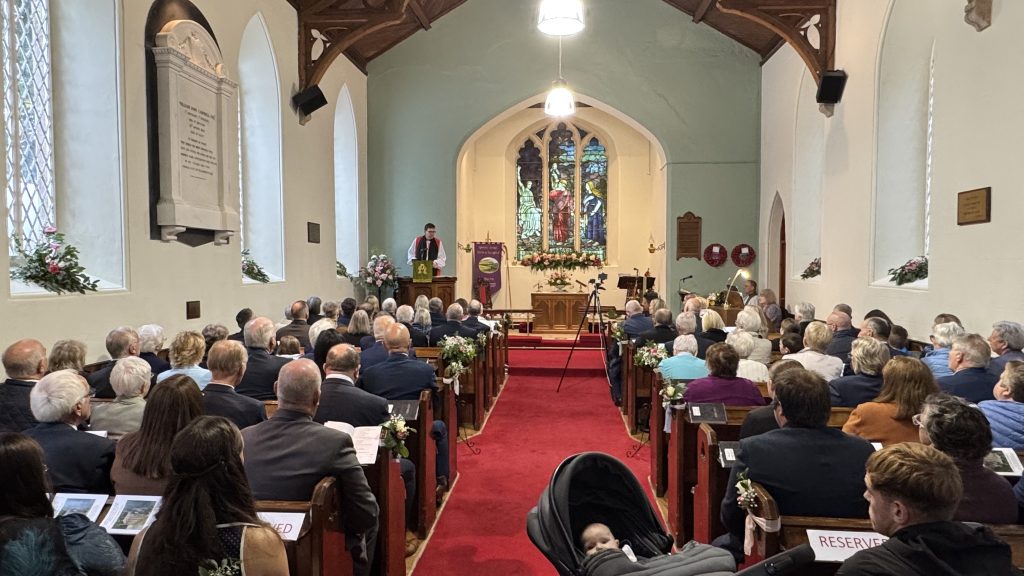
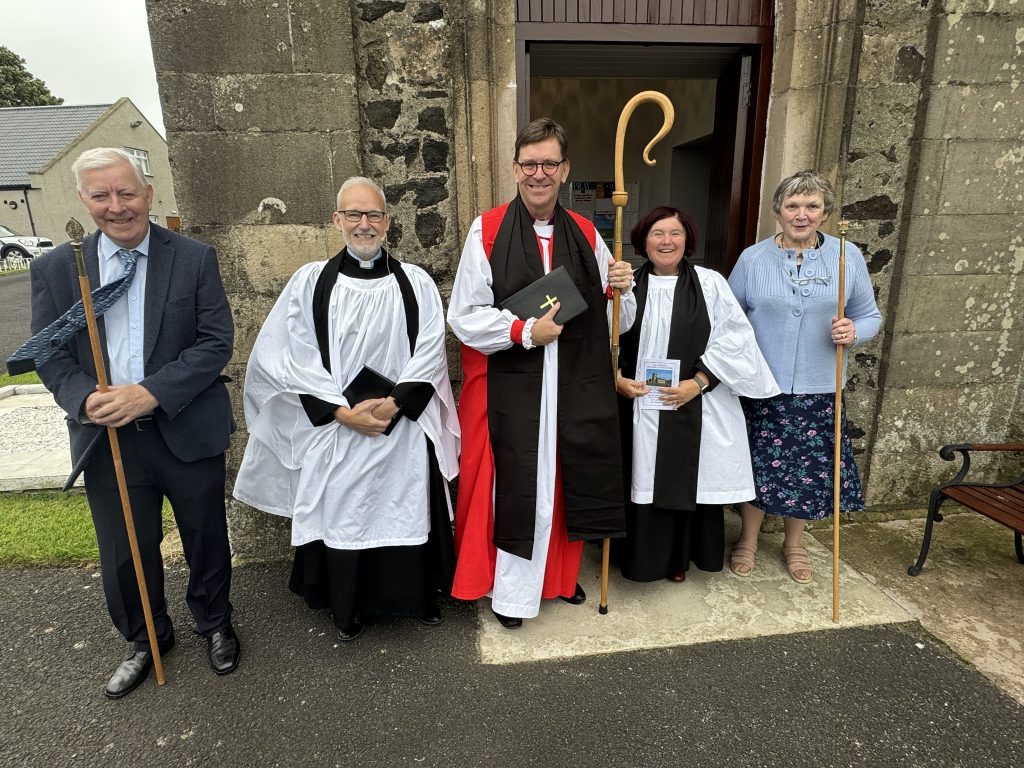
The congregation of Carrick Parish Church were told by Bishop Andrew that the opening of their new hall on Sunday 14th September (2025) had put “a smile on the face of God”. The broad smiles on people’s faces belied the rather damp conditions as the parishioners were joined by friends from their sister churches in the Aghanloo, Balteagh, Carrick and Tamlaghtard Group and guests from elsewhere to celebrate what the Rector, Rev Rhys Jones, called the most significant day in Carrick’s history.
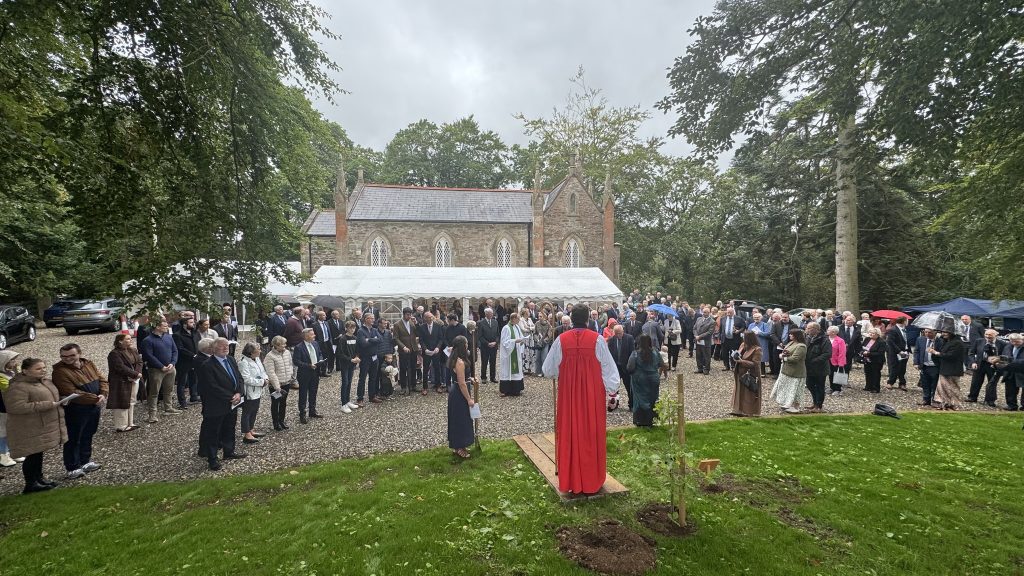
The tiny church enjoys a stunning location, in the heart of the Roe Valley, beside the famous Country Park and overlooking a scenic stretch of the River Roe. And the parish team showed extraordinary resourcefulness, as they rose to the logistical challenge of hosting such a large-scale event. A minibus service was laid on to ferry visitors to the church, and a large marquee was erected in the grounds to accommodate the overspill from the much larger than usual congregation.
The Rector began by extending a “heartfelt welcome” to everyone in the church – and in the marquee – on a “really prestigious day” in the 180-year history of Carrick Church. “Carrick was built some 179 or 180 years ago,” Rev Rhys said, “and without question this is the most significant day in the life and witness of this church and its people. I want to thank you all with sincerity for being here as we join in celebration, thanking the God of providence and grace for giving us the strength and the wherewithal to complete the task that was set before us some five or six years ago.” The Rector thanked everyone who had “contributed financially, or in terms of time or prayerfully, or who gave of yourselves in any way to make this hall a reality for its people and the wider locality. So, God bless you and thank you on behalf of the Select Vestry of this parish.
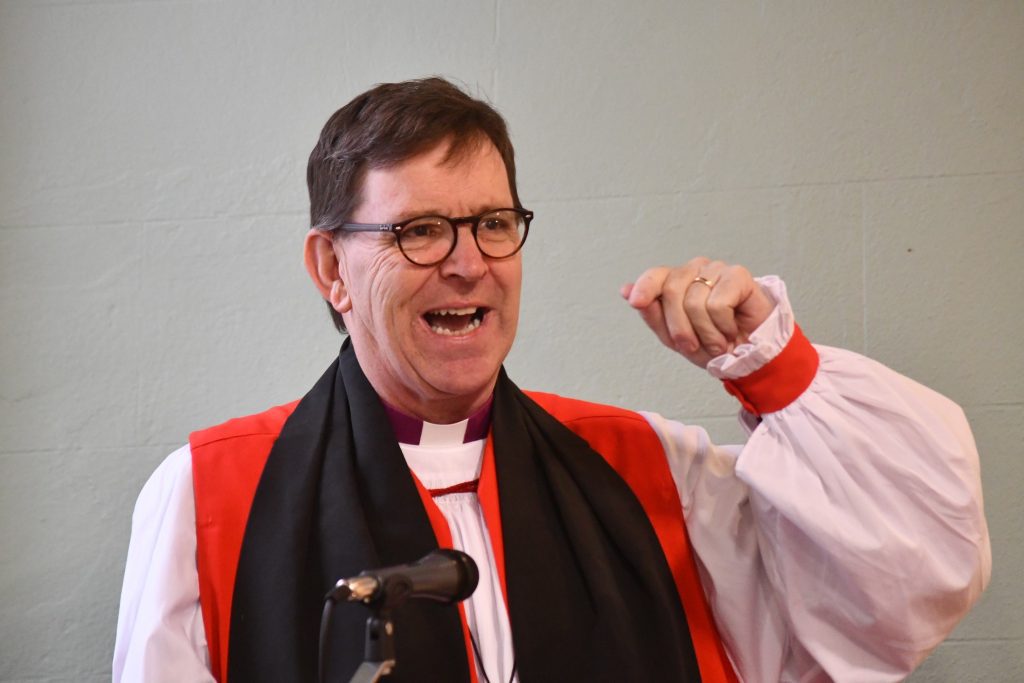
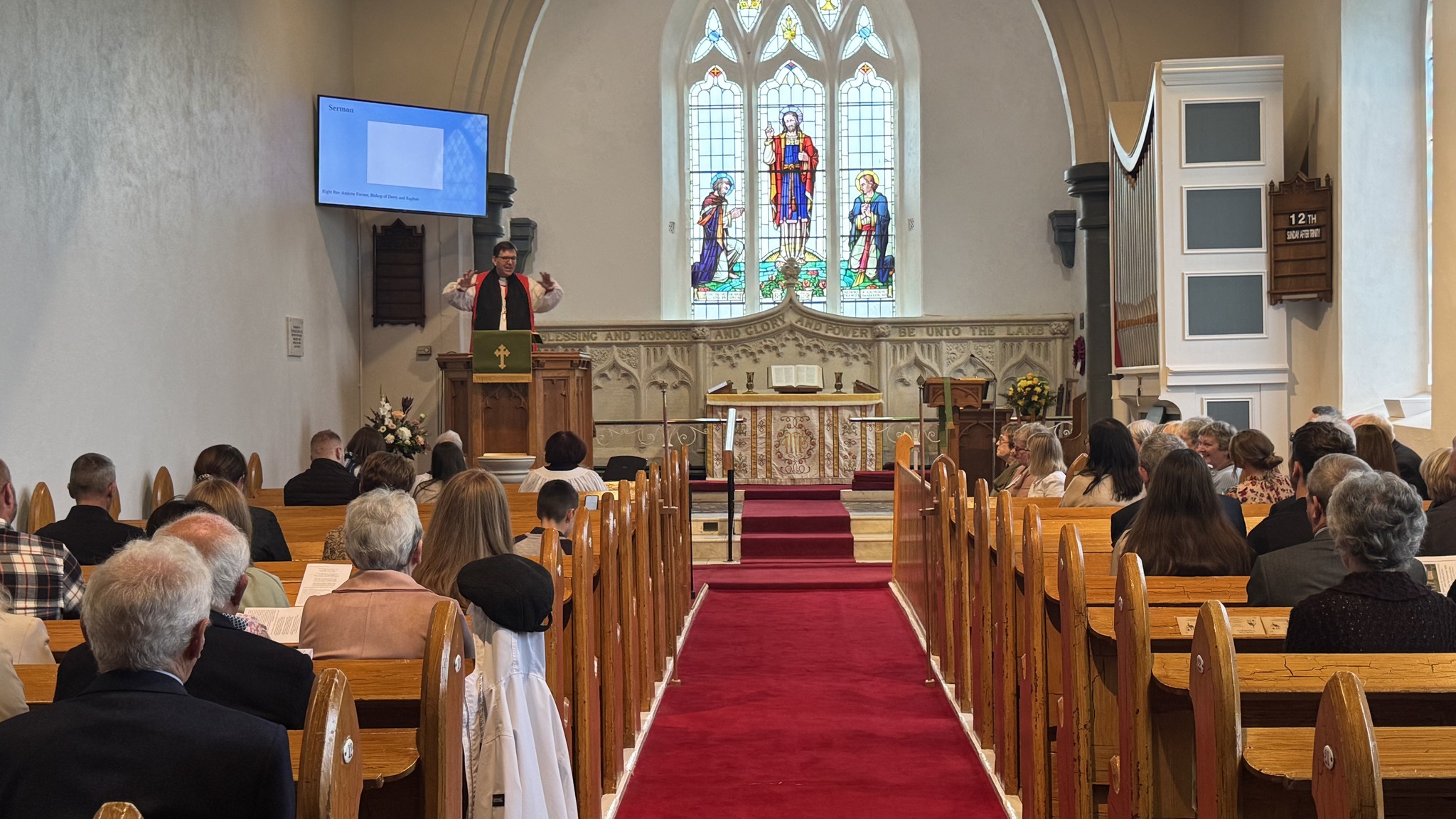
In his sermon, Bishop Andrew said it was wonderful to be there on such a special day, to see this hall – which had been a pipedream for so long – being opened. “And now we have this wonderful, wonderful example of what can happen when the children of God come together,” he said, “His people gather together, as they work together to see this new hall open, and to say, ‘Well done, congratulations’. This is wonderful, this is a dream come true for this parish that we are so thankful to God for, today.”
As an occasional walker in Roe Valley Country Park, Bishop Andrew is familiar with the area in which the church and the new hall are located, and he said he was always struck on his visits by the beauty of the area. “Your group of parishes must be the most picturesque parish churches in our diocese, with beautiful views, beautiful settings, beautiful buildings. We’re here in Carrick and sometimes I come here myself and take a walk down across the little bridge and go for a nice walk around. It’s just beautiful, such a picturesque place, and we’re so thankful for the beauty of what surrounds us. But much, much more than that, this isn’t just a place of beauty in the setting beside the river, in the valley beside us; what we know is the beauty of the family of God that meets here; the family of God that has been a blessing for 180 years for the parish here; and the family of God building a new hall to help continue to build the Kingdom of God here.”
Bishop Andrew complimented the parish on the prudent stewardship and extraordinary generosity that had brought the new hall into being. “Not one penny is owed on this hall. It’s all paid for. Isn’t that remarkable? What a wonderful testament to the people of this parish; to the generosity, to the hard work, to the sacrificial giving; for the time that you have given, the work that you have given; and you have this beautiful hall that just sits so well in its landscape – this beautiful church, this beautiful hall, this beautiful parish – this is wonderful, and God has done great things.
“You know, this puts a smile on the face not just of you, not just of every parishioner, not just on the face of everyone in the Diocese of Derry and Raphoe. I believe this puts a smile on the face of God.
“For far too long we have talked about the Church declining, the Church in retrenchment, ‘the Church isn’t what it should be’. I want to tell you, God is at work. God is at work. The Church is growing. The Church is turning a new chapter, a new chapter of the Church reaching out, standing up, showing the Good News of Jesus Christ, and we want to witness to the vibrancy of what it means to be a follower of Jesus Christ. God is at work.
“For so long, I think, we have looked back and thought that all the big days of the Church were in the past. We looked back and thought, you know, that’s the way it used to be. We thought, ‘Only, if only, we were the way we used to be’. But yet, I want to tell you that the best days are yet to come, that God is at work, that the secularism of our society – many people of my generation have walked away from Church – and now younger people are saying that secularism hasn’t worked, and we see young people coming back to Church, young people wanting to know something about the reality of faith in Jesus Christ. That’s what’s happening across the world. And I think what you’re doing in Carrick is saying you’re ready, ‘We’re ready to reach out, we want to see the Church growing, that the best days are not just the days behind us, today the best is yet to come, that God is at work,’ and what you’re doing in this wonderful parish is saying God is alive. We’re witnessing to the vibrancy of faith.”
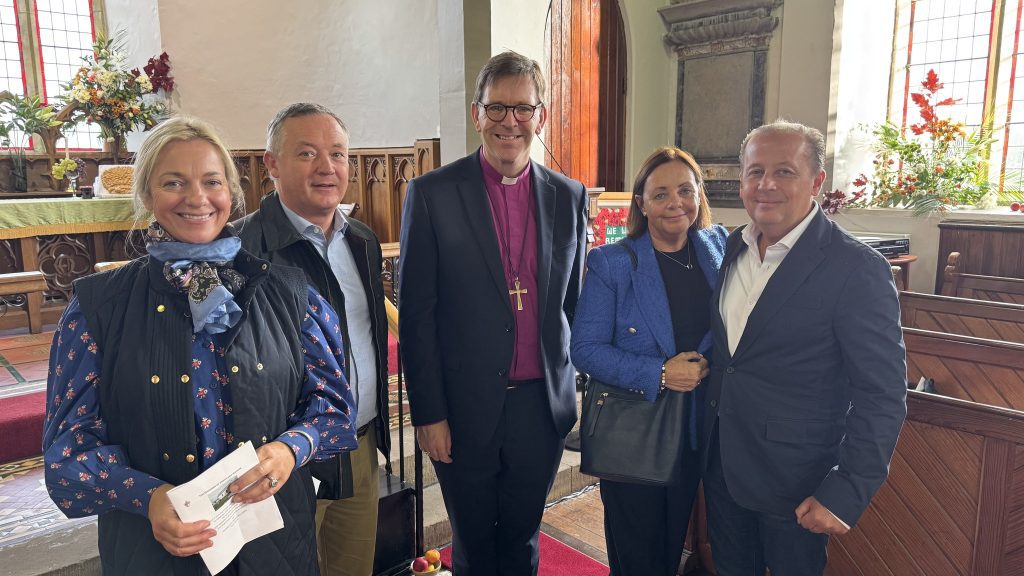
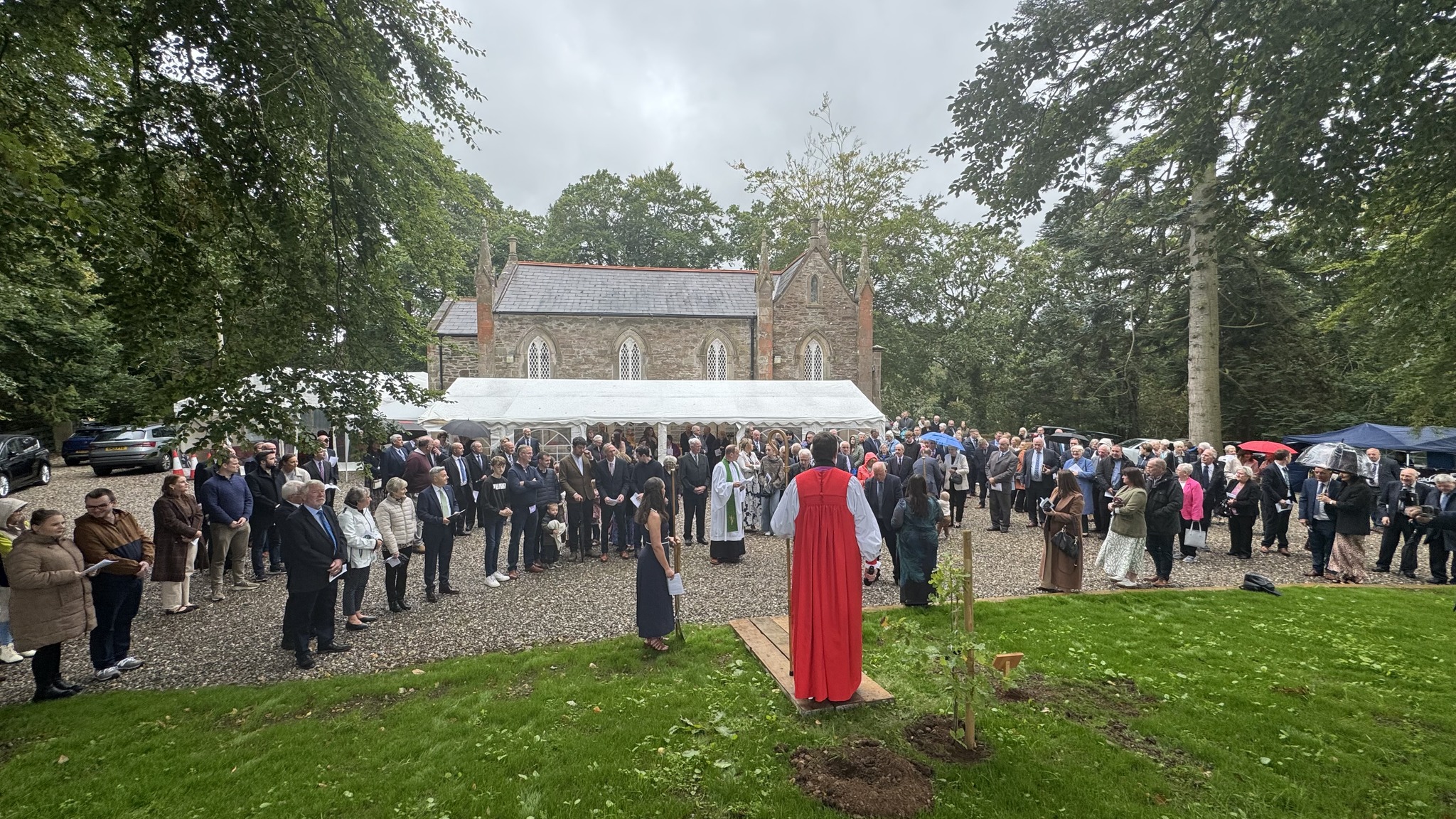
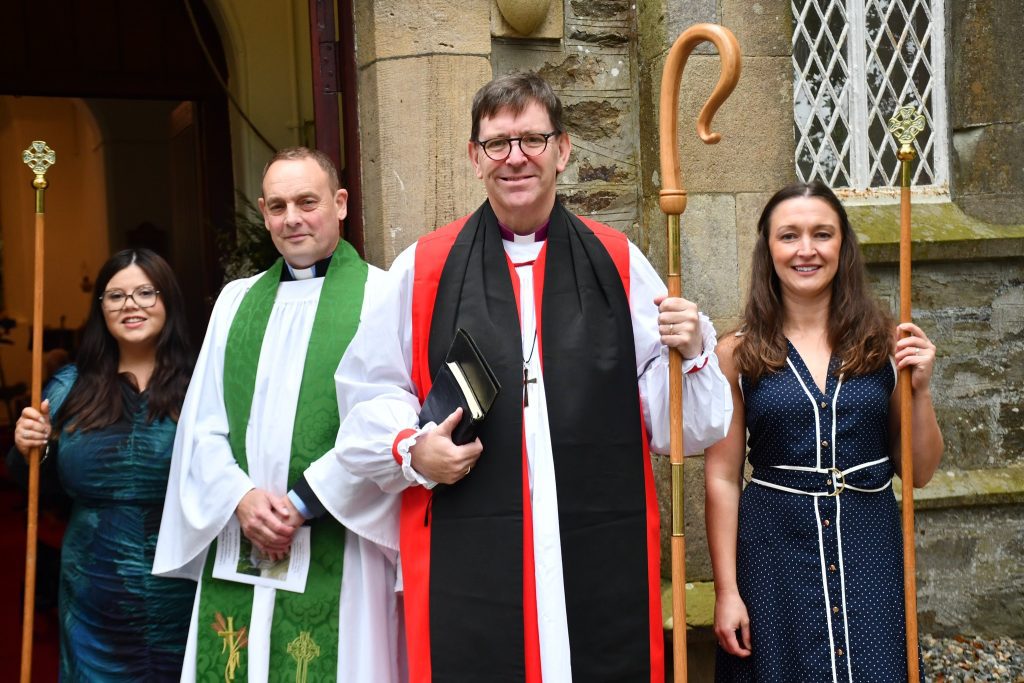
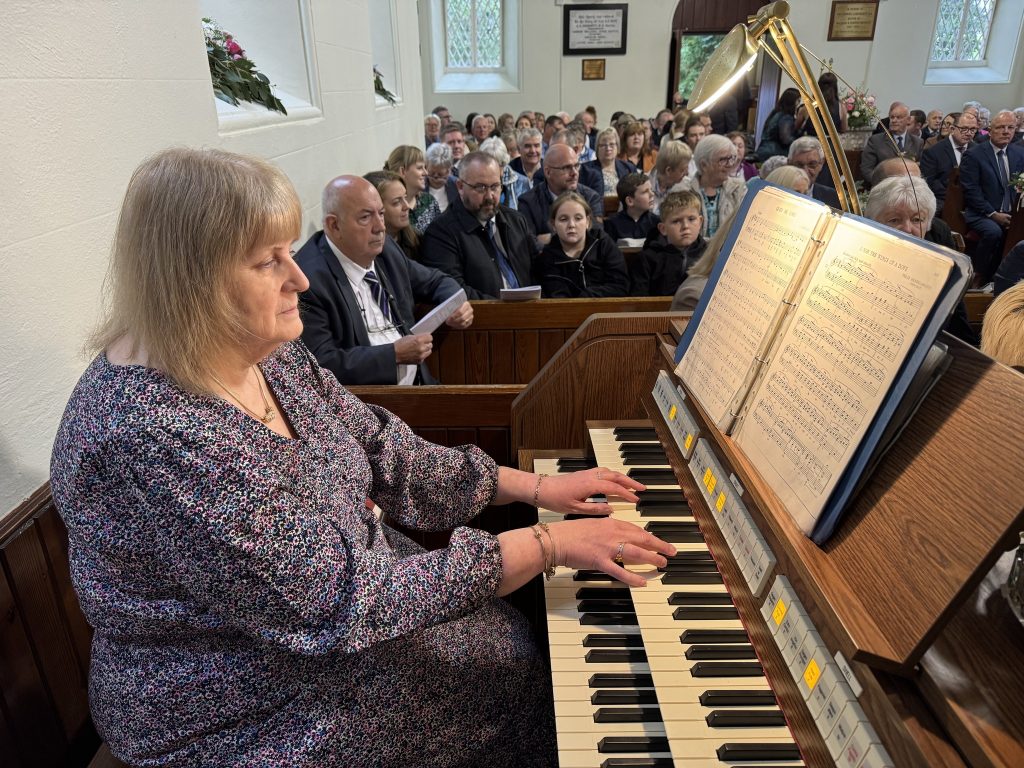
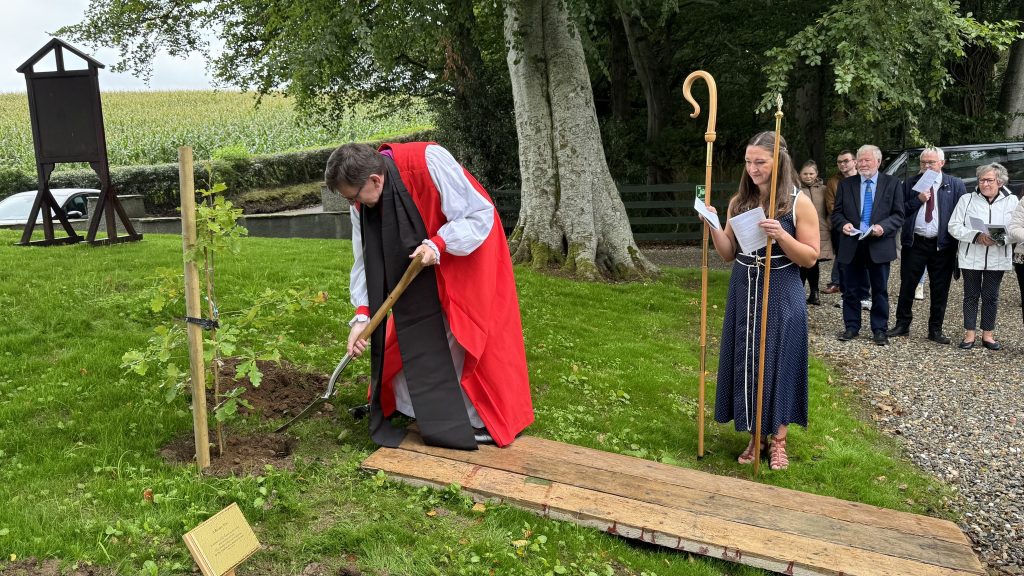
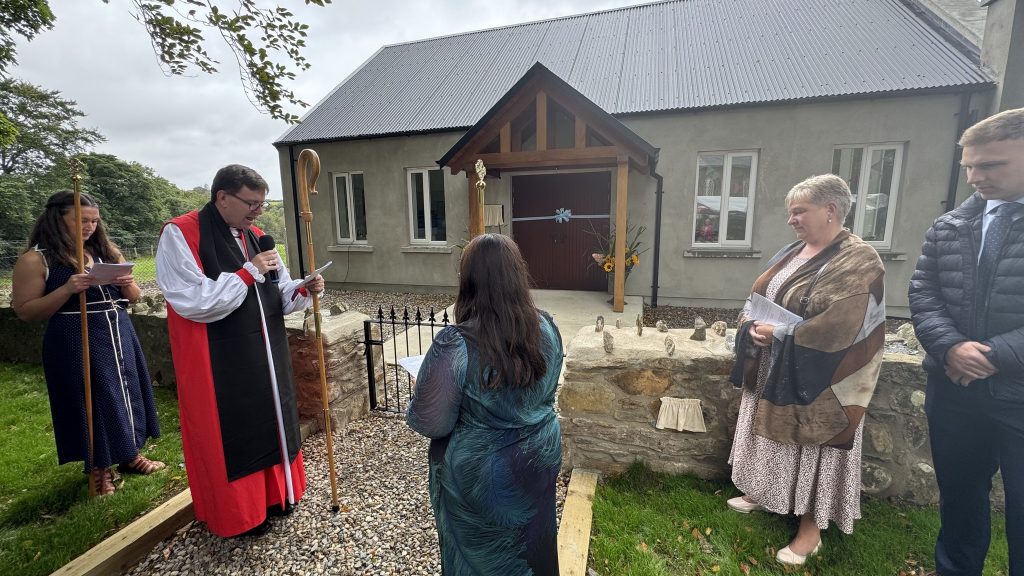
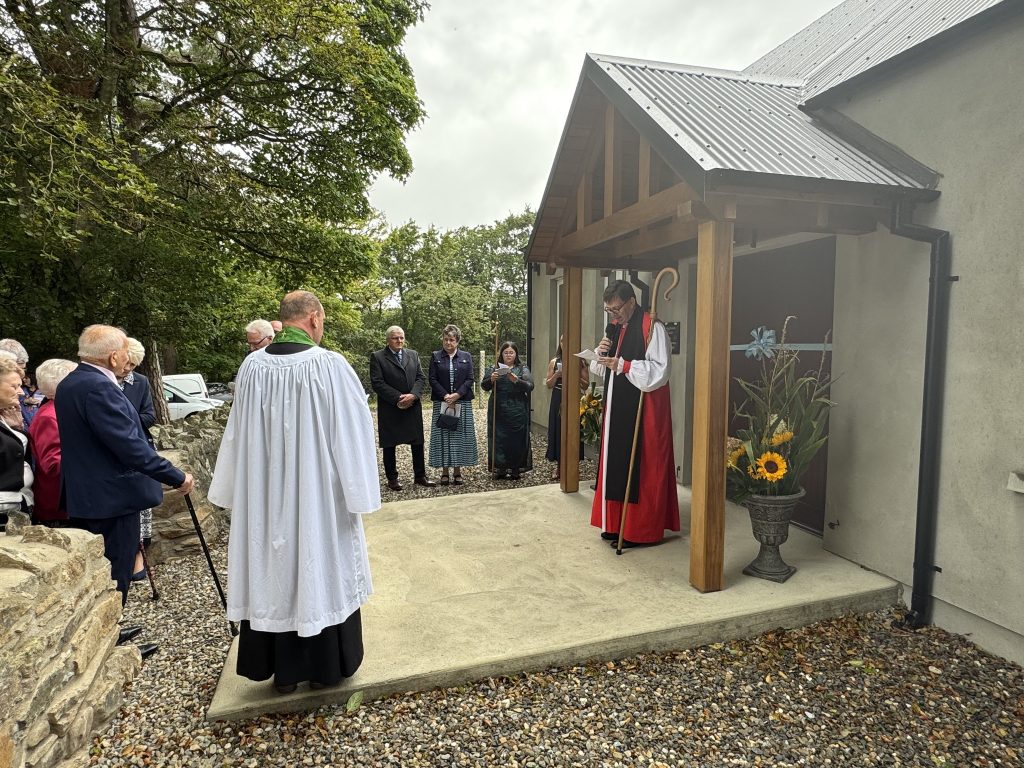
During today’s Service of Praise and Thanksgiving, Bishop Andrew first dedicated a newly-purchased church organ (which was played throughout today’s worship by the parish organist Ann Gibson). Then the Bishop, the Rector and the church wardens – accompanied by the congregation – moved outside the church to plant an oak tree in the grounds (as a memorial to the parishioners’ loved ones). Bishop Andrew dedicated the gateway to the new parish hall in memory of the late Louis McFarland (a warden and “stalwart” of the parish for many years).
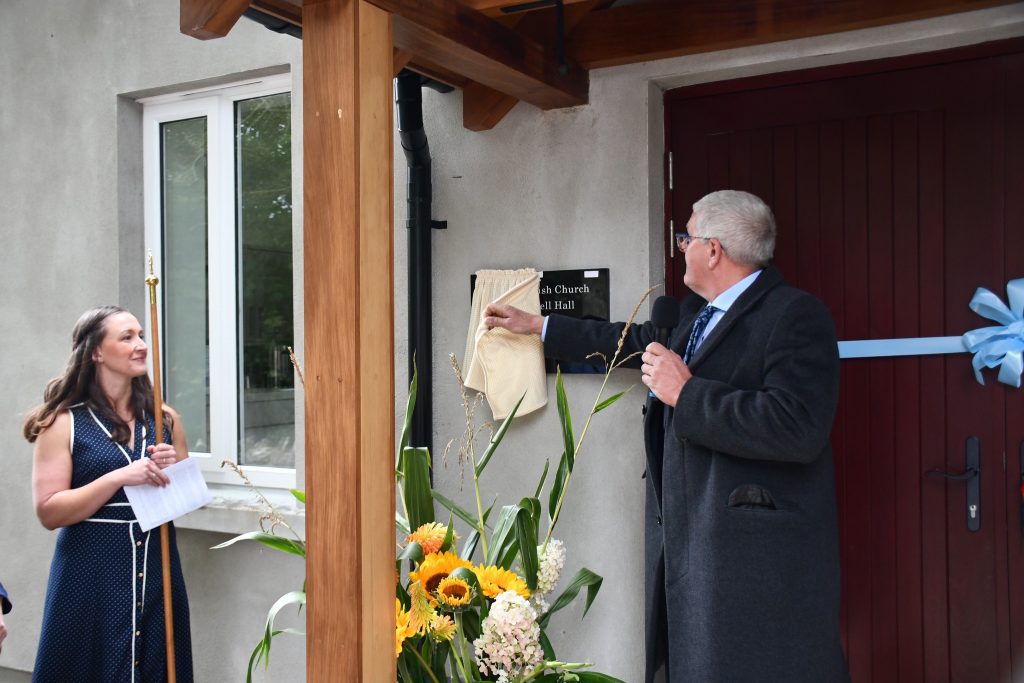
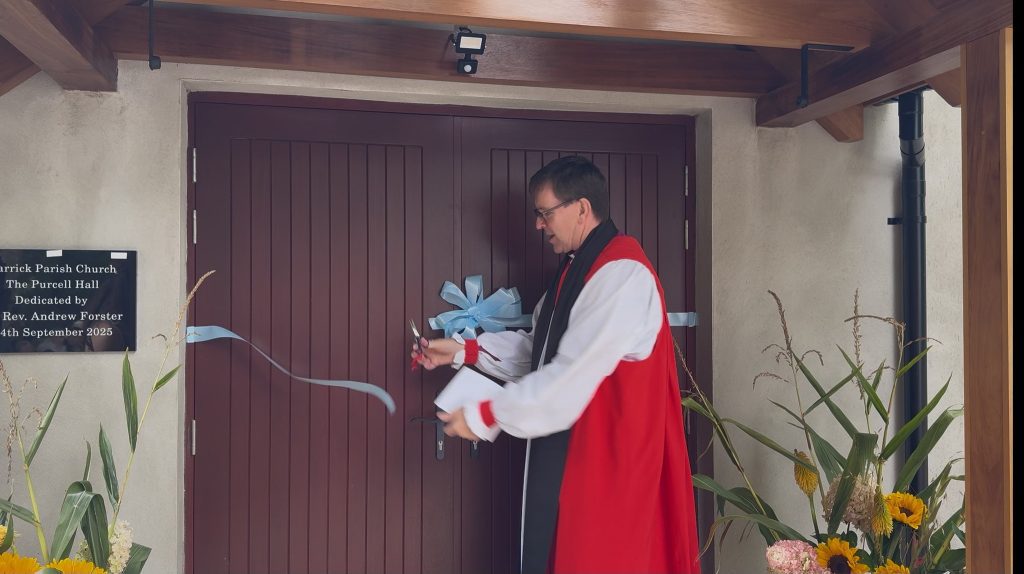
At the new hall itself, William Purcell – who donated the site for the building – unveiled a plaque by the front doorway, before Bishop Andrew dedicated the hall, cut the ceremonial ribbon and declared the hall open. Inside the hall, members of the McGarrigle family looked on as the Bishop finally dedicated an interactive whiteboard donated in memory of All Saints’ Clooney parishioner Leanne McGarrigle.
After the formalities, the congregation and guests enjoyed hospitality and fellowship, with refreshments served in the hall and a BBQ laid on at the marquee, where entertainment was provided for the children present. Throughout the post-service festivities, the Roe Valley Stompers band entertained their audience with a lively performance of popular jazz and swing favourites.
Bishop Andrew has thanked the congregation of Tamlaght O’Crilly Parish Church, near Upperlands, for their care and love for their local church down through the years and praised their commitment to the Christian faith.
His remarks were made in a sermon during a Service of Thanksgiving and Dedication, on Sunday 7th September 2025, during which the appreciation of the Rector of the Parishes of Kilrea, Tamlaght O’Crilly Upper & Lower, Rev Gary Millar and the Select Vestry was expressed for the extensive work carried out on the building over the last year and a half. Today’s service was led by the Rector and his wife, Rev Gillian Millar.
The extensive work includes restoration of the Communion Table and provision of new gold cloths for the communion table, improvements to a number of large windows along the side of the building, the installation of a new handrail, and donation of a new Hall Table and Vestry Table. Gratitude was also expressed to the congregation at large for their financial support, and for their upkeep of the church and its adjoining graveyard.
Bishop Andrew, who returned only a few days earlier from an arduous mission trip to Tanzania, compared the witness of the congregation in south Derry to that of the people in the Diocese of Kondoa, an overwhelmingly Muslim region where Anglicans have been involved in a huge church-building programme in recent years.
“The fact that you love this place, that you care for this place, that you put so much work into this place and dedication into this place, it’s a witness,” the Bishop said, “it’s a witness to the community around that Jesus Christ is loved here and worshipped here, and that we honour him and devote ourselves to him. For me that’s something I feel we – and me personally – need to recapture, that a church building isn’t just a building that we’ve had for years, it’s a witness to the faith in Jesus Christ.
“And when we think about that witness, we think about the part that we have to play – that interlocking chain of people down through the years who’ve been a blessing here. I’m sure you’re thinking of some of them today. I want to acknowledge all you’ve done to make today happen.”
Among the hymns sung at today’s service was ‘My Lighthouse’ and Bishop Andrew employed a couple of nautical metaphors – a lighthouse and a lifeboat – to explain how he felt the Church should serve people in the modern world. “The Church needs to be that lighthouse. We need to warn the world of the danger they’re in without Christ. We need to warn the world that we are lost without Christ. There are people who are trying to find significance in life, trying to find meaning in life, but they’re lost because they haven’t found true faith in Jesus Christ. Jesus said, ‘I am the light of the world,’ and we’re his lighthouse, to show people that they’re in danger without Christ. But also [the Church needs to be] a lighthouse for each of us, to help us plot our course, our journey through life, as we hear from God’s Word, as we listen to His teaching, as we gather in fellowship, to help us live our life in a way that honours God and is a blessing also to the community around us.
“So, the Church is a lighthouse. I think it’s also a lifeboat that says to people in the challenges of life, ‘Come in, let’s help you,’ whenever we feel that sense of need or fear. I think the Church needs to be a lifeboat, a place of refuge, a place of togetherness, a place of help and love and security in a world that is filled with danger and fear and insecurity.”
After his sermon, Bishop Andrew moved throughout the church, leading the congregation in prayers of dedication, thanking God for “the vision that inspired, the generosity that provided, and the hands that built and restored” Tamlaght O’Crilly Parish Church.
During the service, the Rector used two water pistols – one empty, the other filled with water – to impress on the congregation the importance of God’s presence in our lives. Holding up the empty one, he said, “This gun has got many pieces. It’s got a barrel, it’s got a chamber and it’s got a trigger. It looks the part and it is the part, but without water it can do nothing. So, if I fill it with water, what can It do?” Rev Millar squeezed the trigger of the full pistol, sprinkling water over the laughing parishioners. “You see, we can look the part, we can have this beautiful building, it can stand the test of time, but without the presence of God within His church, without the presence of God in our lives, we’re just like that [first] water pistol, we’re empty, and we’re not all that God created us to be. So, today, let’s be filled with the presence of God, allow Him to saturate our whole being so that we can continue to work together to God’s praise and His glory, because when God is in our lives, God is in the building, amazing things happen. My prayer today is that God will bless us and fill us with His spirit.
This afternoon’s readings were delivered by Natalie Rowe and Rev Canon Harold Given (a former Rector of the Parish). Musical worship was led by the church choir, under the direction of organist Melissa McCombe.
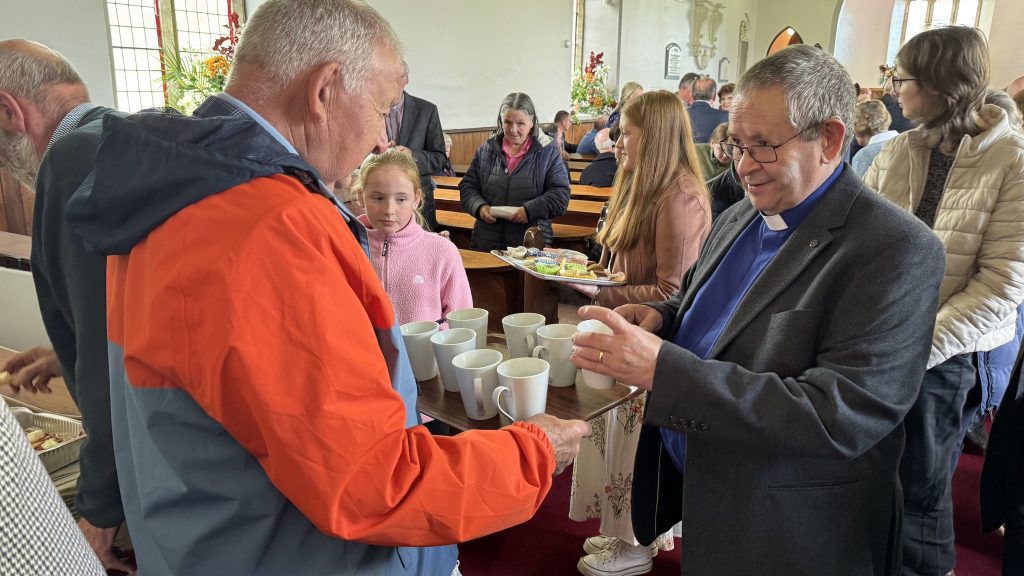
After the service, the congregation enjoyed refreshments and fellowship in the parish hall.
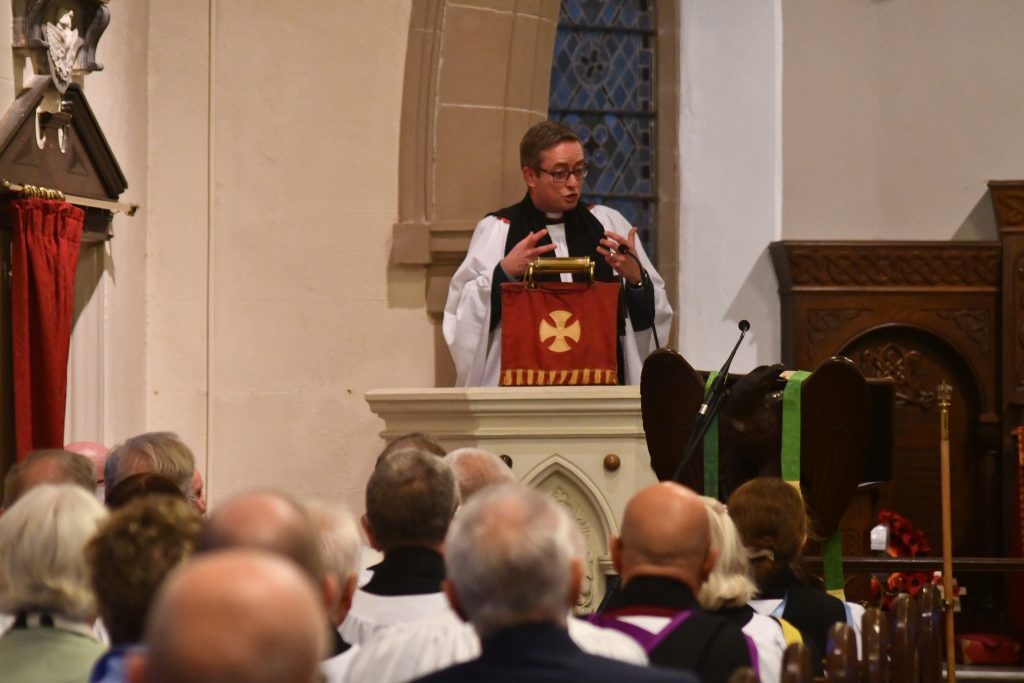
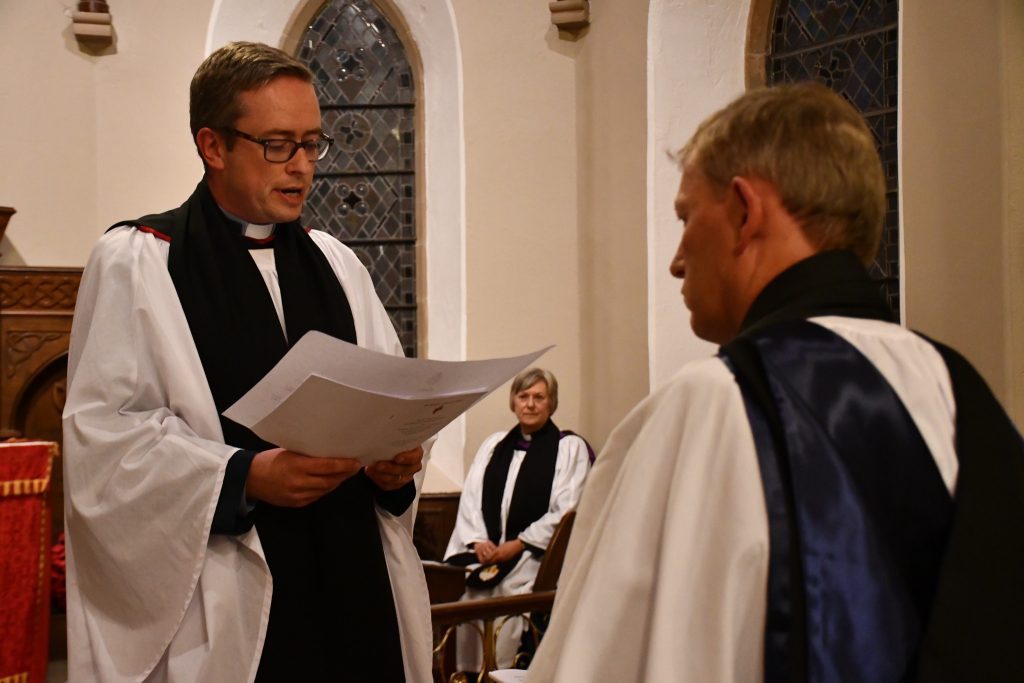
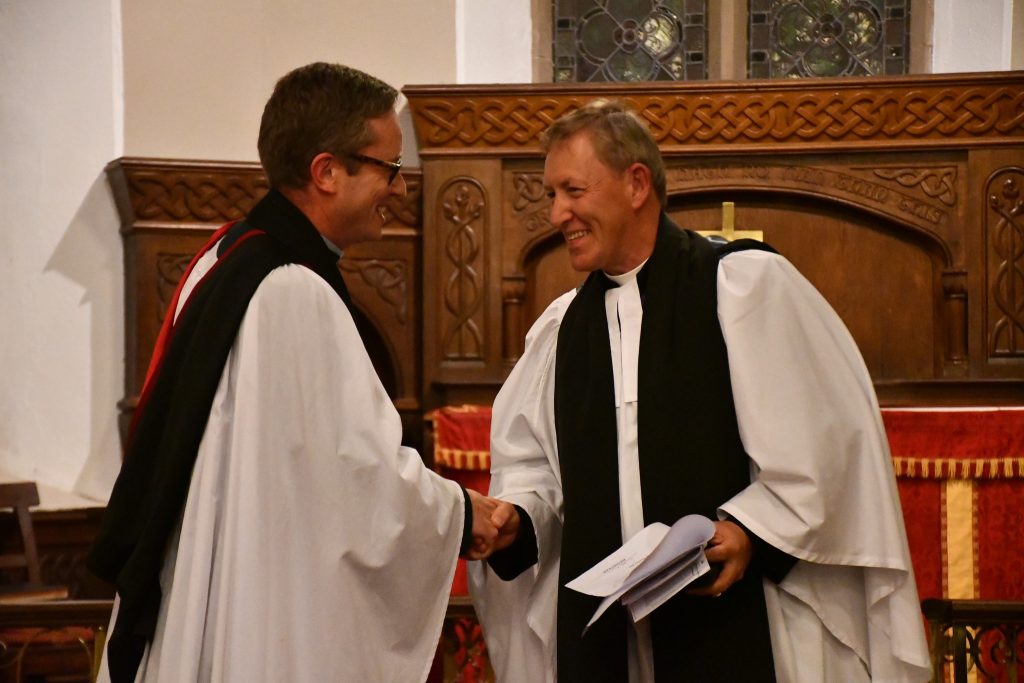
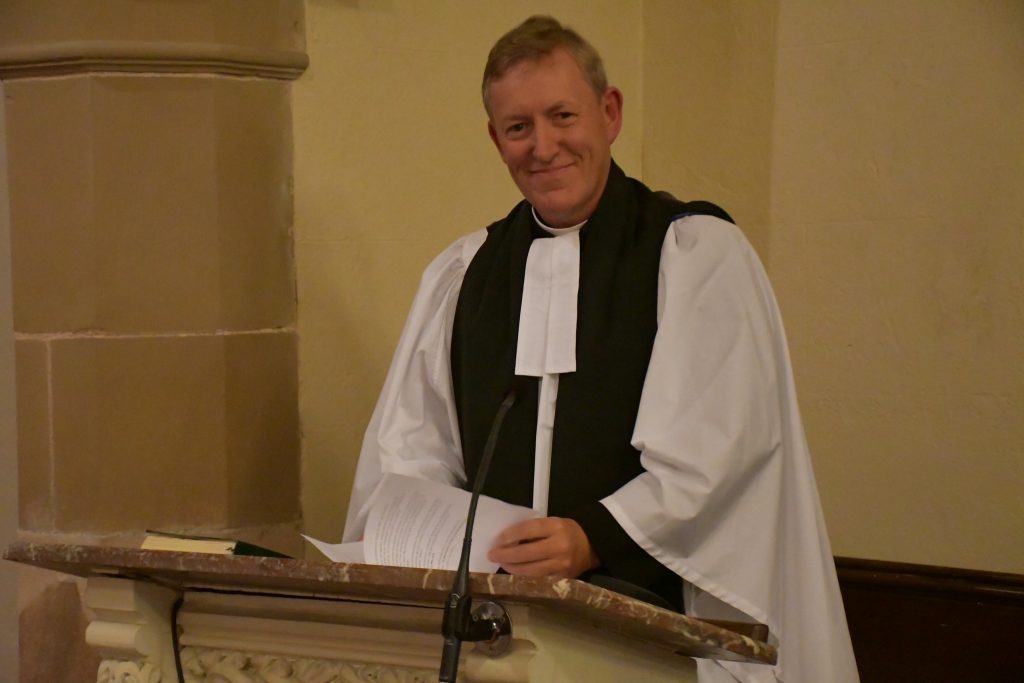
A large congregation comprising parishioners, clergy and readers from as far away as Inver, Dunfanaghy and Ardstraw filled All Saints’ Church in Newtowncunningham on Friday 5th September to welcome the Taughboyne Group’s new priest, Rev Sean McClafferty. Rev McClafferty becomes the first Ordained Local Minister in the East Donegal parishes and picks up the mantle worn by Rev Canon David Crooks prior to his retirement a year ago this week after 40 years as Rector.
The Service of Welcome, which was led by the Rural Dean, Very Rev Liz Fitzgerald, marked a real homecoming for the new minister, who had served for the last couple of years in the Ardstraw Group in Tyrone’s Sperrins area but lives in Newtowncunningham. His wife Jennifer and daughter Zara were in church to see him assume the responsibilities and privileges of ministry conferred when he accepted the BIshop’s Licence.
The Archdeacon of Raphoe, Ven. David Huss, acknowledged Rev McClafferty’s rootedness in the community during a sermon which also included a reference to two of the world’s most powerful leaders. Extending a joyful welcome to the new minister, Archdeacon Huss said the fullness of All Saints’ Church and the enthusiasm of the singing and worship was testament to how meaningful this moment was. “It’s a joyful time and it’s a new beginning,” he said.
It was tempting, the preacher suggested, to compare this evening’s occasion to the event recorded in the Gospel reading (Luke 4: 14-21). “Both of them involve homecomings which are also fresh starts in ministry. In Luke, Chapter 4, Our Lord, Jesus Christ, returns to his home town of Nazareth and preaches in the synagogue there. Here tonight, Sean returns to minister in the place where he lives and among people he knows and is known by.”
The ministry to which Rev McClafferty and all of us were called, Archdeacon Huss said, was the ministry of the Gospel, a ministry which – tempting as it often was – was not so much about laying down the law, rather more about lifting up the Saviour – a ministry of invitation, that His door is open wide. “It is the ministry of the Gospel that will comfort those who mourn; the ministry of the Gospel will give joy in place of faintness; the ministry of the Gospel will build up ancient ruins and repair desolate cities; the ministry of the Gospel will build and bless the Church – Christ’s body.”
Archdeacon Huss said that that ministry was going to take a particular form in the Taughboyne Group of Parishes. OLM was a new format of ministry in the Church of Ireland, he explained. “Sean is among the first OLM priests in Derry and Raphoe. A need was identified for an ordained priest to work in this group of parishes. Sean was identified as the person called to meet that need….Tonight that role commences. Tonight’s a change – for everybody. The remarkable ministry of Canon Crooks over 40 years shaped these parishes, and we remember David with affection and we hold him in our prayers. Today’s a new chapter and now Sean will be the visible, local face of ministry in these parishes, under the Bishop, and in close cooperation with the Dean.”
Archdeacon Huss said he was reminded this week that eternal life had far from disappeared from the agenda. “Perhaps you saw the rather strange news at the great summit that President Xi held in Beijing, to which he’d invited some of the rather severe men of the world – Putin, Kim Jong Un, and so on – and at one point they were caught by a microphone that had been left inadvertently switched on. And what were they talking about? Eternal life. Check this out, it’s not a joke; this is actually true. They were discussing how long it would be possible to live under new technology like transplants and artificial implants in the body. Here were some of the most powerful men in the world, leaders of China, Russia and North Korea and what do they want? To live for ever. It’s not an encouraging thought for us for them to continue for ever in the vein they’re currently in. But there is eternal life for all who will not build themselves up in grandness but who will come only to the cross of Jesus Christ. The answer to eternal life is not solved through the technology that’s coming towards us in the 21st century, it was solved in the first century at the cross and empty tomb of Jesus.”
Members of the three currently active churches in the Taughboyne Group – Don Pearson (Taughboyne and Craigadooish), Billy Moore (Killea) and Terence West (All Saints) delivered this evening’s readings. After the service, the congregation walked the short distance to the parish hall for refreshments and fellowship.