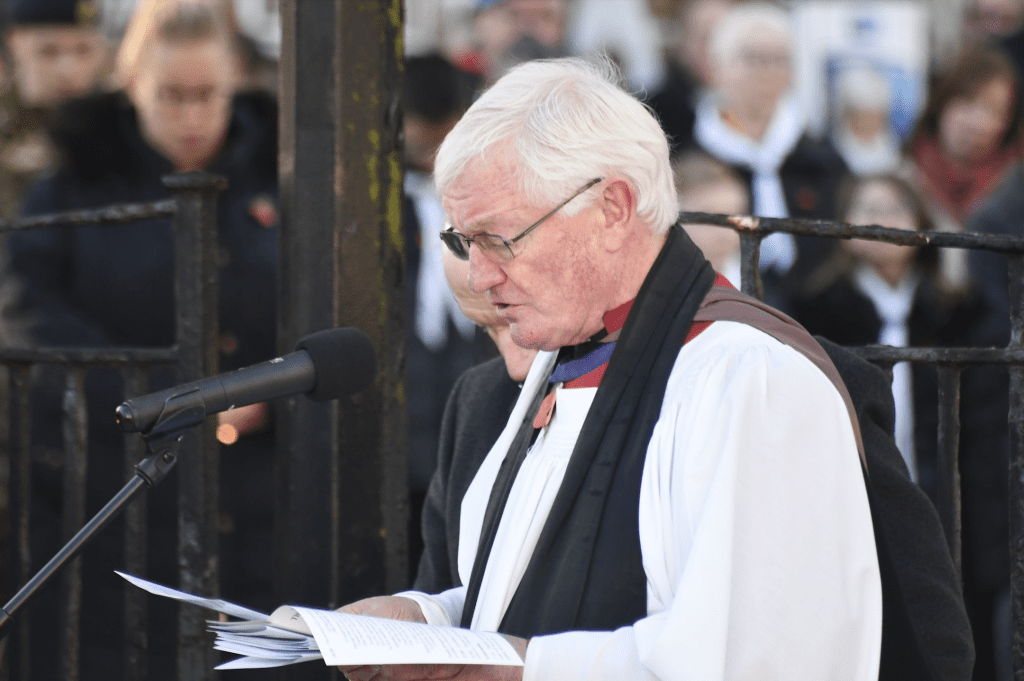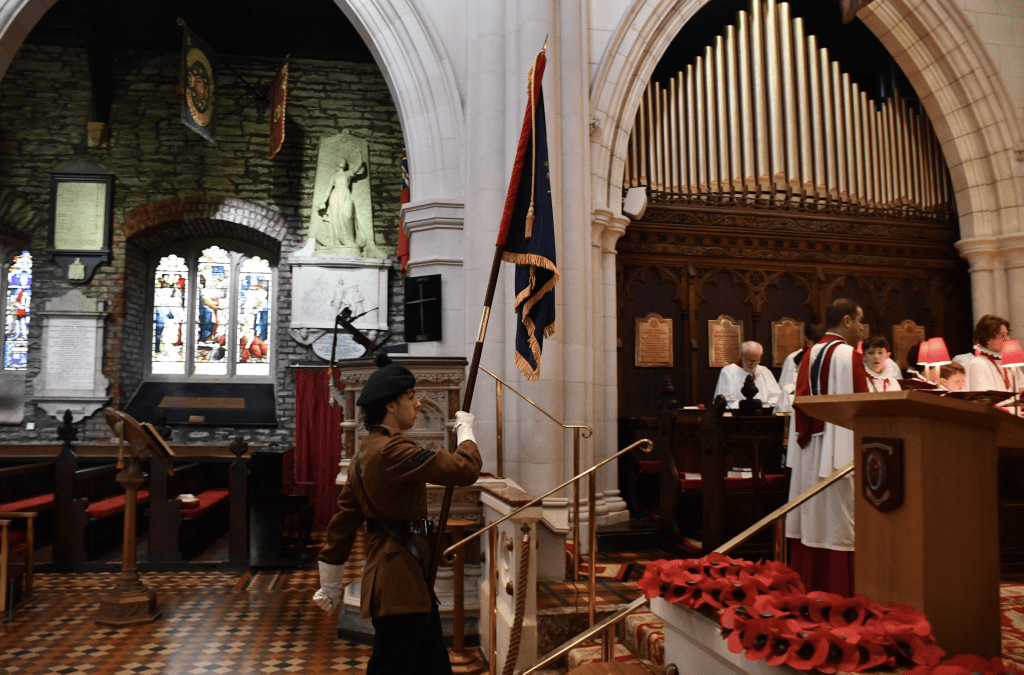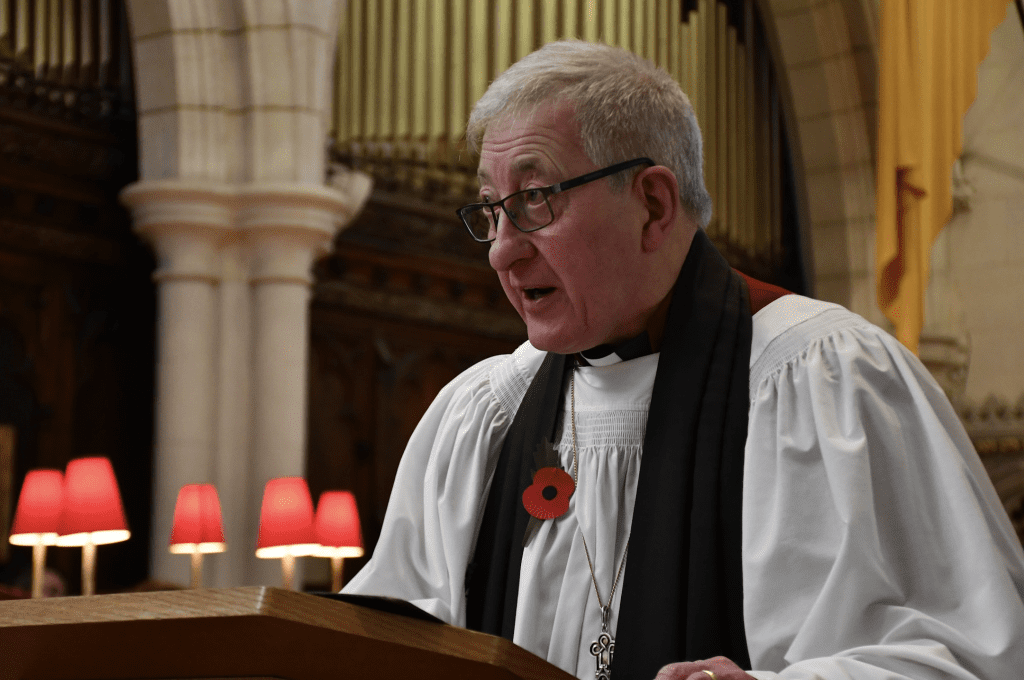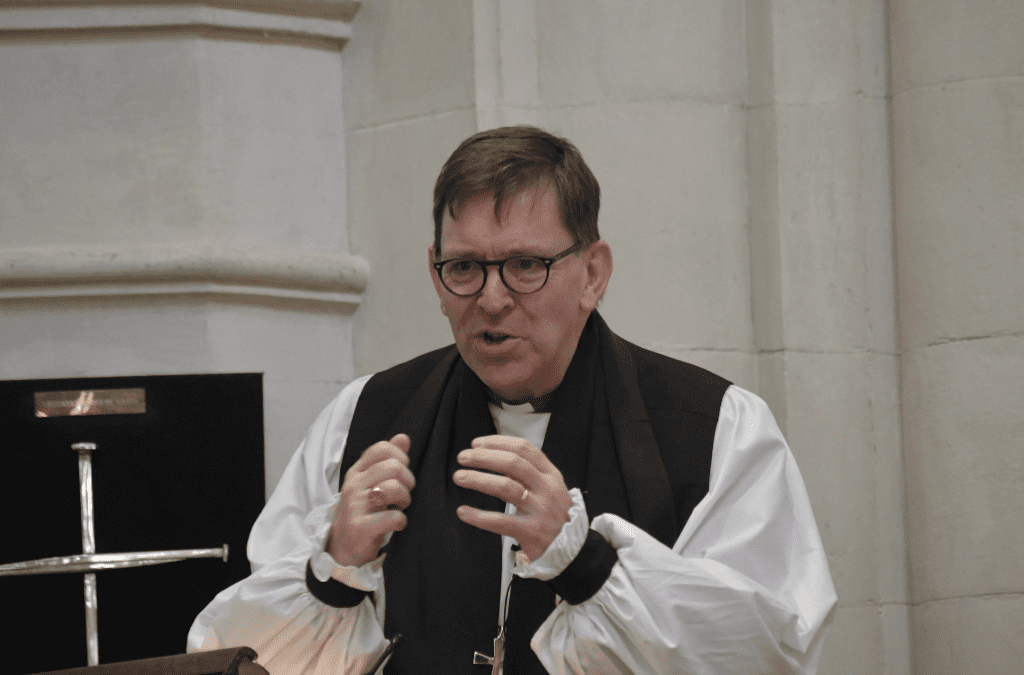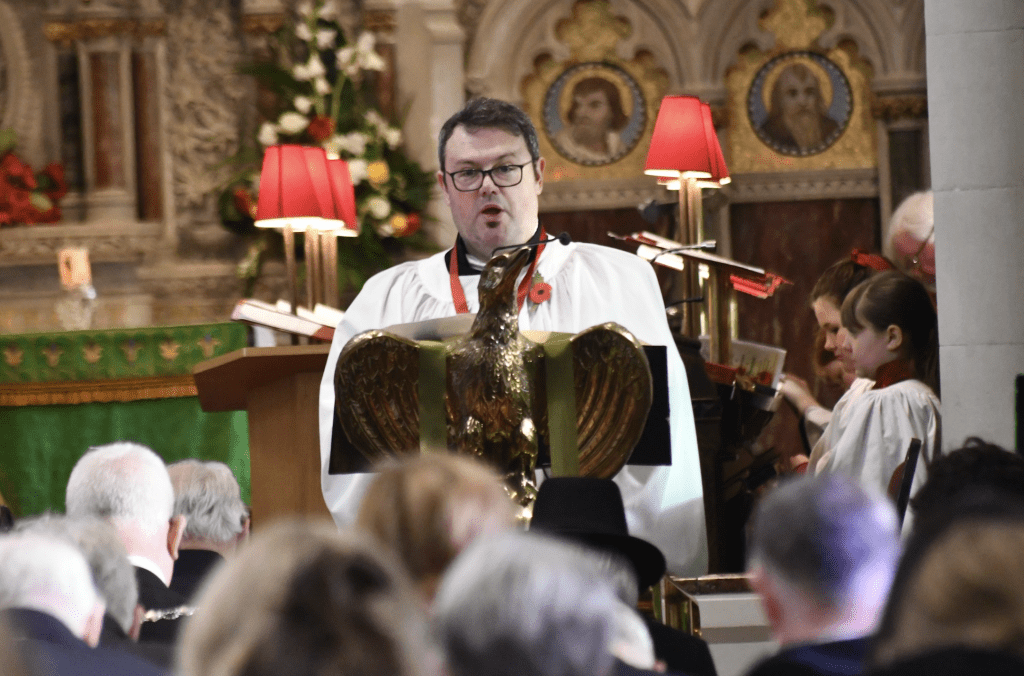
The Bishop of Derry and Raphoe, Rt Rev Andrew Forster, has told the congregation at a ‘Service of Remembrance and Thanksgiving’ in St Columb’s Cathedral in Londonderry, today, that they should treat peace like a precious family heirloom, so that it isn’t damaged or broken. “Peace,” he said, “is never, ever handed to us as a finished product. It has to be crafted – carefully, tenderly, courageously.”
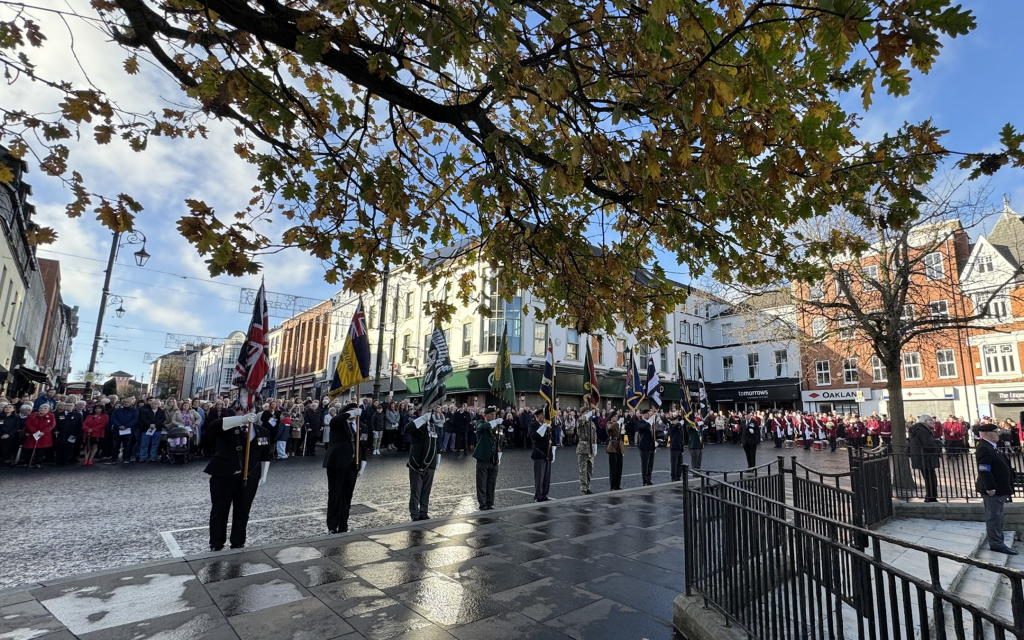
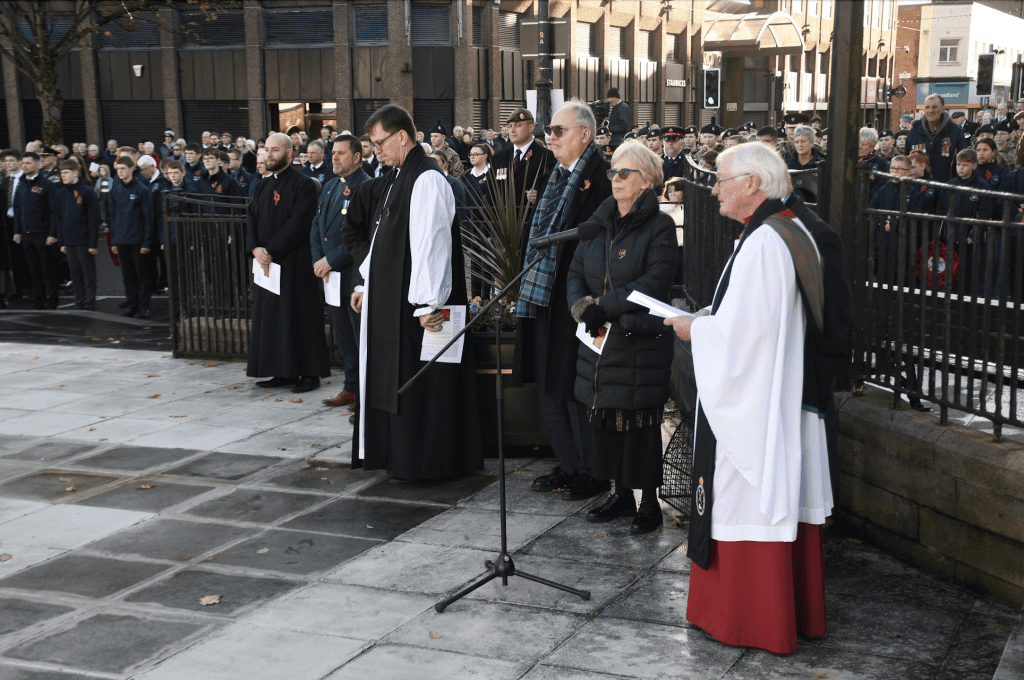
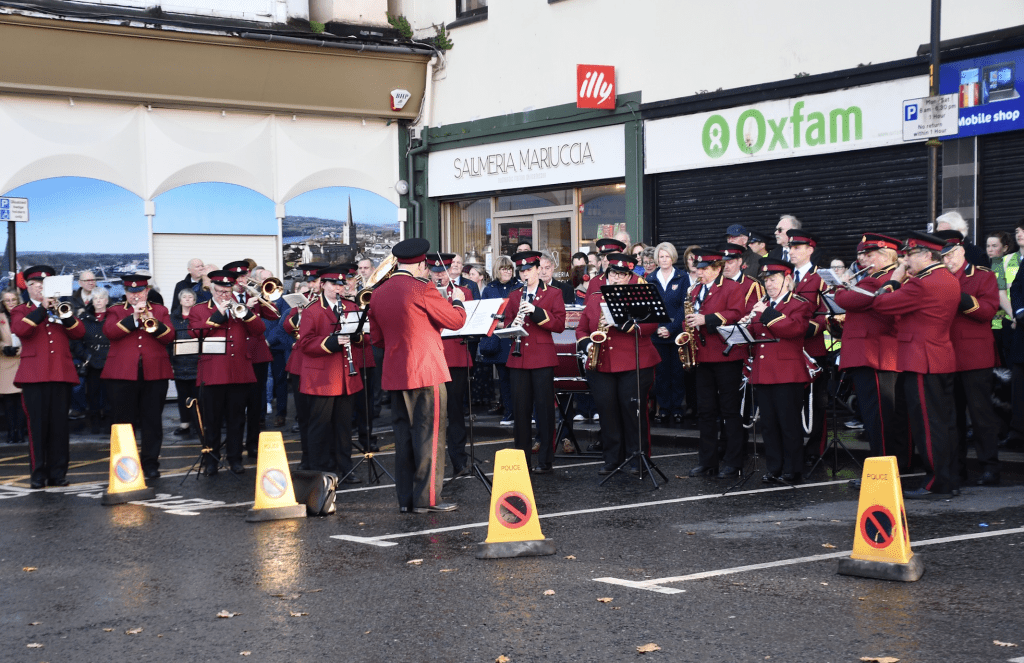
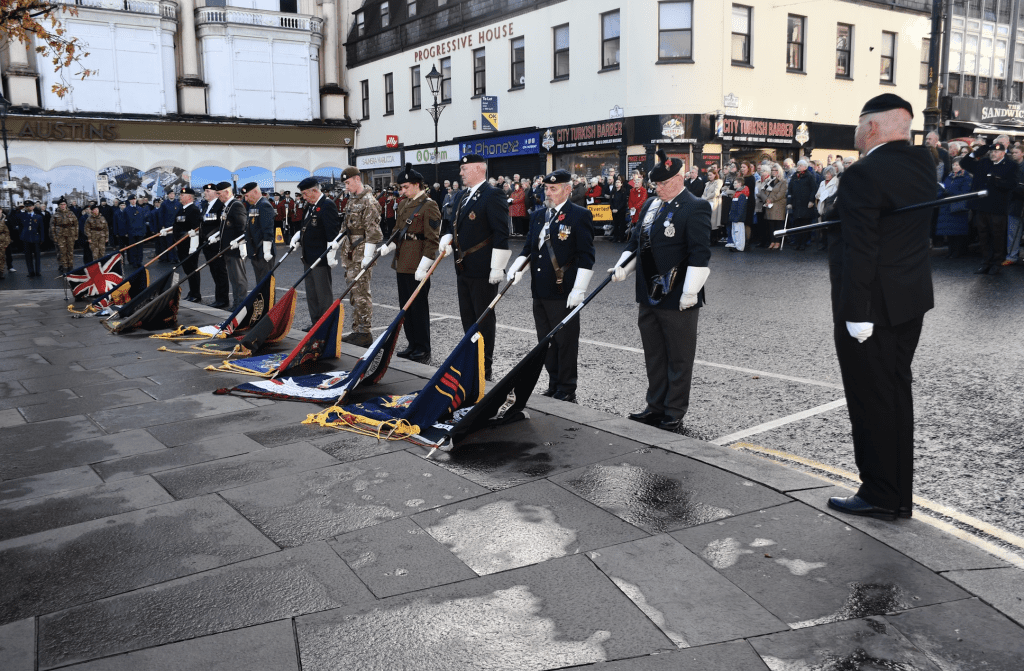
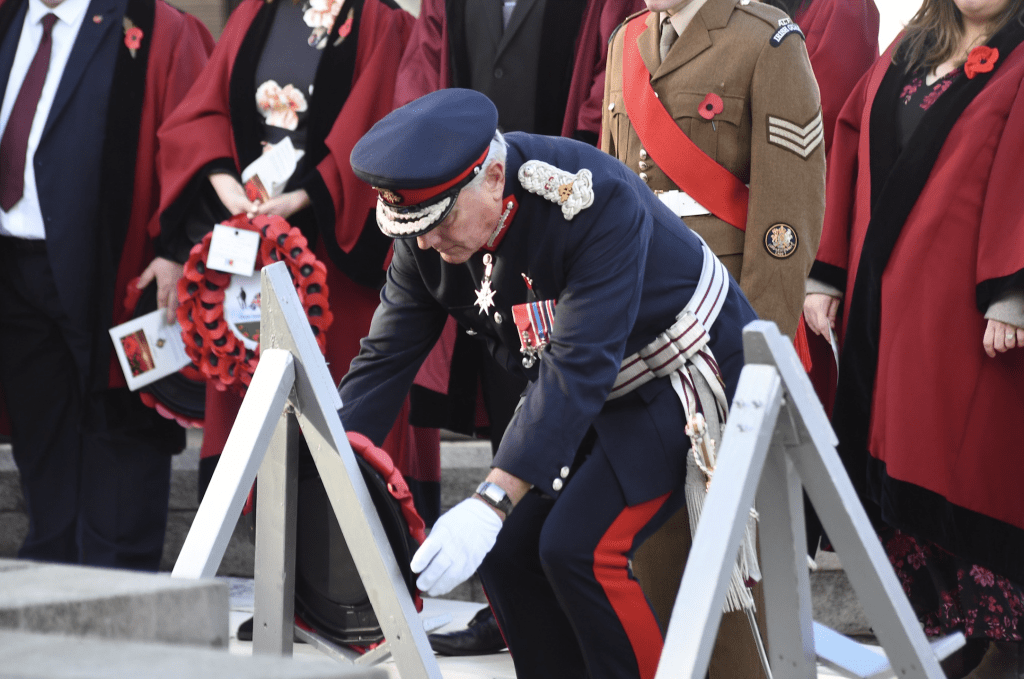
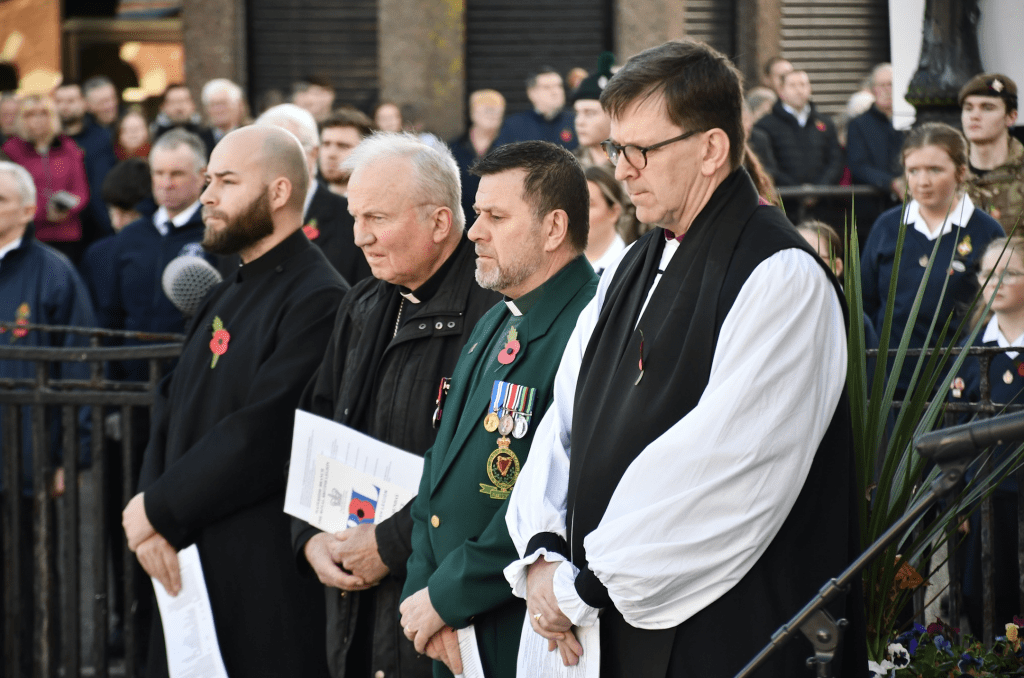
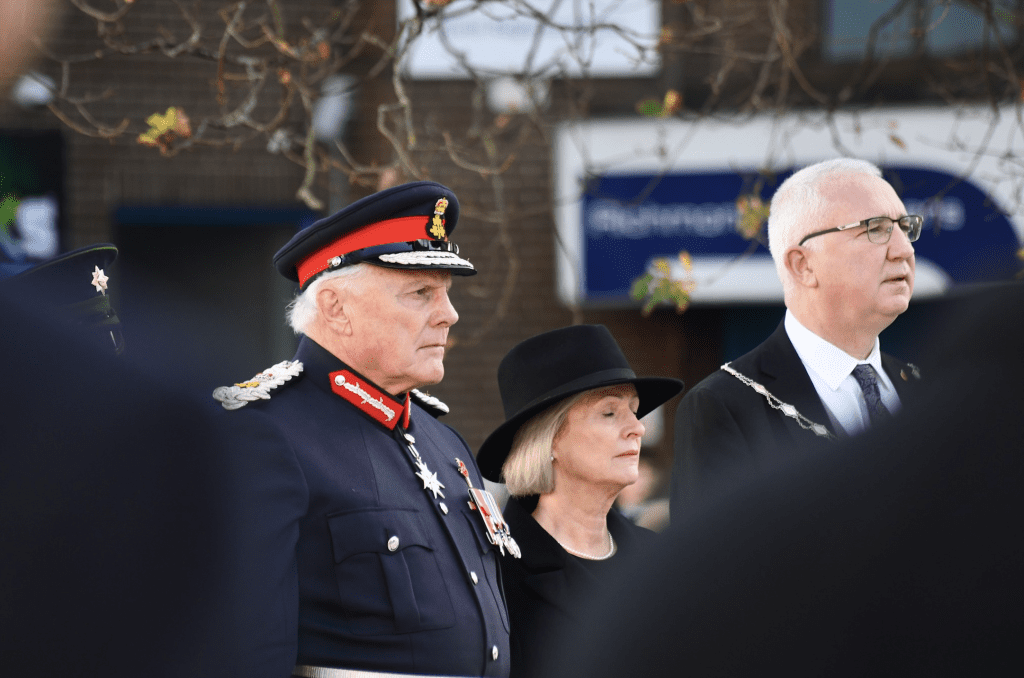
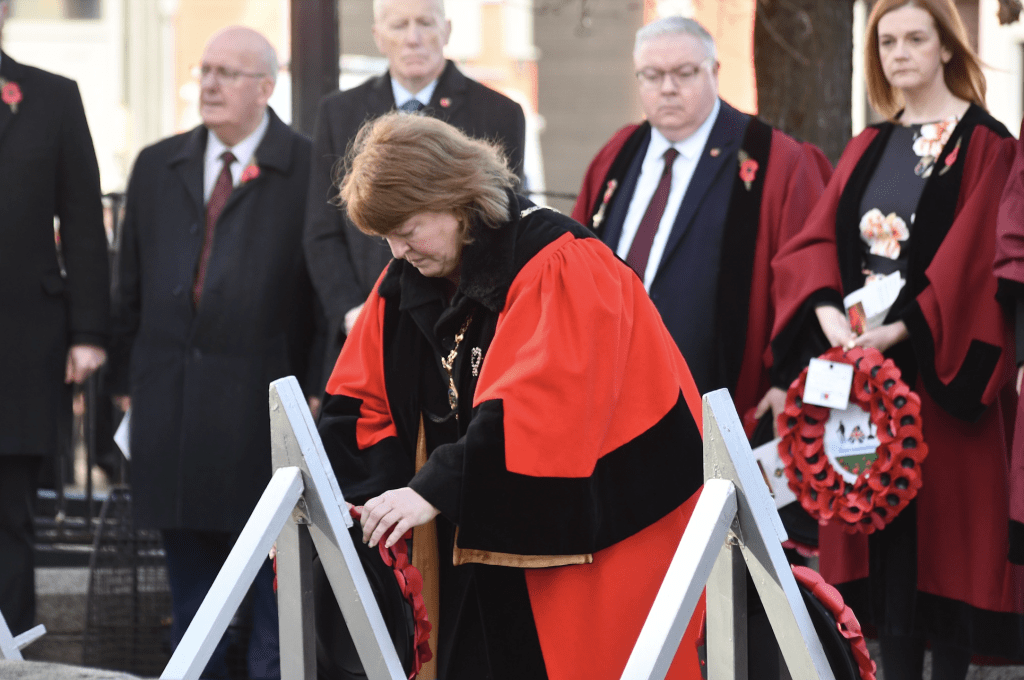
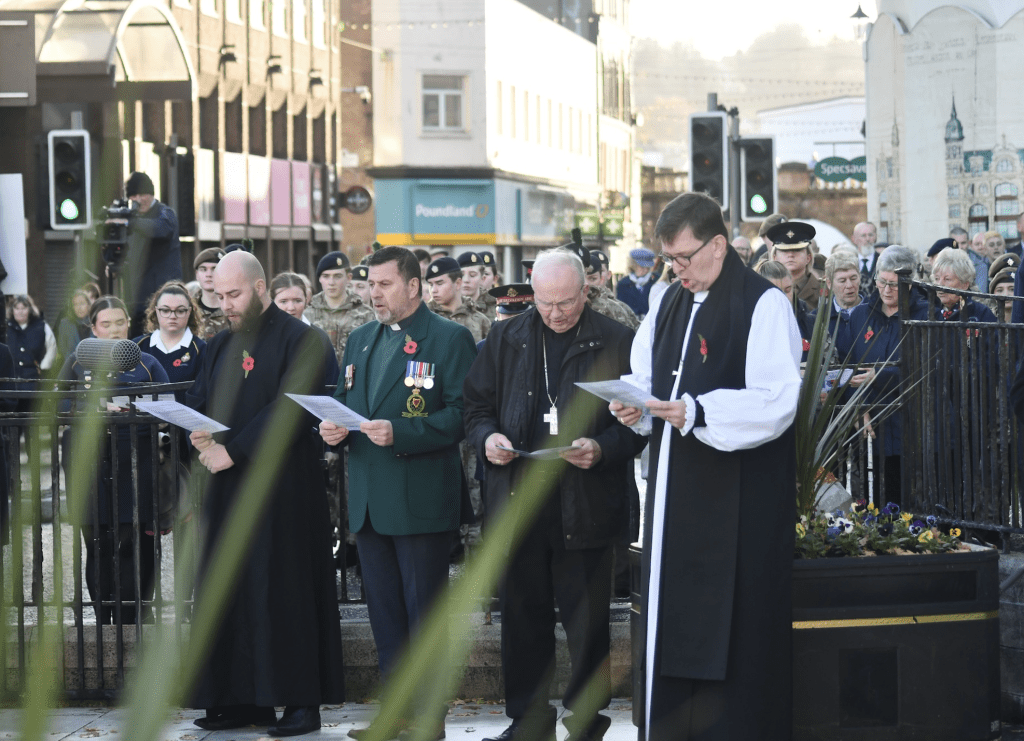
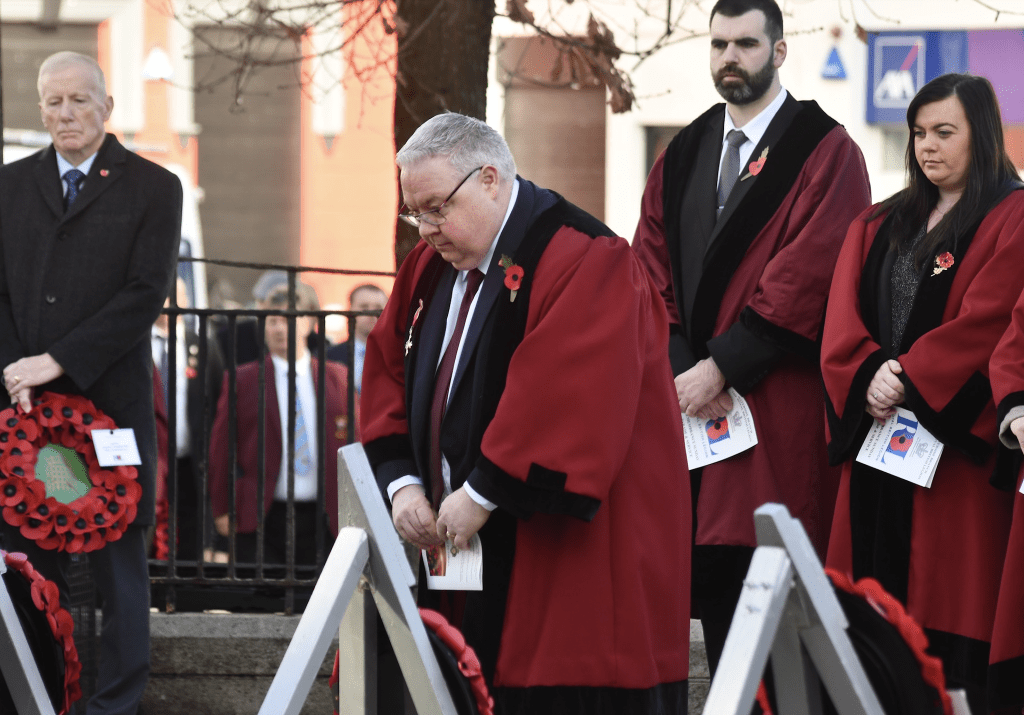
Shortly before the service, the Bishop joined leaders of the other main local churches at an Act of Remembrance at the War Memorial in the city’s Diamond, where wreaths were laid by civic, political and military representatives, including the Lord-Lieutenant for the County Borough of Londonderry, Ian Crowe MBE DL, and the Deputy Mayor of Derry City and Strabane District, Alderman Niree McMorris. Worship was led by Rev Canon John Merrick, with readings from the Bishop of Derry, Dr Donal McKeown; the Moderator of Derry & Donegal Presbytery, Rev Stephen Hibbert; Rev Peter Morris from the Methodist Church in the city; and Bishop Andrew Forster.
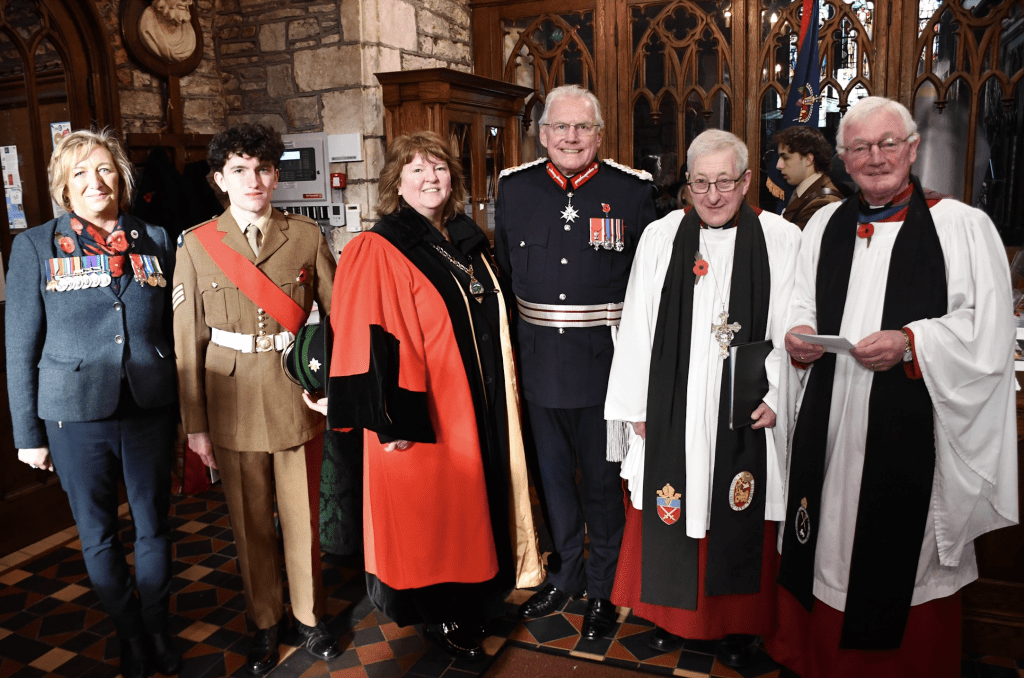
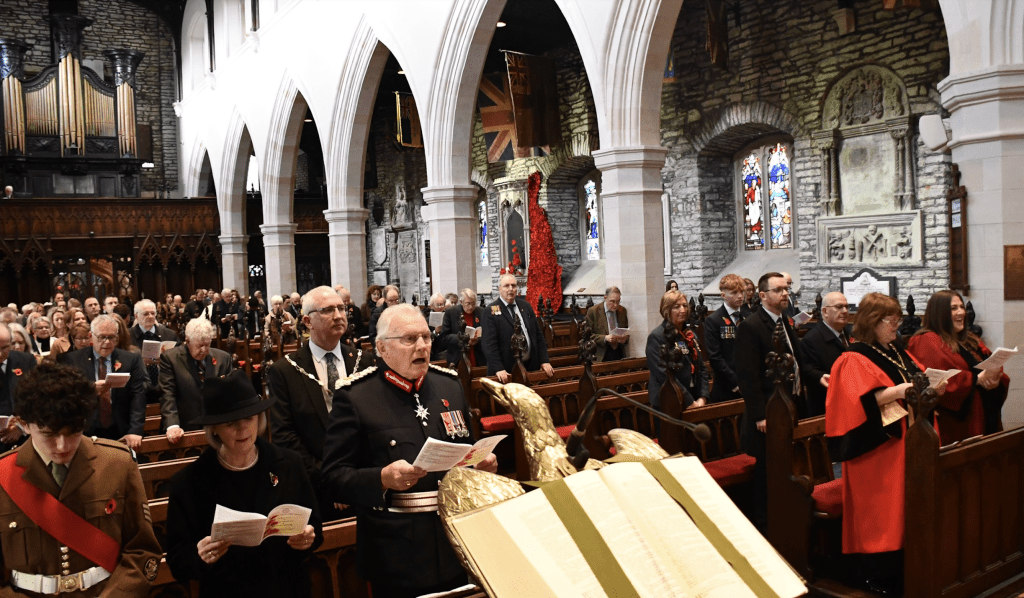
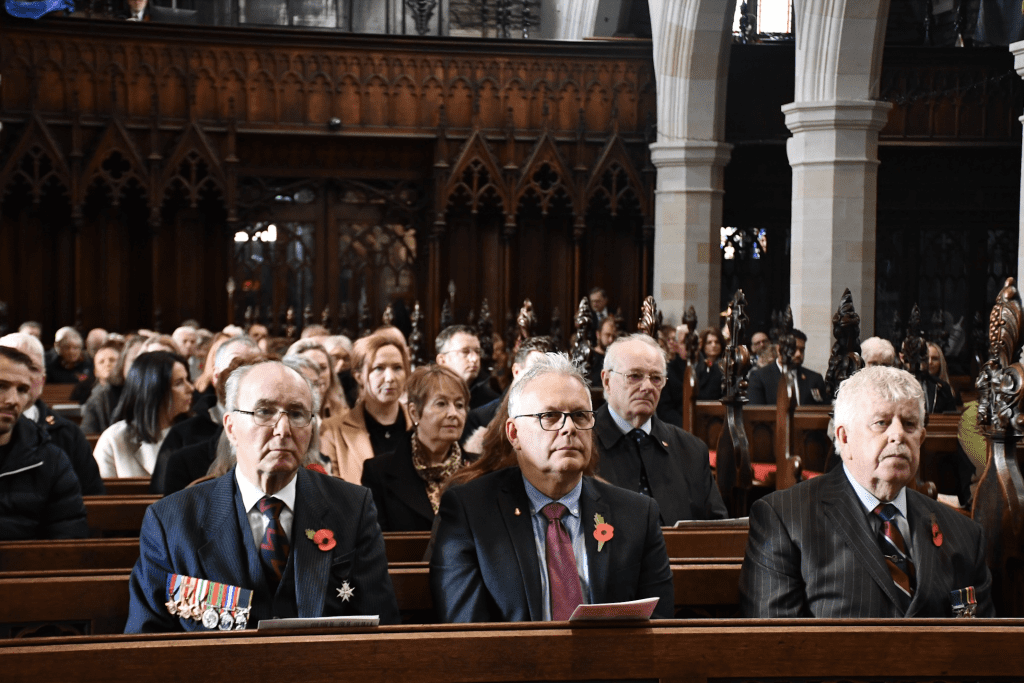
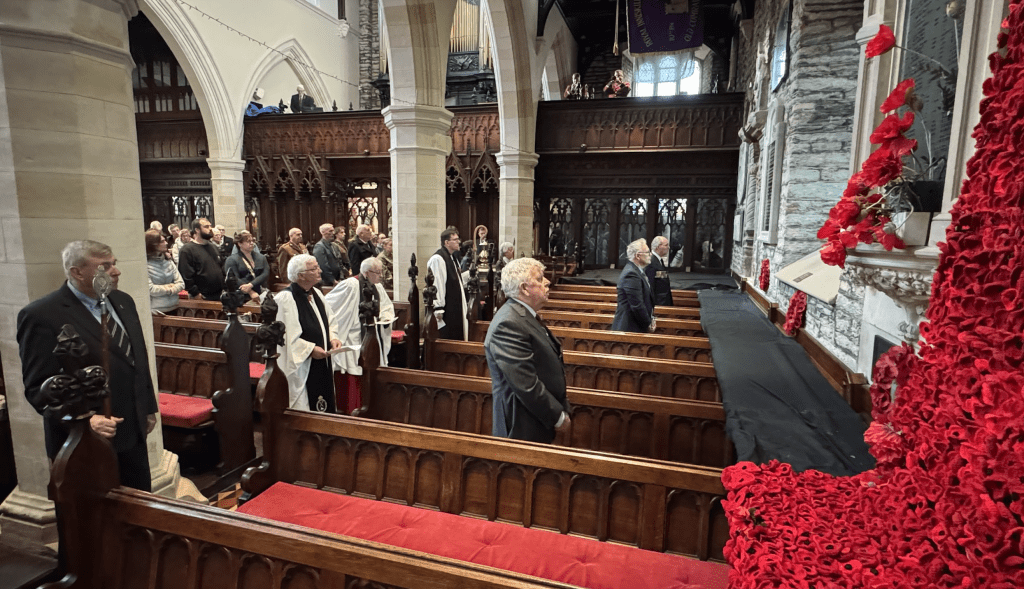
People were welcomed to the service in the Cathedral by the Dean of Derry, Very Rev Raymond Stewart, who was assisted by Canon Merrick. The congregation included the High Sheriff of the County Borough of Londonderry, Brian Dougherty, members of the City Council, representatives of the Royal British Legion, other civic groups and the Foyle Cadets.
The Sermon was preached by Bishop Forster who described Remembrance Sunday as the most poignant and sombrest of days in the nation’s calendar. “On Remembrance Sunday,” he said, “the past draws near. We remember those who served, those who suffered and those who died in the cause of peace and justice. We remember sacrifice freely given and courage quietly sustained.”
This year, Bishop Andrew said, we commemorated the 80th anniversaries of VE Day and VJ Day. The city had played a vital role as a naval base during the Second World War. “This city helped thwart Hitler’s aim to starve these islands into submission, and the convoys that sailed from here, – from this place – carried not only fuel and food and equipment, they carried hope; and this city, its ships, its people, played their part in keeping open the arteries of hope throughout these islands, Europe and the world. Hope was kept alive at a remarkable and incredible cost.”
Today, the Bishop said, we, in this city, could feel justly proud of the part that was played here in the defeat of Nazism and all the evil that it sought to usher into the world. But remembrance was not only about looking back, he said, it was also about how we lived now and what we built for the future.
On the 14th May, 1945, the German U-Boat fleet surrendered off Lough Foyle and yet less than 25 years after that, the Bishop said, another conflict much closer to home would shape this city – a conflict that for far too long darkened the light of hope in this place. “The Troubles have left wounds that are still dearly and terribly felt: lives that were broken; families that were scarred; trust that was stretched to breaking point.
“But the story of this city does not end in brokenness,” Bishop Andrew suggested. “The hope of something better helped us choose a different way – a way of bridge-building, a way of healing, a way of loving our neighbour, and even that greatest call of all of the Lord Jesus, to love our enemies. For peace has been worked for in this city. Prayed for. Lived for.
“Peace doesn’t have a set destination. It’s a constant and ongoing journey. It is fuelled by a desire to build something better for generations to come and it always remains something very, very delicate.”
Bishop Andrew compared peace to a precious heirloom that families look after to make sure it doesn’t get cracked or broken. “I think peace is like that. It’s all of our responsibility to care for it. It’s a delicate thing. It’s precious. And all of us, in words and actions, have to carry peace in such a way that we don’t damage it or don’t break it. It is all of our responsibility.
“Peace is never, ever handed to us as a finished product,” the Bishop said. “It has to be crafted – carefully, tenderly, courageously.”
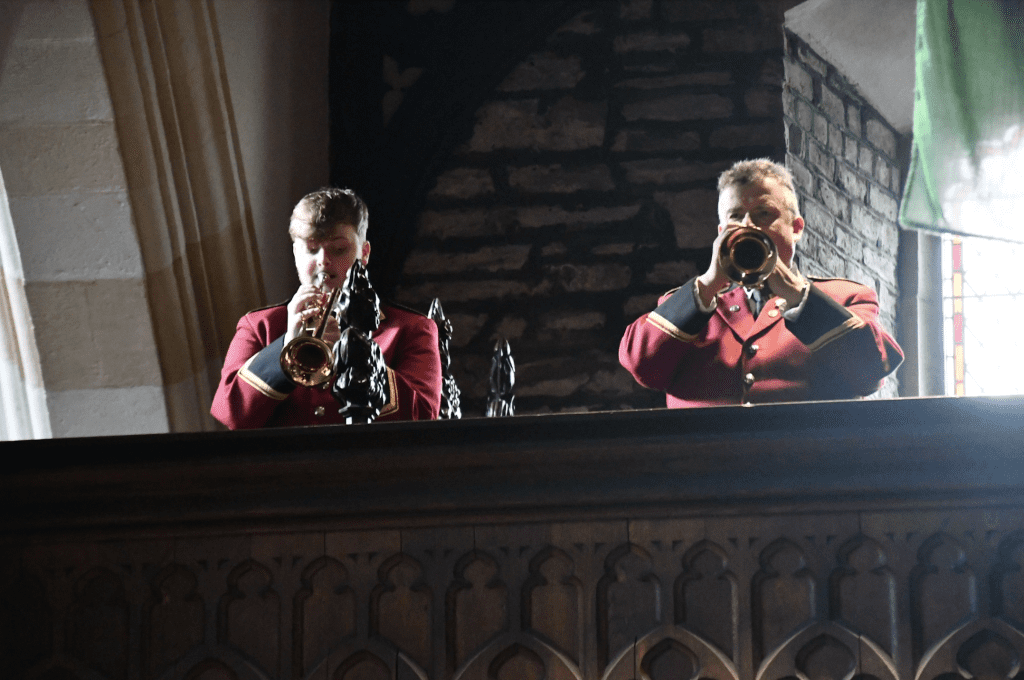
During today’s service, wreaths were laid at the war memorials in the cathedral, and the congregation stood in silence for the playing of The Last Post and the Reveille.
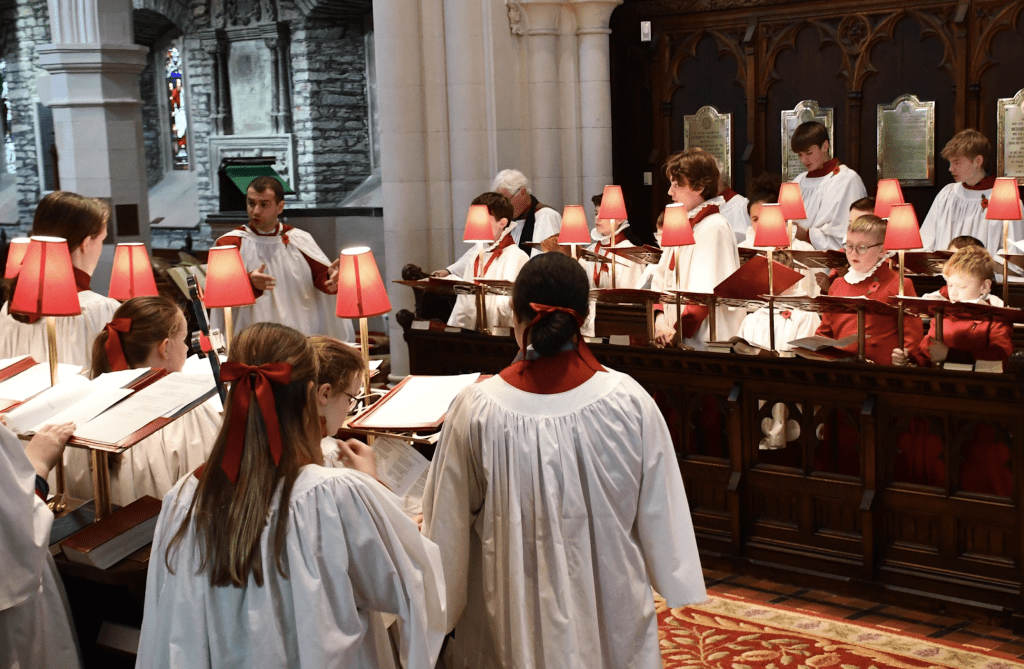
Today’s Scriptural readings were delivered by the Lord-Lieutenant and the Deputy Mayor. The Prayers of the People were led by Simon McGonigle. Musical worship was led by the Cathedral Choir of Boy and Girl Choristers and Lay Clerks, accompanied by organist Louis Fields and directed by Nicky Morton.
The offering was received for the Royal British Legion.