Category: Uncategorised

Archbishop of Canterbury leads high-poweredAnglican delegation on historic visit to Derry-Londonderry

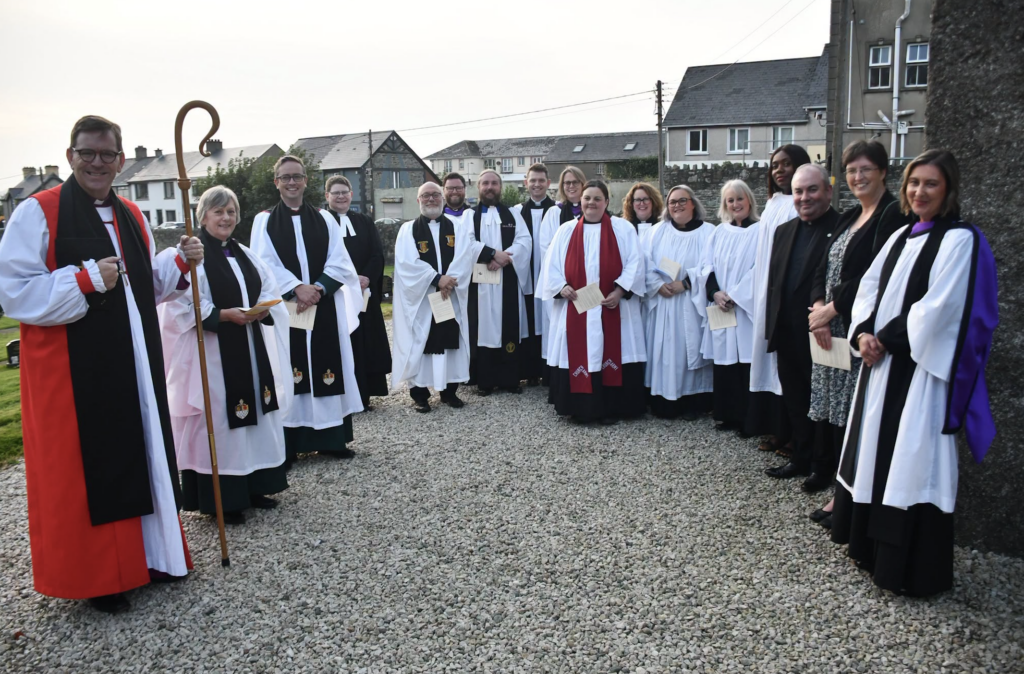
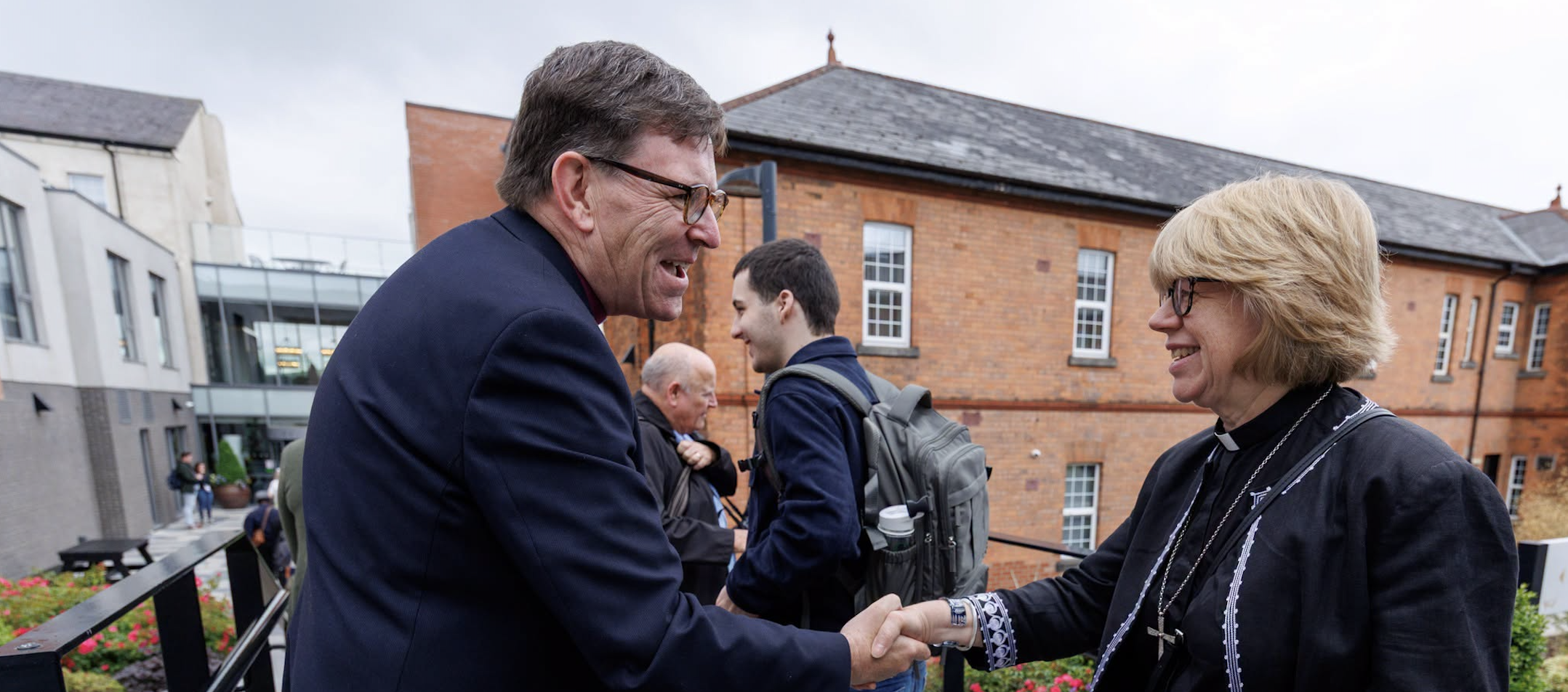
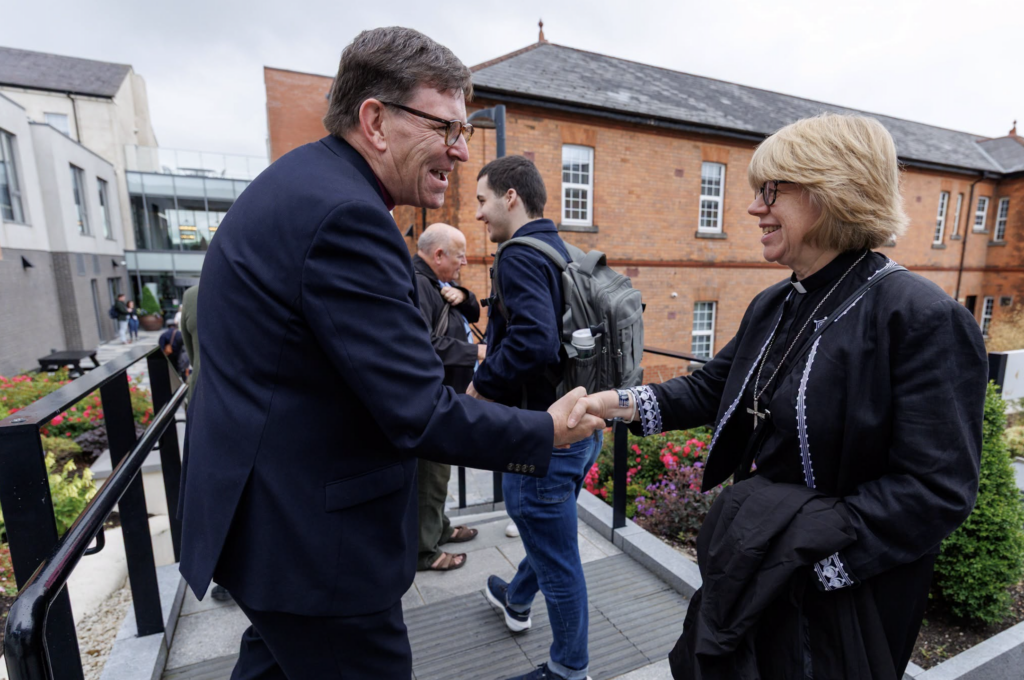
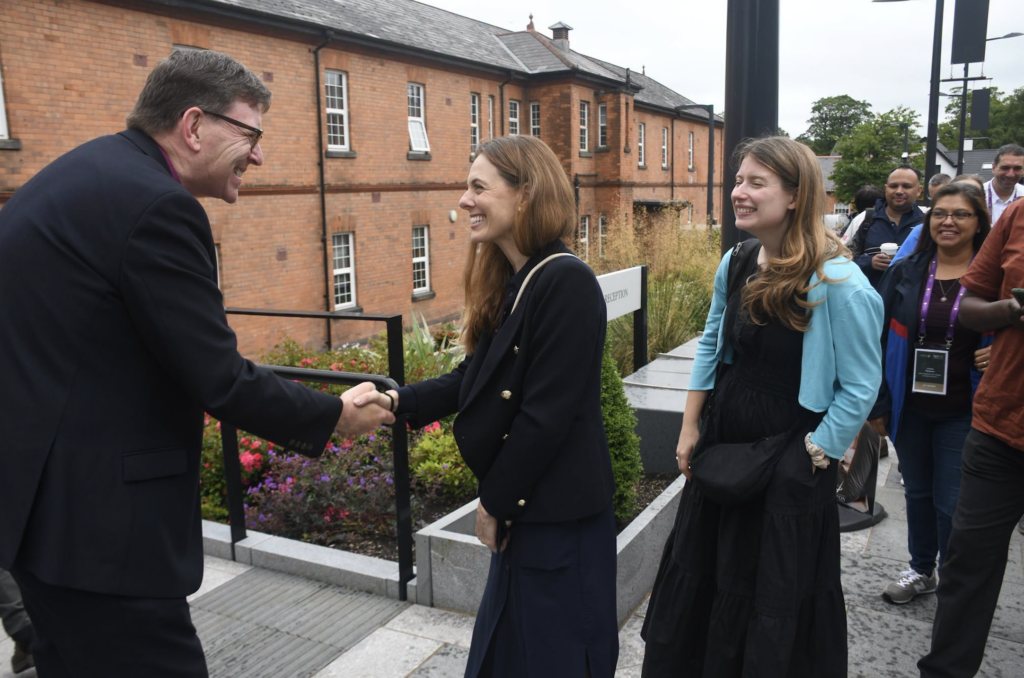
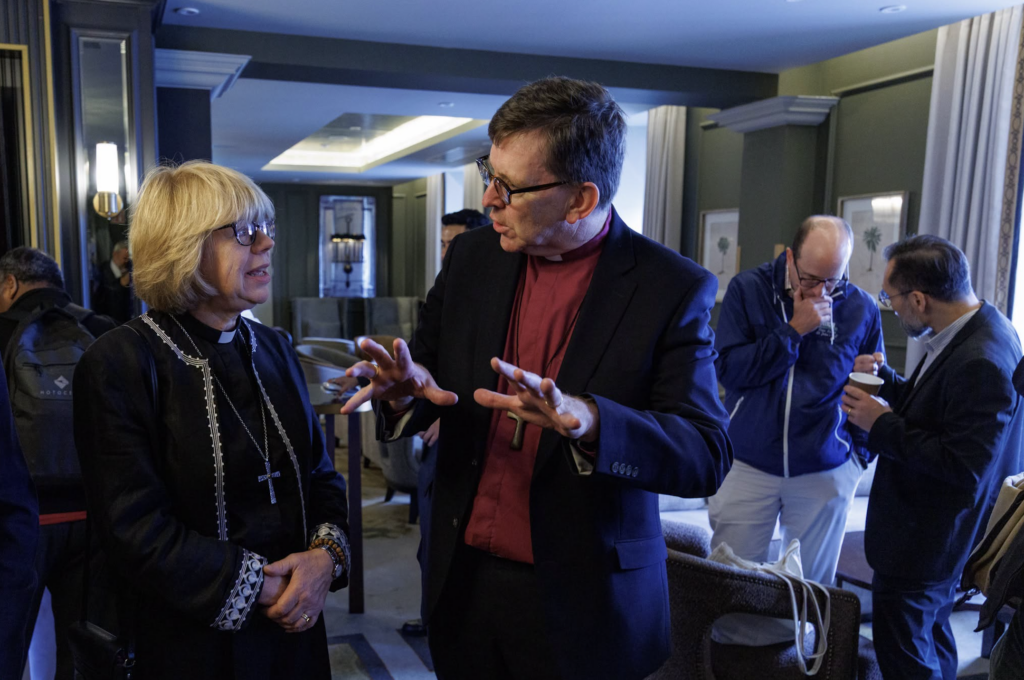
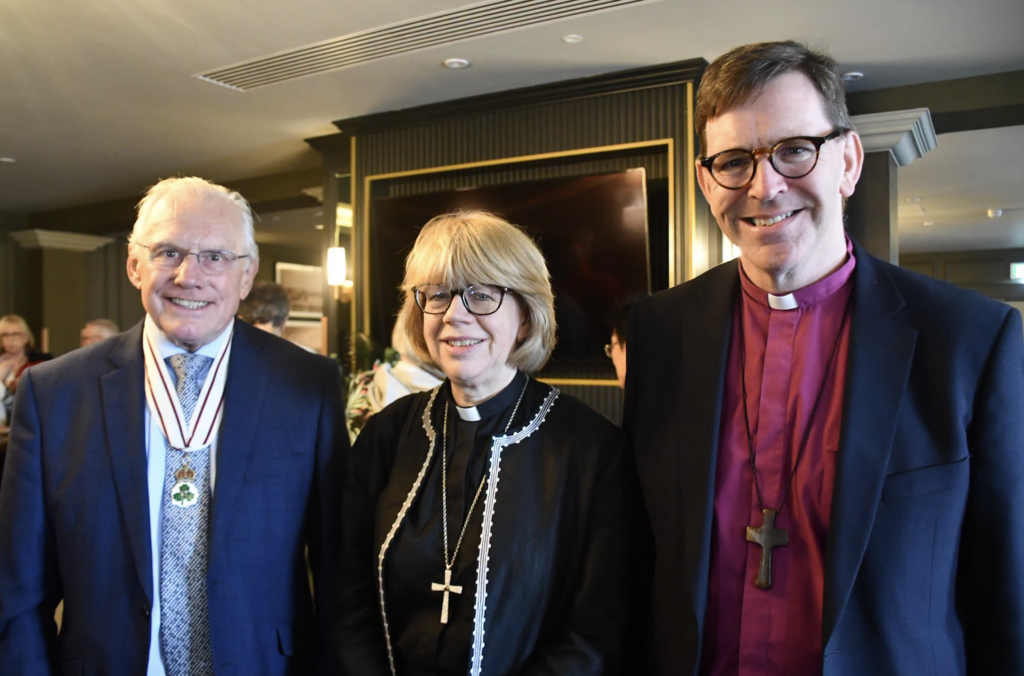
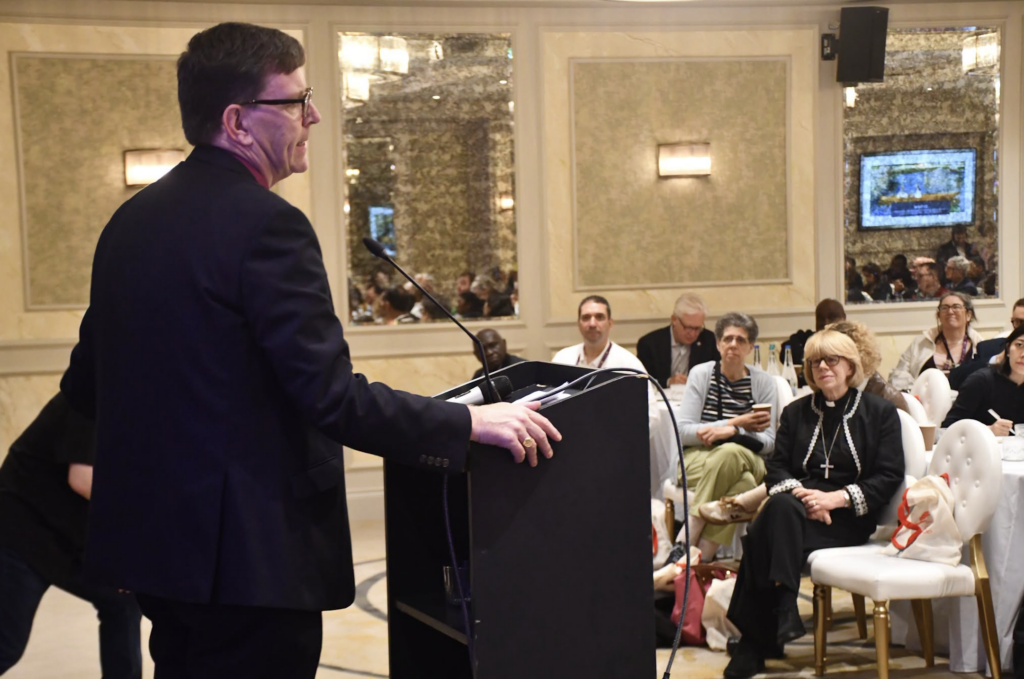
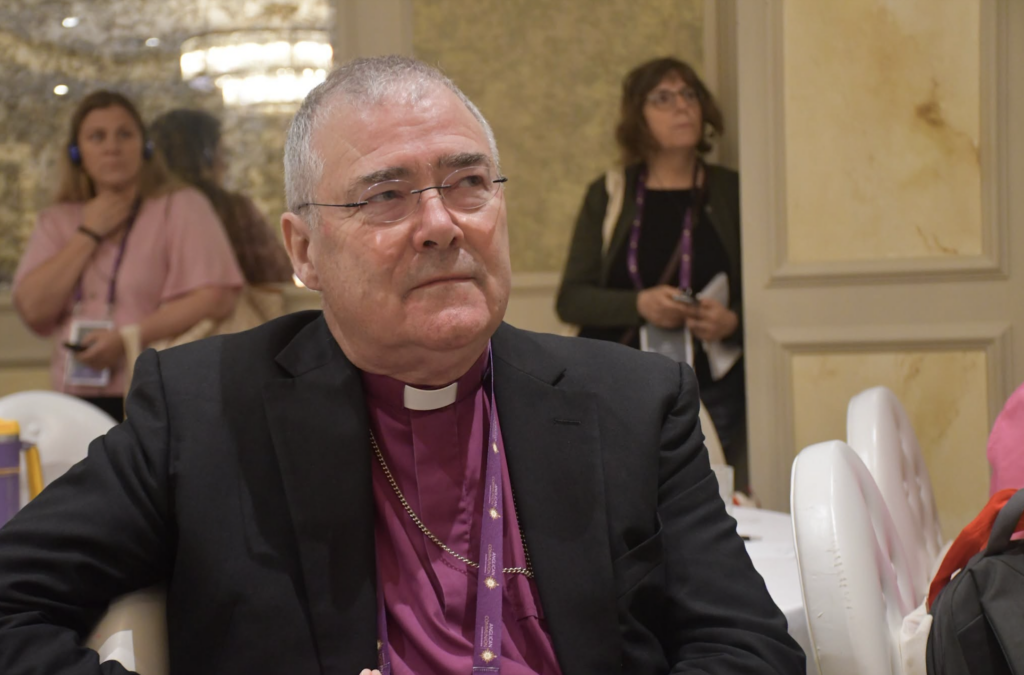
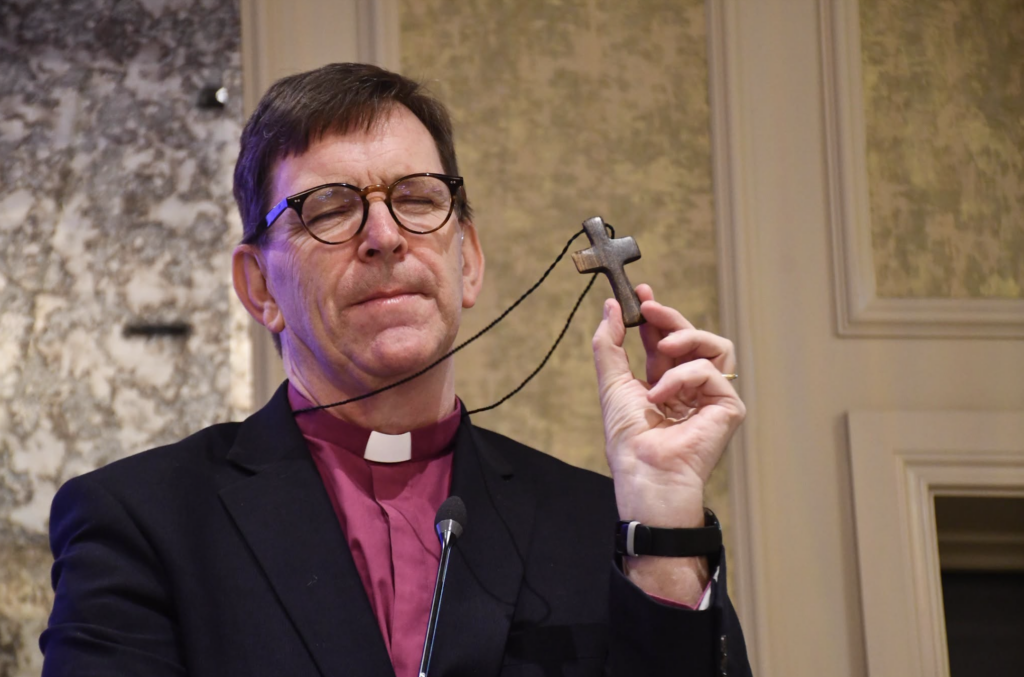
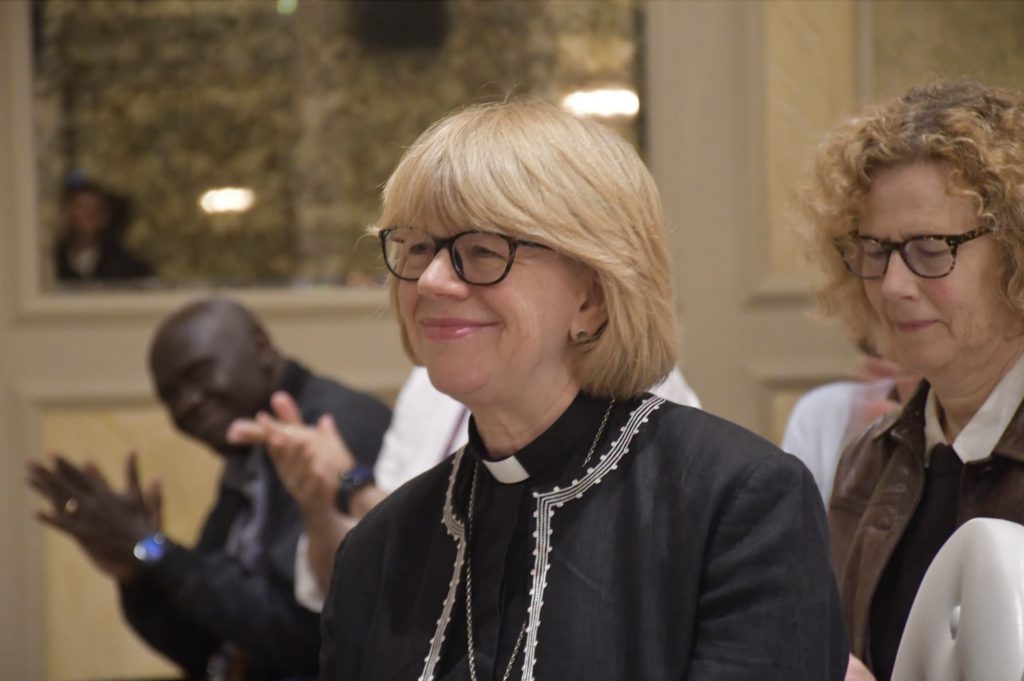
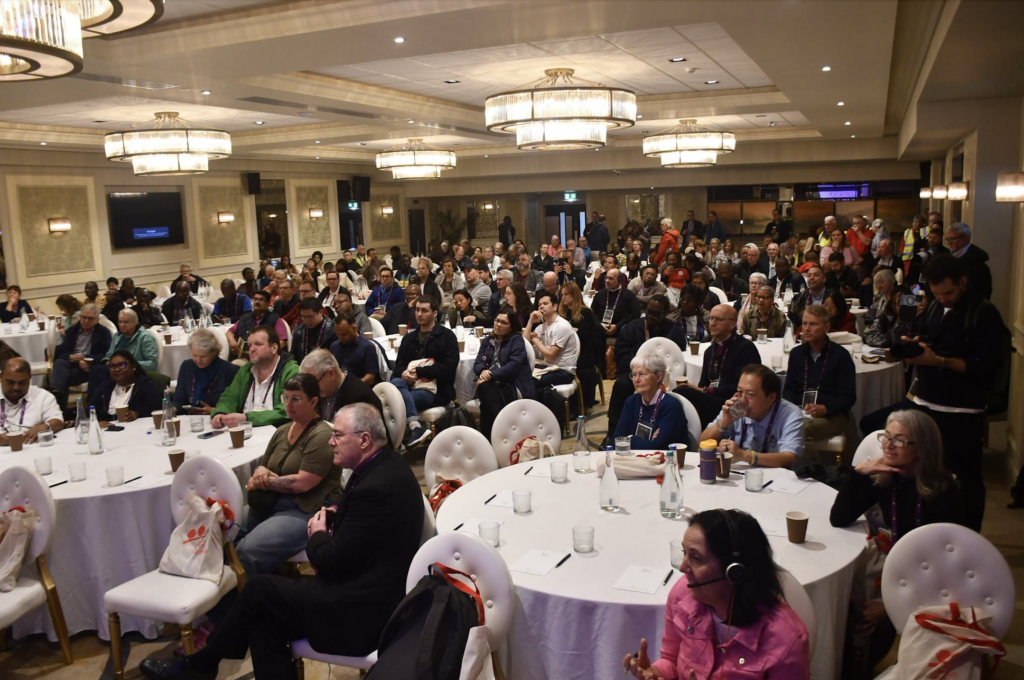
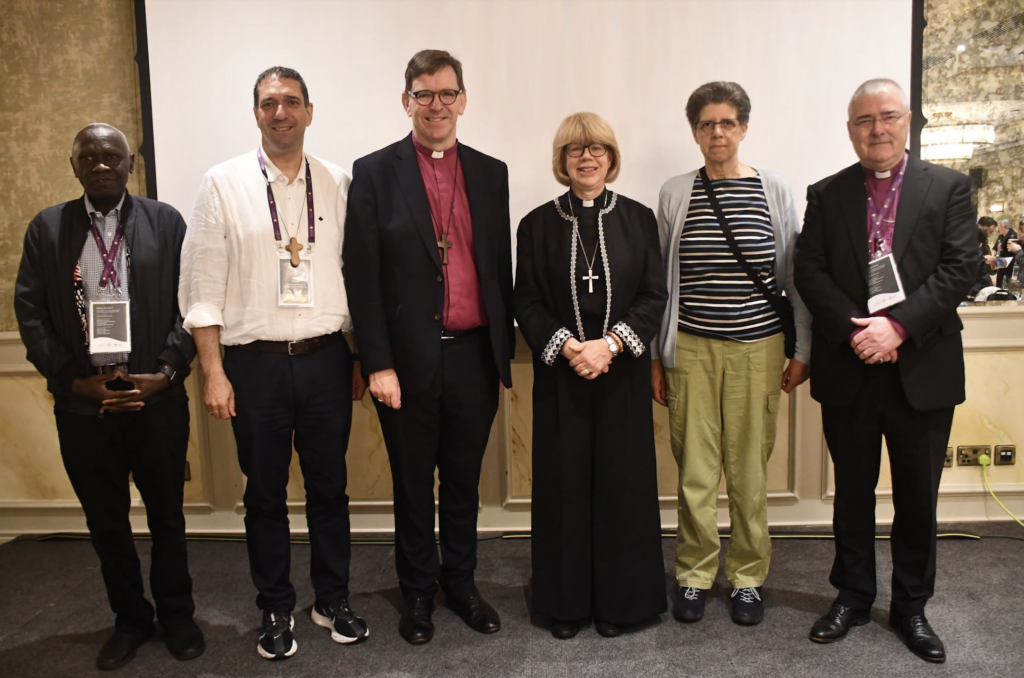
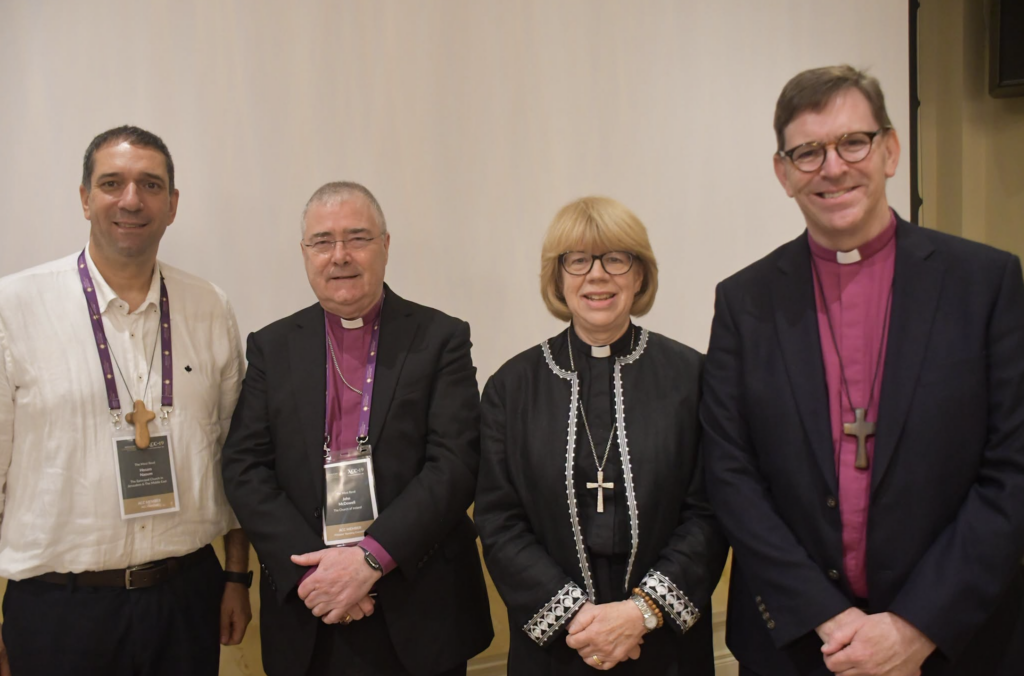
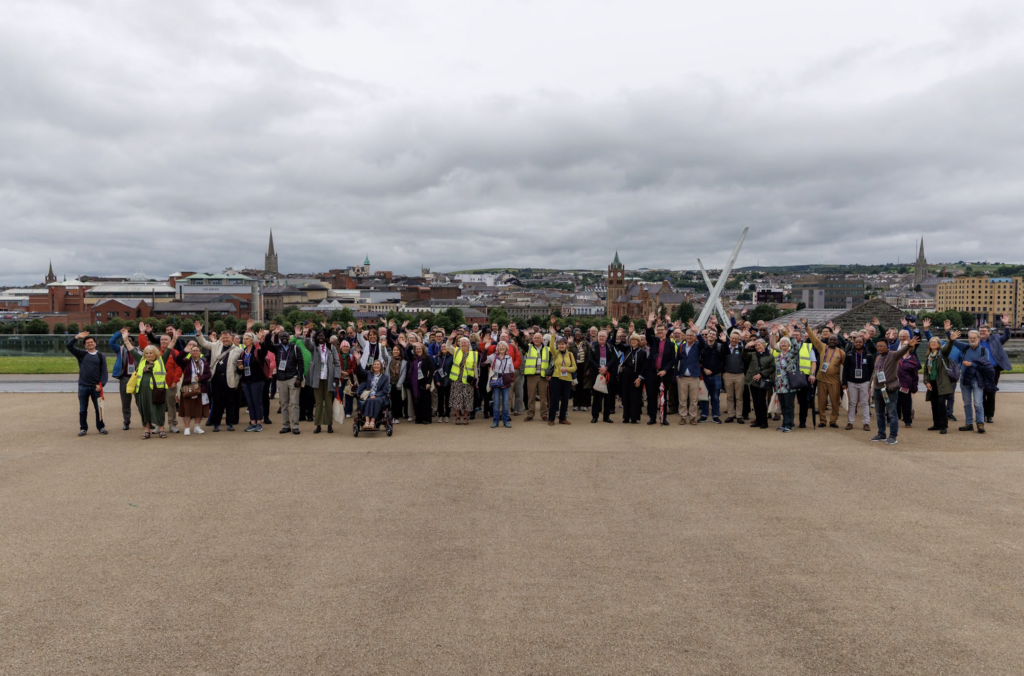
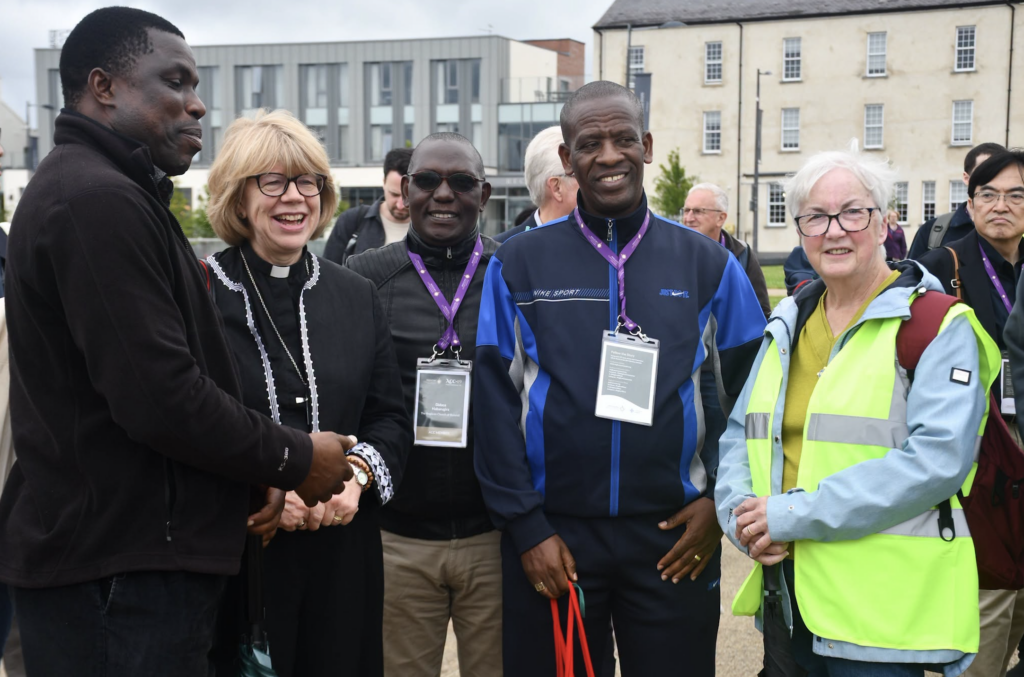
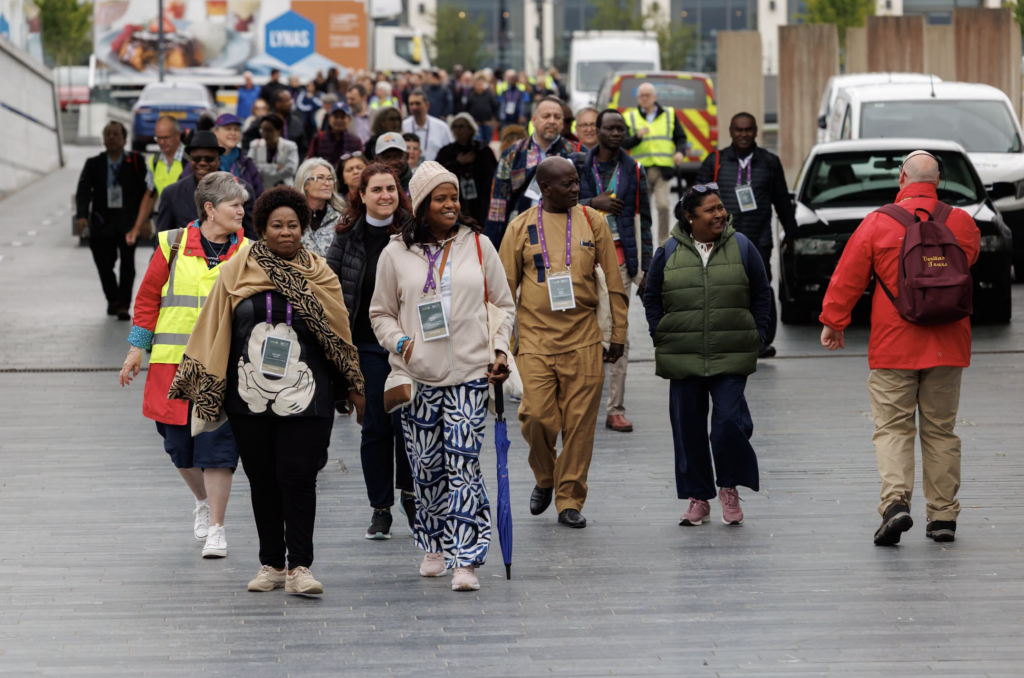
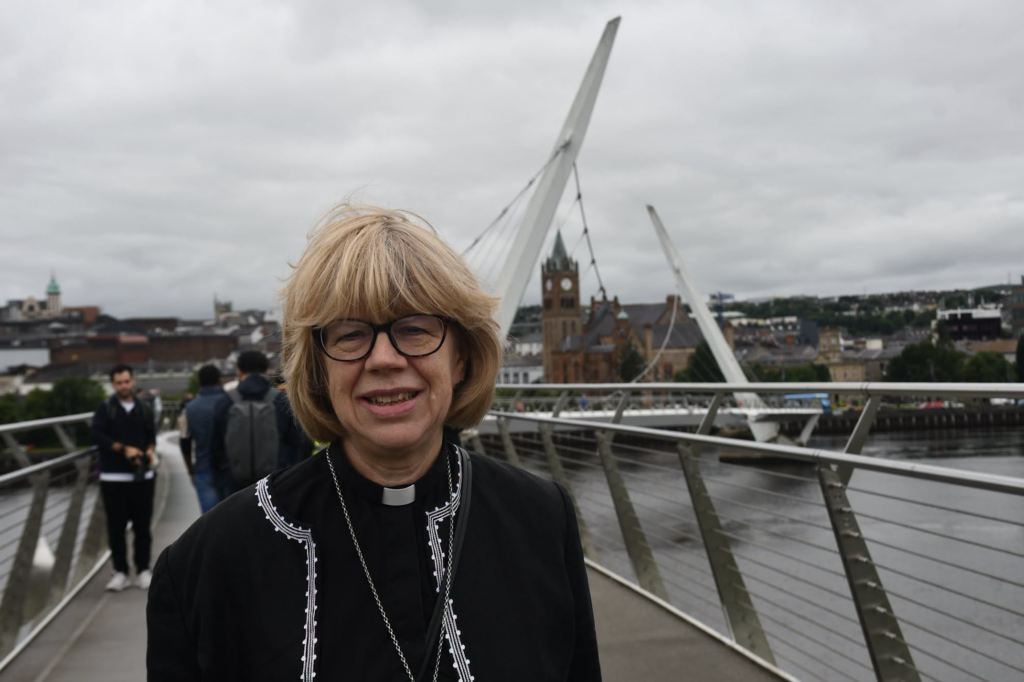
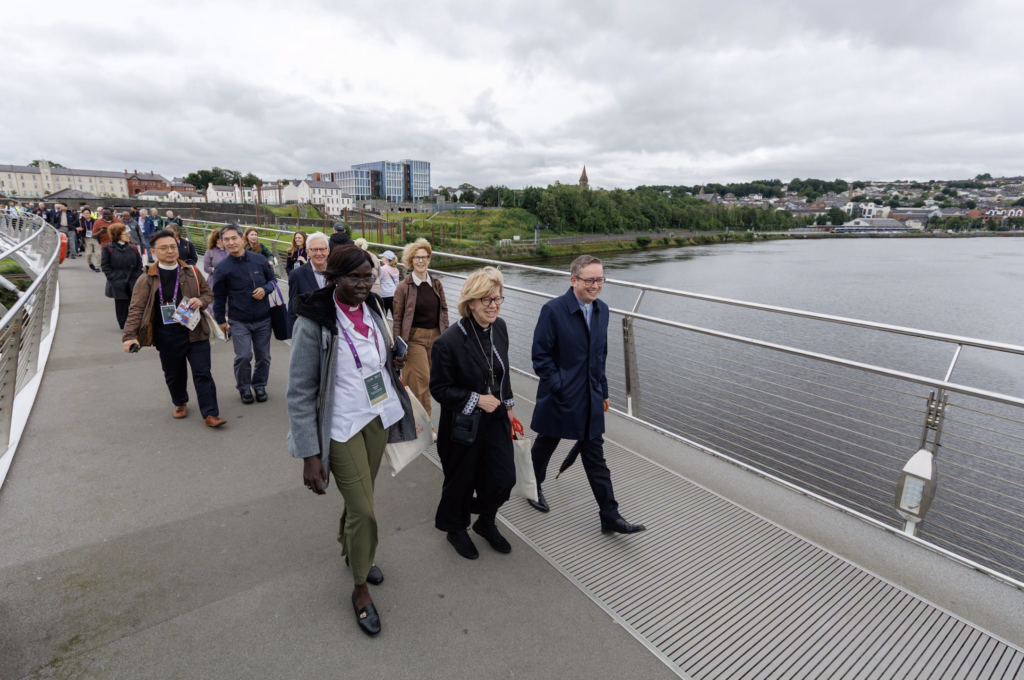
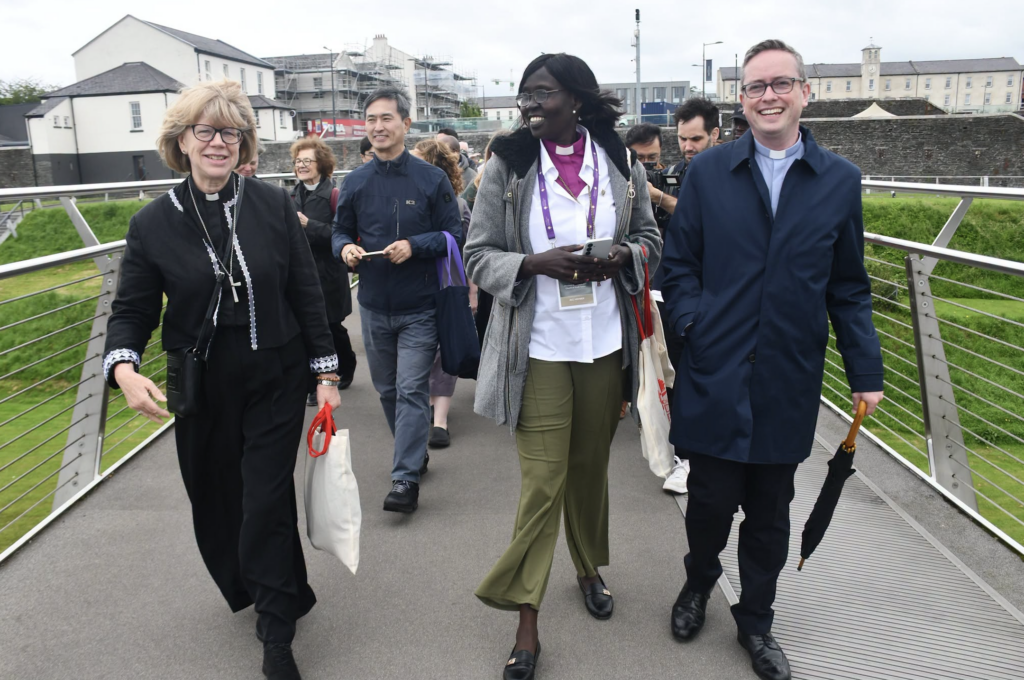
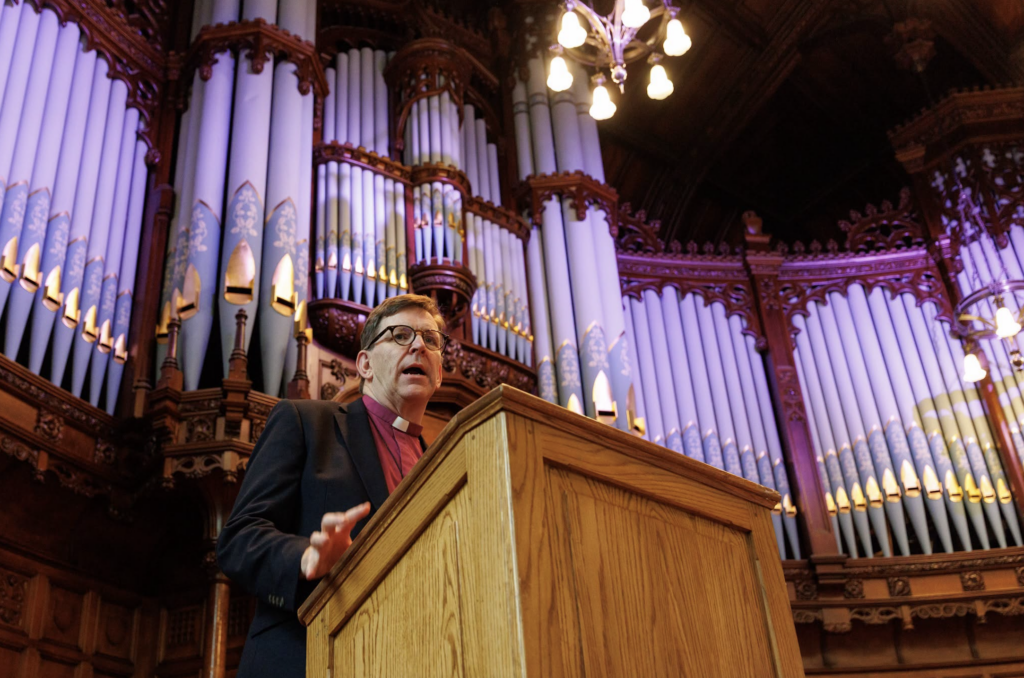
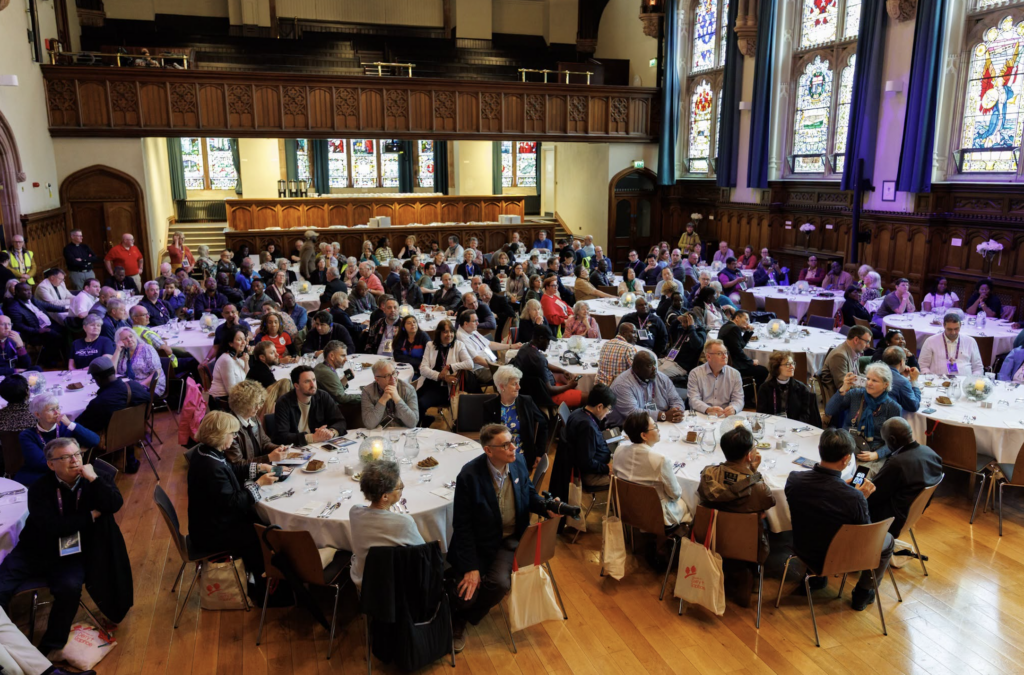
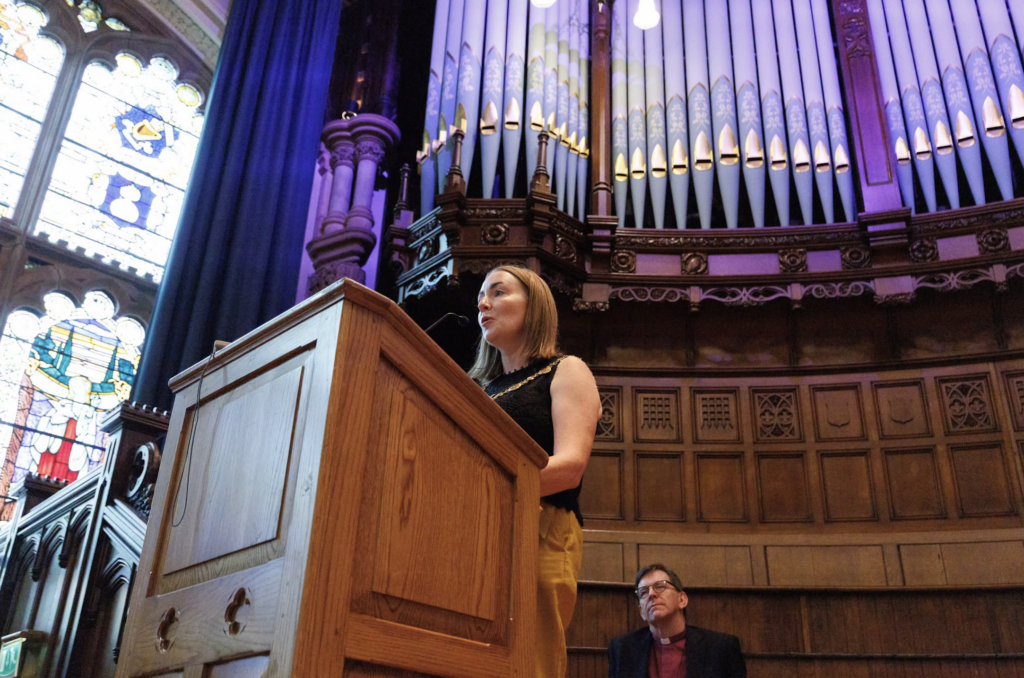
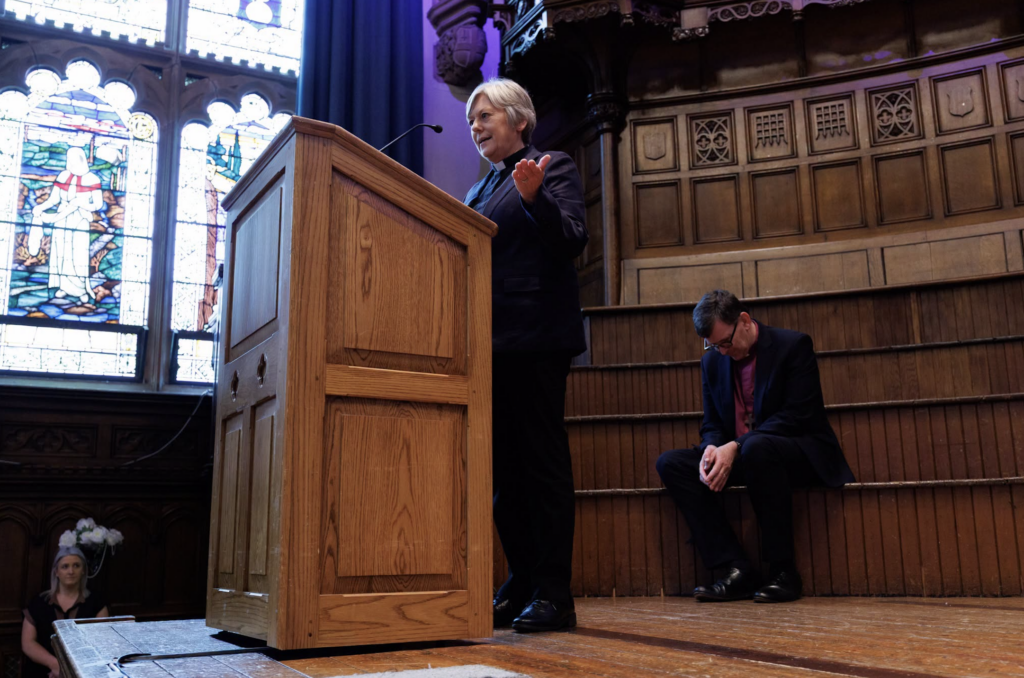
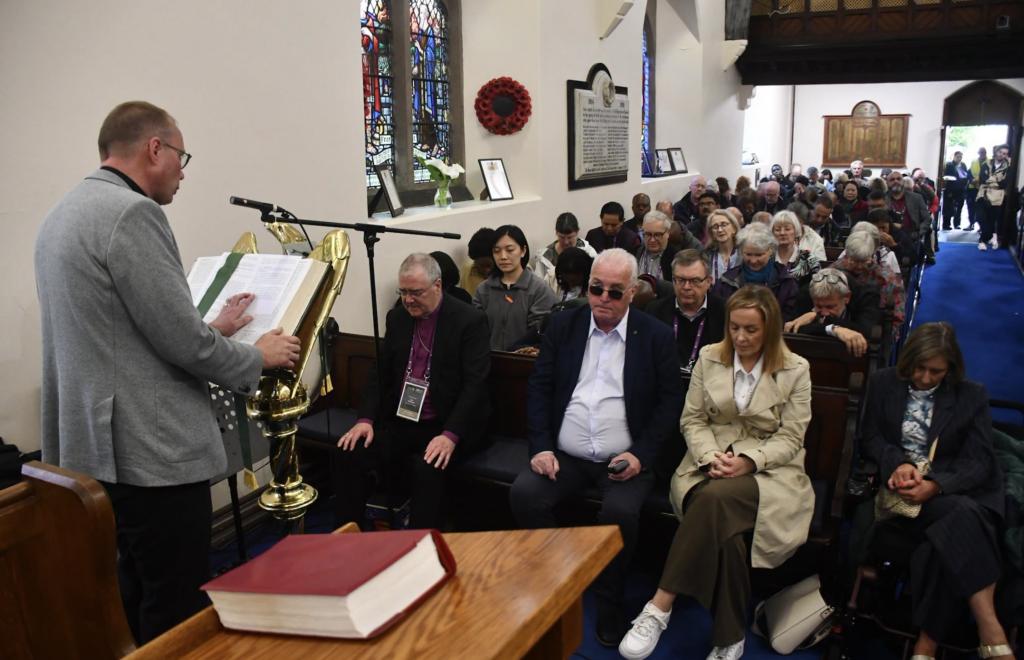
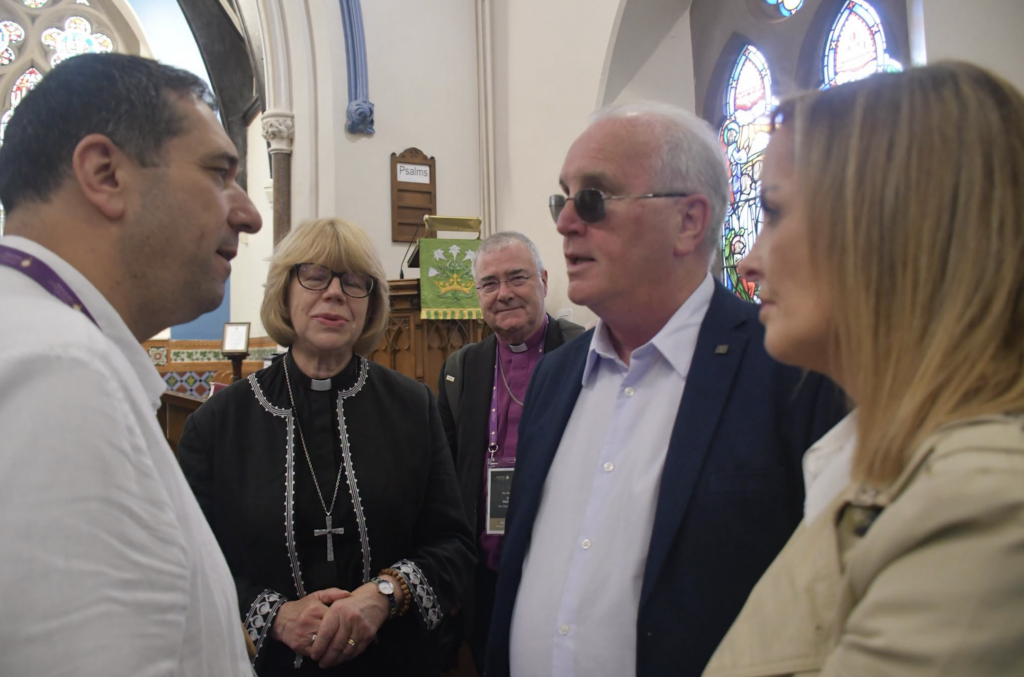
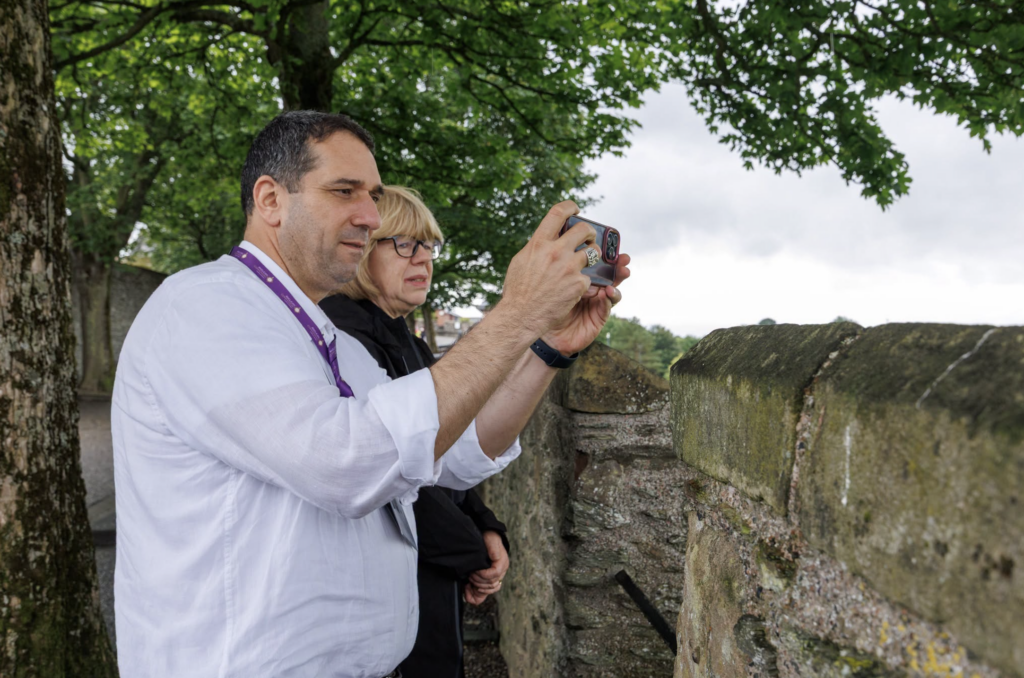
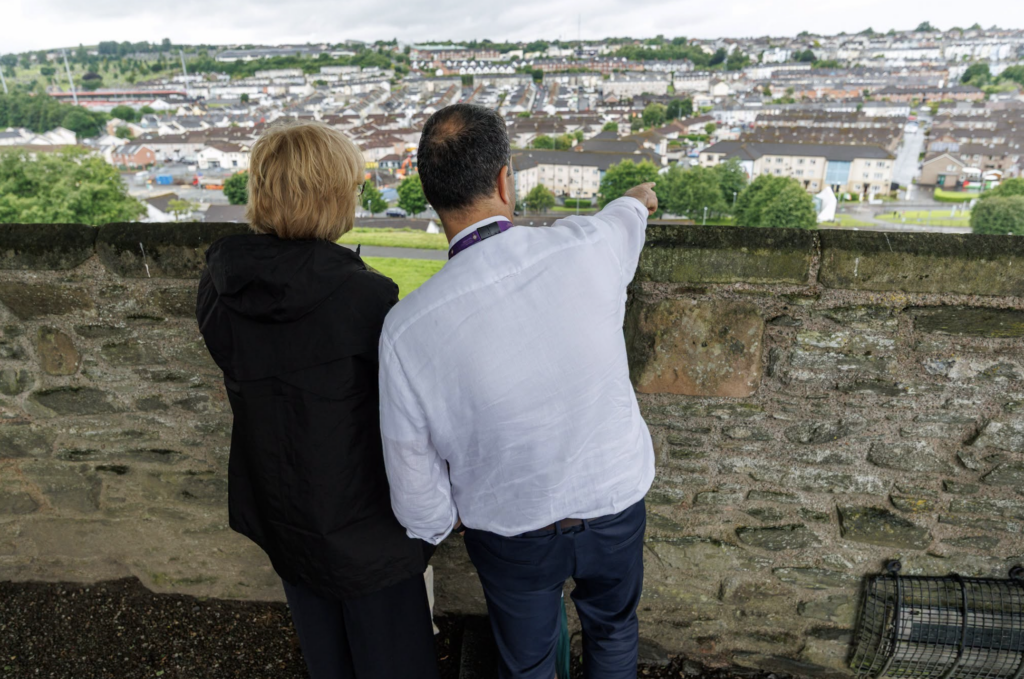
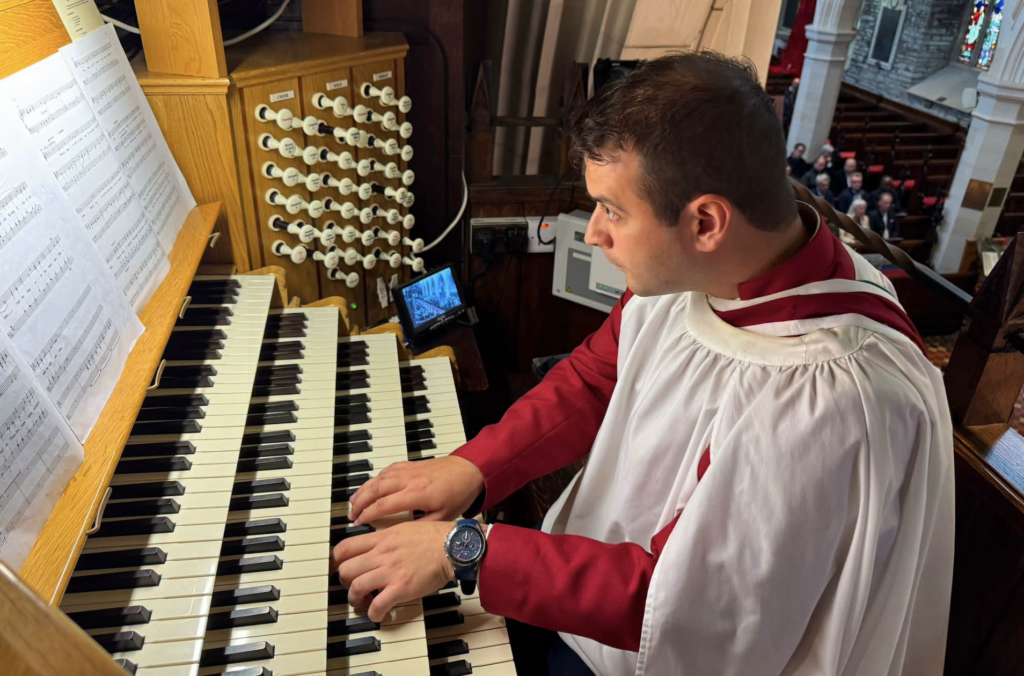
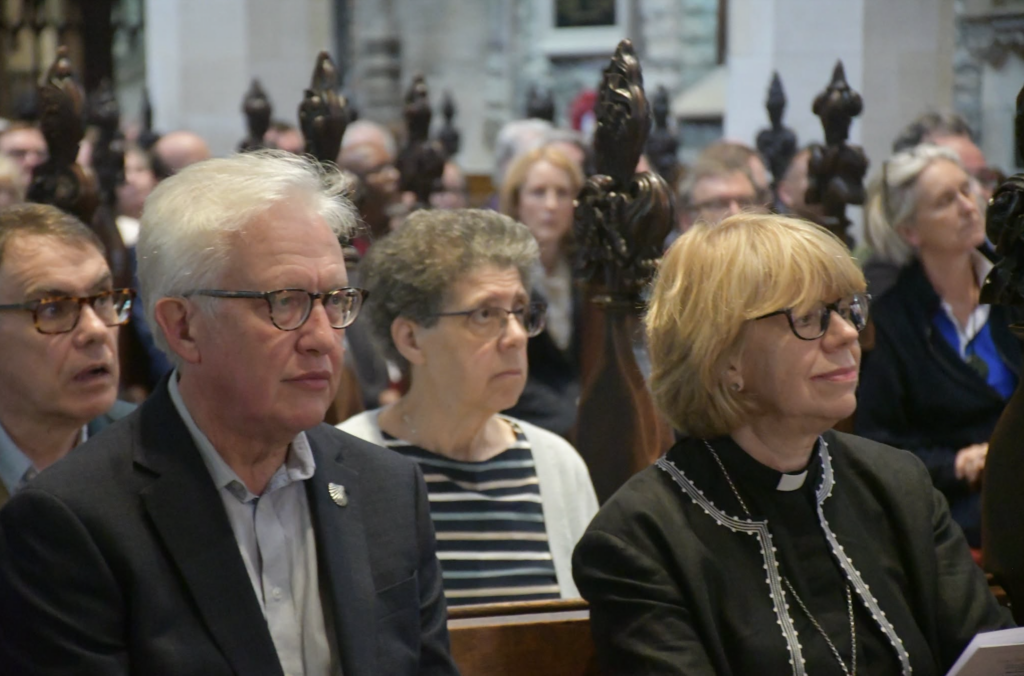
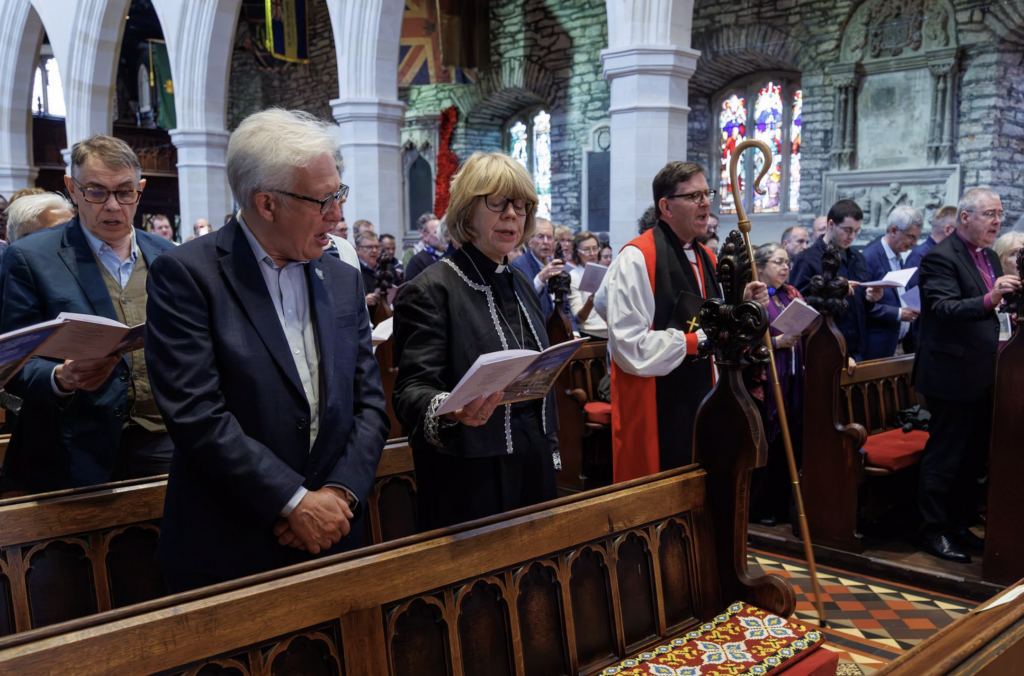
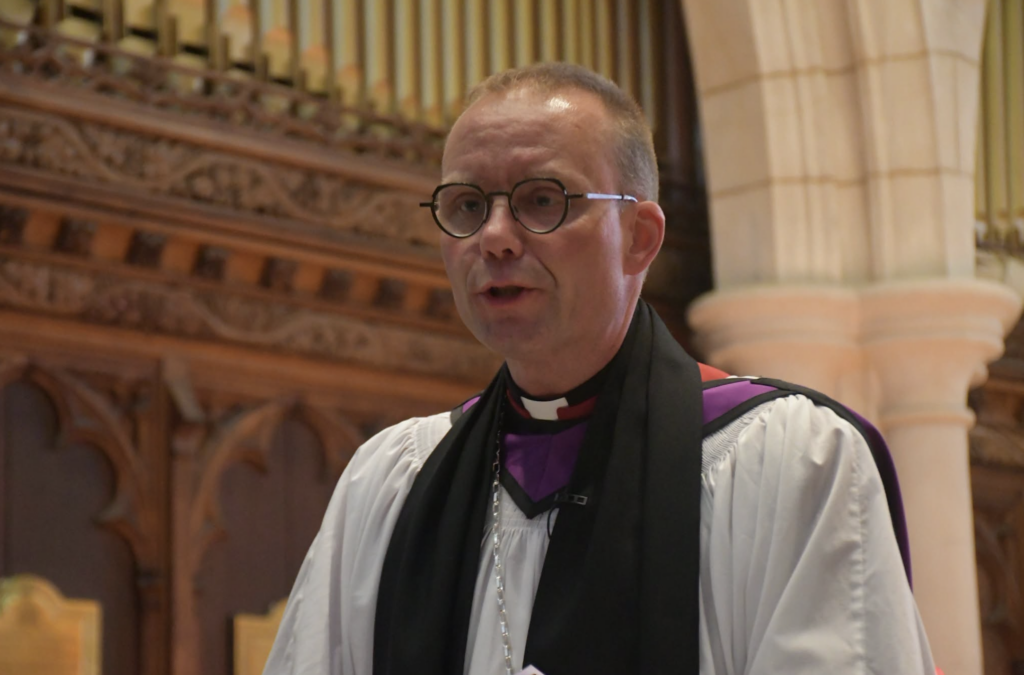
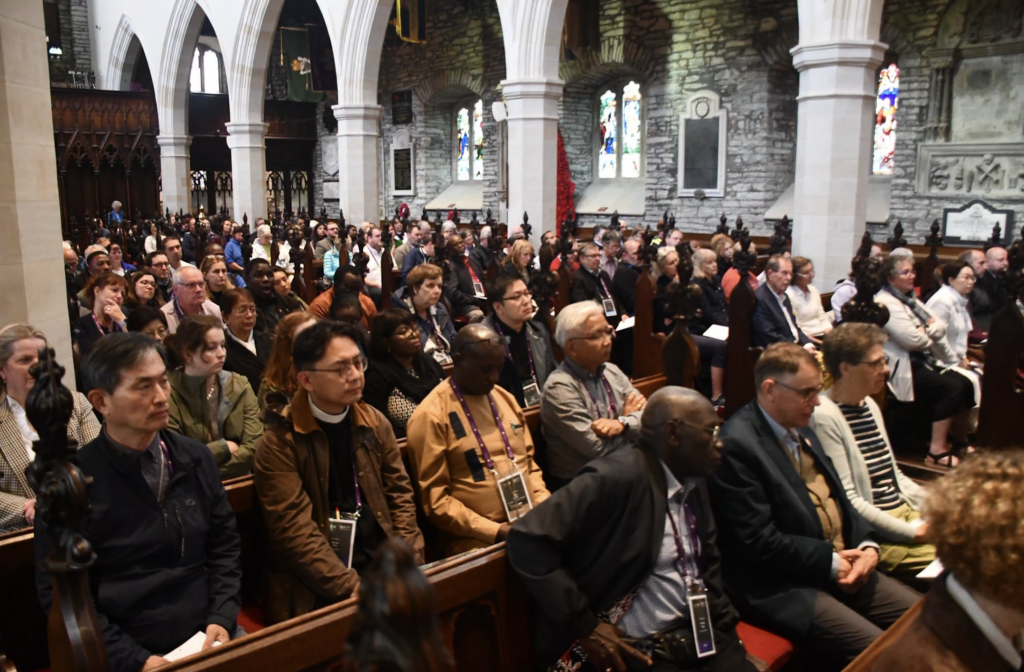
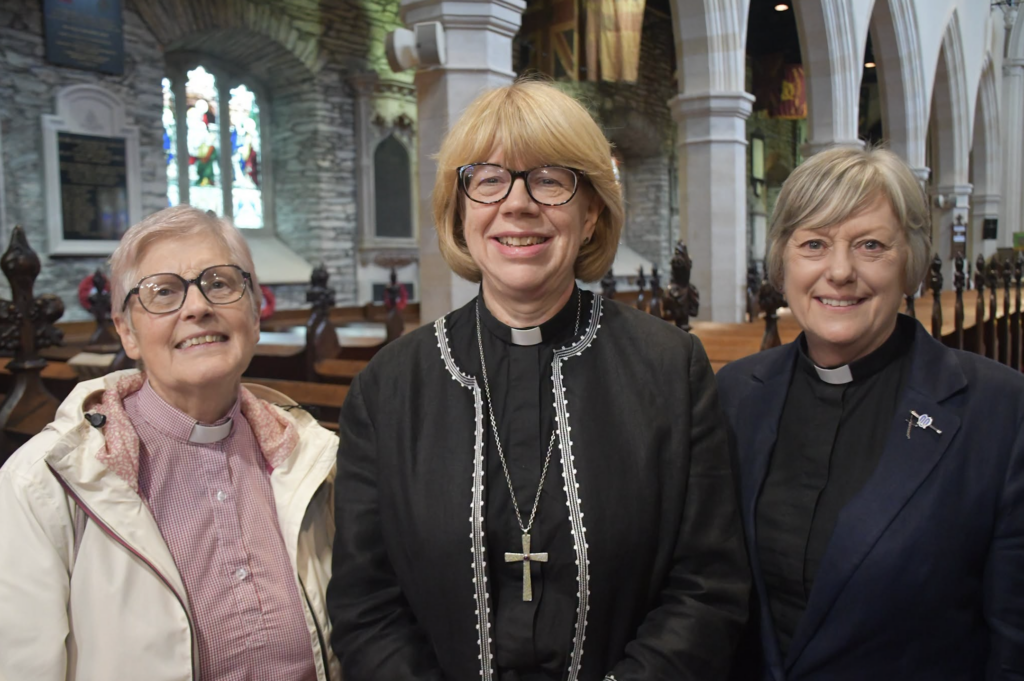
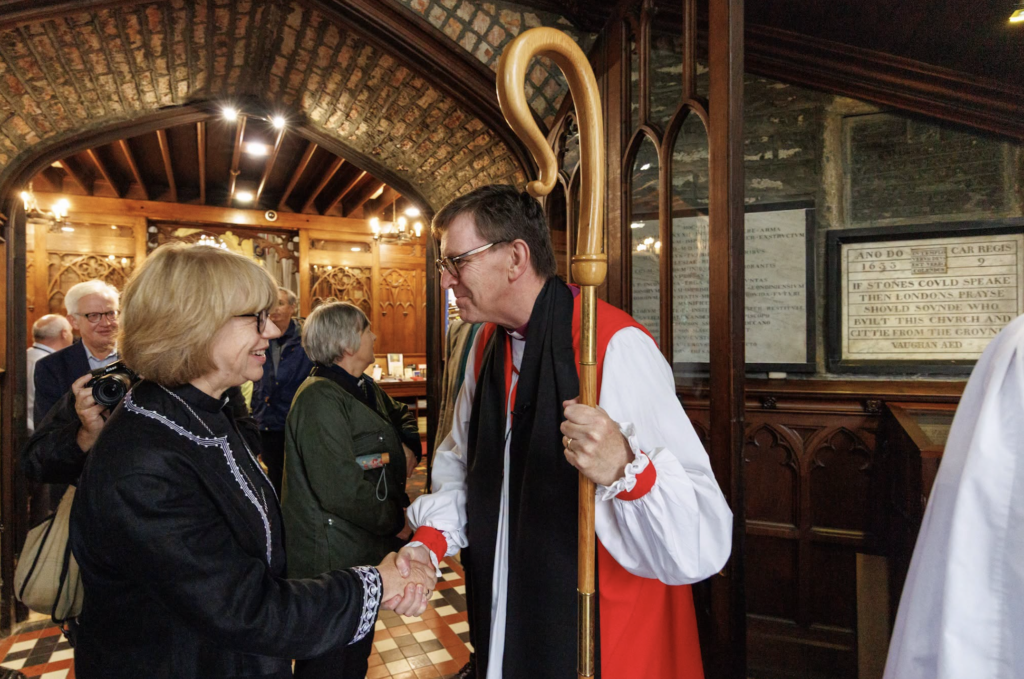
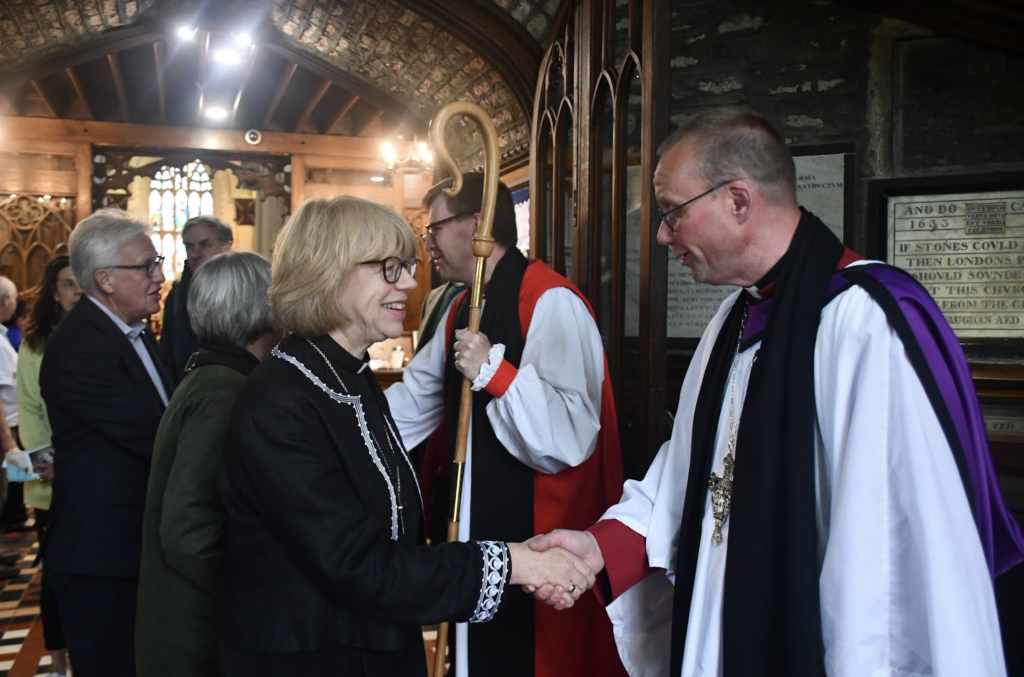
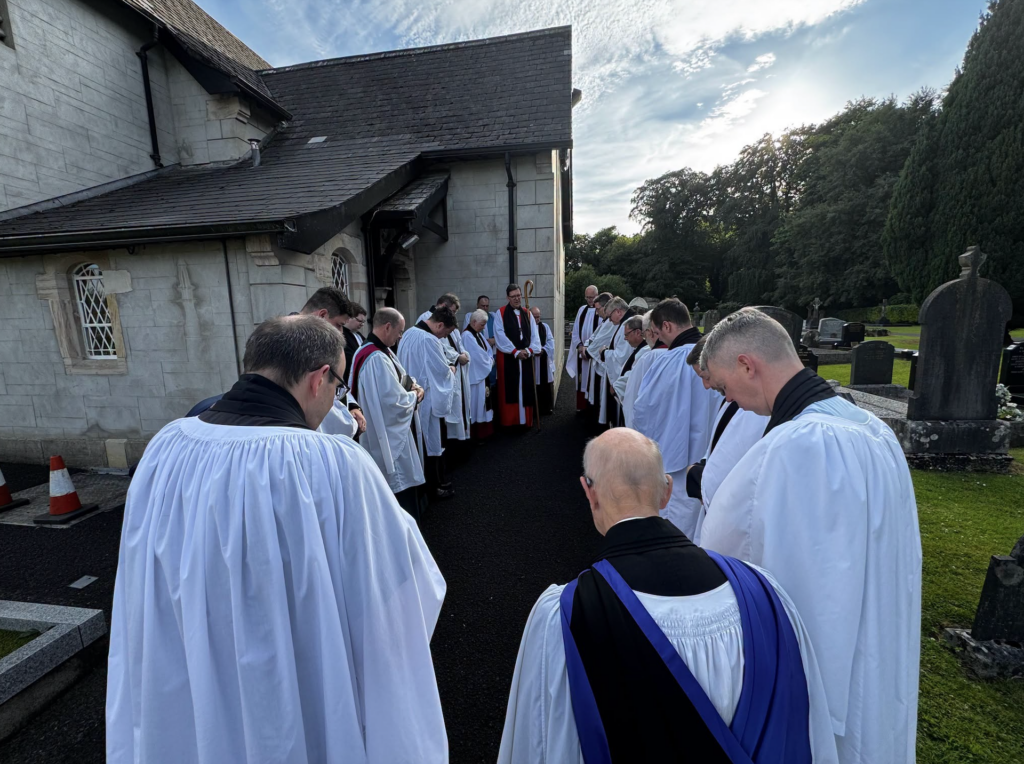
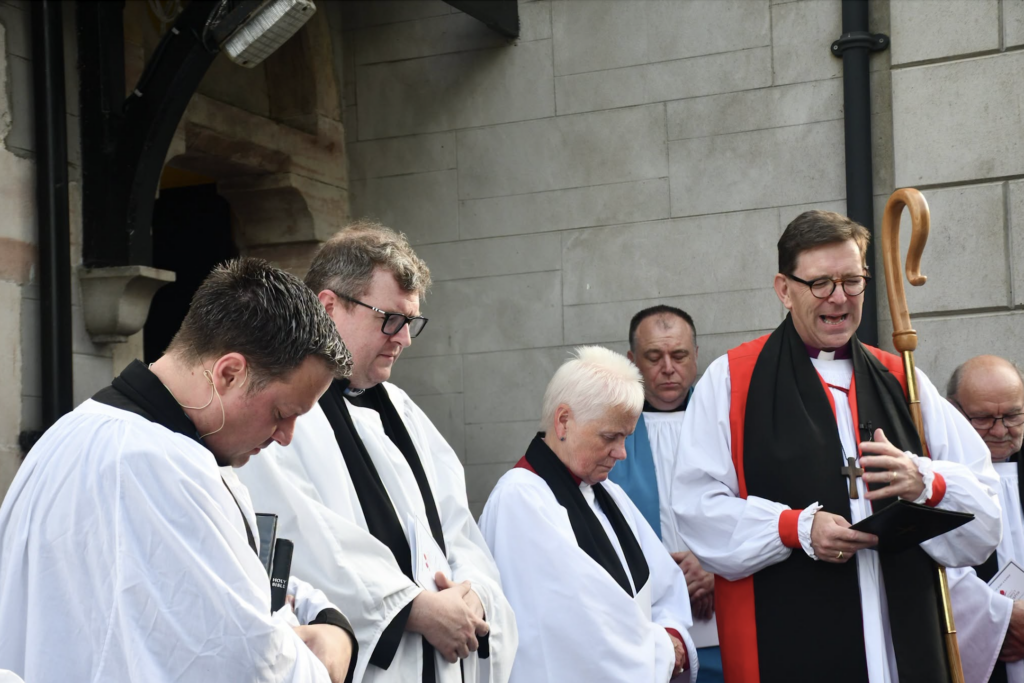
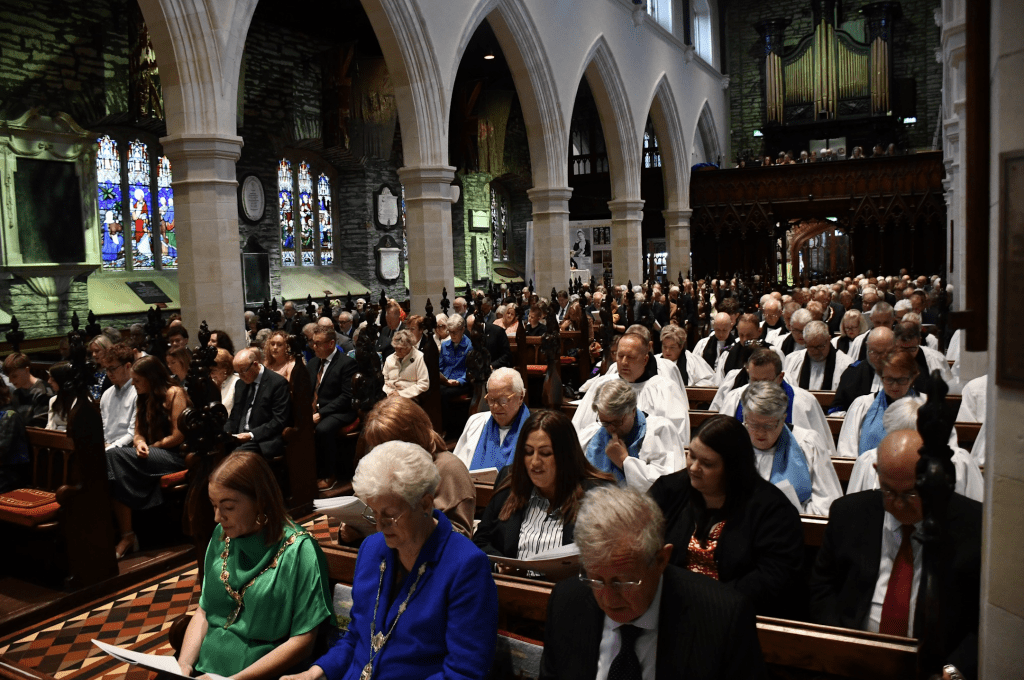
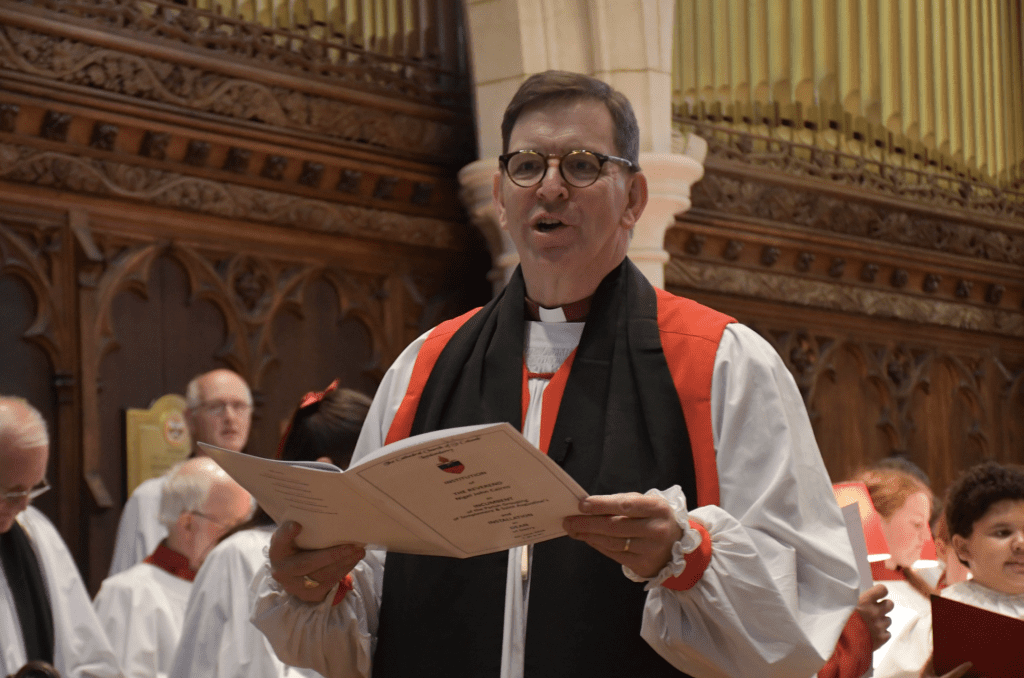
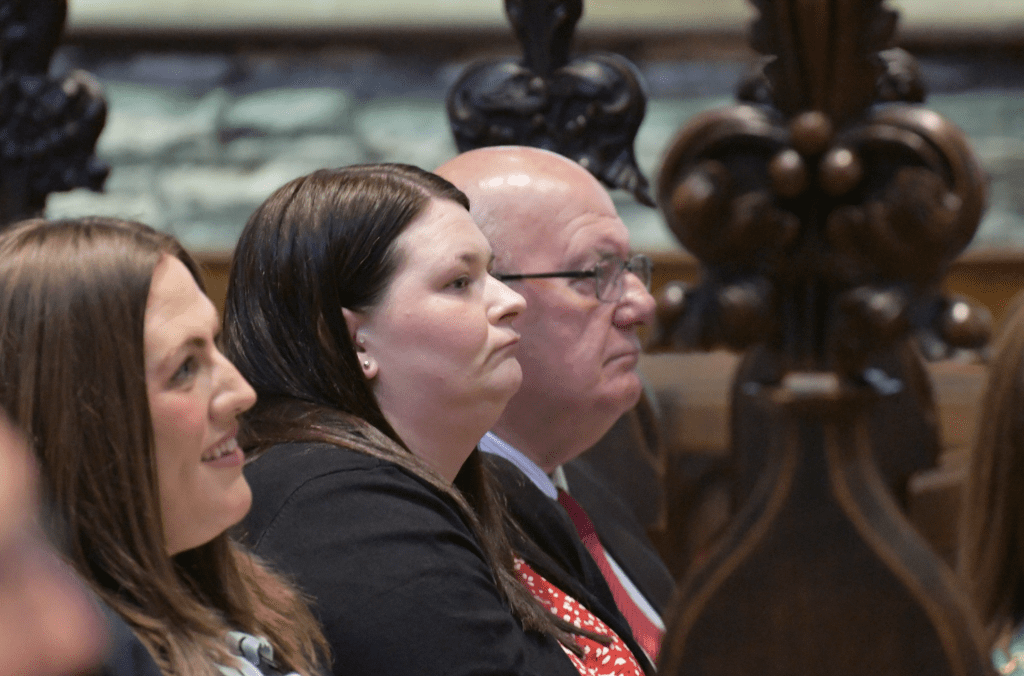
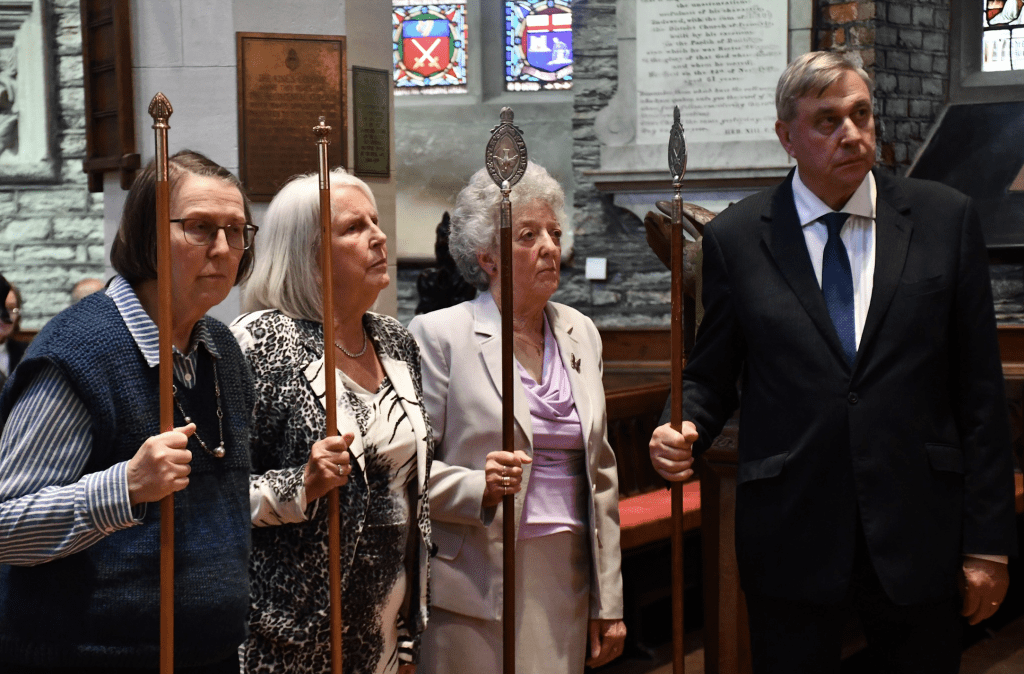
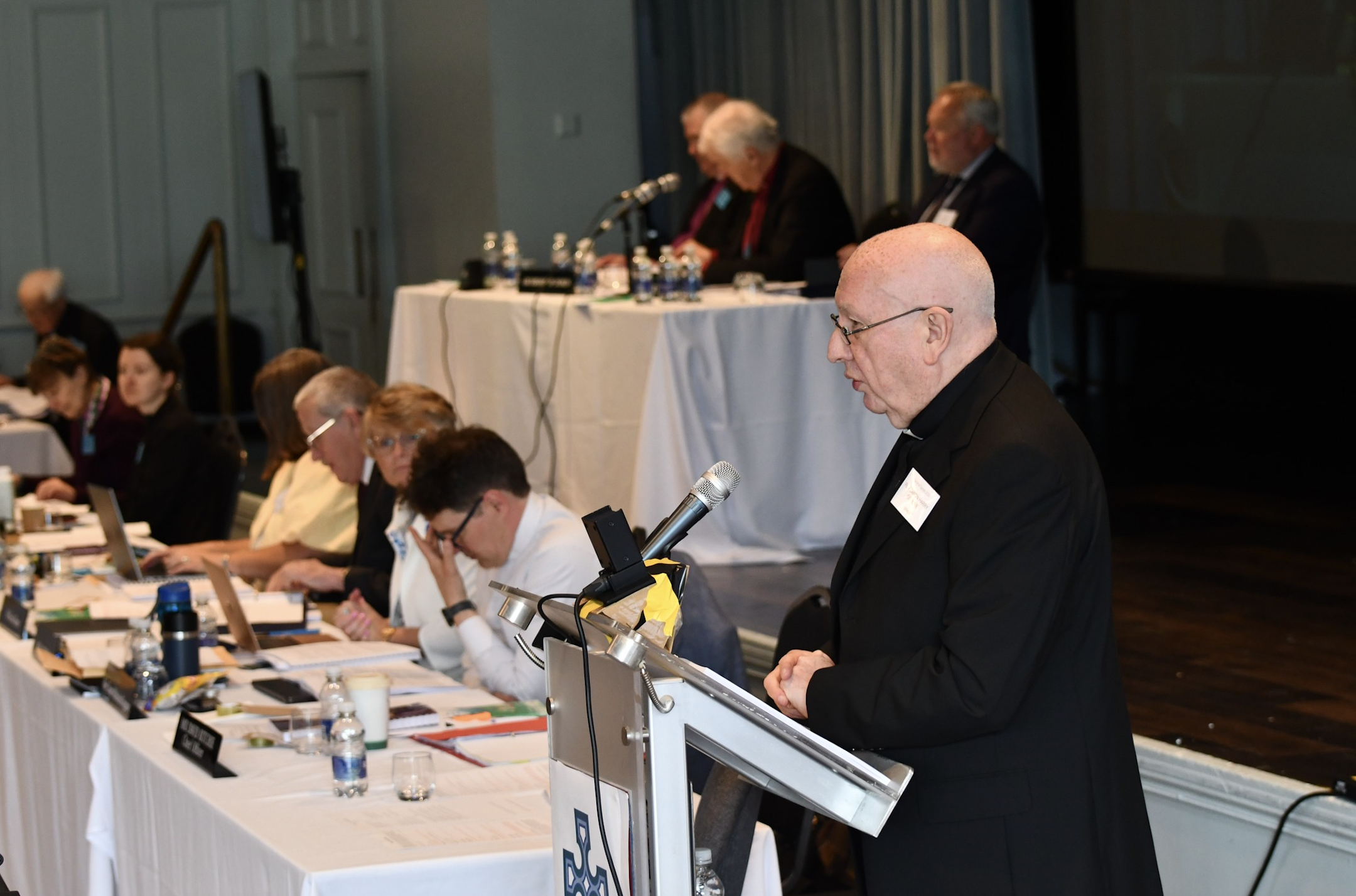
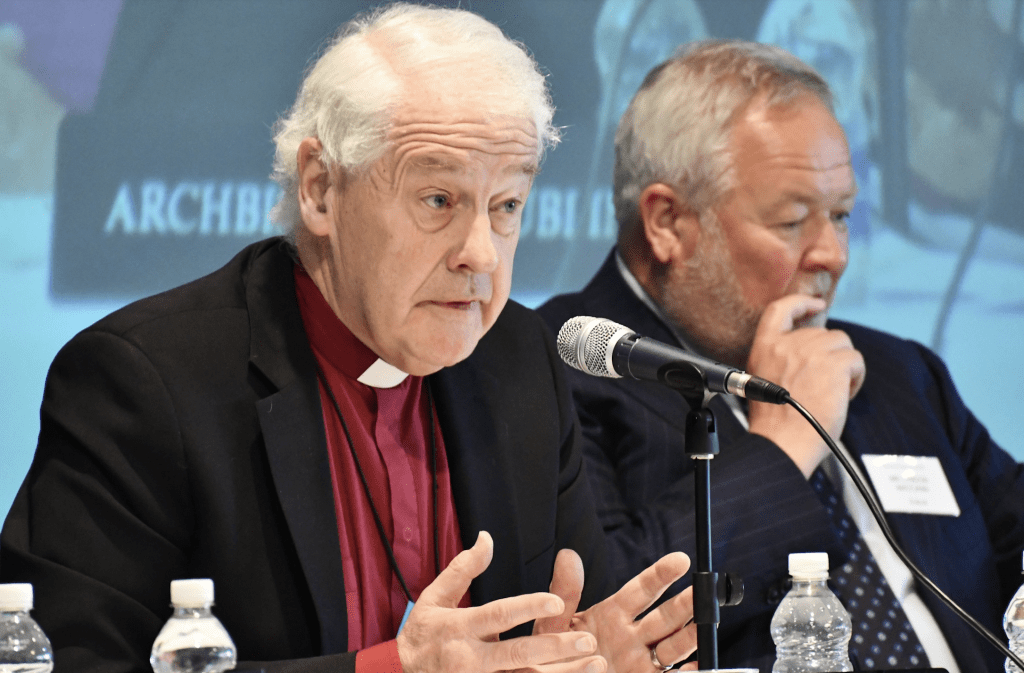
The Archbishop of Canterbury, the Most Revd and Rt Hon Dame Sarah Mullally DBE, paid her first visit to Londonderry as she led a high-powered group of more than 100 senior Anglican clergy and ecumenical guests on a one-day pilgrimage to the city. The international delegation was made up of bishops, clergy and laity from 38 Anglican provinces worldwide and included the Secretary General of the Anglican Communion (the Rt Revd Anthony Poggo), the Chair of the Anglican Consultative Council (ACC), Canon Maggie Swinson; and the Vice-Chair, the Most Revd Hosam Naoum, Archbishop in Jerusalem.

The group are in Northern Ireland for the 19th meeting of the Anglican Consultative Council which is taking place this year in Belfast. The organisers scheduled a one-day visit to Derry – hosted by Bishop Andrew Forster – during which delegates were invited to explore the theme of reconciliation.

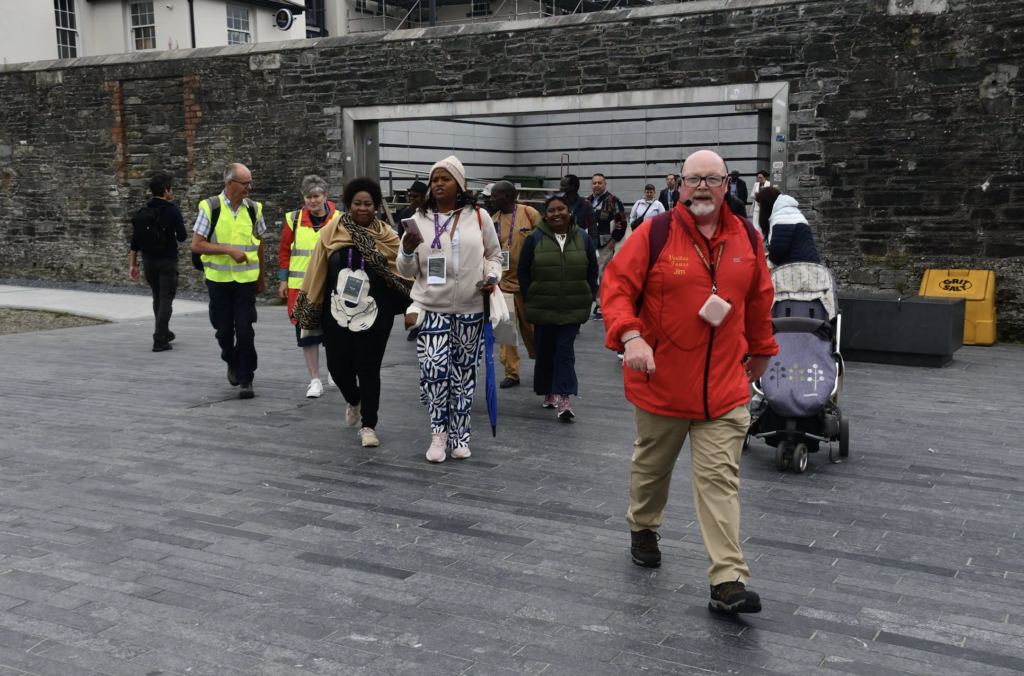
The pilgrimage began at Ebrington Square, a former British military complex for over 160 years, which was closed and handed to the public in 2003 and has since been transformed into a vibrant, shared civic and cultural space.

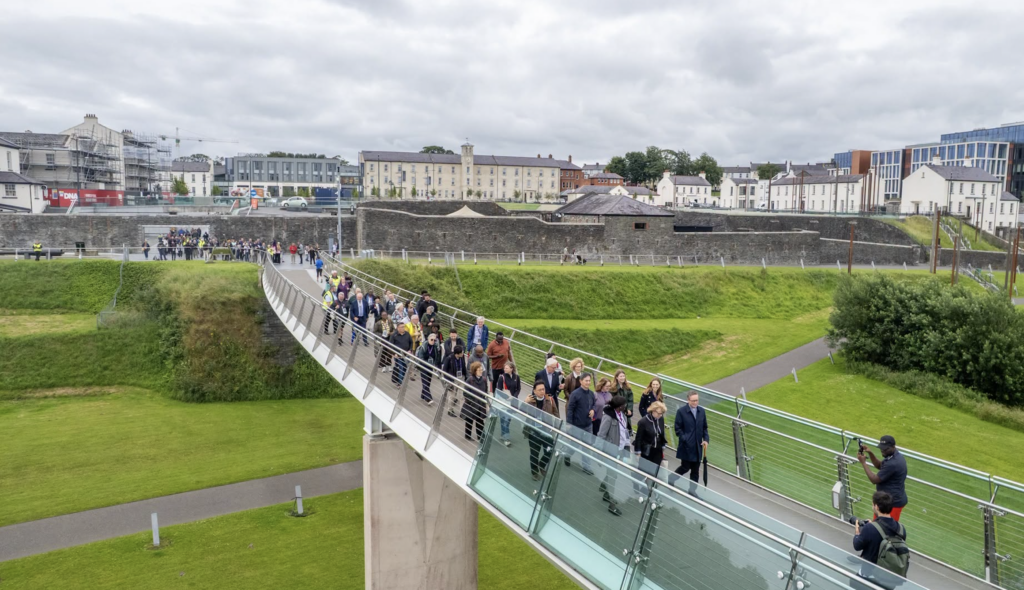
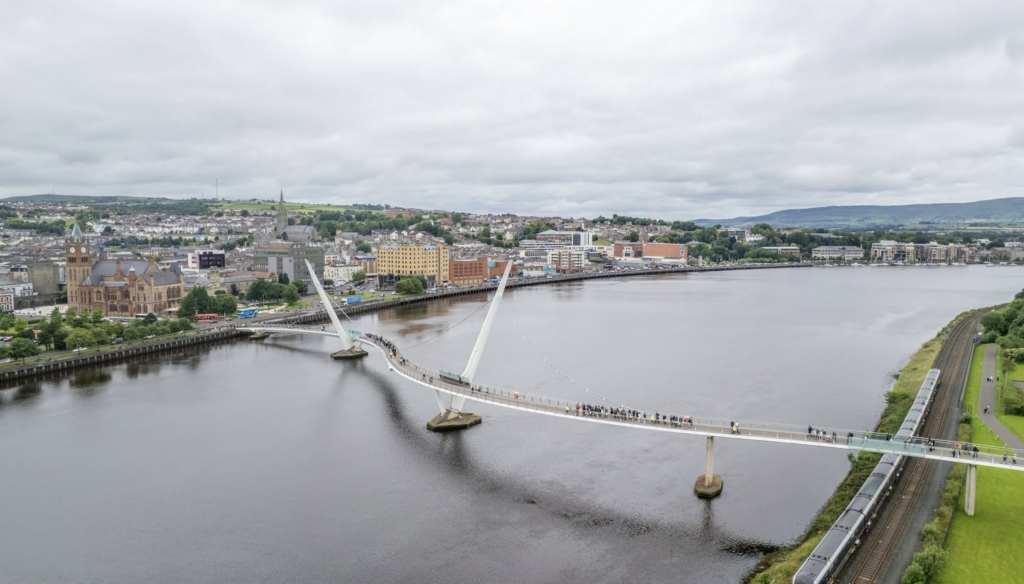
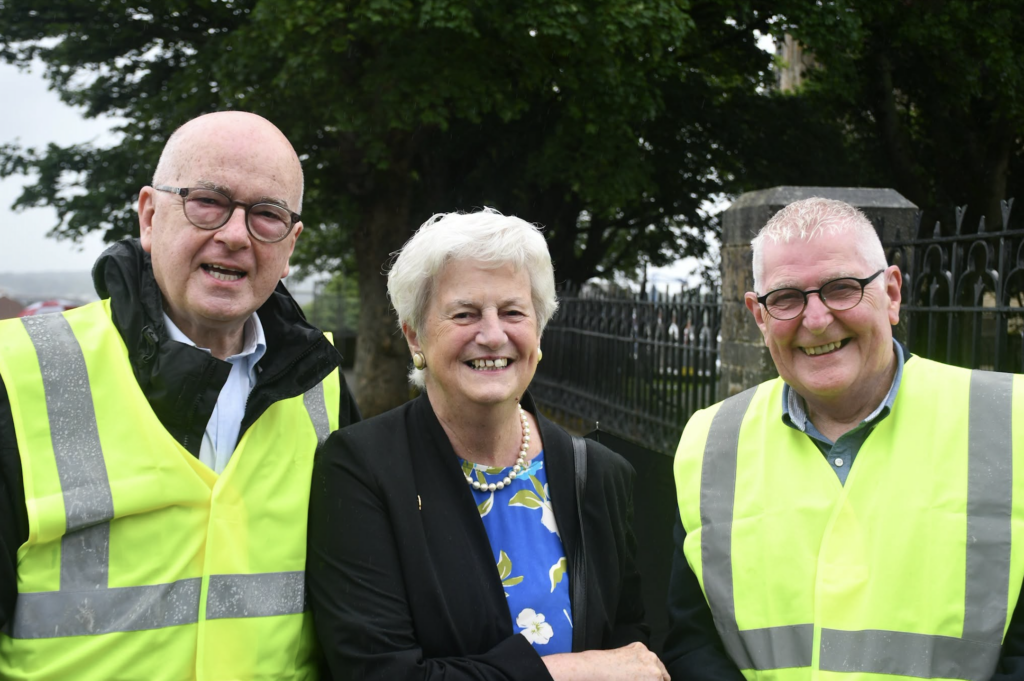
Setting the scene for the day, Bishop Andrew expressed his hope that the pilgrimage would be an opportunity to ‘journey further into the heart of God, journey further into the heart of other people’s experiences, and journey further into our own discipleship and journey of faith.’ Of the delicate work of peacebuilding in the city, he added: ‘Peace is always a fragile thing that must be handled with care — the more care we use, the more we value it and see it as precious.’ Delegates – accompanied by volunteers from local parishes – walked a path through sites of historic and symbolic significance, tracing Northern Ireland’s journey from conflict to peace.

The day had been designed as a living encounter with Irish history and the Church of Ireland’s ministry in the midst of sectarian conflict and Northern Ireland’s peace process. It provided an opportunity for the international delegation to learn from the host church’s experience and to reflect on how Anglicans can support peace and reconciliation work around the world.

The pilgrimage offered an important opportunity to understand the history of the region as well as providing a practical resource for the global Church in reconciliation ministry. Many delegates attending ACC-19 come from countries currently experiencing armed conflict, political instability or post-conflict transition. The Anglican Communion also advocates for peace and reconciliation about ongoing conflicts around the world, including in South Sudan, the Middle East, Sudan, Myanmar, and the Democratic Republic of Congo.

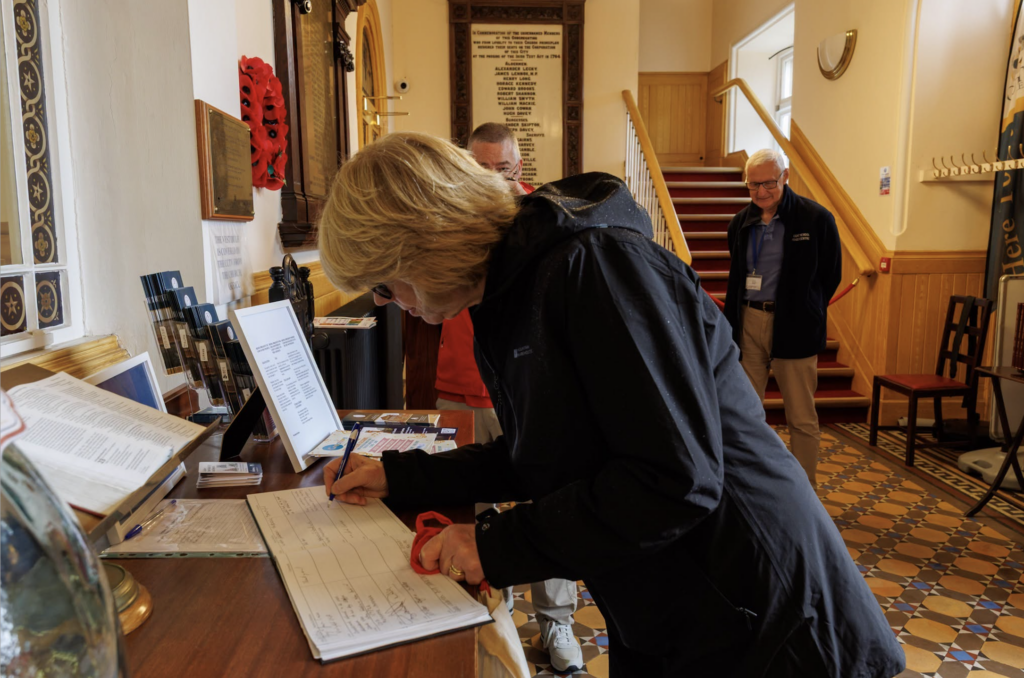
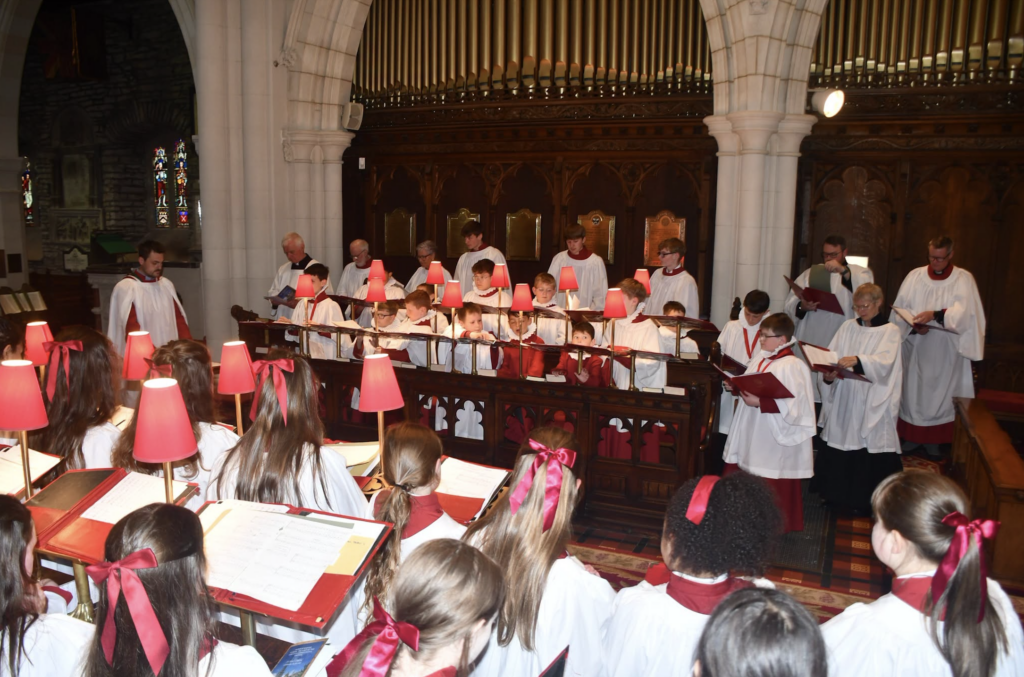
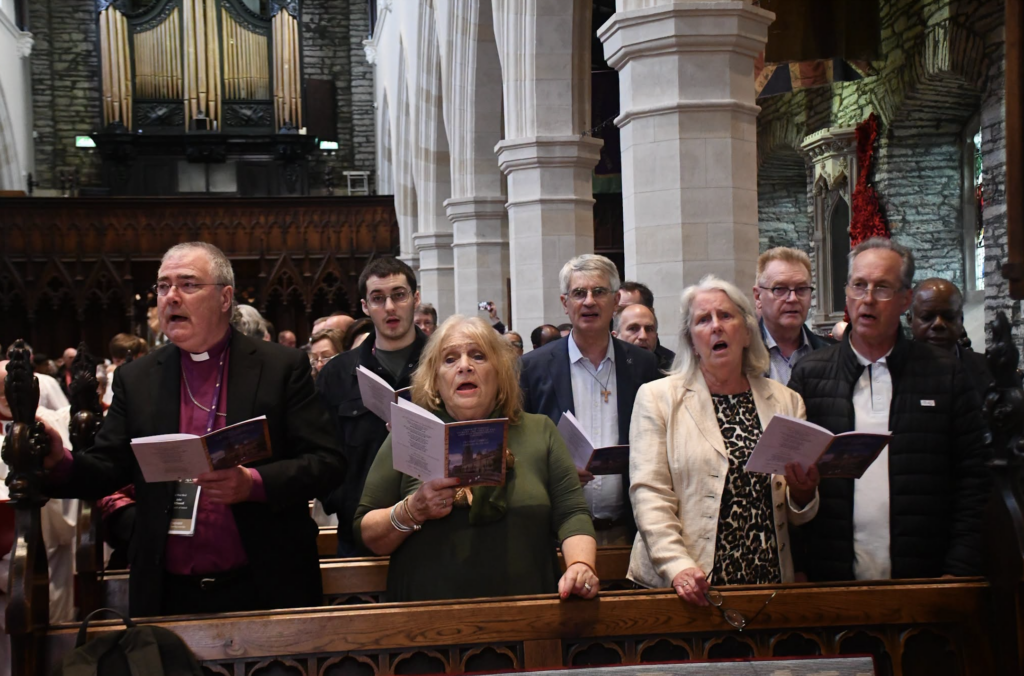
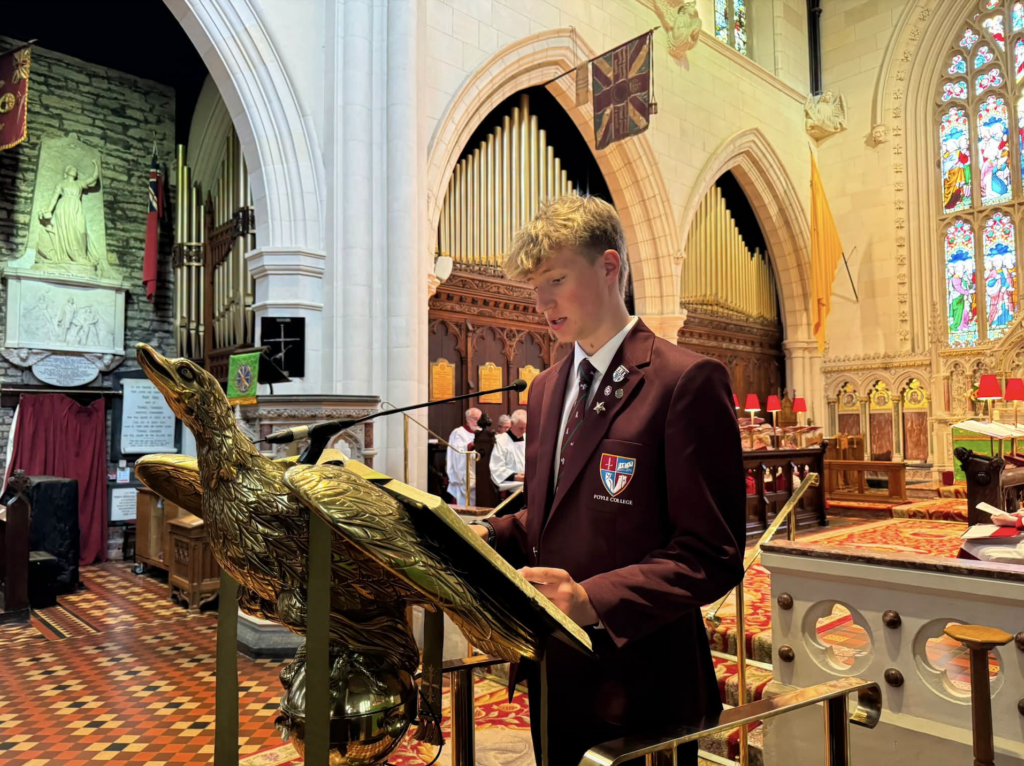
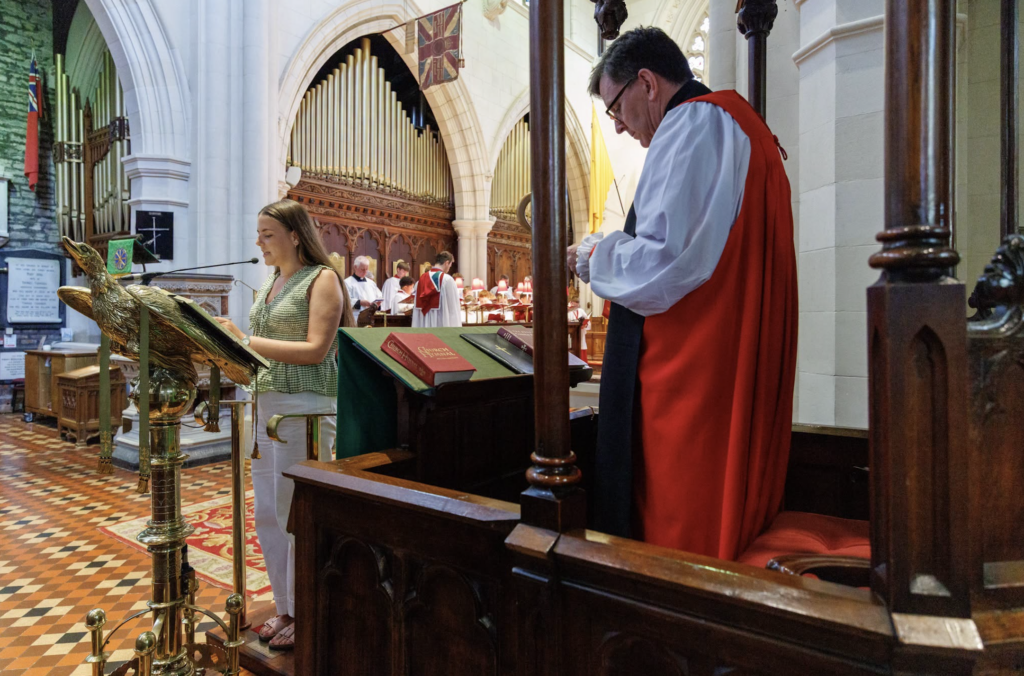
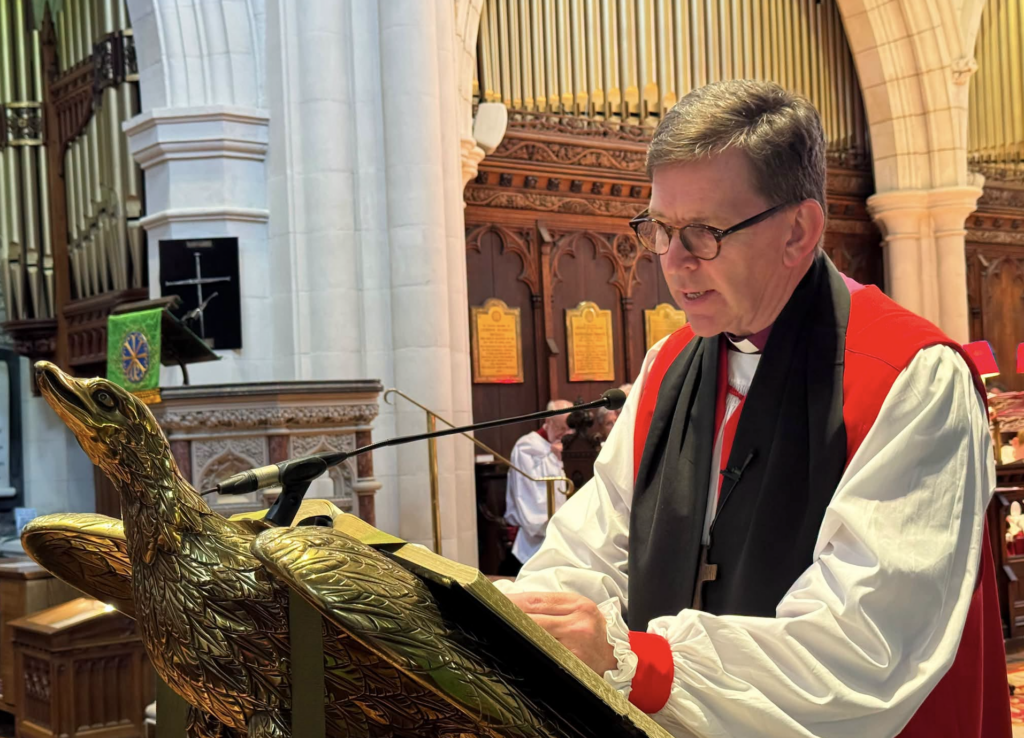
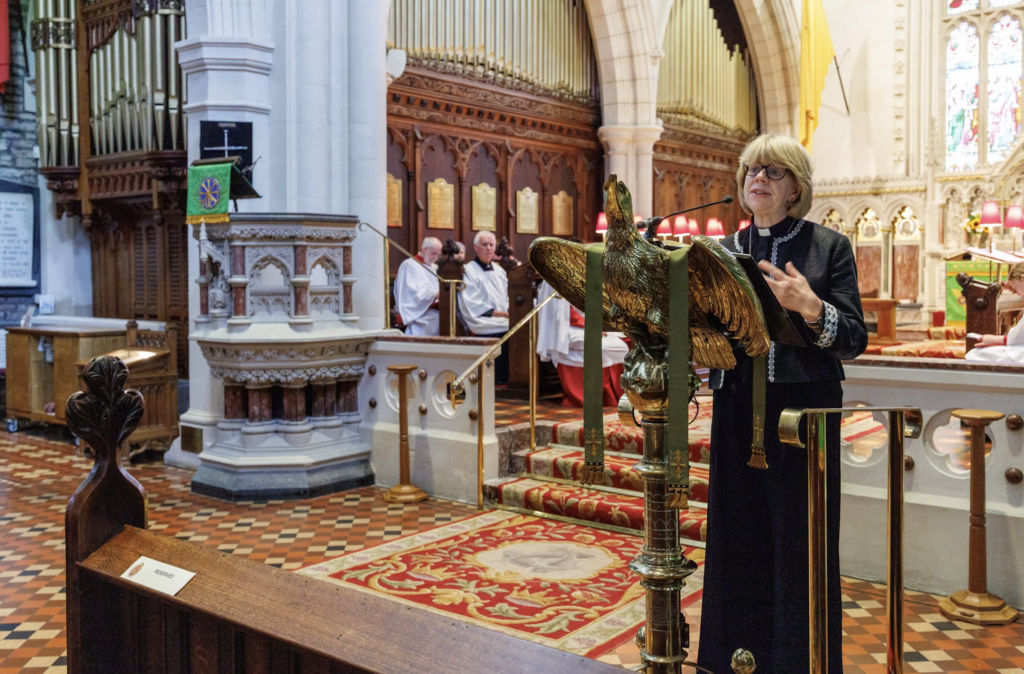
There were many moments throughout the day to send the visitors home with fond memories: a beautiful liturgy service at St Columb’s Cathedral, a walk across the iconic Peace Bridge; and a visit to the Guildhall to find out more about the city’s history and its journey towards peace.

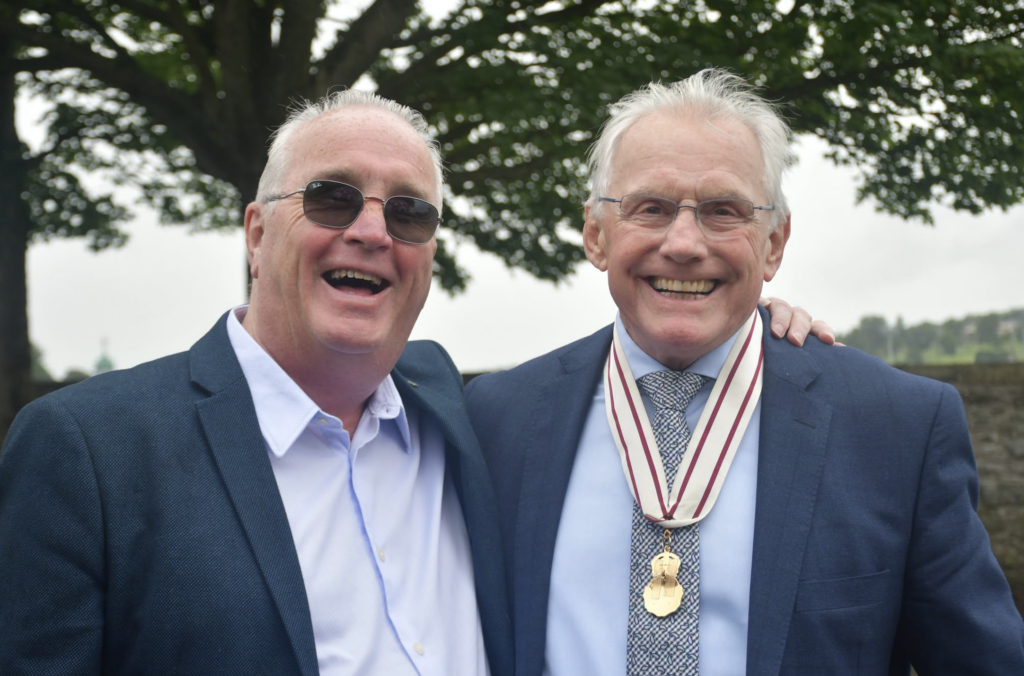
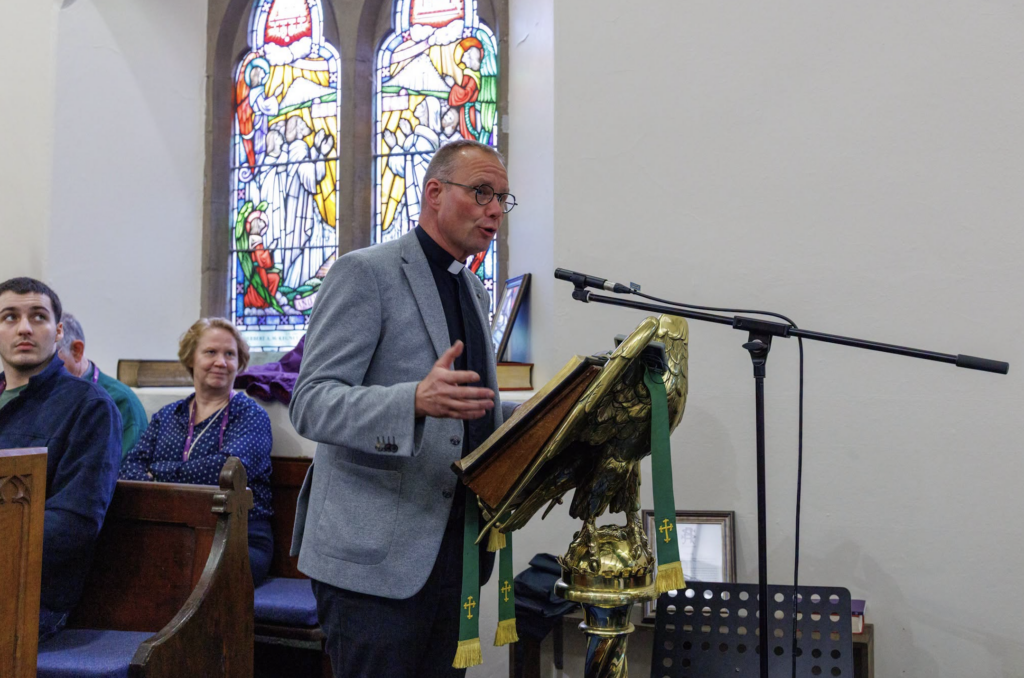
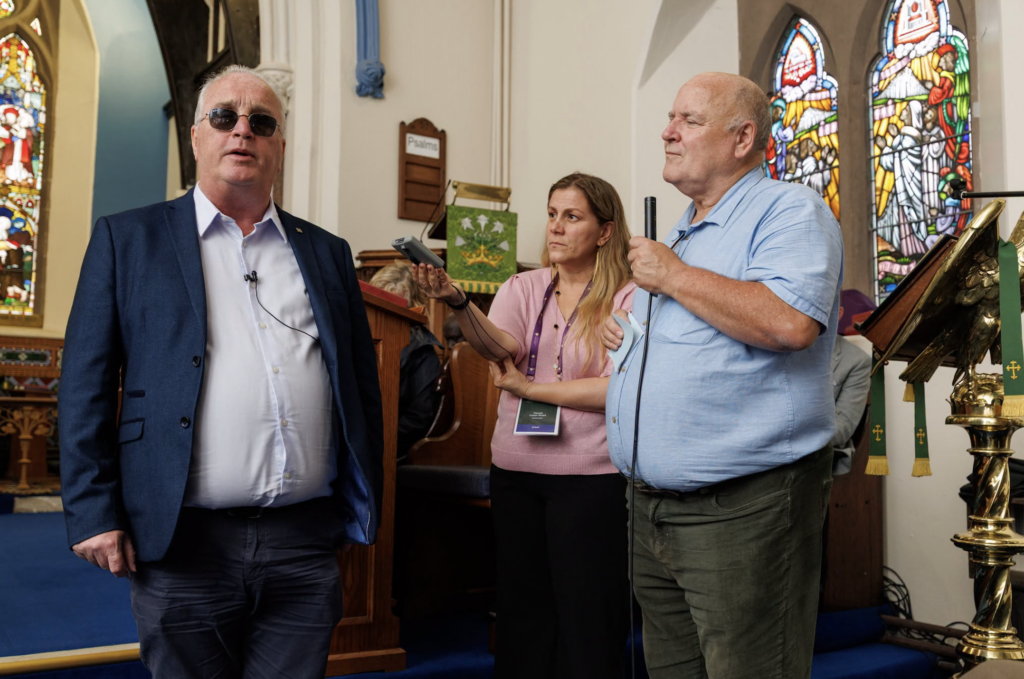
The highlight of the day for many came at St Augustine’s Church, where the delegation heard from Richard Moore who as a 10 year-old schoolboy was blinded when he was struck by a rubber bullet fired by a British soldier in May 1972. More than 30 years later, Richard sought out and met the soldier responsible – Charles Innes – an act of courage and grace that he described with honesty and humour. Reflecting on his initial hesitation, Richard recalled: ‘The man had hurt me, my mammy and daddy — he was a British soldier. Was I letting my own side down and other victims? But I wanted to meet him.’

Richard’s account of their encounter and of his own journey toward forgiveness moved the international congregation deeply. Speaking of the importance of striving for reconciliation, Richard said: ‘No matter how difficult the situation might seem, given the right level of support, love and compassion, you can contribute to the lives of other people and you can overcome the difficulties that you face and use them in a positive way. I believe that if you really want reconciliation, it has to begin within yourself. Forget everyone else. Begin in your own heart. Not Stormont. Not Westminster. Not with politicians. If you can reconcile your own heart, you can reach out to others.’

(Photo credits: Neil Turner and Diocese of Derry and Raphoe)

Parishioners and clergy feel the heat at Castledawson institution

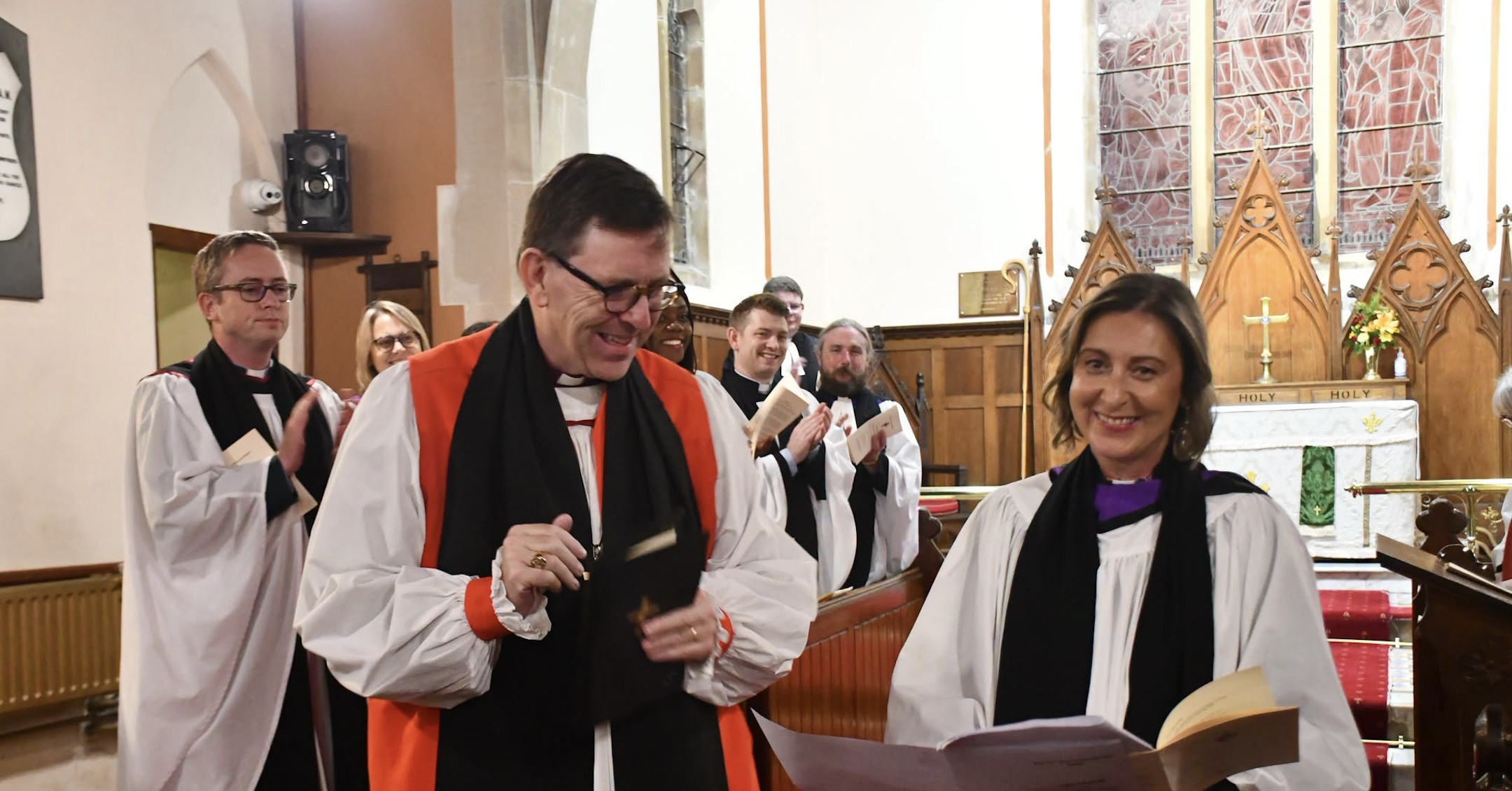
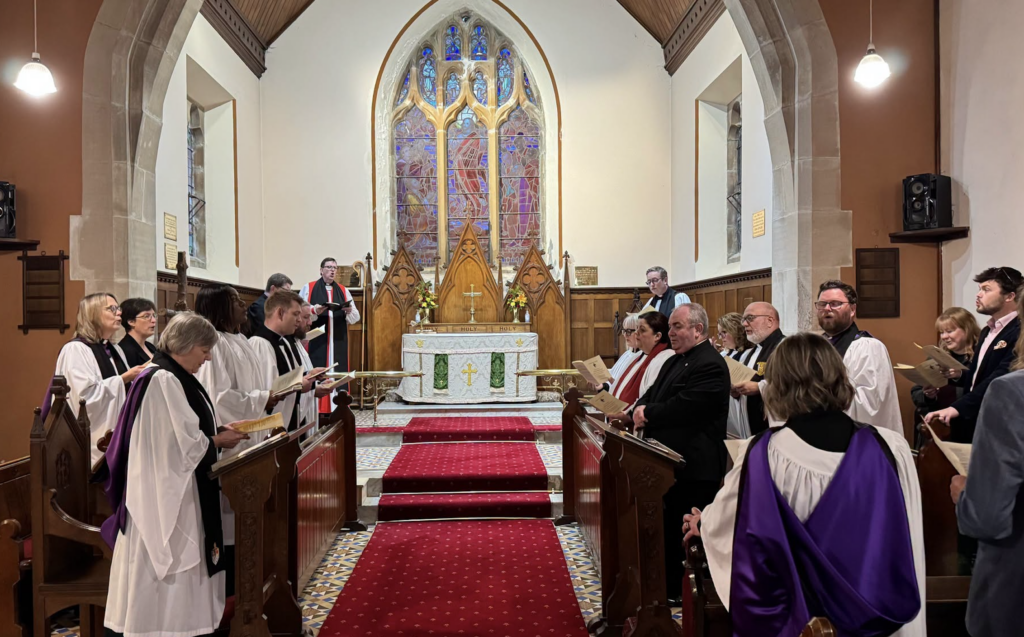
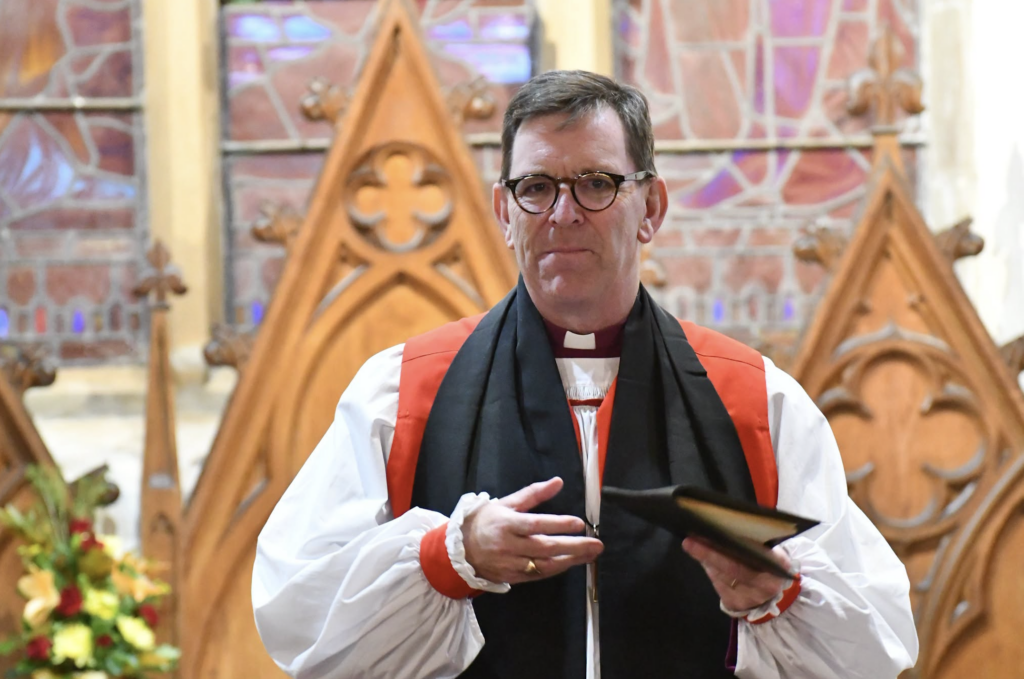
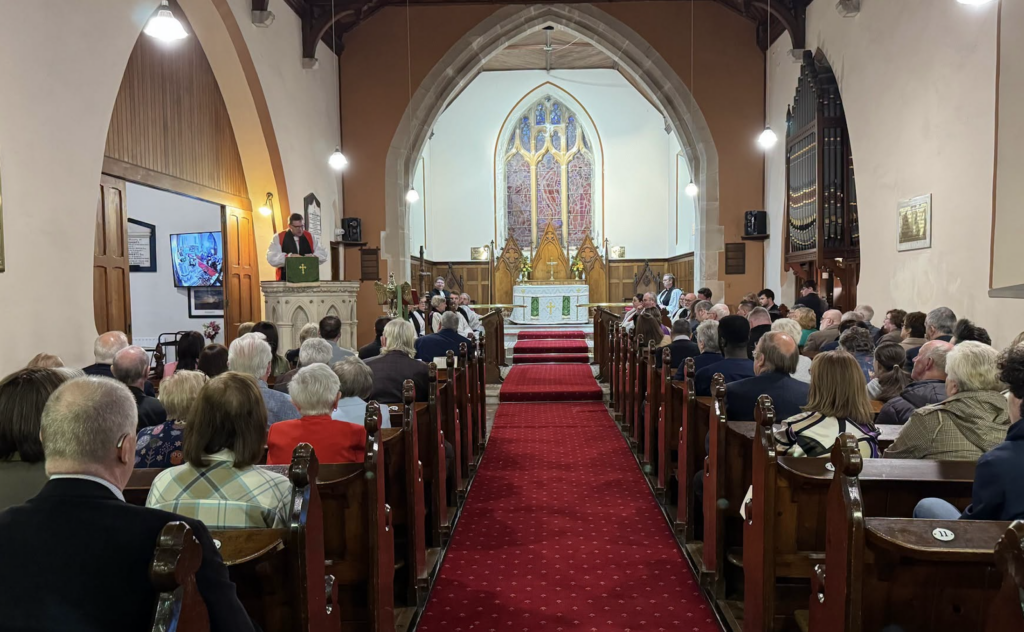
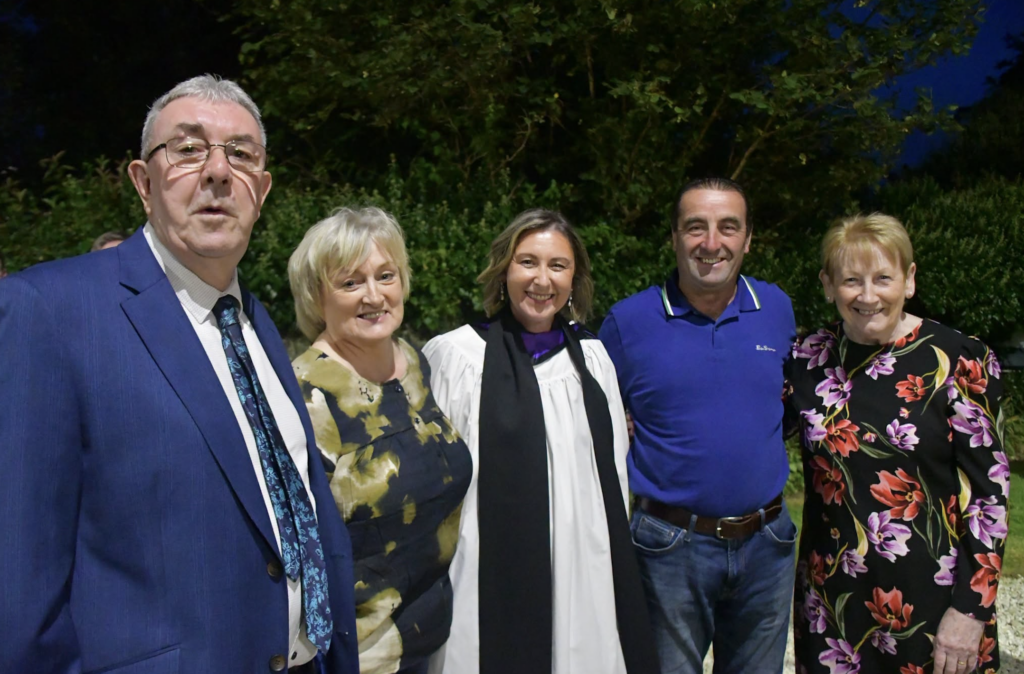
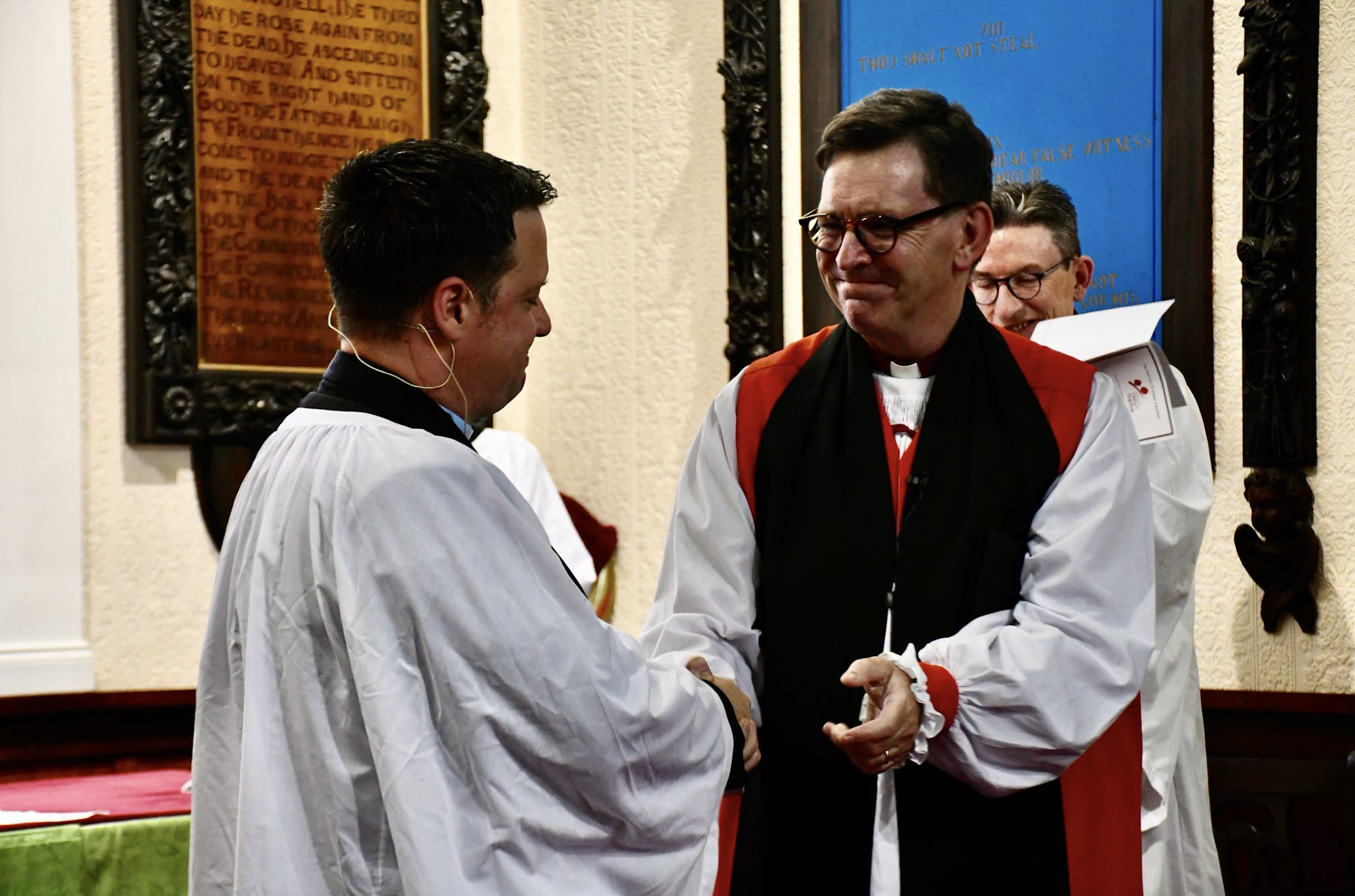
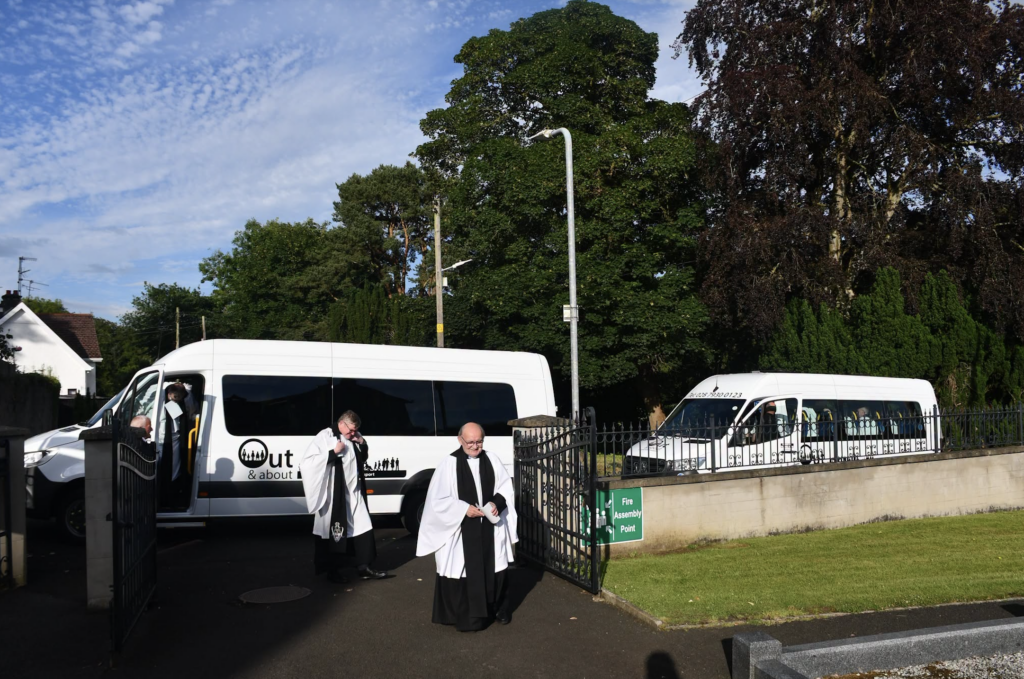
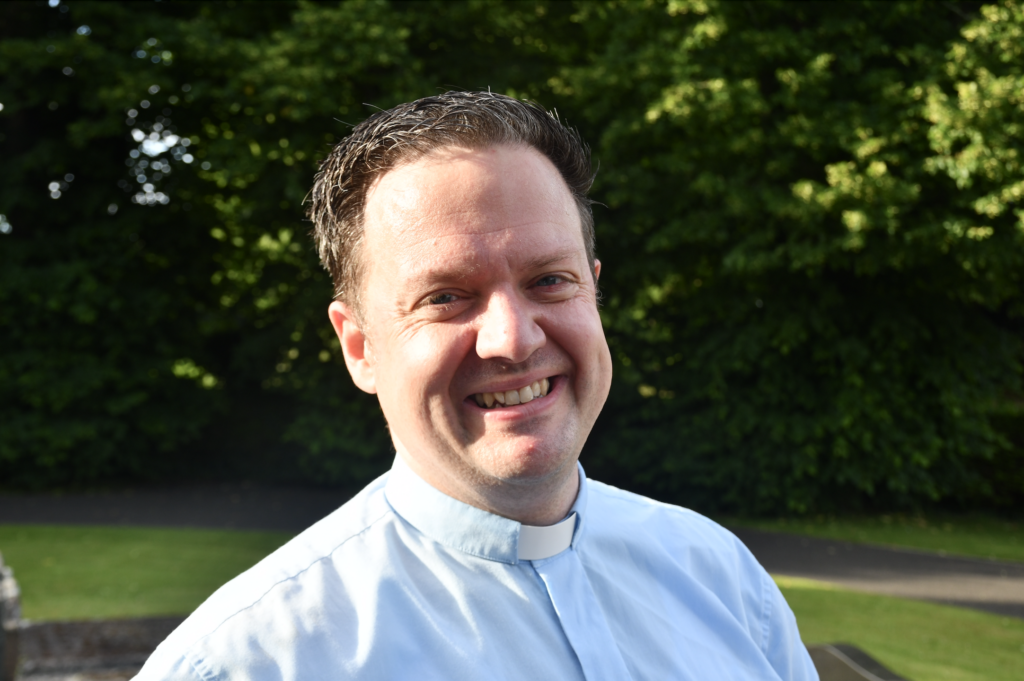
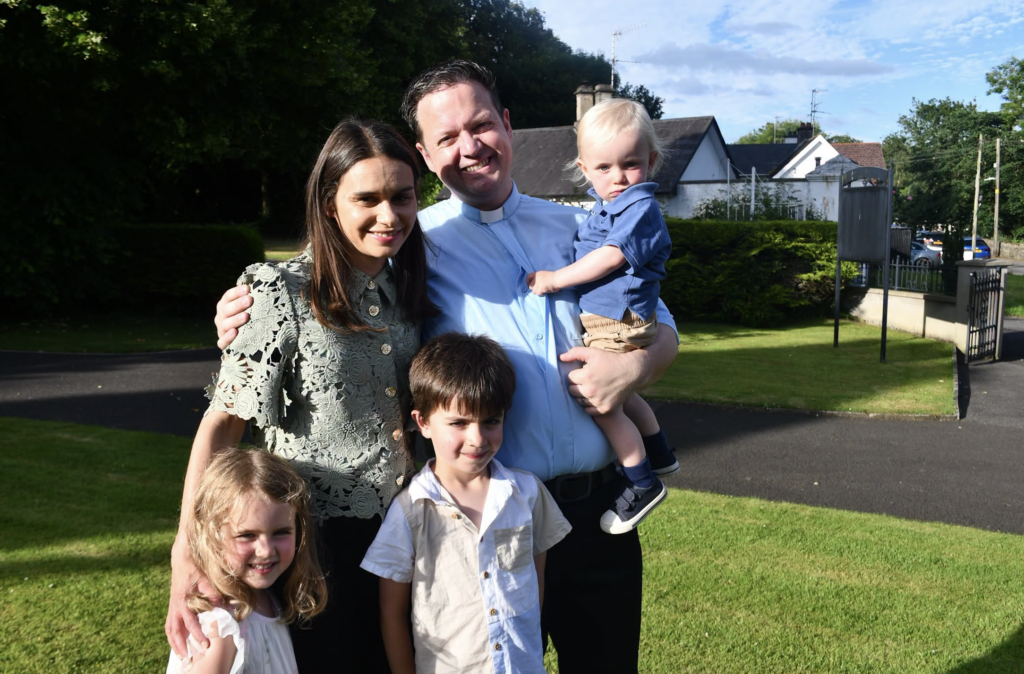
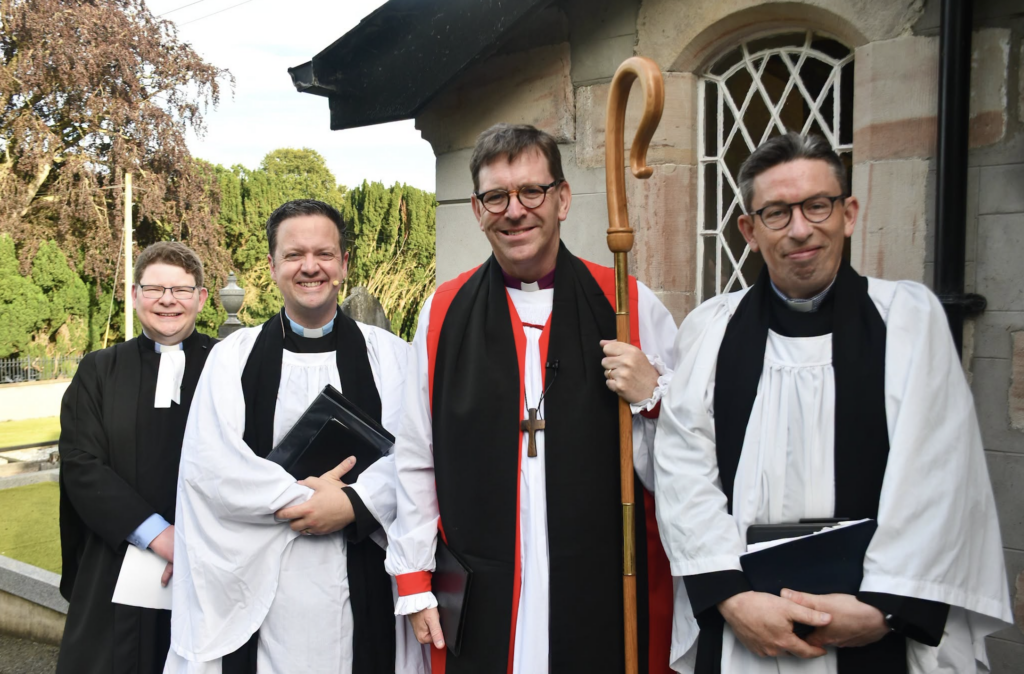
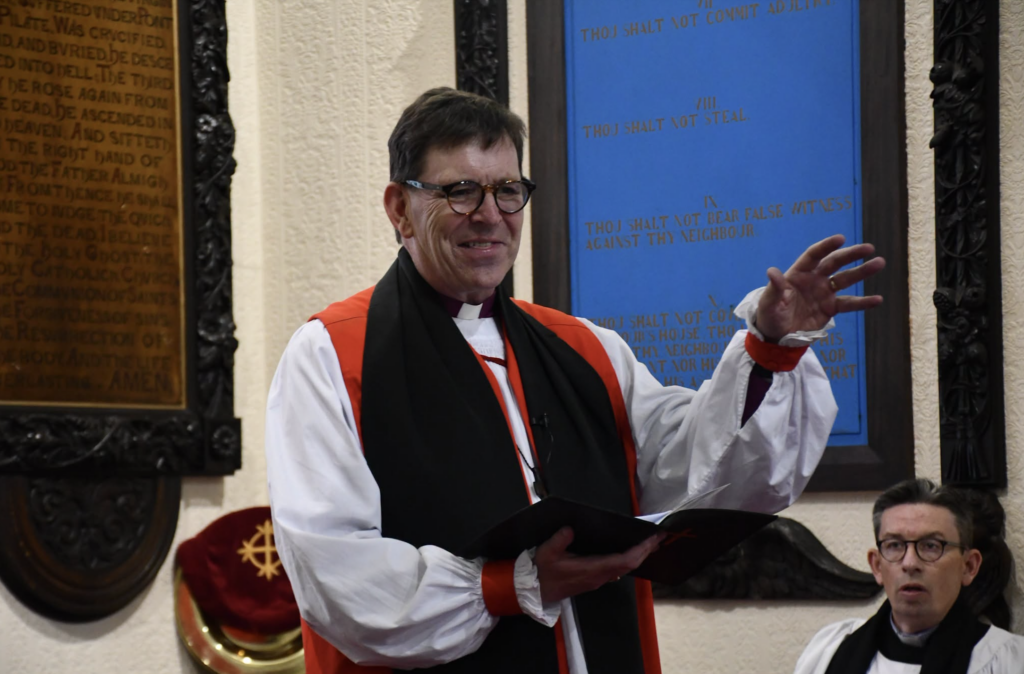
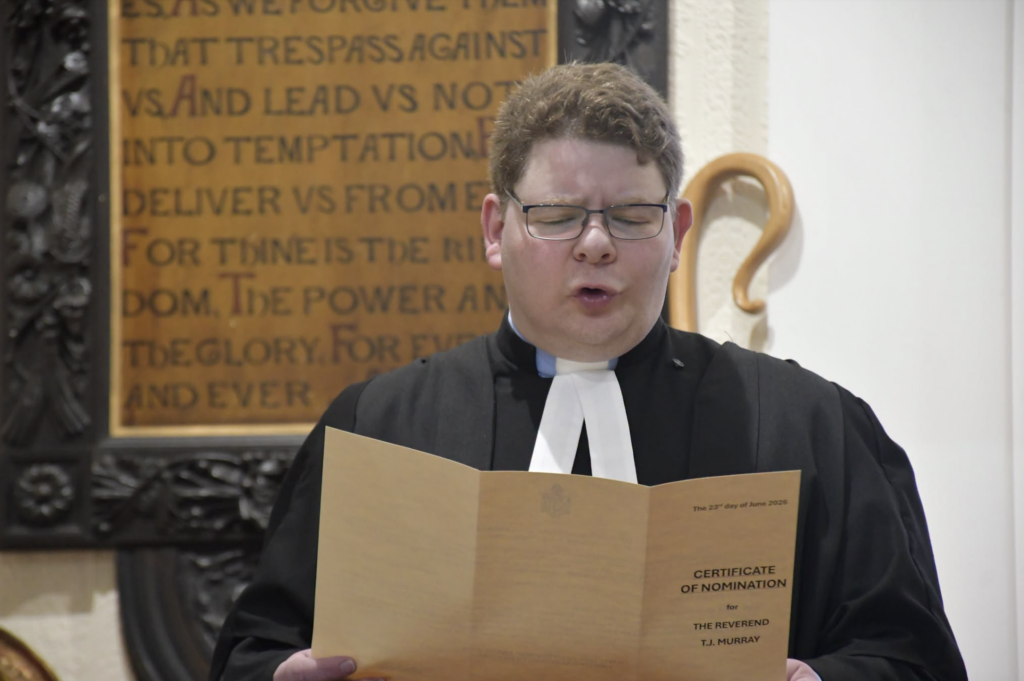
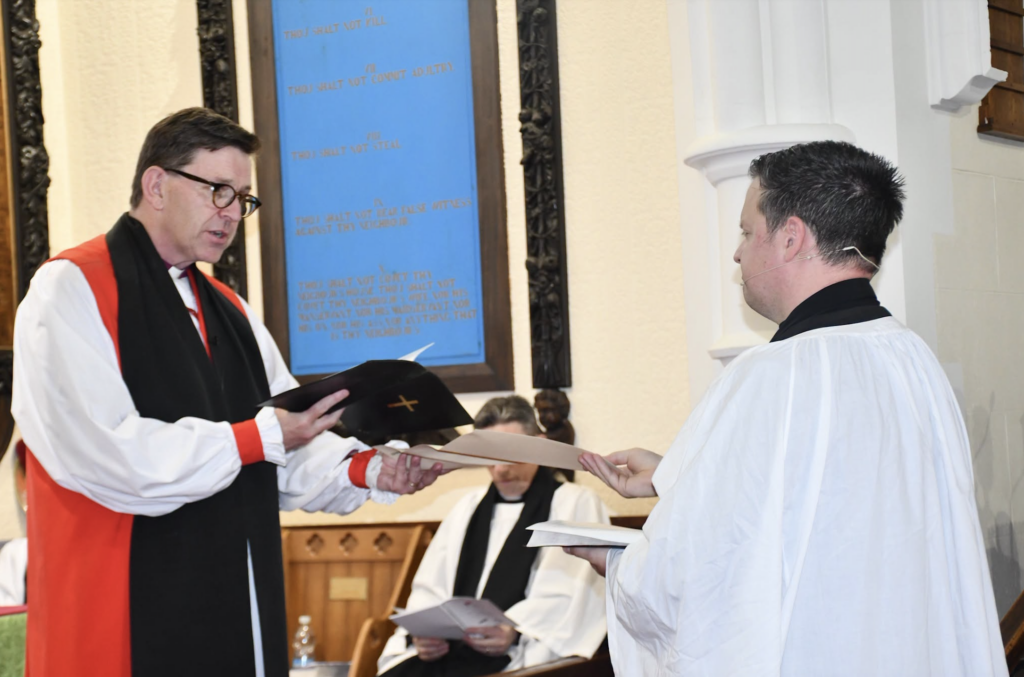
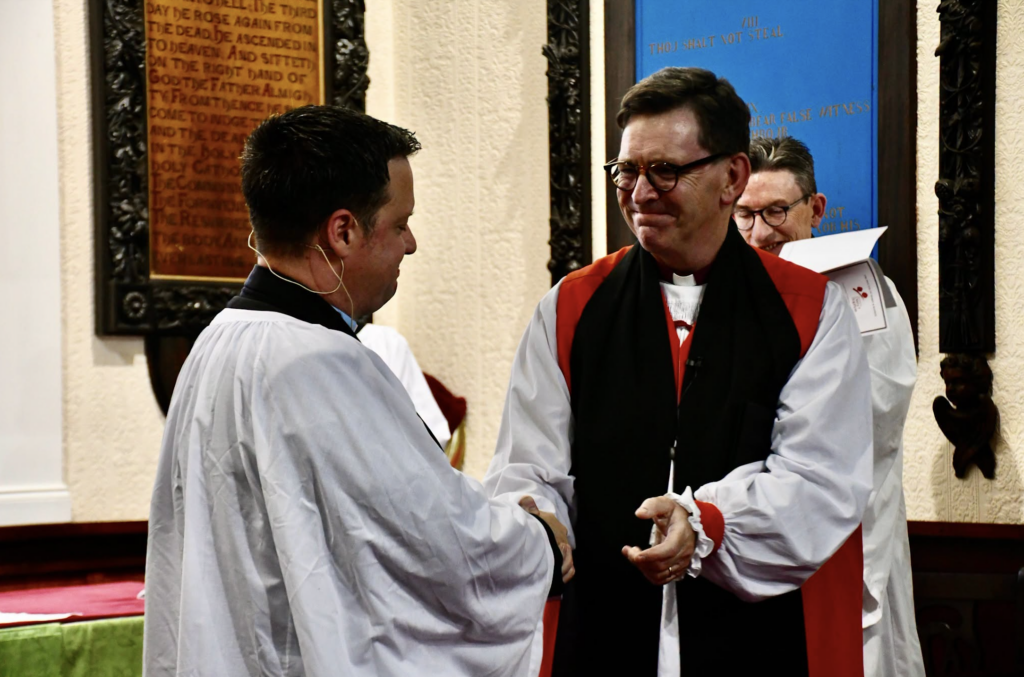
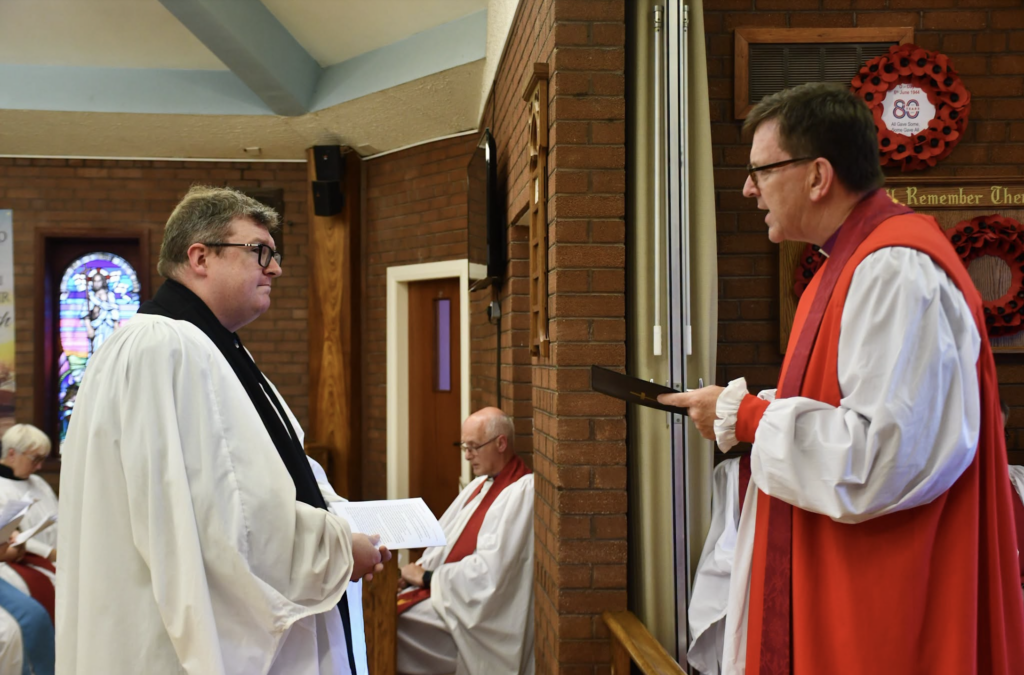
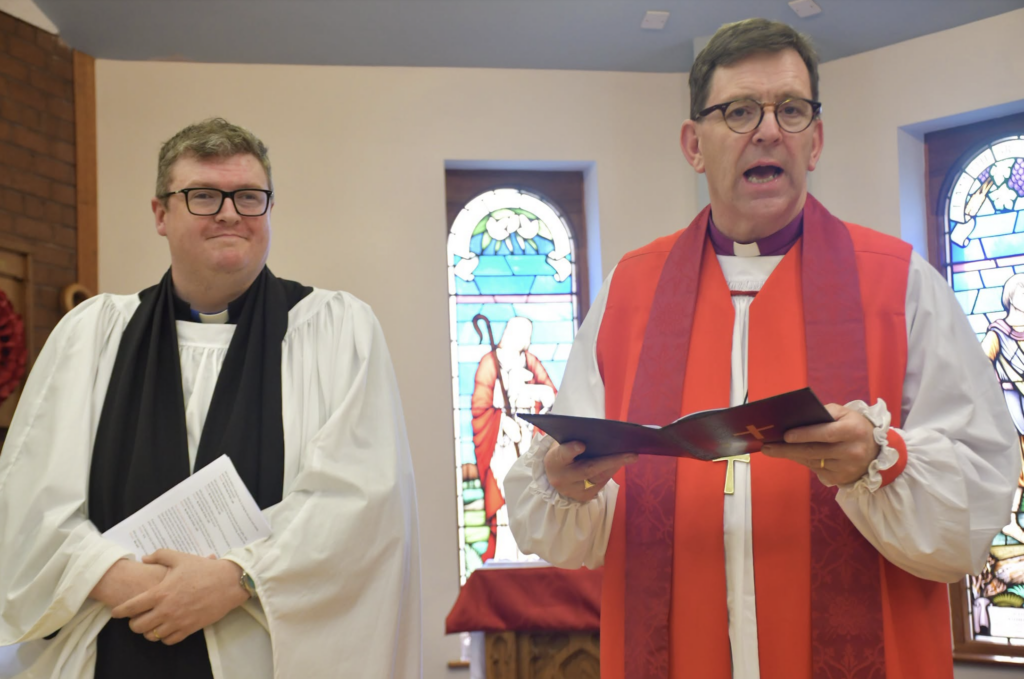
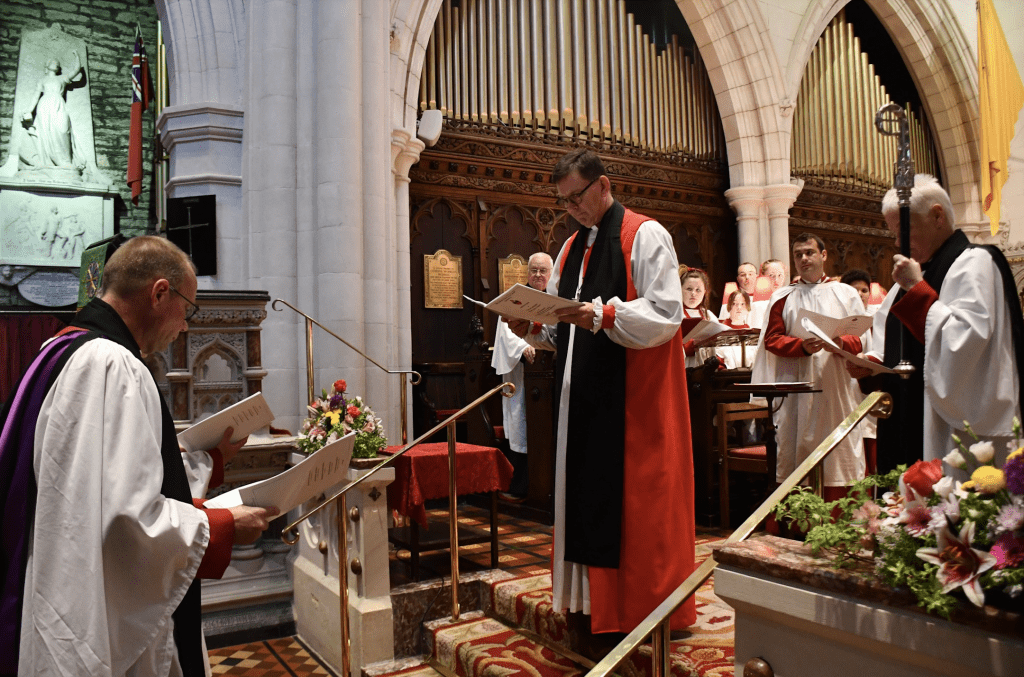
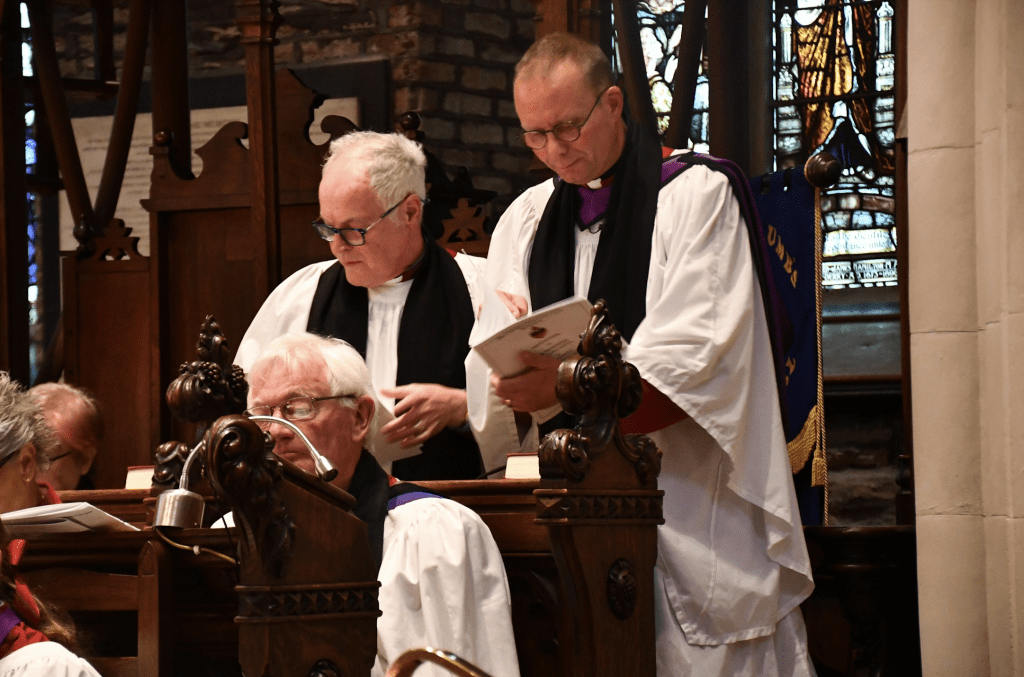
The new Rector of the Grouped Parishes of Castledawson and Ballyscullion, Rev Thomas Murray, was instituted by Bishop Andrew Forster in a sweltering Christ Church Castledawson, on Tuesday evening, in a service organised by the local Rural Dean, Rev Gary Millar.

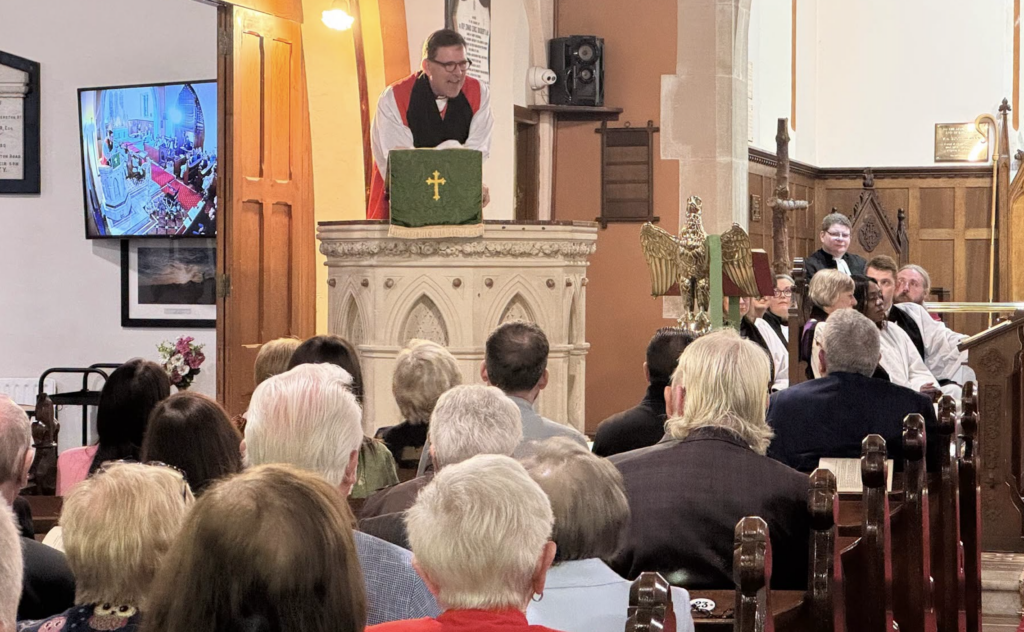
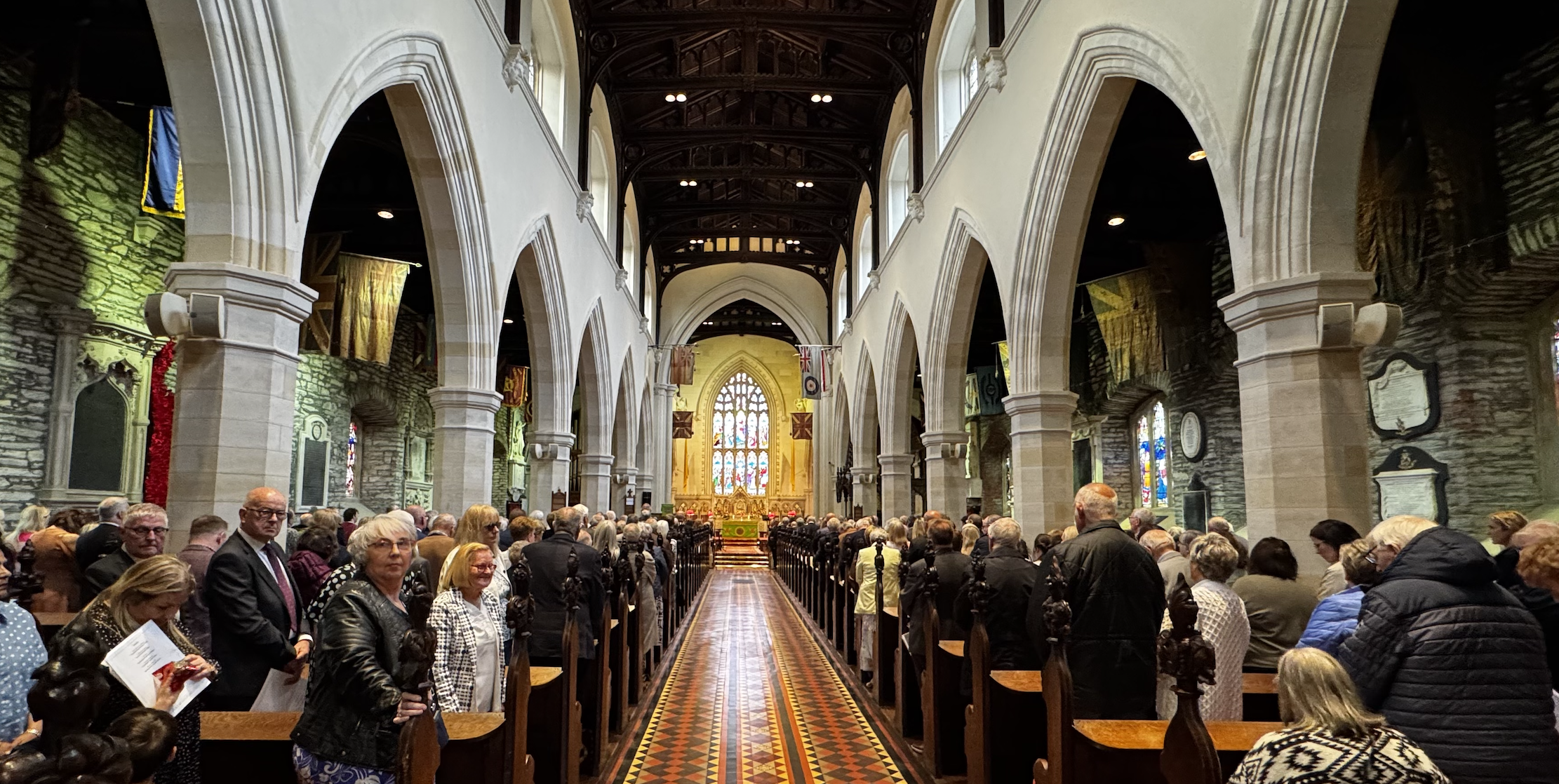
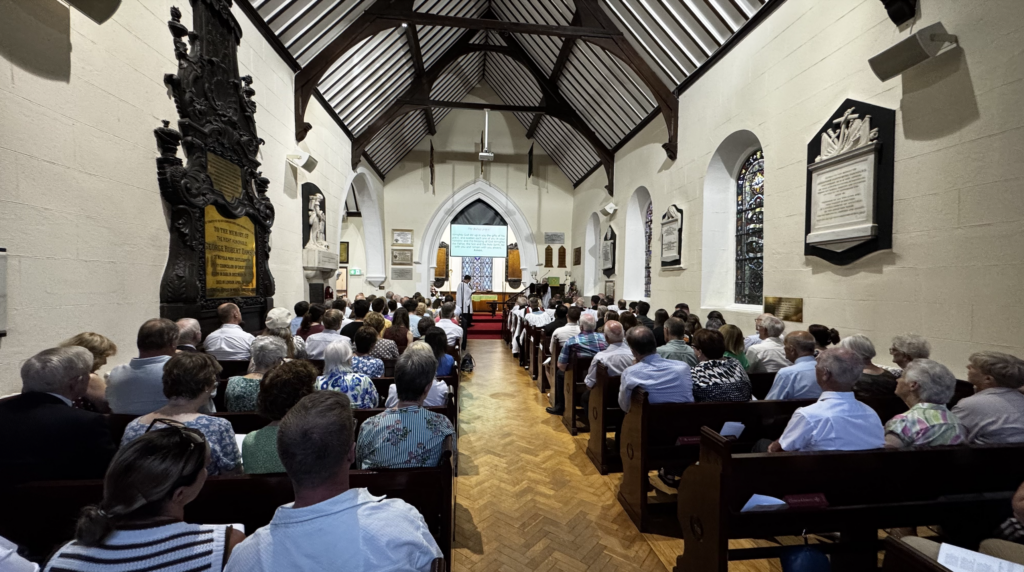
The three doors of the church were left wide open throughout the service and members of the congregation fanned themselves with their orders of service in an effort to alleviate the heat. The church was packed for the occasion and a live feed of the service was relayed to a couple of hundred parishioners following proceedings from the parish hall. Clergy and readers robed in the hall before being ferried by minibus to the church a third of a mile away.

Welcoming those in both locations, Bishop Andrew joked that they had laid on some Australian weather for the new incumbent and his family (the Rector’s wife, Jodie, is Australian and the couple’s eldest child was born ‘down under’).

It was, the Bishop said, a special night marking the start of a new chapter in the Murrays’ life and a new chapter in Rev Thomas’s ministry. “I want to tell you that you are the answer to our prayers,” Bishop Andrew told him. “We prayed that God would raise up the right person to come here to be rector and we believe that God has done exactly that in bringing you to us, Thomas”.

The Bishop had some words, too, for the two congregations celebrating the arrival of their new rector. “To the parishioners of Christ Church Castledawson and Ballyscullion, this is a new chapter for all of you, as well, as we inaugurate this new parish group which, I have to tell you, I’m really excited about because I think that within this parish group there is both a diversity and a wonderful unity in the cause of God and the Gospel in this area. There are wonderful, different expressions of worship that we celebrate together and are joyful in together, and I do believe that for this new parish group there is a bright future ahead”.

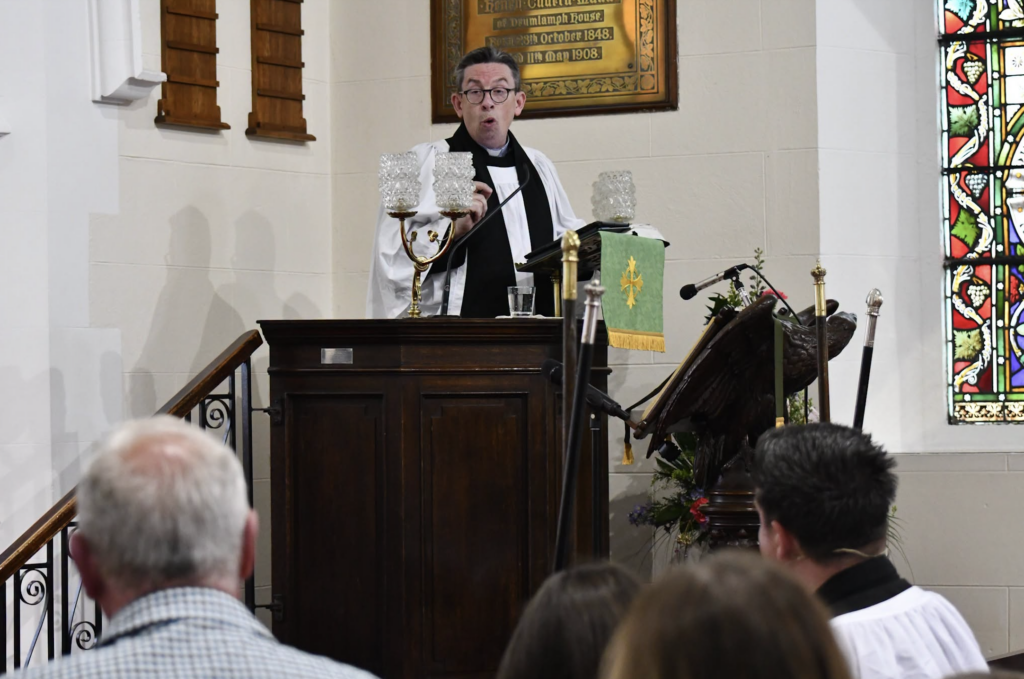
The preacher for the service, Rev Bryan Martin, Rector of Kilhorne Parish Church, Annalong, said “although from different hemispheres” the Murrays – Rev Thomas and Jodie – were “very much a Gospel team” and that they would be a blessing to their new parishioners. “I’m so excited,” he said, turning to the couple, “to hear what God’s going to do through you, here”.

“Now, in a sermon like this at an institution,” Rev Martin said, “there is a little thought in everybody’s head that says something like this: ‘This sermon is all for Thomas, after all [in the second reading], Paul is speaking to Timothy, the young church leader’. And you might be thinking, well, I can switch off, because this is irrelevant to me, because I’m not in a cassock and surplice.

“But the truth is, it is utterly relevant to all of us for three reasons. First, you need to know what to look for in your minister. Not whether he is impressive, not whether he is friendly, not whether he will tell funny stories, or even keep meetings short (I’ll bet he manages that one, Praise be to Jesus). You need to know what a biblical minister looks like, so you can pray for him, support him, encourage him, and, when needed, lovingly hold him to the things Paul writes in this letter.

“Secondly, if you’re a Christian, you are a minister in the wider sense. The New Testament says all Christians are ministers. In other words, if you believe in the Lord Jesus Christ, yes, you may never stand in a pulpit, but your life is already teaching others. Children are watching you. Friends are watching you. Your neighbours, who don’t go to church, are watching you. New believers are watching. Colleagues are forming part of their understanding of Christ by watching what you do and what you say.

“Thirdly, some of you, one day, might enter gospel ministry yourselves. Please God may there be people sent out from this place, or raised up in this place, to teach the Scriptures, to shepherd God’s people, to plant churches, to serve overseas. So this matters for all of us.”

During the Service of Institution, the care of people in the parishes is committed to the new Rector and various symbols – a Bible, water, a Book of Common Prayer, bread and wine, the keys of the churches and a towel – are brought forward representing the teaching, pastoral and sacramental ministry of a Rector.

The Rural Dean reminded the congregation that these symbols had implications for them, too. “They are symbolic not only of Thomas’s ministry but the ministry of all the people in these parishes”.

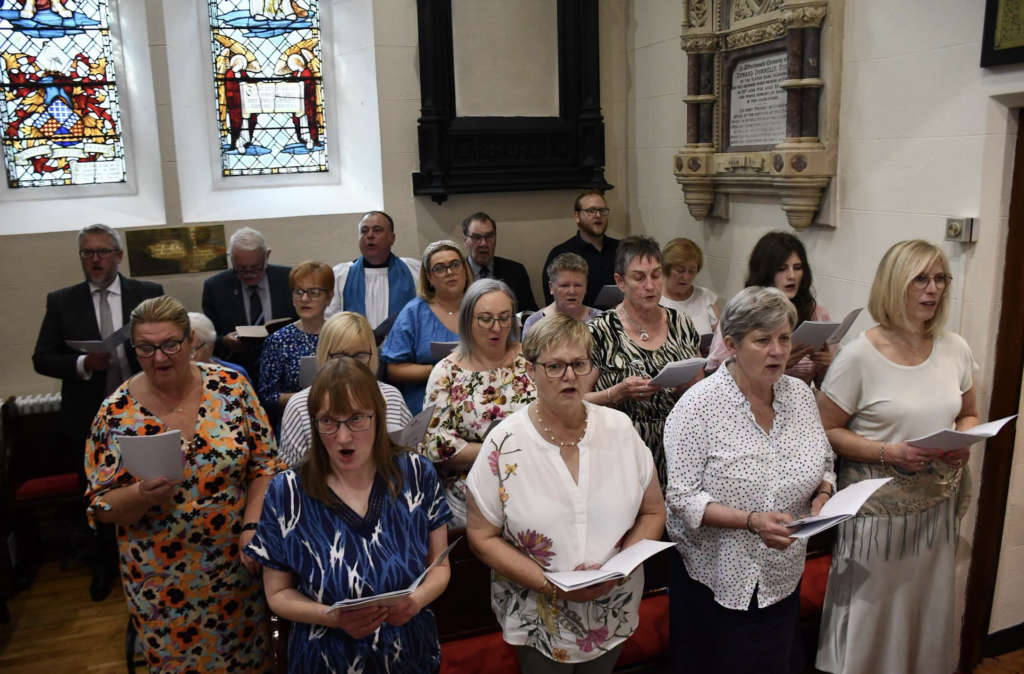
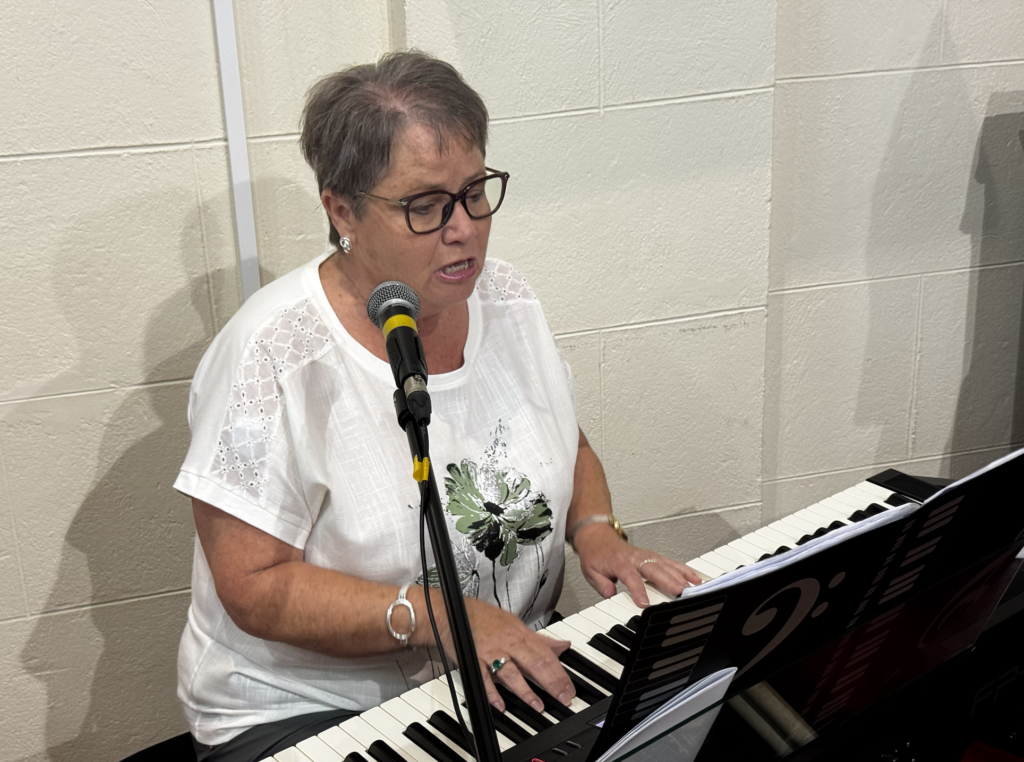
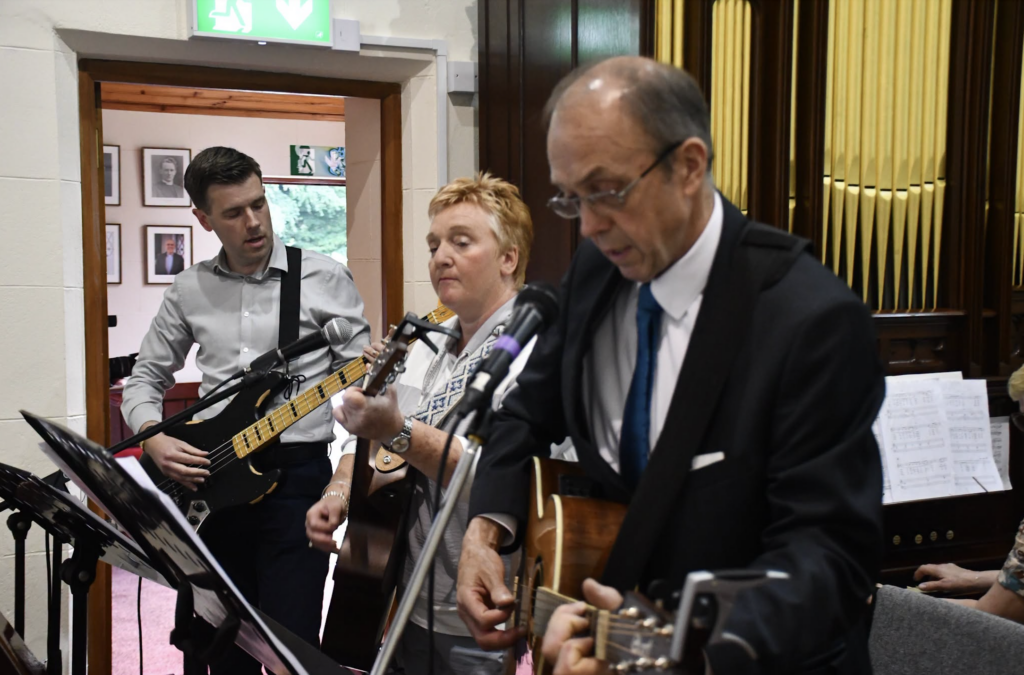
Members of both churches in the new group were actively involved in the Institution Service. Musical worship was led by a joint choir, and by the Praise Band. The Scriptural passages were read by Alan Campbell (Ephesians 4:1-13) and Jodie Murray (Timothy 4:6-16); and the Prayers of the People were led by Mrs Gillian Atkinson (Castledawson) and Mrs Jan McKeown (Ballyscullion).

As the service neared its conclusion, presentations were made on behalf of the two parishes to Mrs Murray and the Murray children.

Afterwards, the congregation made their way to the Church Hall on Station Road for refreshments and fellowship with the many parishioners who had been following Tuesday evening’s service on screens.

Rev James Shiels priested on significant night for Newbuildings Church of Ireland

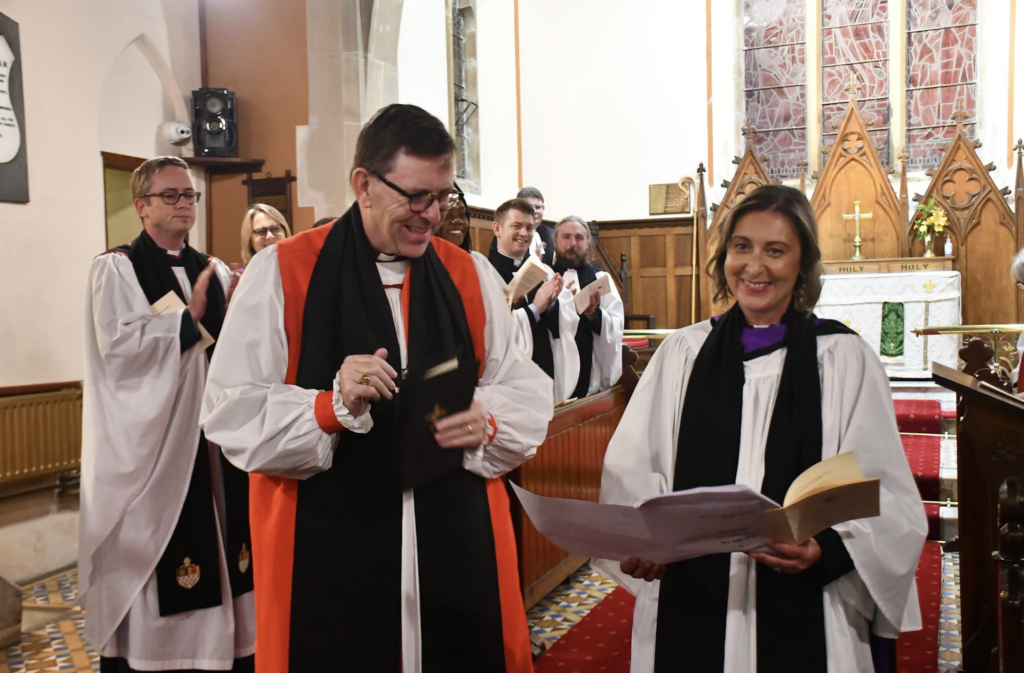
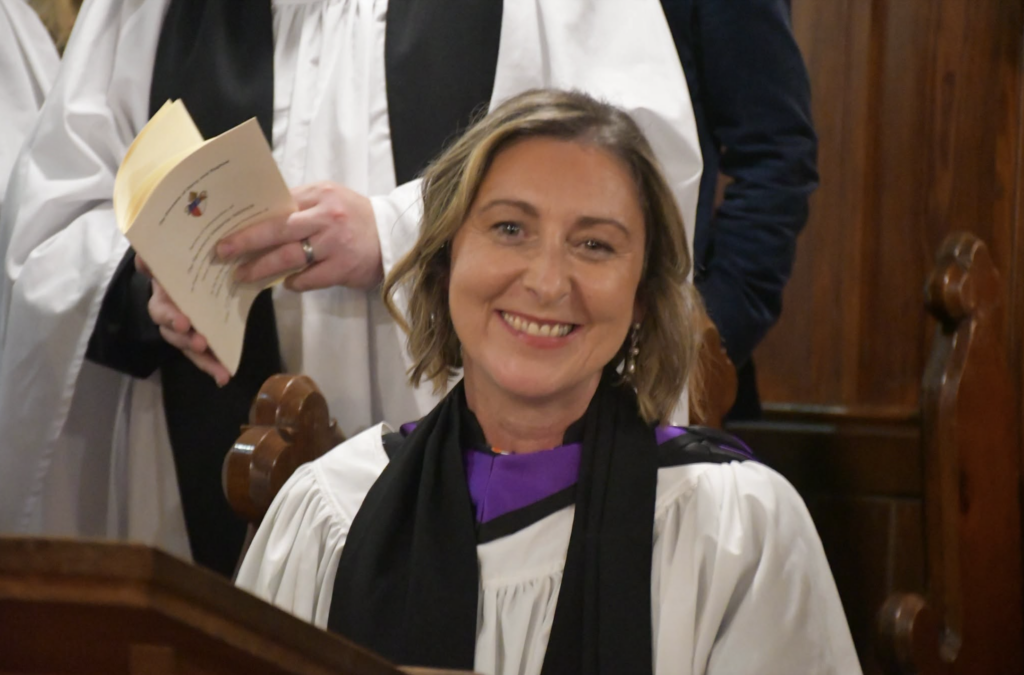
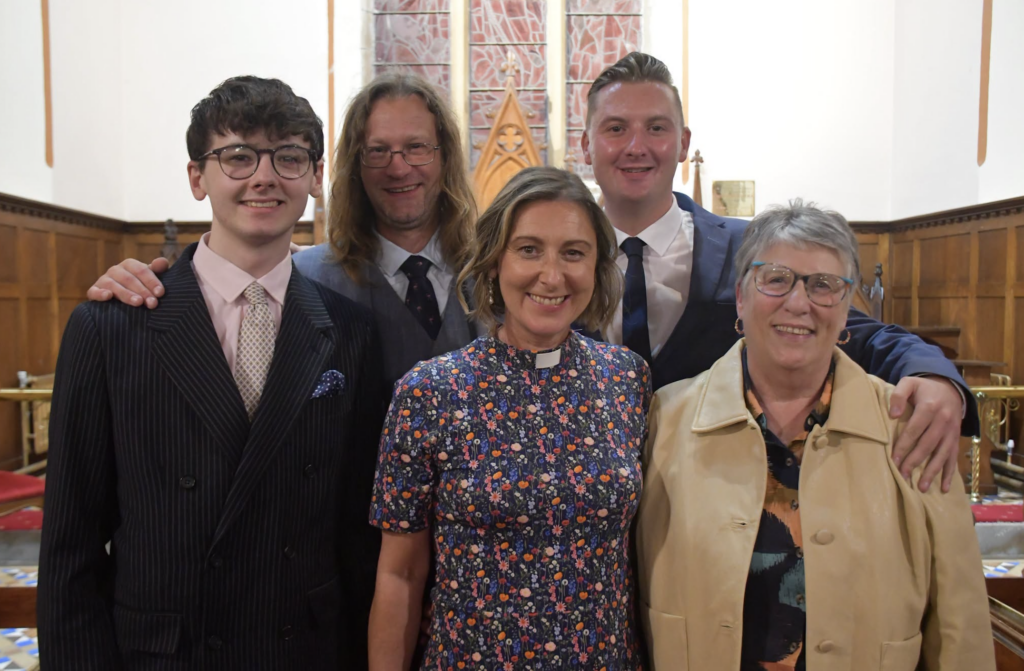
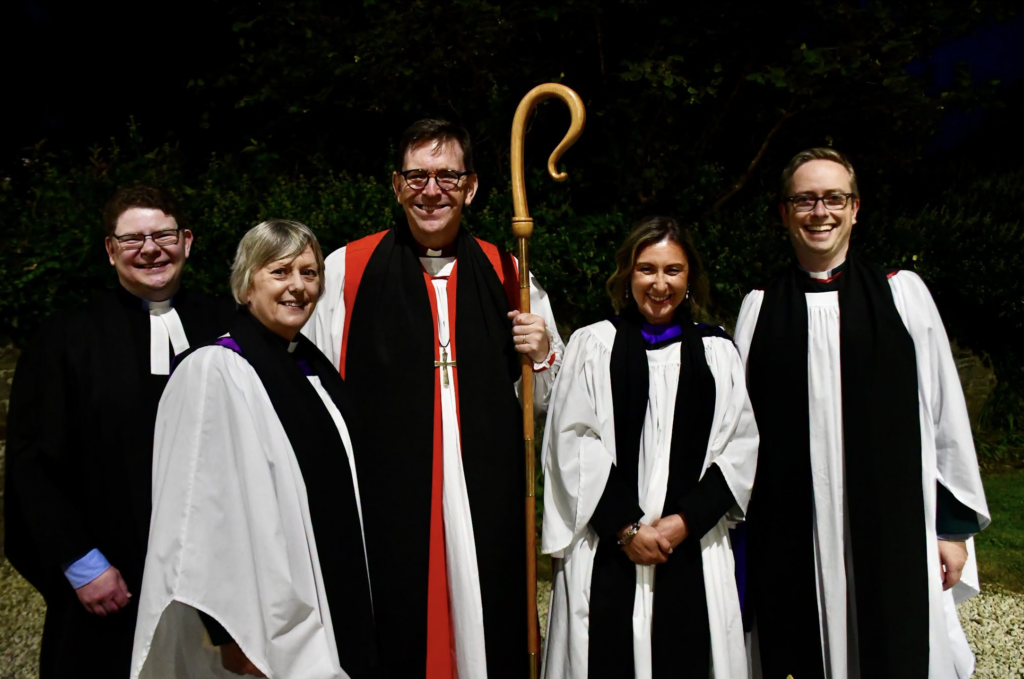
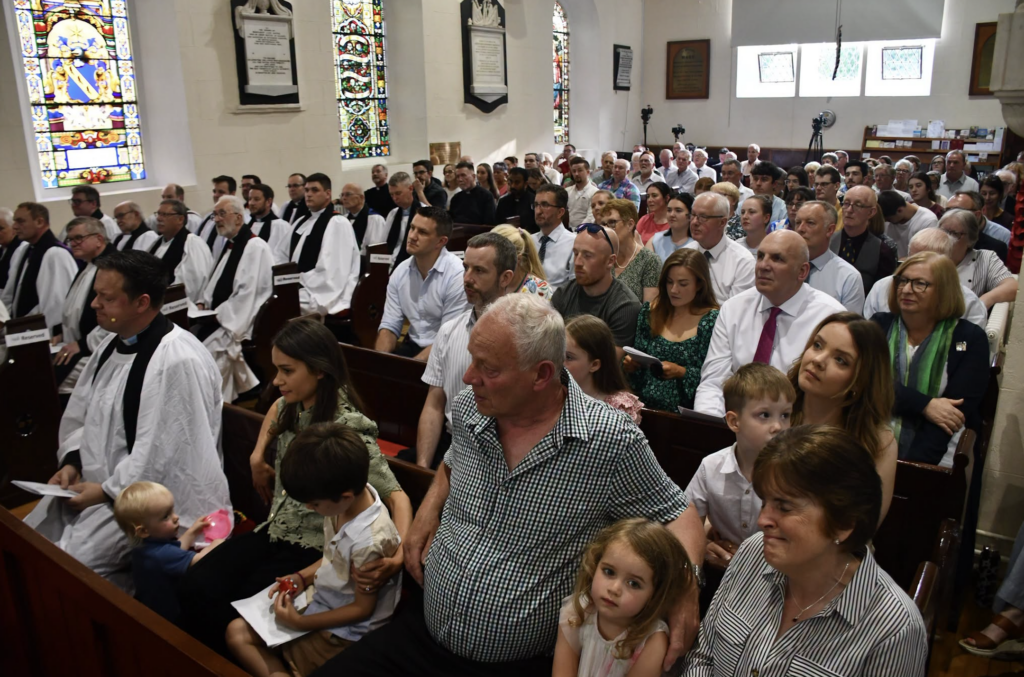
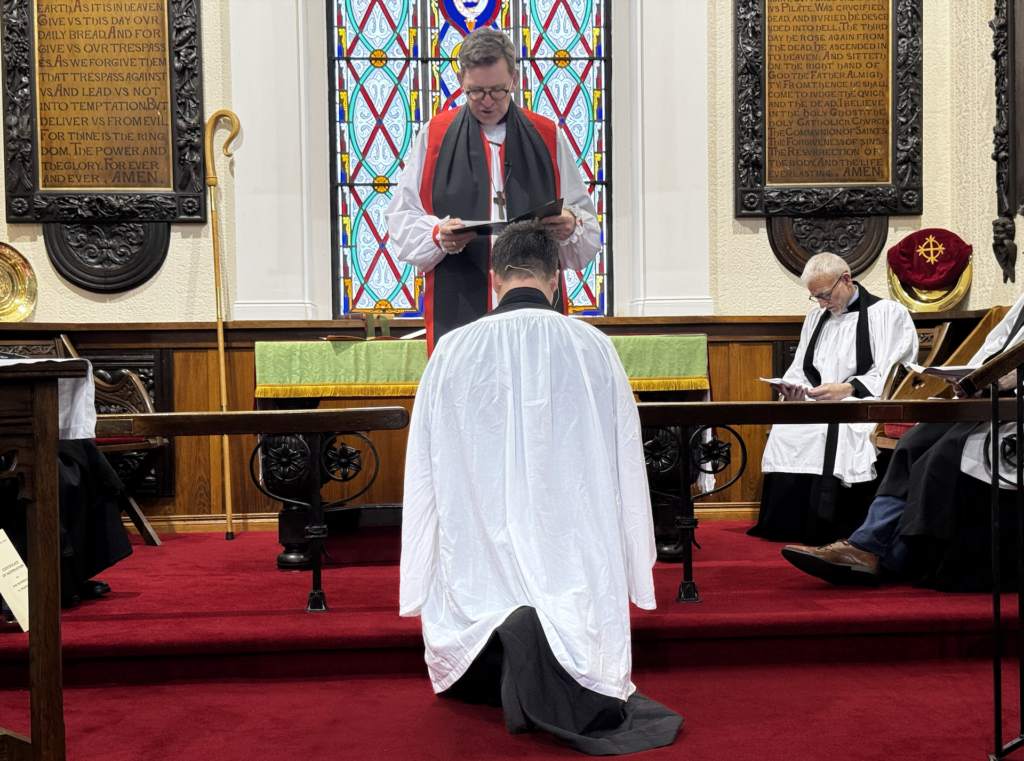
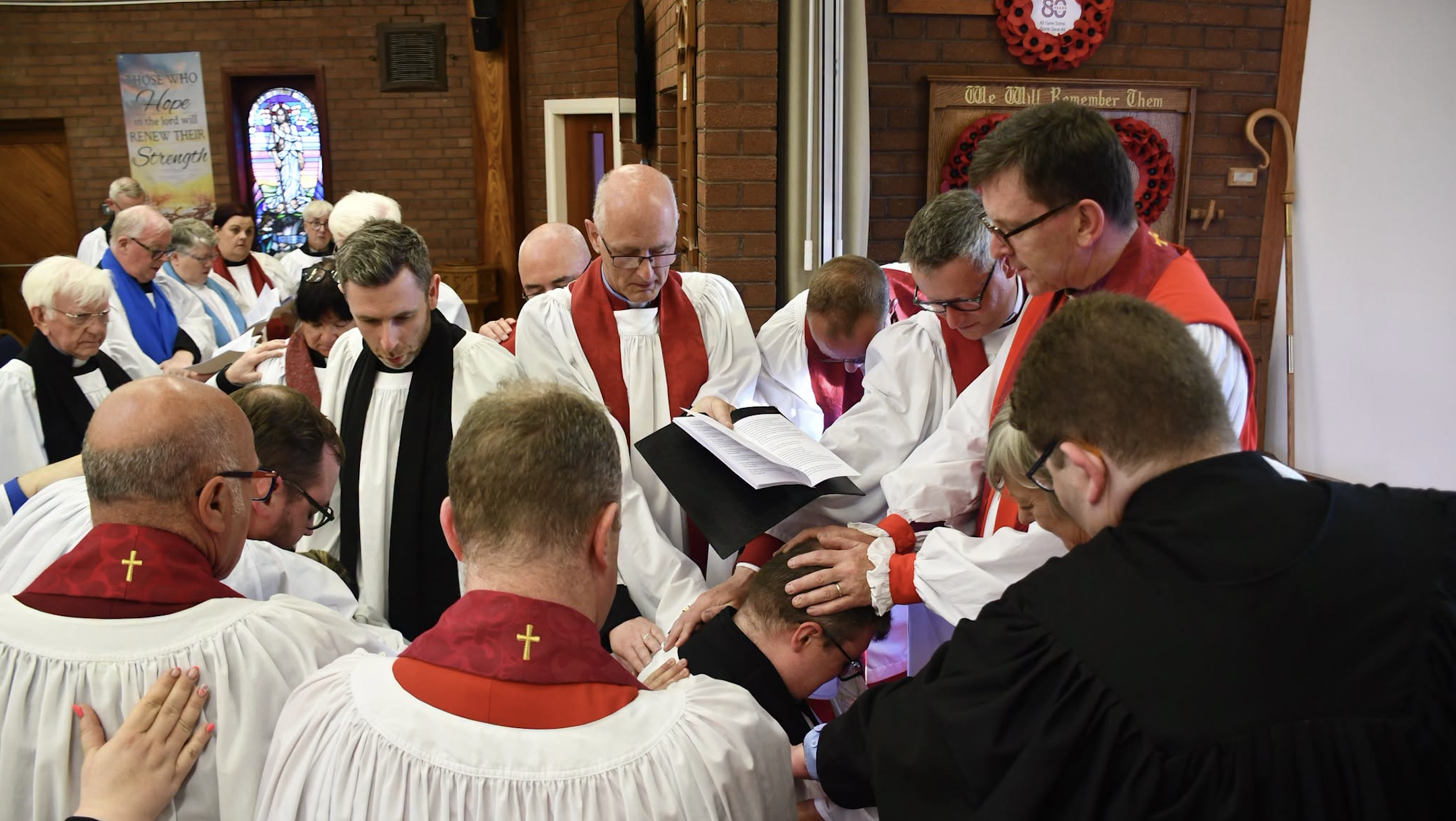
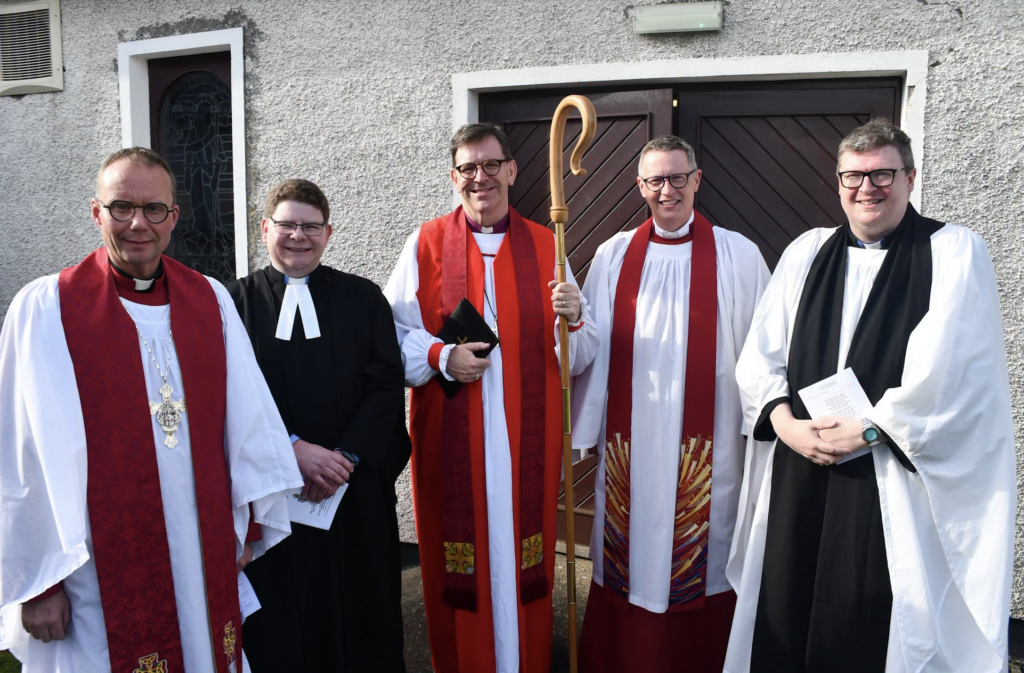
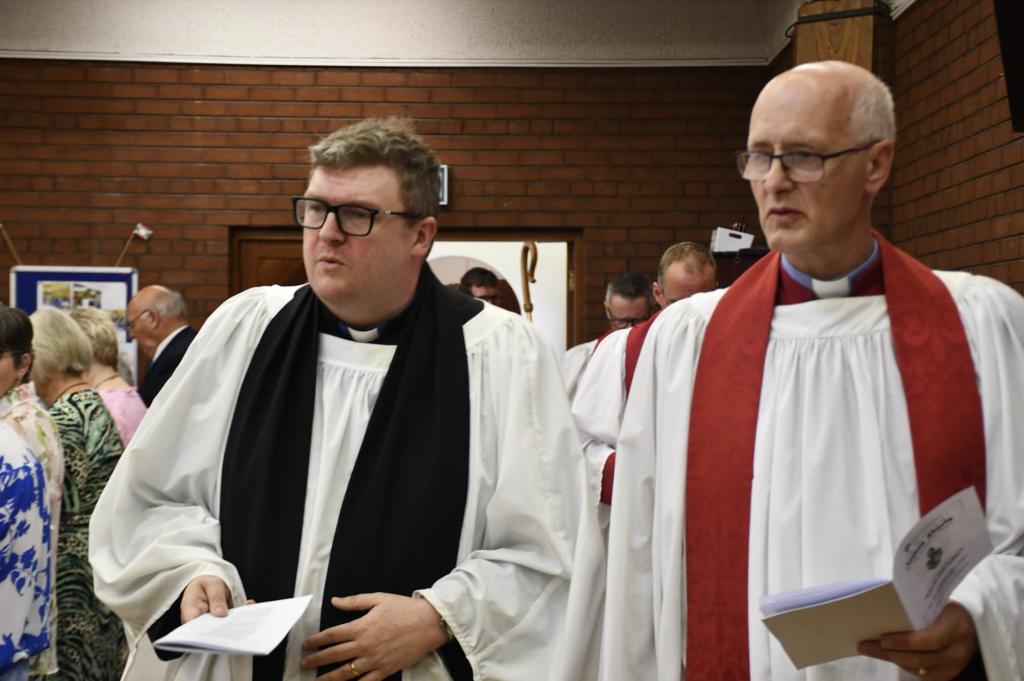
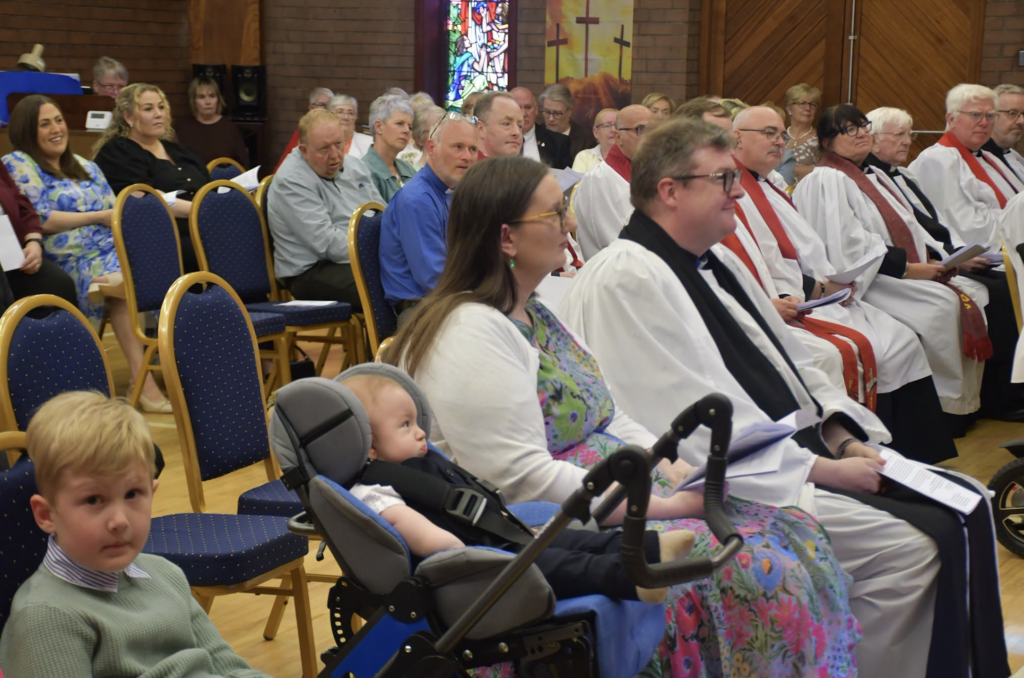
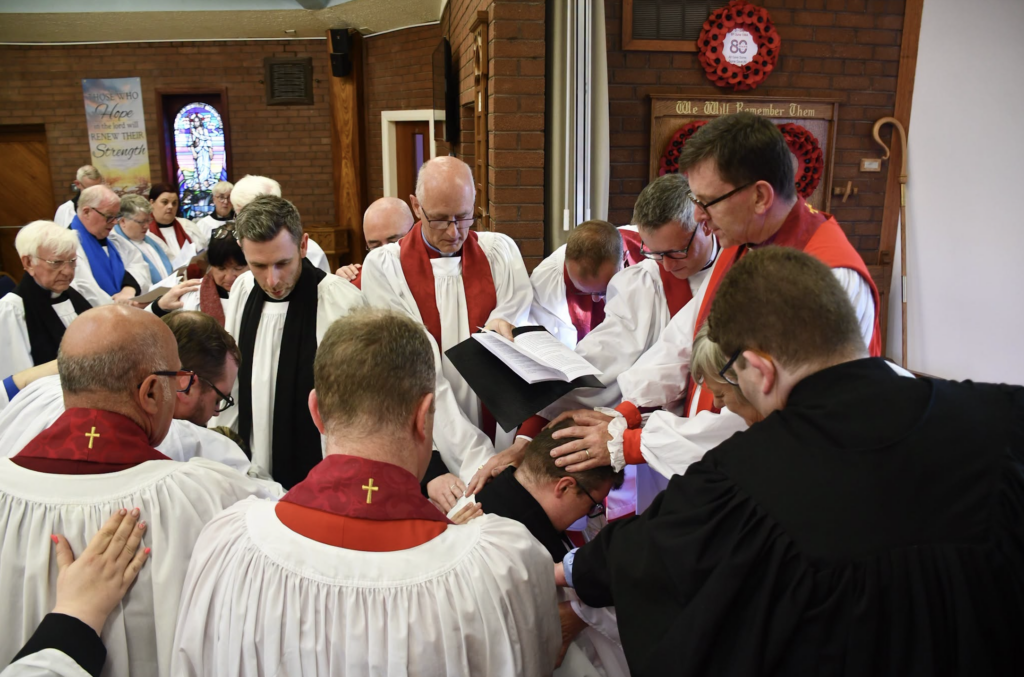
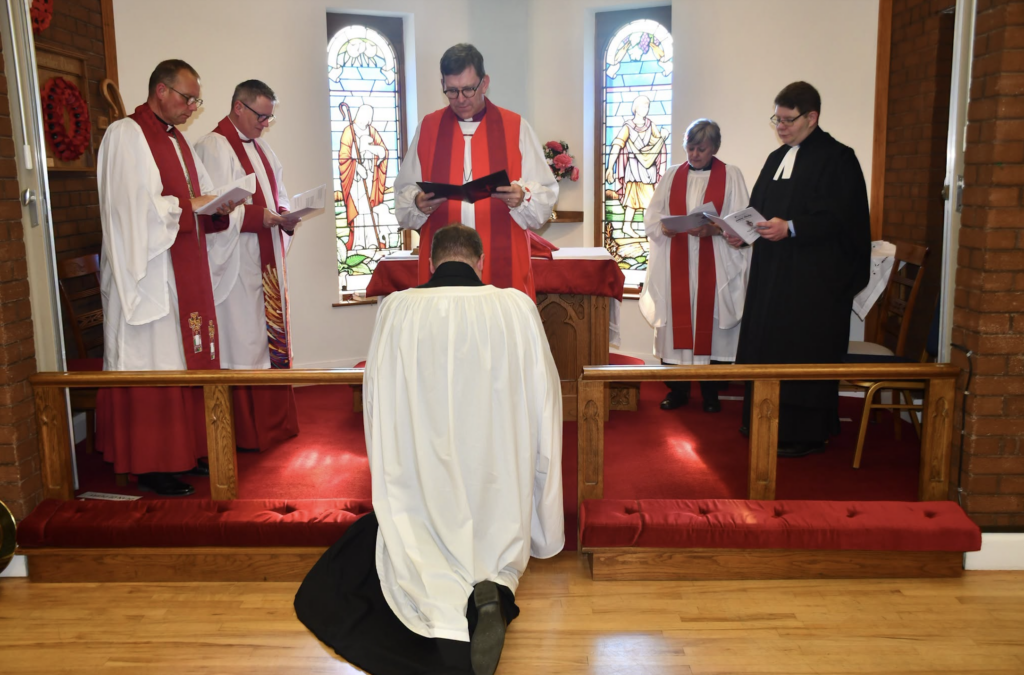
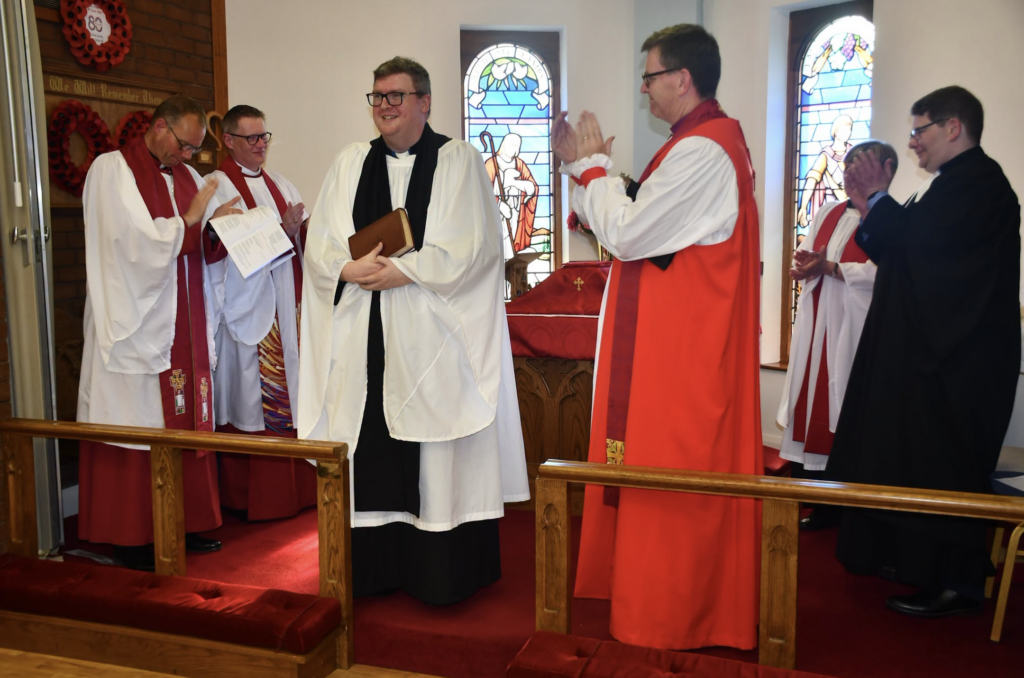
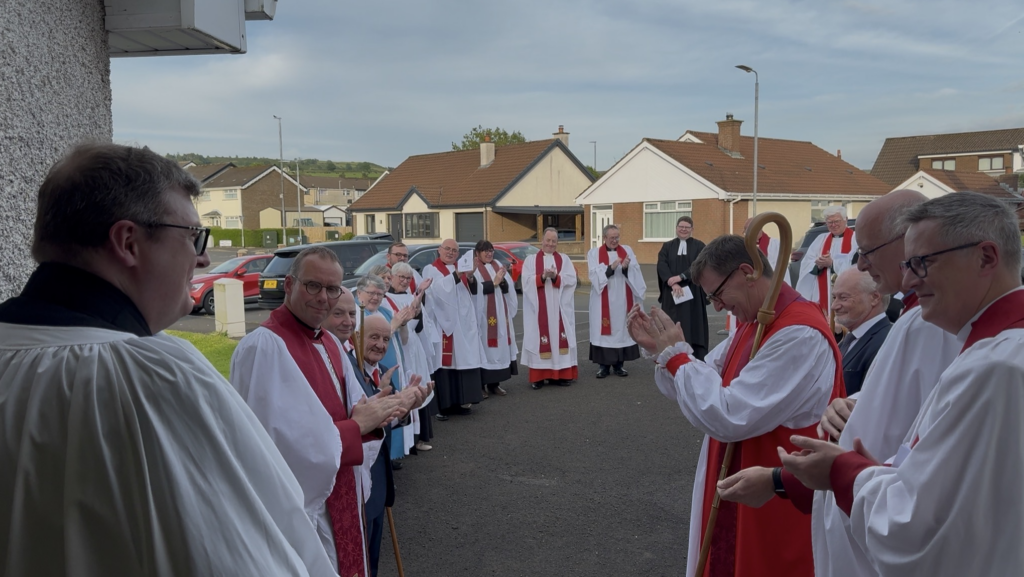
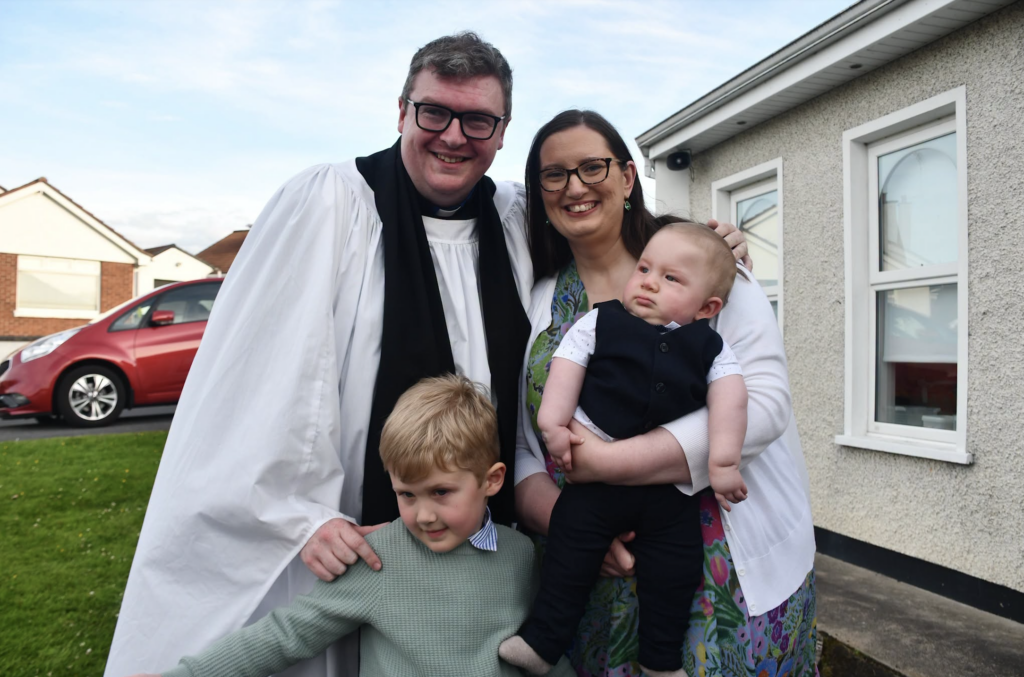
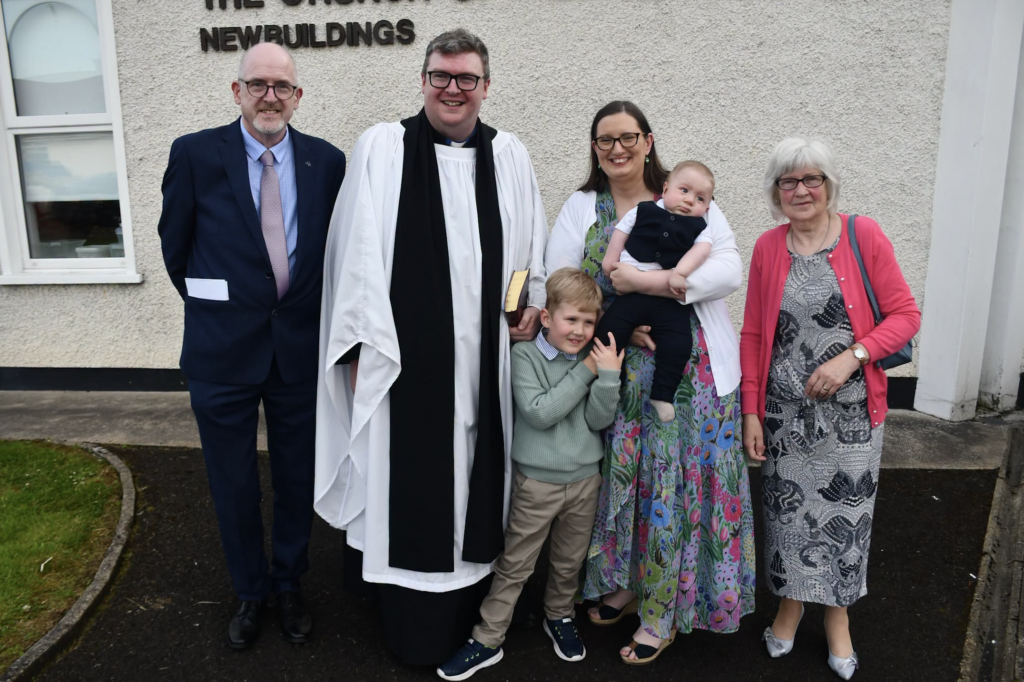
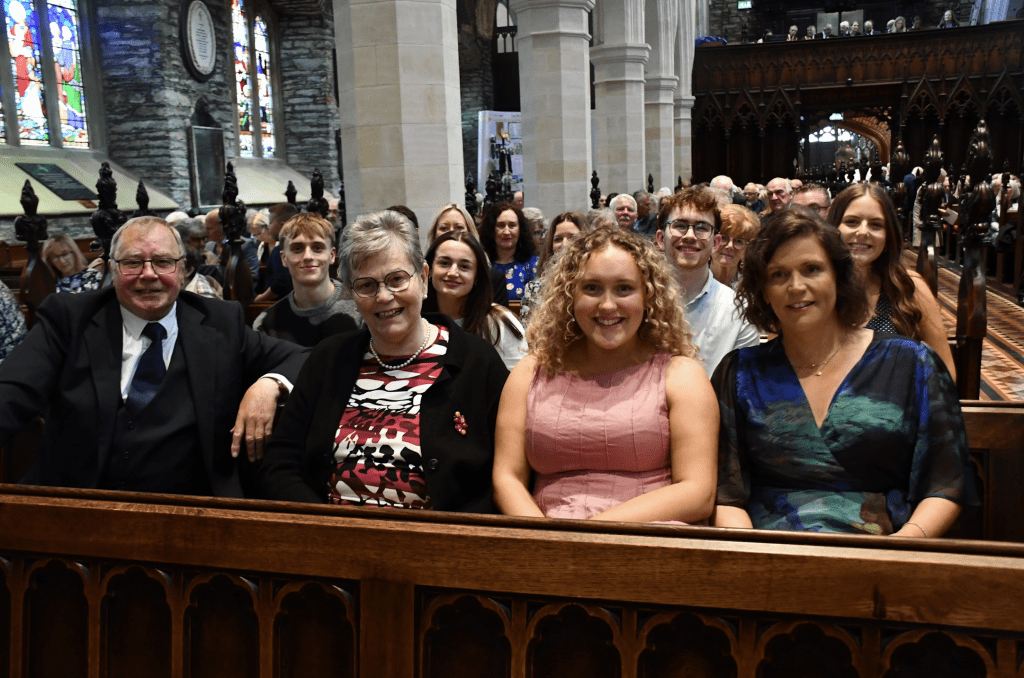
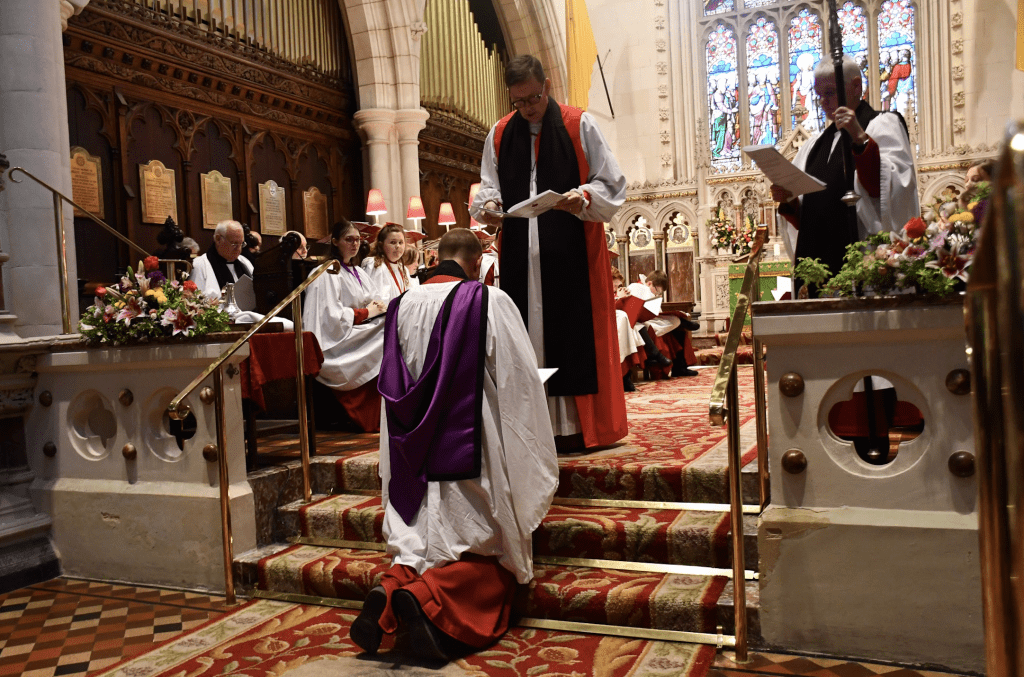
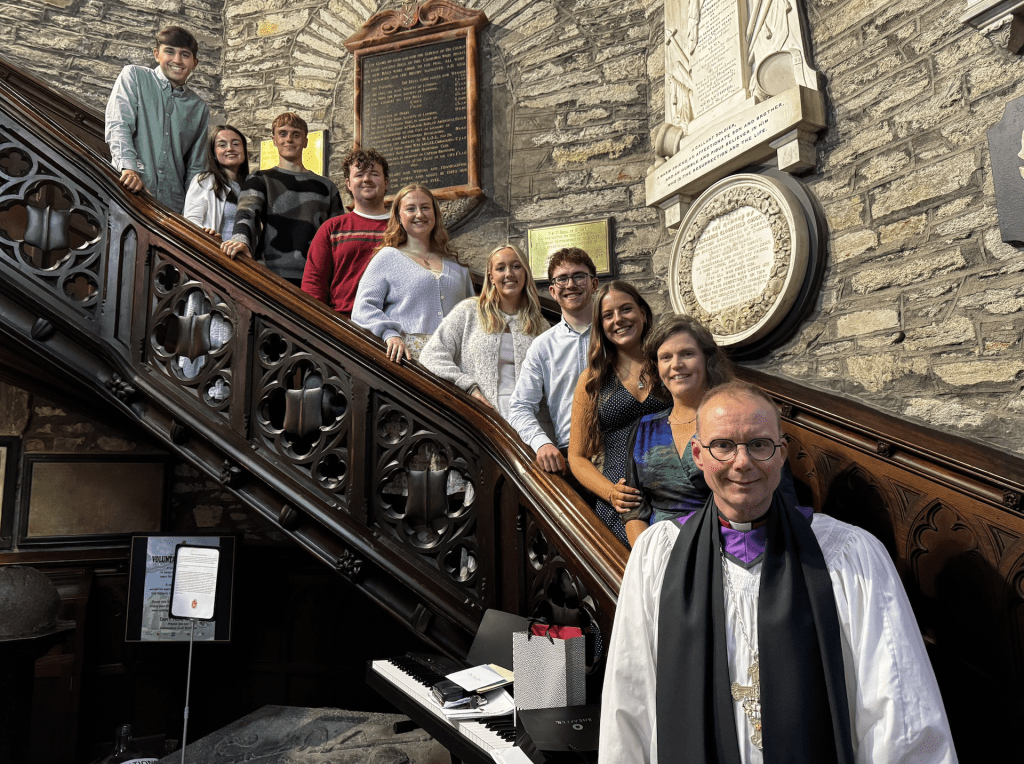
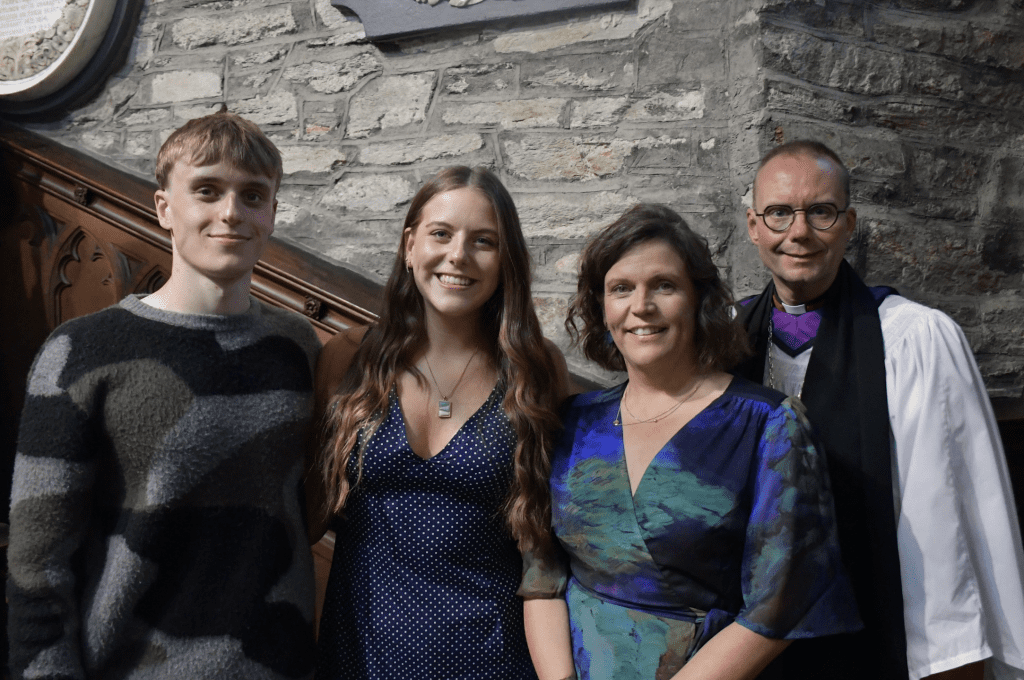
There was a distinct family feel to the Service of Ordination in Newbuildings, on Sunday evening (21st June 2026), during which Glendermott & Newbuildings Curate, Rev James Shiels, was admitted to the Order of Priests by the Bishop of Derry and Raphoe, Rt Rev Andrew Forster. Rev Shiels’ wife, Julie, their sons Clarke and Daniel, and James’ parents Mary and William, were there to witness the laying on of hands.

Newbuildings Chapel of Ease is the newest church in our diocese and for its parishioners – as well as the new priest’s family – this was an immensely proud occasion. Welcoming the congregation to the Church of Ireland Centre, Bishop Andrew reflected on the significance of the service. “It’s a historic moment,” he said, “because it’s the first ordination that has happened in this special building – the youngest church building that we have in the Diocese of Derry and Raphoe. And I was so pleased when Robert and James suggested that we came here tonight to Newbuildings. I think James [who lives beside the church] was suggesting it because it was very handy. But it’s very special to be here this evening.”

Bishop Andrew also welcomed some of the new priest’s colleagues from the Theological College, his former Rector, Archdeacon Peter Thompson, and local MLA Julie Middleton. “But especially,” the Bishop said, “James, Julie, Clarke and Daniel, you’re all so welcome tonight, and it’s wonderful to share with you in prayer tonight as you take this new step of ministry.

“And I want to say to you, James and Julie, and to the family, how blessed we feel in the parish, and in the Diocese of Derry and Raphoe, to have you. We know this last year for you has been an absolute rollercoaster of all sorts of different emotional experiences. We want to acknowledge that and, in acknowledging that, pay tribute to both of you as parents, and pay tribute to both of you as children of God for your faith, your grace, and the great love that you are showing to your family and this church family. So, for me, it’s a personal joy to be ordaining you tonight.”

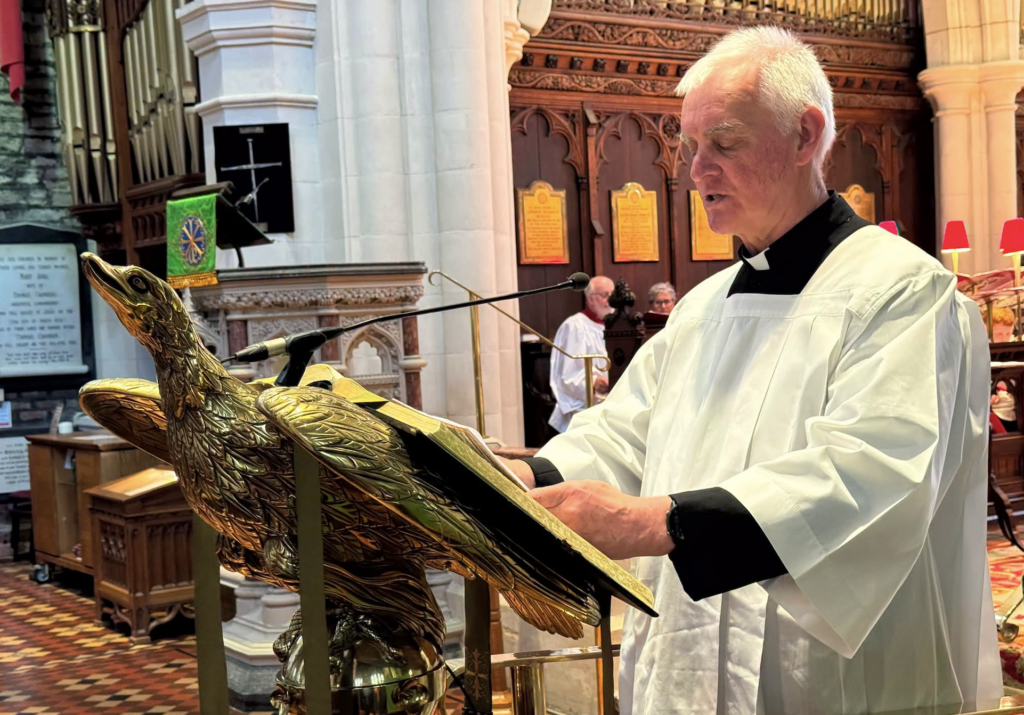
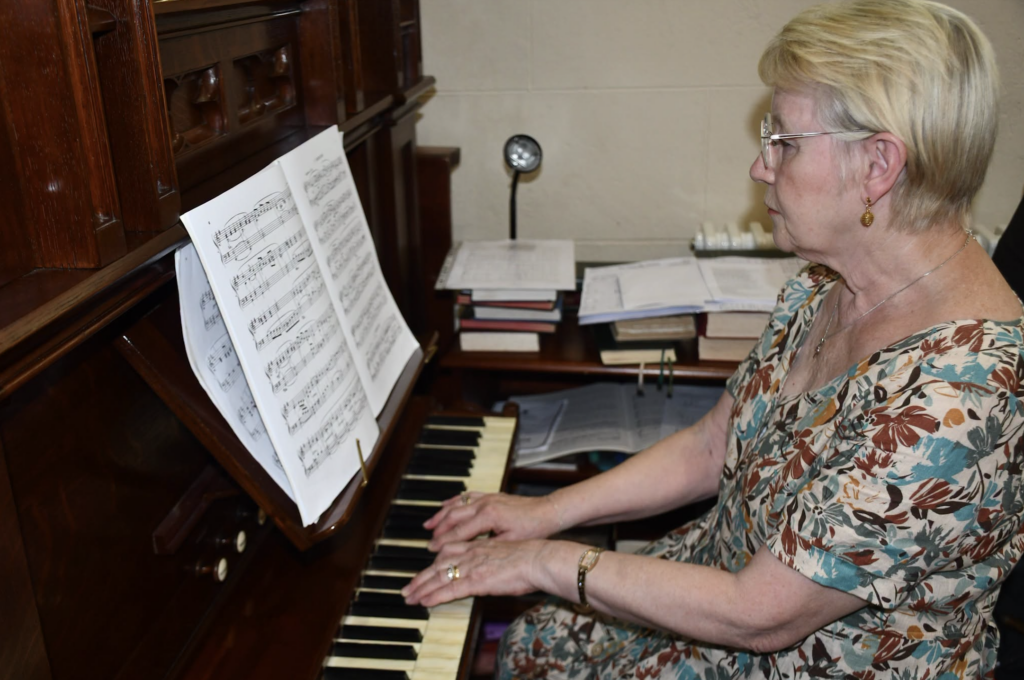
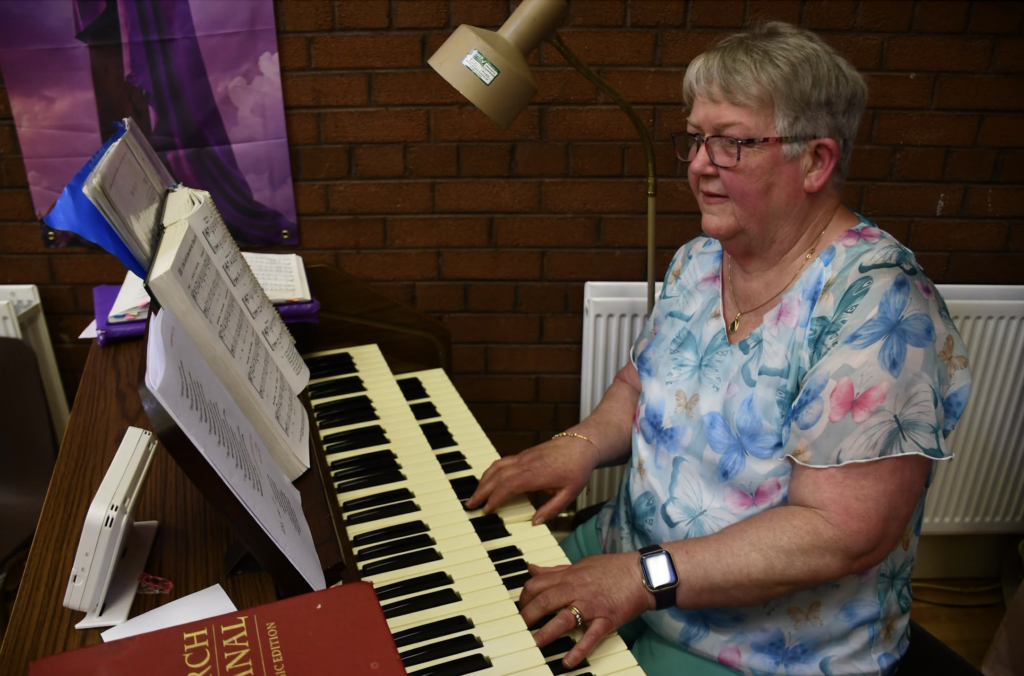
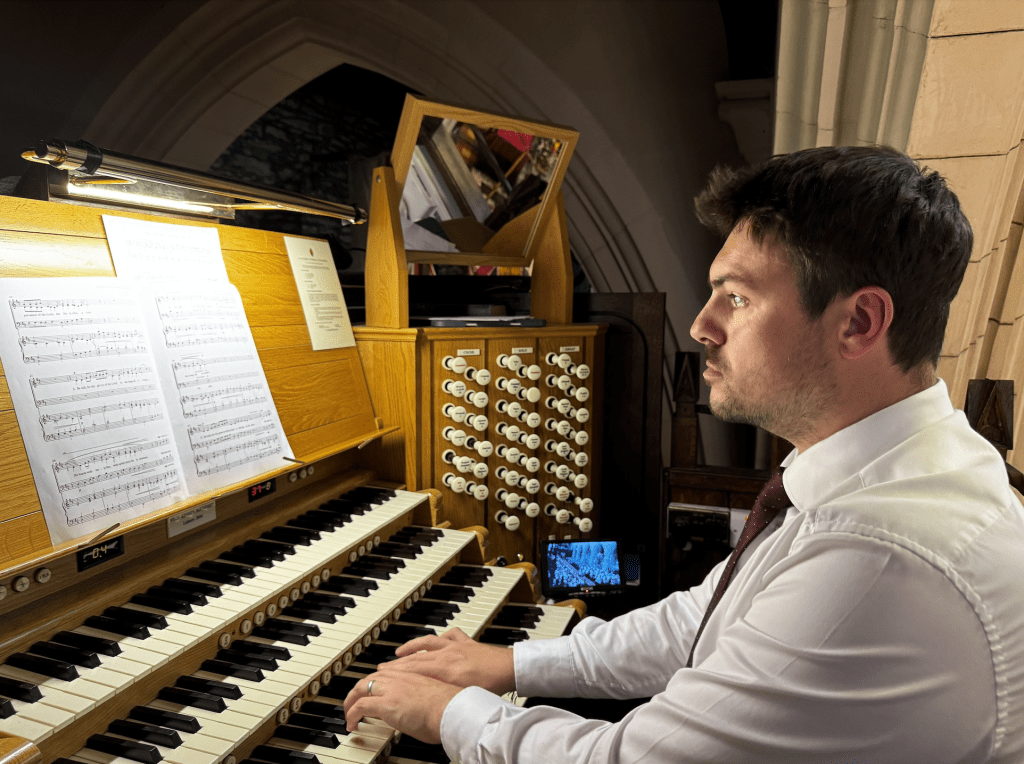
The Scriptural readings were delivered, this evening, by Margaret Boyd, Dr Joanne Miller and Rev Matthew Gaw. Musical worship was led by Mrs Adrienne Edgar on the church organ.

The sermon was preached by the recently-appointed Dean of Derry, Very Rev Nigel Cairns, who – like Rev Shiels – served his curacy in Newbuildings. The First Reading [Isaiah 61:1-3a] could, Dean Cairns said, be described as “one of those great mountaintop passages of scripture”, because “it’s filled with hope and joy and restoration” and the promise of God’s transforming power. “In the appointed verses,” he said, “we find not only beautiful poetic words, but also words that describe the mission of God amongst God’s people. And I’m sure we’ll agree that for an ordination service, they are wonderfully fitting because they speak about being anointed by the Lord for holy service. ‘The Spirit of the Lord God is upon me because the Lord has anointed me. He has sent me to bring good news to the oppressed and bound up the broken hearted.'”

Isaiah 61, the Dean said, with words such as good news, hope and renewal, took our minds immediately to the Lord Jesus himself. “Isaiah 61 ultimately points to Christ, and James, that matters enormously, because priesthood will be futile if it’s viewed as anything that’s independent of the Lord Jesus. You see, we’re not freelance spiritual consultants with a peculiar dress sense. Christian ministry has to flow from the ministry of Christ himself. A priest is called to participate in the example of the great high priest.”

The anointing described in Isaiah 61 wasn’t an anointing for privilege, Dean Cairns said, but rather an anointing for service. “It’s more of a mandate, perhaps, a calling, you could nearly say a holy job description given by God himself.” A striking aspect of this holy job description was what Isaiah referred to as binding up the broken-hearted and comforting those who mourn. “I have no need to tell you that ministry does not take place in a perfect world, but rather, it takes place in a wounded one. Every congregation contains hidden griefs: marriages under strain; parents anxious about children; quiet illness; bereavement; illness; depression; regret. People arrive at church carrying burdens that are invisible to everyone else. And priests are called to minister into those places of pain: binding up the broken hearted.”

Dean Cairns felt Rev Shiels was well placed to deliver on the challenge of ministry. “I suspect, James,” he said, “that the most fulfilling times in your ministry will not be found in the dramatic moments, but they’ll be found in faithful companionship, sitting beside that bed, listening carefully after a funeral, praying quietly with someone whose world has fallen apart. And, you know what – referring to what the bishop said at the beginning of the service) – I think you are well placed to do that role. I think, I know, that you’ve been around one or two of those corners yourself. The great illusion of leadership is to think that man can be led out of the desert by somebody who’s never been in the desert, says Henry Newman. In other words, your calling isn’t a ministry of the untouched expert, but of a servant, who knows personally the grace of God, and who might even himself be described as a wounded healer. I think that’s what gives depth and authenticity to pastoral care.”

After this evening’s service, the congregation stayed on to enjoy refreshments and fellowship in the Church of Ireland Centre.

New Dean of Derry Installed at Service in St Columb’s Cathedral

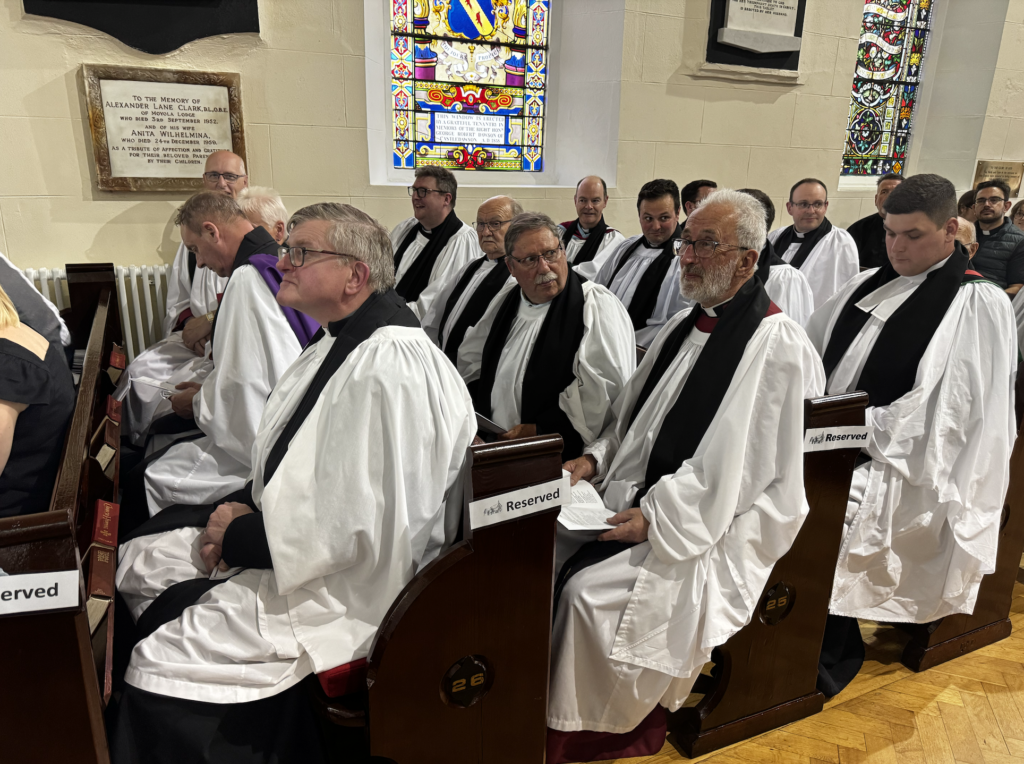
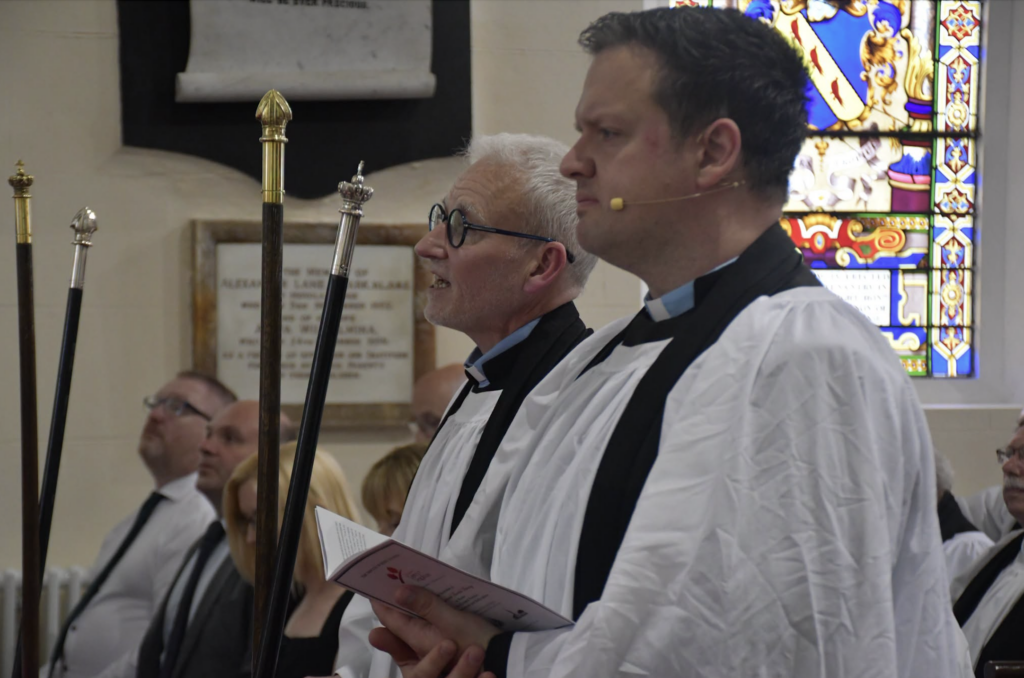
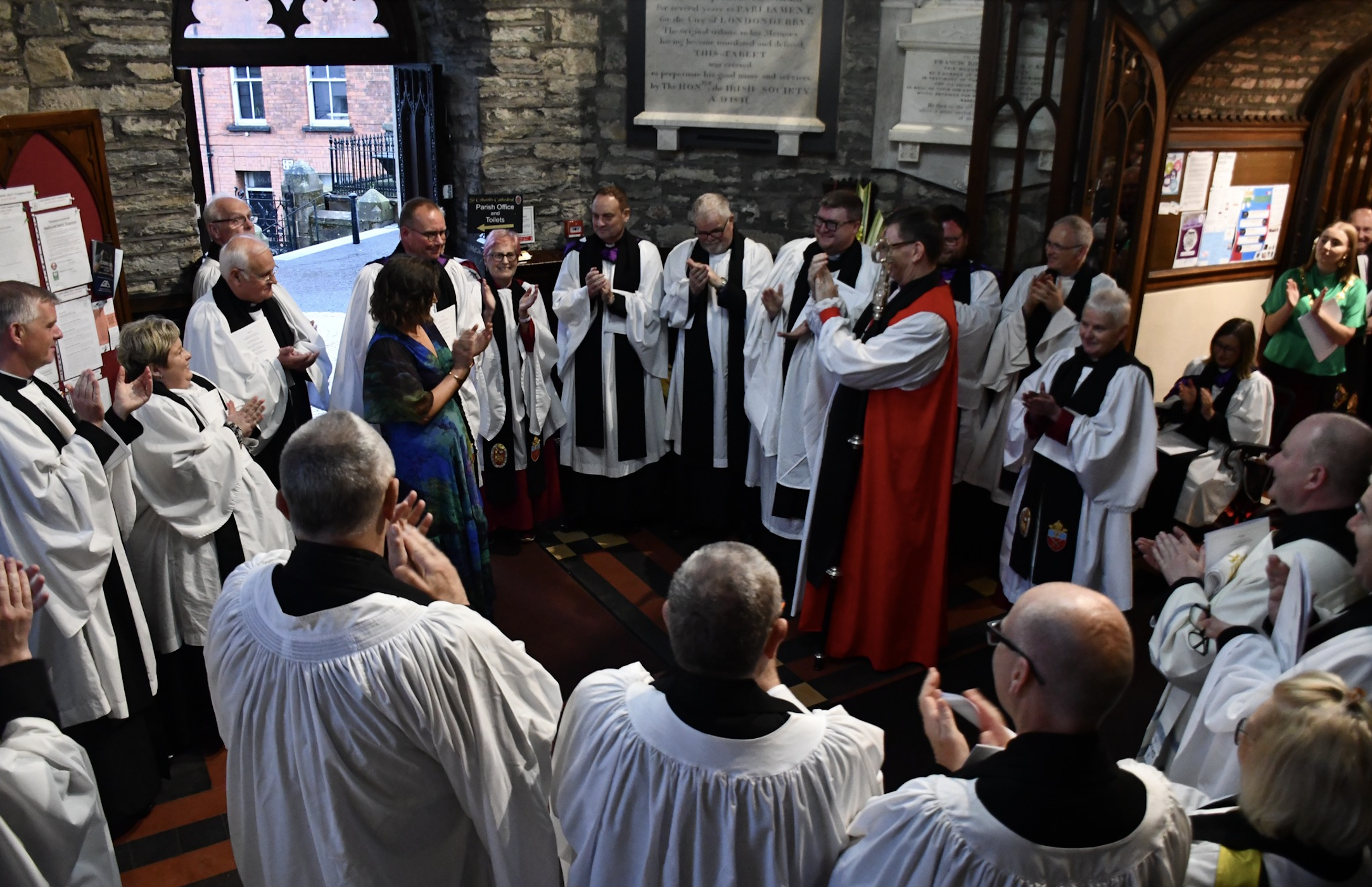
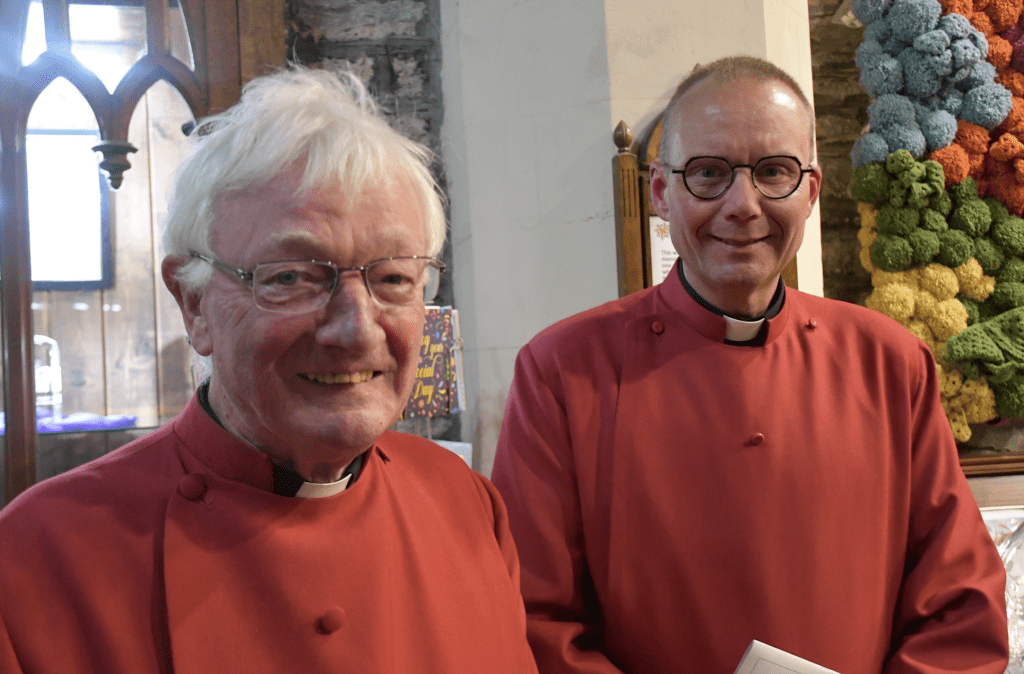
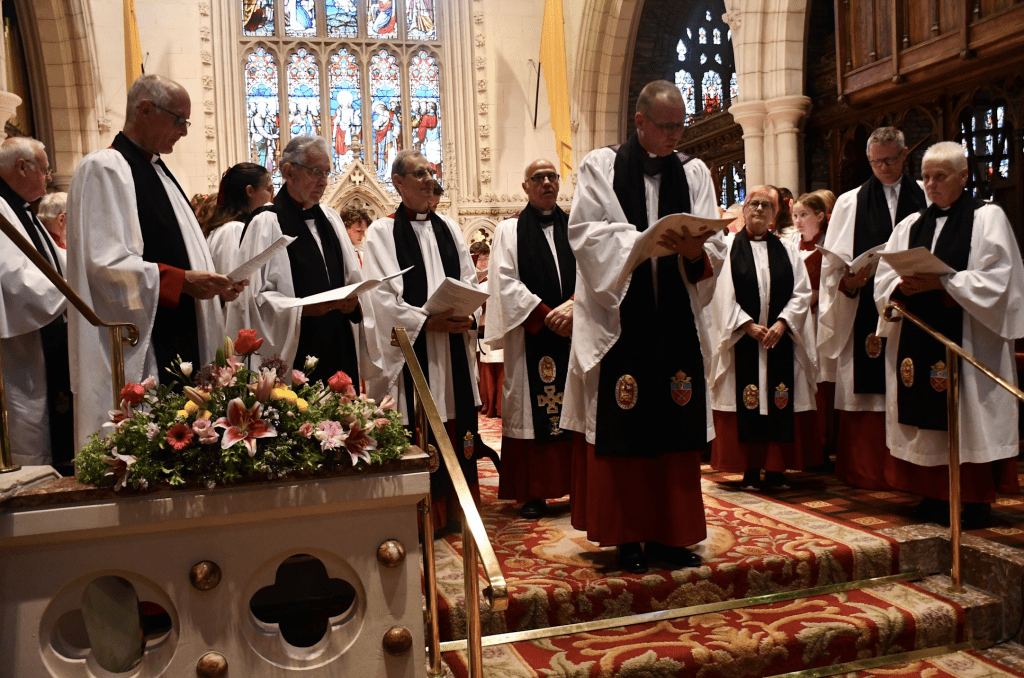
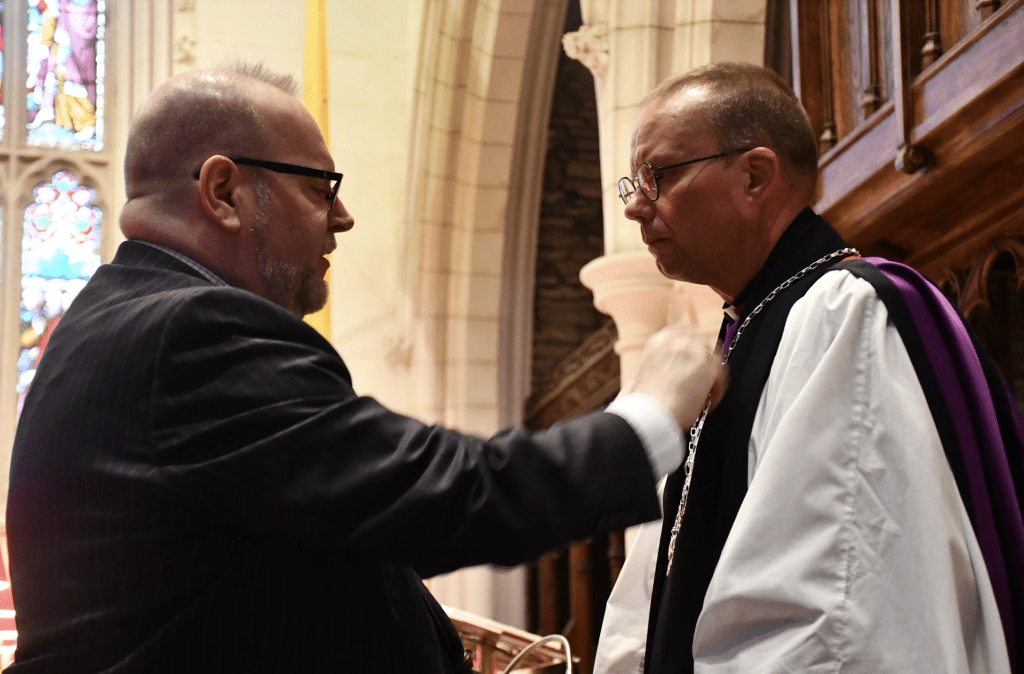
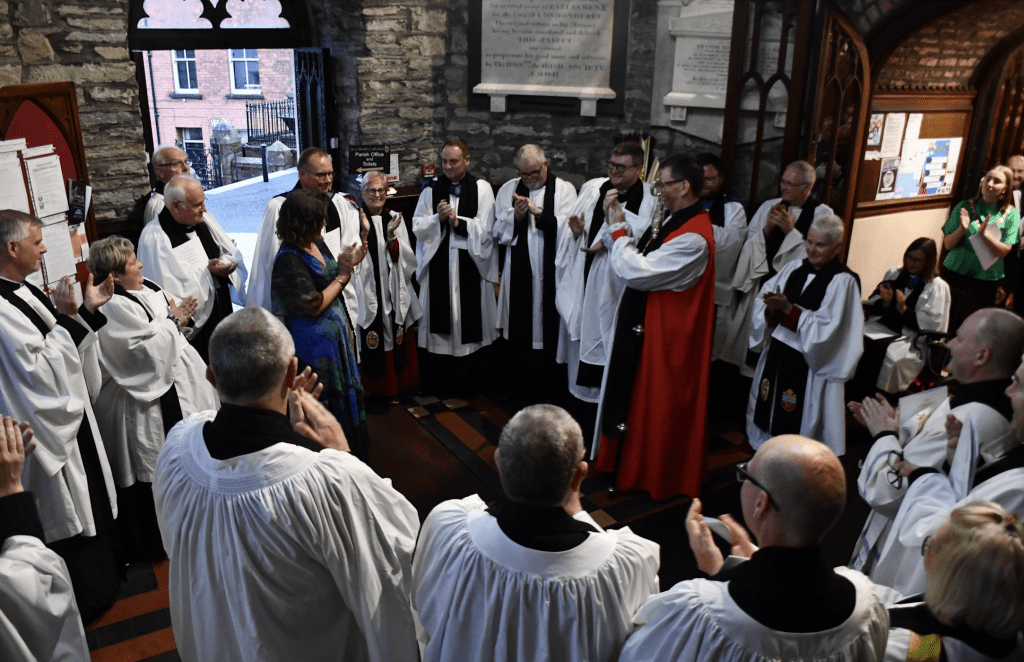
The Very Rev’d Nigel Cairns has been installed as the new Dean of Derry and instituted as Rector of the new parish grouping of Templemore & St Augustine’s. He succeeds Very Rev Raymond Stewart who retired at the end of last year.

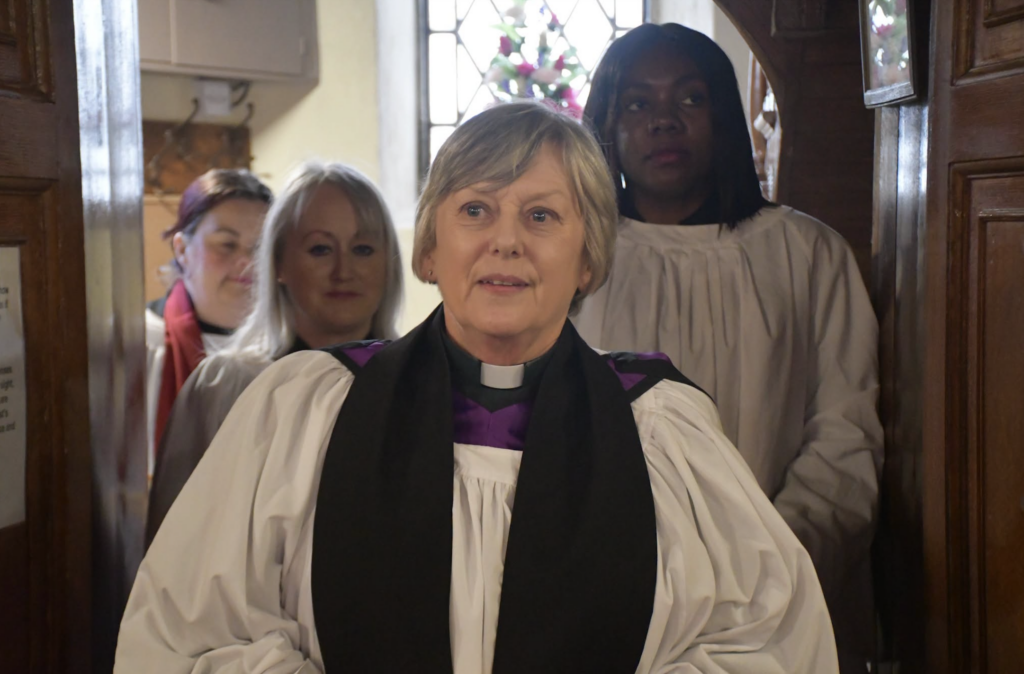
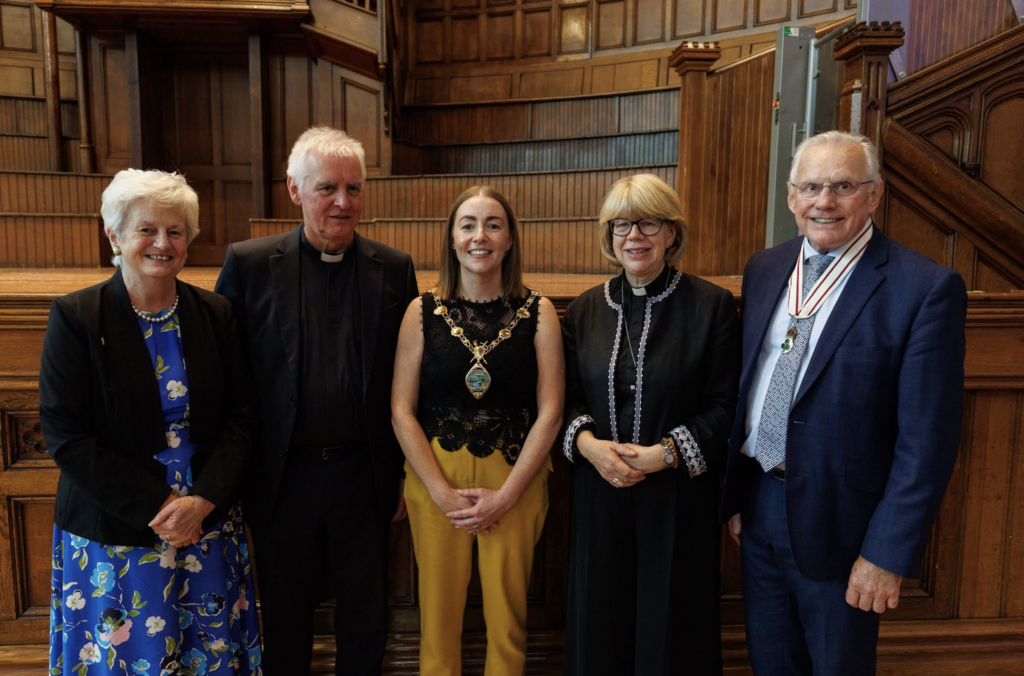
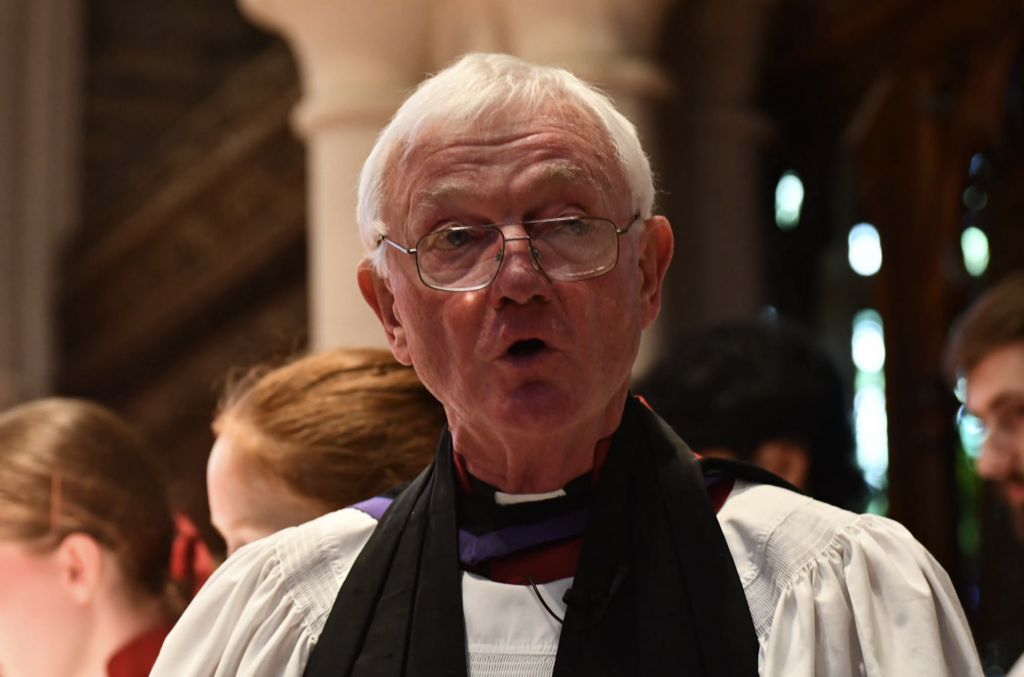
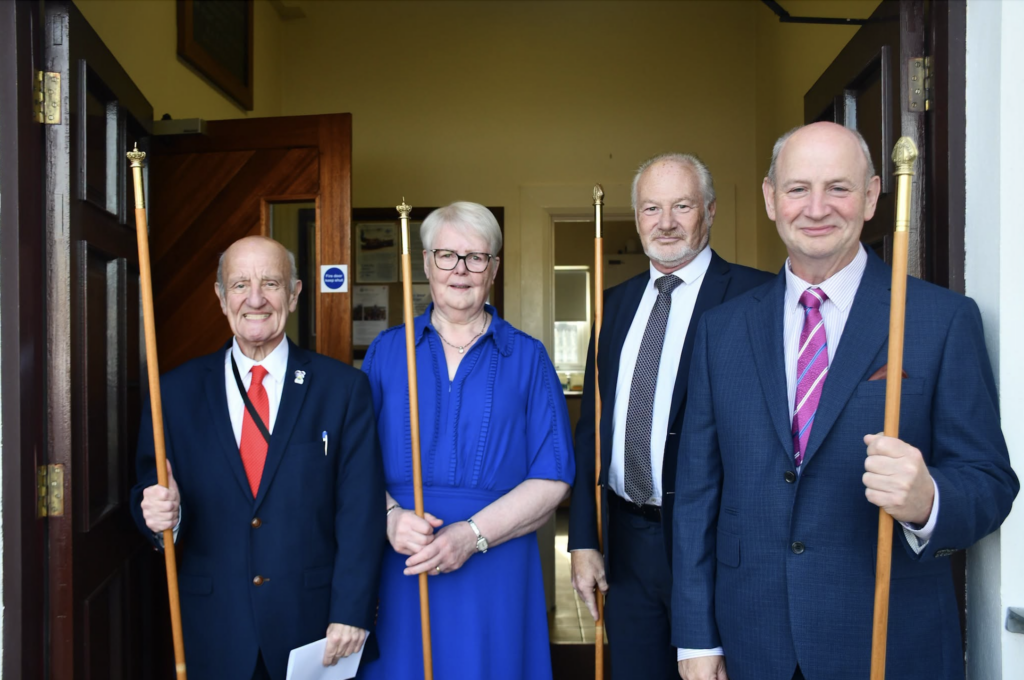
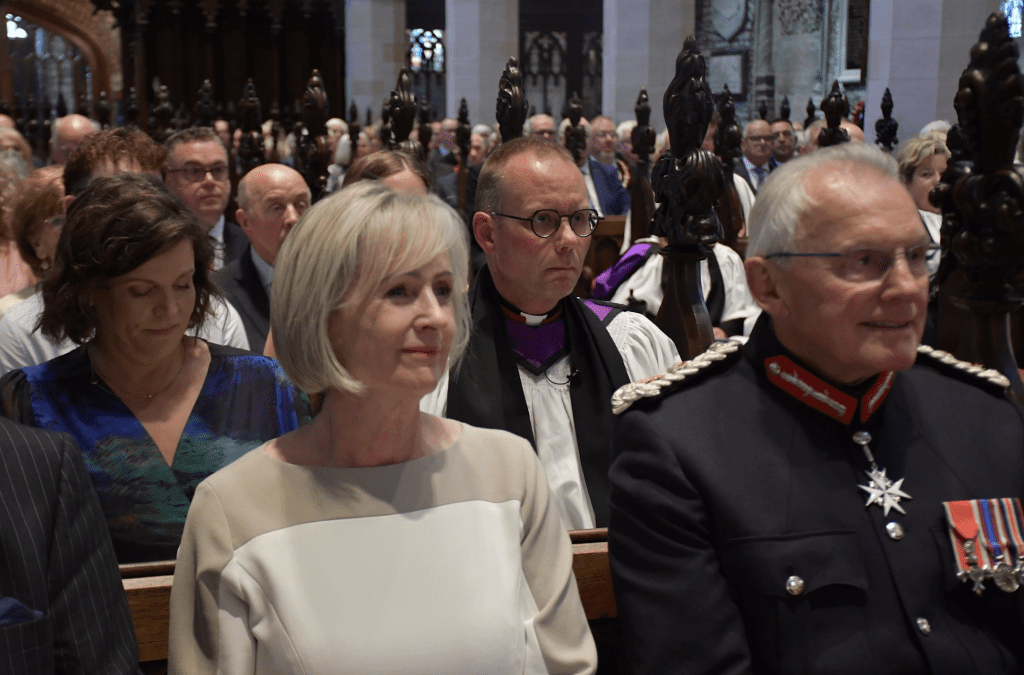
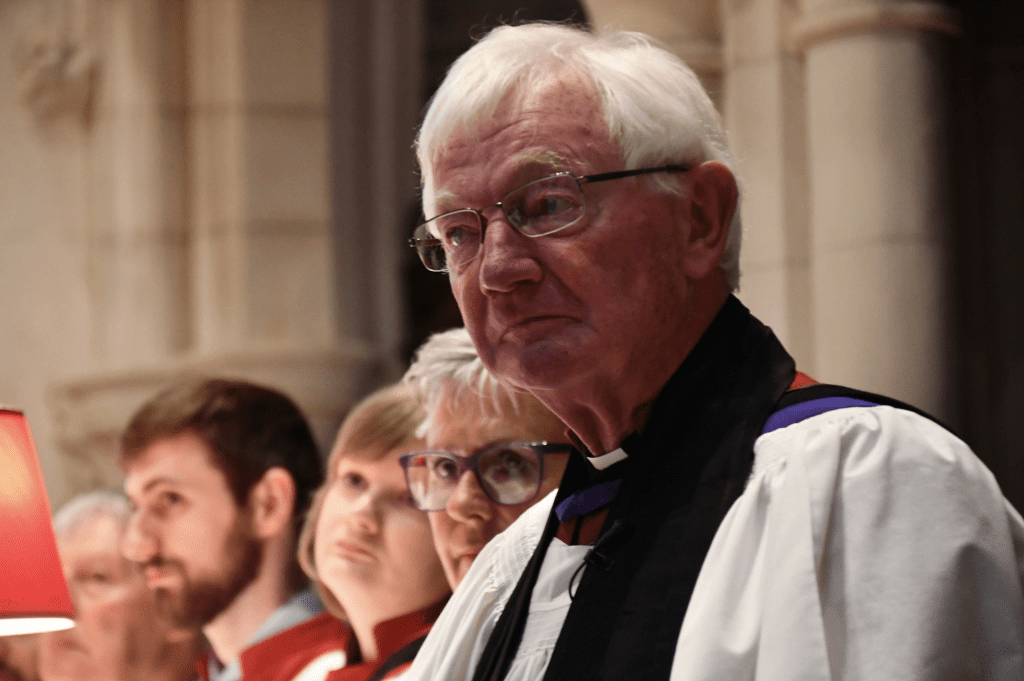
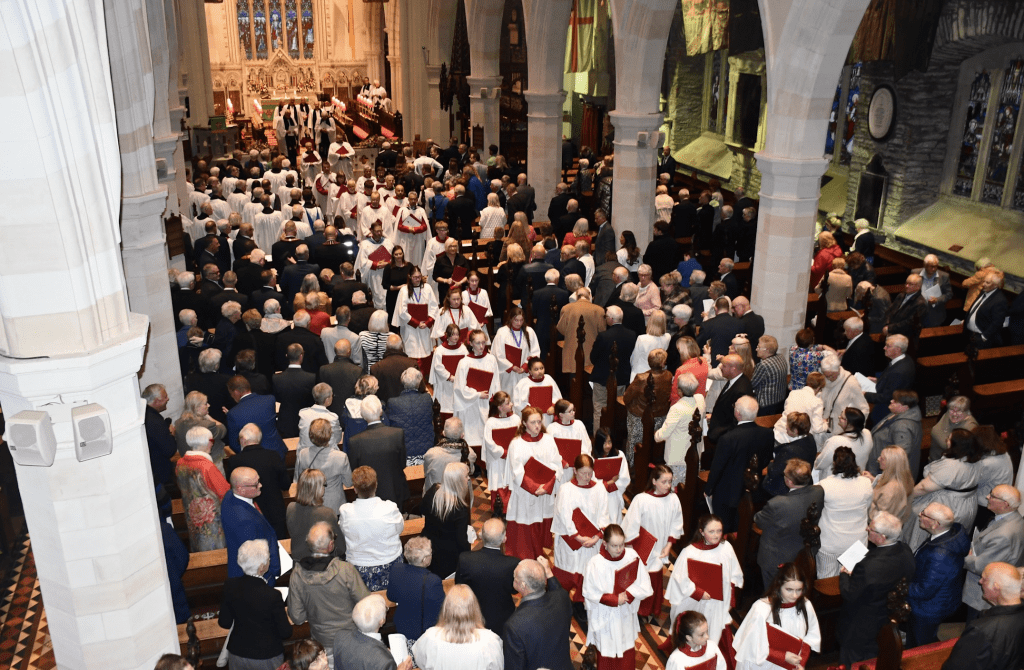
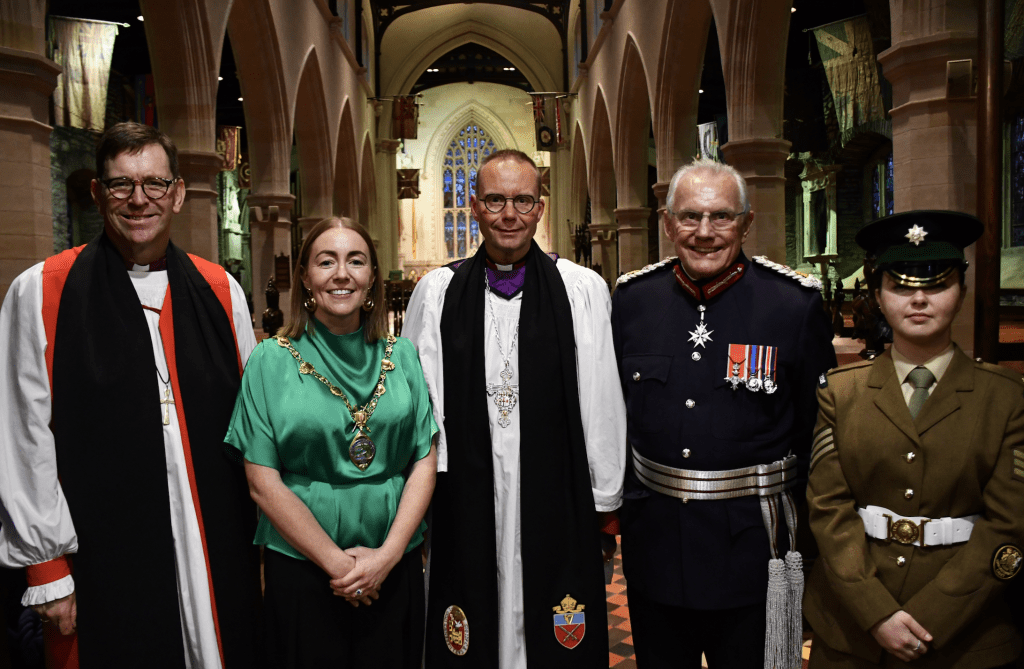
Members of Dean Cairns’ family were in St Columb’s Cathedral on Thursday evening for what the Bishop of Derry and Raphoe, Rt Rev Andrew Forster, described as “an historic occasion”. The service, which was led by Rev Canon John Merrick, was attended by dignitaries including the Lord Lieutenant for the County Borough of Londonderry, Ian Crowe MBE DL, the new Mayor of Derry City and Strabane District, Councillor Grace Uí Niallais, the High Sheriff for the City & County Borough of Londonderry, Mrs Joan Doherty MBE, and a former Speaker of the Northern Ireland Assembly, Lord Hay of Ballyore. 
 
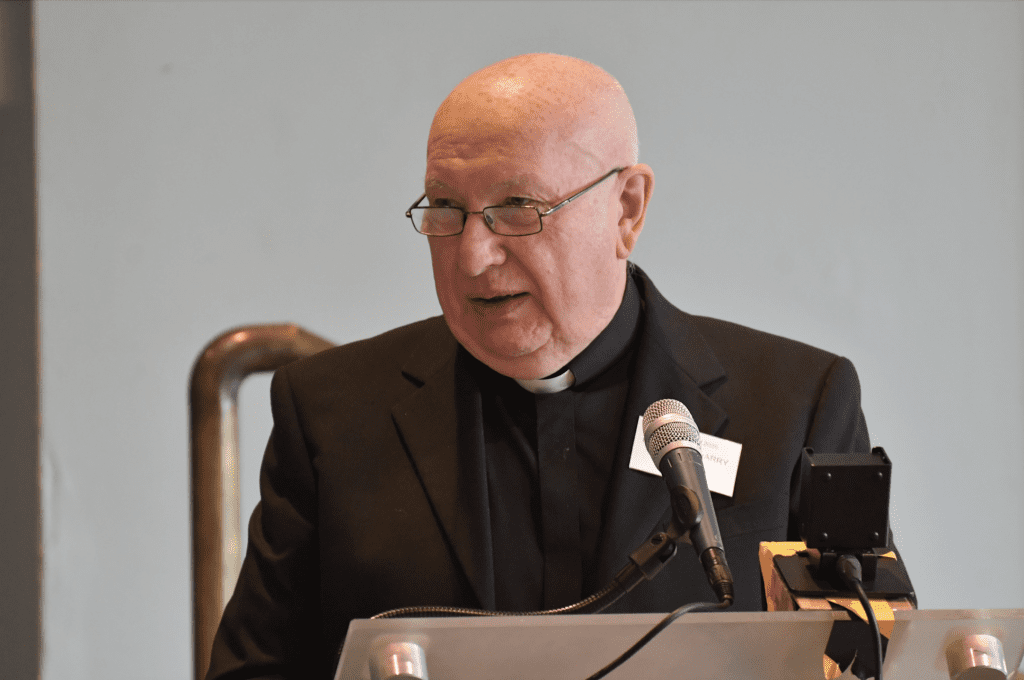
Leading members of other Christian denominations in the city were also in attendance, including the Vicar General of the Diocese of Derry, Fr Michael Canny (representing Bishop Donal McKeown), Rev Colin Jones from First Derry Presbyterian Church, and Fr Paul Farren, the Administrator of St Eugene’s Cathedral.
 
In his sermon, Bishop Andrew acknowledged the historic nature of the occasion. “This evening,” he said, “we sit inside the walls of our beloved city for this special night for the two Church of Ireland churches within these walls, St Augustine’s – the site of St Columba’s monastery – and the Cathedral, the oldest building in continuous use in this city.
 
“These walls, that are just a few yards from us – the walls of our city – have witnessed siege, and famine; they have been cherished and reviled in equal measure; walked on and argued over. They’re an iconic part of our city’s unique history, a history that, at times, has pulled us apart and divided us; but now these walls are visited by literally hundreds of thousands of people, year after year, from right across the world. They come here to this city that we all love, to hear of our history, and also to hear of how we seek to write a better future for this place that means so much to us.
 
“No matter what our background is or what our allegiance is, this place matters to all of us. And we as a Church – as a Church of Ireland community here, and as a Church that is represented here in all its wonderful diversity through members of other denominations who are here tonight – we as the Church of Jesus Christ have our part to play in writing that better future. And this evening is part of writing that better future for the city that we love and hope so much for.”
 
Churches within and near the city centre, from the four main denominations, have already forged very strong links and Bishop Andrew developed the ‘walls’ metaphor further. “As we gather within the ancient walls of this city and the ancient walls of the cathedral, and think of the beautiful walls of St Augustine’s, what our real aim to do is actually to build a church without those walls, to build a church that is a church of welcome, to build a church that is a place of promise, a place of hope, a place of Good News, to build a church without walls that would exclude, to build a church that is open to all. We want that for those who worship here, for the people across this city, and for those far, far beyond who come to visit this place day and daily – a church without walls in mission and ministry.
 
“Sometimes walls can limit us, can’t they? They can limit our horizon. It’s hard to see beyond walls. But a church without walls opens up new horizons of mission, opens up new horizons of ministry. And, as Nigel comes as Rector and Dean, he comes to help lead the people of God in this parish, to lead them in the promises of God, to lead them in the hope of God, to lead them in the Good News of God.”
 
Usually, Bishop Andrew said, on occasions such as Thursday evening’s, the preacher shared a potted biography of the new incumbent or dean. Dean Nigel needed no introduction, he said, but that didn’t stop the Bishop from doing some digging into the history of the cathedral. “I”m not sure when the last time was,” he said, “that a Derryman was installed as Dean of Derry. Nigel has a great love for this place, for this city. It’s his homeplace. It is bone of his bone and flesh of his flesh. It is a place that he has committed himself to, [where] he wants to see God’s promises lived out, God’s hope known, and God’s Good News shared.
 
“Nigel comes with a rare combination of Godly humility coupled with an authority to lead. He is wise. He is caring. He has a heart for God and his church, and a deep compassion for those who are suffering. He understands the rich traditions of this cathedral and of St Augustine’s, and he sees the potential for this new group of churches serving God within the ancient walls of this city. And, I have to say, he comes with the most delightful and supportive of families.”

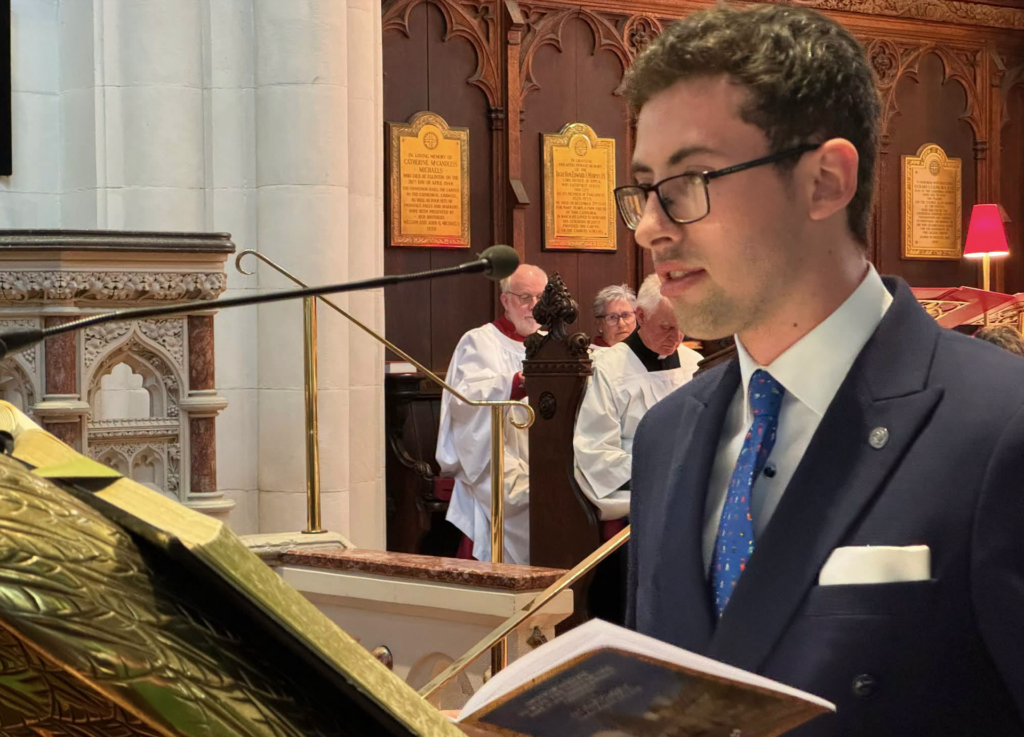
The new Dean’s wife, Alison, and daughter, Megan, delivered the readings from Scripture, at Thursday’s service. His son, Matthew was also there to enjoy and share in a special evening for the Cairns family.
 
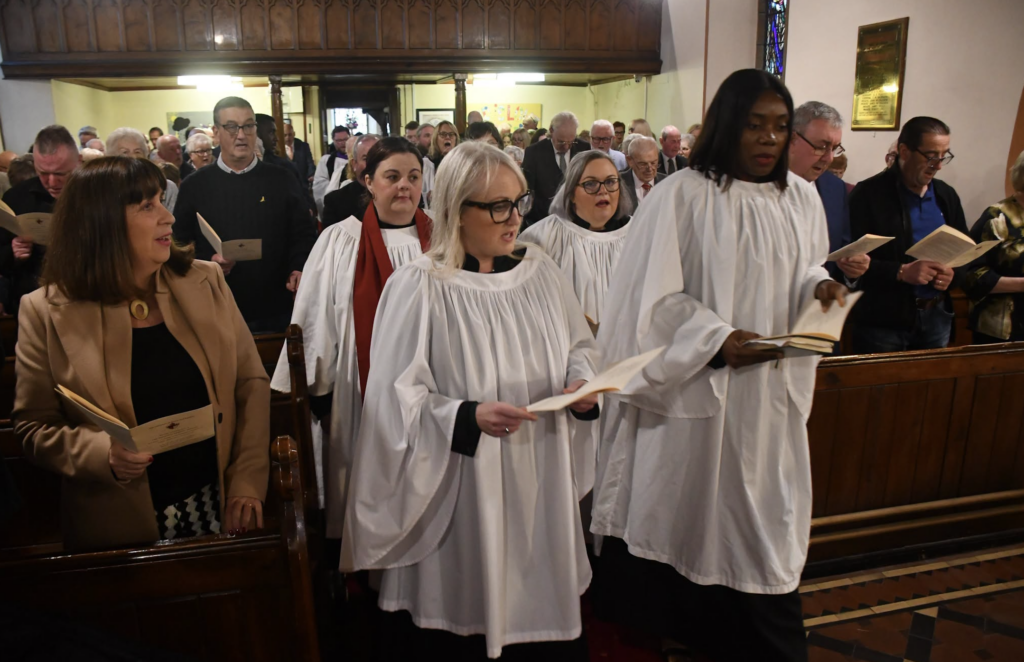
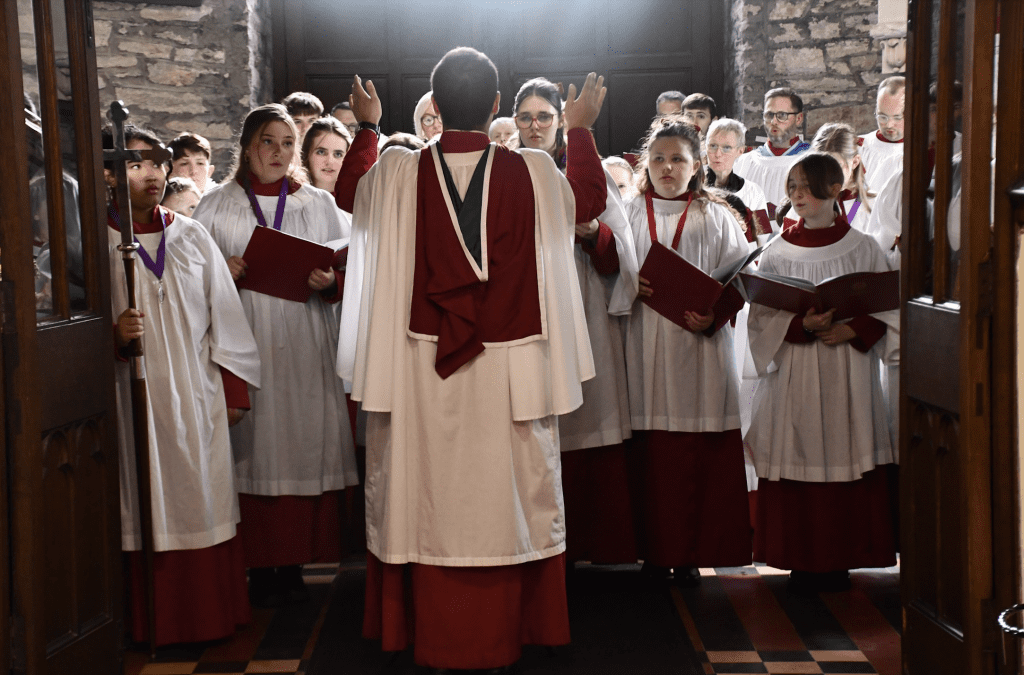
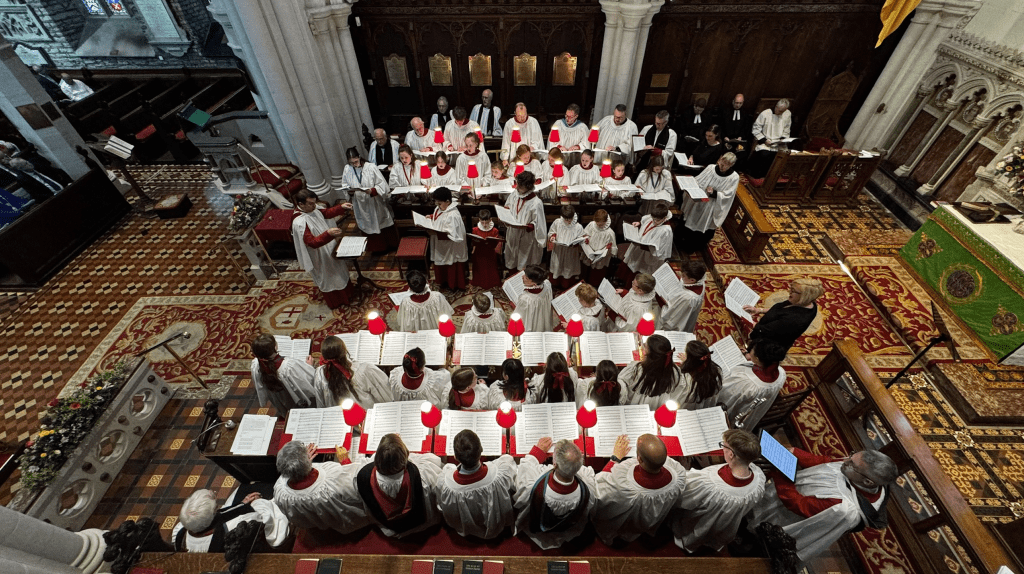
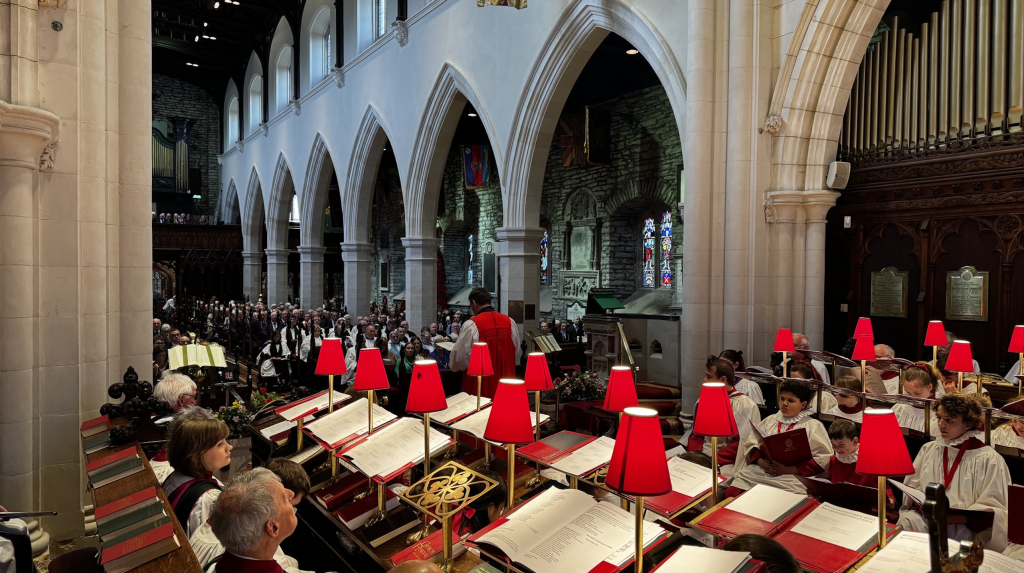
Musical worship was led by the Cathedral Choirs of Boy and Girl Choristers and Lay Clerks, directed by Mr Nicky Morton and accompanied by Assistant Organist Louis Fields. After the service, the congregation were invited to enjoy tea and refreshments in St Augustine’s Hall.

New members sought for Board of Social Responsibility

Bishop Andrew’s seeking expressions of interest from people who wish to be considered for membership of the Diocesan Board of Social Responsibility, which is being reconstituted.

The board seeks to encourage and inform the Diocese’s engagement with local communities and wider society as we seek to share the love of God in Jesus Christ. This will be achieved through the dissemination of best practice, the delivery of workshops and training events, and the generation of public statements and reports.

Who is it for?

Up to ten individuals from the Diocese – clergy or lay – may be appointed. Those with experience and expertise in the following areas are particularly sought:

  • Community development
  • Environmental issues
  • Healthcare
  • Rural issues
  • Political engagement

What is the process?

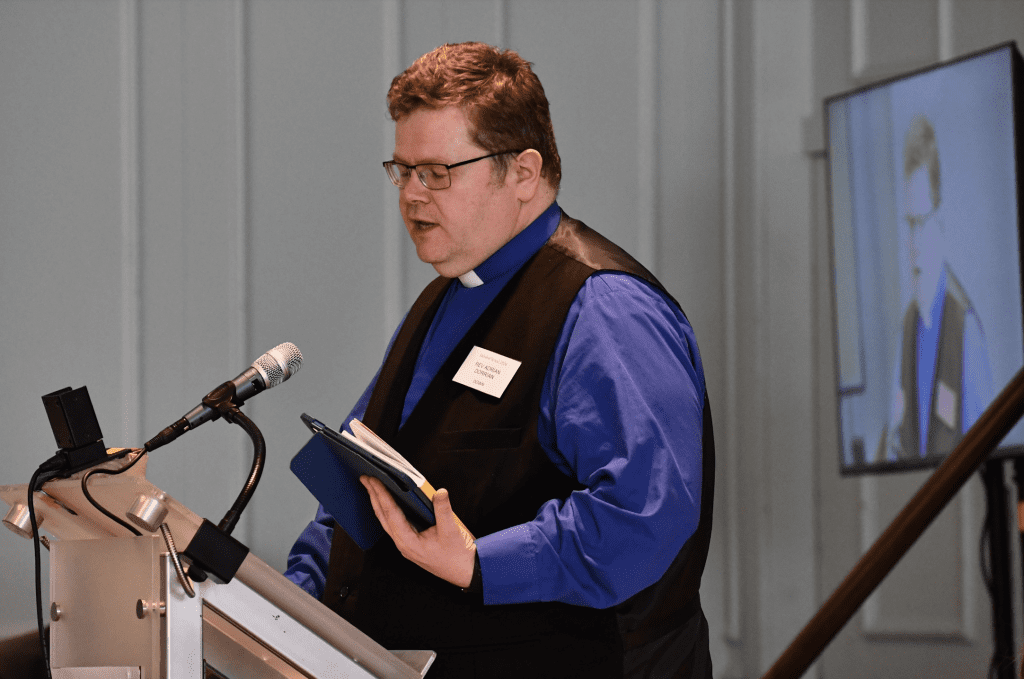
Please email expressions of interest to the Interim Chair, the Revd Adrian Dorrian (letterkennyrector@gmail.com). Expressions of interest should be up to 250 words and should outline the reason for your interest and any relevant experience you have. You may be contacted for an informal conversation. The Interim Chair, in consultation with the Bishop, will bring names to the Diocesan Council for ratification. It is hoped that the new board will meet for the first time in the Autumn of 2026.page1image32595888

APPENDIX I

Terms of Reference

The Derry and Raphoe Board for Social Responsibility seeks to support the Bishop and the Diocesan Synod in engaging with and responding to issues of social relevance, in theology and practice.

The Board will resource, encourage and inform the Diocese’s engagement with local communities and wider society as we seek to share the love of God in Jesus Christ.

This will be achieved through

  • dissemination of good practice across the diocese
  • workshops and training events
  • public statements (in consultation with the Bishop) responding to particular events
  • the generation of reports and informational documents

The membership of the Board shall be ratified by the Diocesan Council at the start of each Triennium.

• The Chair shall be appointed by the Bishop.
• Membership of the Board need not be limited to members of theDiocesan Synod or Council.
• Ordinary membership of the Board will not normally exceed eleven persons, including the chair.
• The Bishop and Honorary Secretaries to the Diocesan Synod shall be ex-officio members of the Board, who shall not be counted among the total of ordinary members.page2image32685296

APPENDIX II

AREAS OF ACTIVITY FOR BSR

Possible areas of work for the new board in its first year may come from the following list.

page3image32706000

Poverty/Cost of Living

  • Foodbanks
  • Gambling
  • Homelessness

Health Matters

  • Organ donation
  • Addiction
  • Dementia

Legacy/Border

  • Day of the Disappeared
  • Victims’ Groups

Disability

  • Accessibility
  • Support for carers

Racial Justice/Welcome

Family Life

  • Adoption/fostering
  • Domestic Violence

Rural Issues

  • Farming Challenges
  • Isolation
  • MICA

Environmental Stewardship

  • Care for creation
  • Practical steps for Parishes

Mental Health

  • Suicide awareness
  • Self-care
  • Social Media

Board of Education Expresses Concern for Education in Northern Ireland

The Board of Education of the General Synod has expressed its deep concern for the welfare of principals, teachers, staff and governors due to the state of funding in education in Northern Ireland. Proposing the report of the Board of Education (NI) at General Synod on Friday, the Revd Catherine Simpson highlighted a recent report which stated that 91% of teachers, including principals, were stressed, anxious and near burnout.

“The current political system means education in Northern Ireland has largely become a political football,” Revd Simpson said. “Teachers find themselves overburdened, with a number of concerns including paperwork, parental expectation and challenging pupil behaviour. Workload, special educational needs, and extremely limited funds are putting immense pressure on those running our schools. Add to that the social media world we live in, which is impacting young people and their parents alike, and our schools are in a fragile position.”

She added that the board was concerned at the increasing issues of mental health affecting all connected with the education system, from head teachers to the youngest pupil. They were calling on clergy to support their local schools and encouraged their church communities to support them.

The board is working with the Department of Education on the issues raised by the Supreme Court’s decision on JR87 on the rights of a child and how religion is taught in schools. Ms Simpson sought members’ prayers for all working on the review process of the Religious Education curriculum, particularly Dr Peter Hamill as he represents the Church of Ireland.

The board welcomed the publication of a Charter from the Transferor Representatives’ Council which gave clear guidance to visitors on taking assemblies and classroom lessons, she said. The board also acknowledged clergy and parishioners who served as volunteers on their local school Boards of Governors, and Revd Simpson added that it was vital to remain an integral part of local schools.

She expressed sadness at the closure of the Drelincourt School in Armagh but highlighted the board’s closer links with Seagoe Primary School, the last remaining Church of Ireland school in Northern Ireland.

She outlined allocations from the board’s fund to a number of schools and the board’s hosting of the Annual theological Lecture at Queen’s University Belfast which looked at issues around assisted dying.

The report of the Board of Education was seconded by Canon Harry Gilmore who focused on matters of education in the Republic of Ireland. He highlighted the 50th anniversary of Boards of Management in primary schools in the Republic. He said that a commemorative plaque had been provided for each school in the Republic.

Canon Gilmore noted that Dr Ken Fennelly was representing the Church of Ireland at the National Convention on Education, the first meeting of which took place last week and which operated to a broad agenda. He said it would be interesting to see how the Department of Education deals with the issue of finance. He welcomed the appointment of Christine Cody to support Patronage. Canon Gilmore highlighted the small schools’ initiative in Donegal. He flagged a survey which would go out to schools shortly and an increase in the core funding grant.

Archbishop Michael Jackson (Dublin and Glendalough) who was in the chair, said that the Convention was an interesting concept. He said of the 160 members, there were four from a faith based background, among them Dr Ken Fennelly. He urged all with responsibility within a Church of Ireland national school to respond to the survey so that positive and confident information from our sector could be presented to the organisers of the convention.

Stephen Trew (Down and Dromore) spoke of the stresses that teachers faced. “Teachers are very much feeling the difficulties and stress of their jobs at the minute”. He appealed to clergy and members of Boards of Governors to take the welfare of the teachers, principals and staff of schools very seriously. He said education in Northern Ireland in a Christian context was “under attack”.

The Revd Adrian Dorian (Down and Dromore) also spoke of the mental health challenges throughout schools on teachers and pupils. He said that the clergy and governors and people of the Church of Ireland could bring empathy to schools. He said it was “missional work” and that as schools flourished, communities flourished, and as communities flourished, churches flourished. He urged people to pray for and encourage those in our schools and all who served in any way.

Archdeacon Peter Thompson (Armagh) said that the judgement of the Supreme Court had brought a lot of anxiety to clergy. He also highlighted the importance of clergy bringing gifts and tallents into schools.

Canon John Clarke (Meath and Kildare) thanked Ken Fennelly and Susan Ellis, as well as the patrons, for their support of education. He paid tribute to all involved in the day-to-day running of Church of Ireland schools. He was grateful, also, for the increased capitation fund. He commended the principals and assistant principals and expressed gratitude to the RB for its support for patrons. He said he was sure the majority of schools ran smoothly but there were some situations which he described as toxic and unsustainable. He wondered if there could be funding made available for professional support in times of difficult situations.

Bishop Ferran Glenfield (Kilmore, Elphin and Ardagh) said he was chair of Wilson’s Hospital School, which he observed was probably the best-known school in Ireland, for the wrong reasons. Yet, he said, representatives of the school were at General Synod and that was good news. He said it was good news because Christ was made known in the school. Christianity was alive and living in Wilson’s Hospital School, he said, thanking people for their prayerful support for the school. He thanked all who stood with Wilson’s Hospital School. As patron of 20 “very small national schools”, he said that the Church was doing great things in schools. He paid tribute to the sterling work of Dr Fennelly and Susan Ellis.

Archbishop Jackson said around 1,345 volunteers work in national schools in terms of boards of management and he called for a round of applause for their dedication.

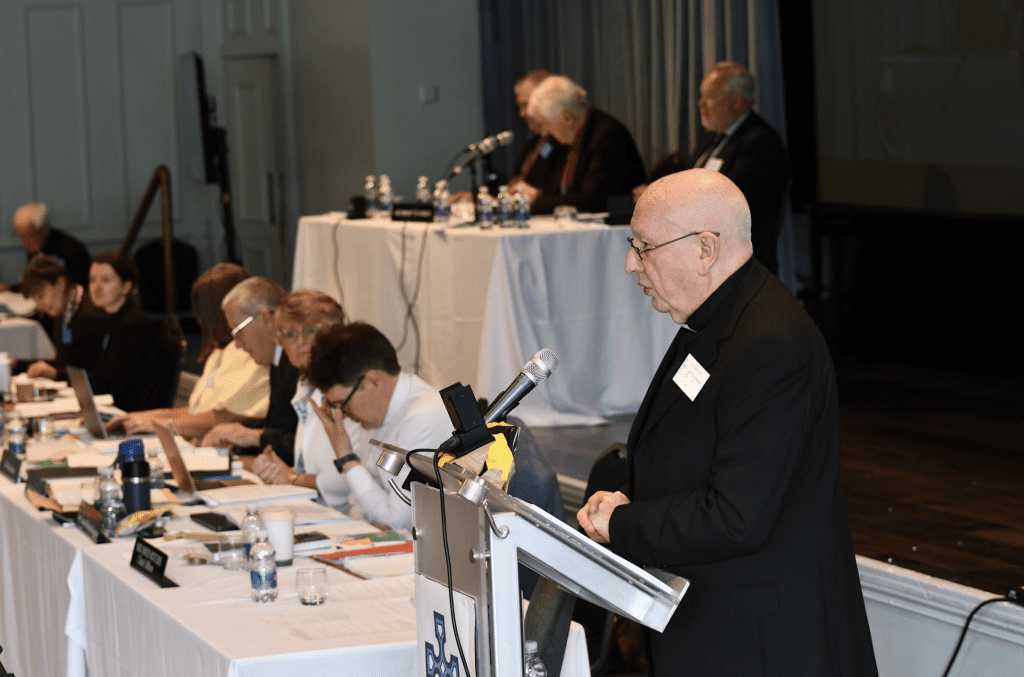
Christian unity “vital in a fractured world” – Bishop Andrew

The work of Christian unity may not be the most visible part of Church life but, in an increasingly fractured world, it was one of the most important, Bishop Andrew Forster said, as he proposed the report of the Commission of Christian Unity and Dialogue on the third day of the General Synod.

Noting that Jesus linked unity with mission, Bishop Andrew said that unity wasn’t always easy to achieve – even within our own traditions, never mind across them – but pointed out that that was precisely why the work of the commission mattered. He said he believed that in towns, villages and communities across our island there was a desire to build the Kingdom of God across denominational boundaries. “In many ways, the most encouraging part of working together for Christian unity happens day by day, quietly, faithfully, at local level – in parishes and communities. Christians from different traditions are working together in joint services, supporting food banks, running Alpha courses, peace building initiatives, and times of shared prayer. It doesn’t make the headlines but it’s Kingdom work, and there’s a great deal there to give thanks for”.

Bishop Andrew said he counted it a privilege to be involved in the Irish Council of Churches and the Irish Inter-Church Committee, and that he had never come away from those meetings without feeling blessed. “There’s a depth of fellowship,” he said, “that is deeply enriching and a real sense of shared faith in Christ.” Bishop Andrew expressed “delight” at the appointment of Bishop Michael Burrows as vice–chair of the Irish Council of Churches. “I assure him of our encouragement and our prayers as a leading ecumenist on this island.”

Seconding the report of CCUD, Archdeacon Katharine Poulton (Meath and Kildare) looked forward to the Anglican Consultative Council’s meeting in Belfast from June 27 to July 5 this year. “The ACC is one of the Instruments of Communion,” she said, “and reminds us to think beyond our parochial, diocesan, and provincial boundaries”. Among the items on the agenda for discussion will be the Nairobi Cairo document which was produced by IASCUFO (the Inter–Anglican Standing Commission on Unity, Faith and Order) in response to a resolution from ACC 18 held in Ghana three years ago. It was a theological paper offering a framework for fostering Christian Unity and maintaining communion, she explained.

Speaking to the report, Andrew McNeil (Dublin) agreed that the breadth, scope and scale of the report was wonderful. He repeated last year’s call by the Revd Rebecca Guildea who encouraged the Church to engage with Pentecostal and house groups. He said it was good to see that Churches doing things together was no longer front page news as it was when the Church of Ireland and Catholic Archbishops of Dublin first carried a cross through Dublin on Good Friday.

George Okikiolo (Dromore) suggested that the Church of Ireland’s focus should not just be on the western world but also on those who were persecuted.

Dean Stephen Farrell (Ossory) hailed Pope Leo’s forthcoming encyclical Magnificat Humanitas looking at AI and its impact on human dignity and human flourishing. He hoped it would be something that captured the imagination and helped shape the churches’ response to the vexed issue of AI.

Full Text of Presidential Address by Archbishop John McDowell at 2026 General Synod

Brothers and sisters in Christ,

I would like first to thank the Diocese of Down and Dromore for acting as our hosts for this Synod and particularly to thank the bishop and all those who have been involved in planning and preparing for our Synod Eucharist earlier this morning.

I suspect like many people in the General Synod over the years, I have sometimes been a little bit wary of the term “Presidential Address”. The words are, of course, constitutionally accurate. The Archbishop of Armagh is indeed the President of the General Synod and, as a privilege and as a responsibility, I wouldn’t want that to be otherwise. And it’s not even that the word “President” has lost some of its lustre in recent times on the world stage. It is more to do with the fact that my calling, and the calling of any bishop, or indeed priest, is a calling to the work of a shepherd. If you like, it is a vocation of care and of solidarity to be lived out in the manner of the Good Shepherd; I hope it is in that manner that I have addressed the General Synod in the past and will do so today.

So, although I may refer to it from time I do not intend to go into the business – the Bills and Motions – of this Synod in any detail. Each will be handled by very capable members of the General Synod and, as always I will rely on the good sense of the Synod to weigh the arguments and to think of what is best for this Church in its witness to the Gospel of Jesus Christ and in its searching out of the will of the Father.

For it is His will and not our own that is to be done. In fact that is the great issue of all life: the life of individuals, the life of churches, the life of communities and the life of nations.

I am, I think, in the unique position of having been the only Archbishop of Armagh to have presided over a General Synod in the season of Advent – the online Covid Synod of 2020 – which, you might say, is the season of accountability. And that is a good reminder of our accountability and to whom we are ultimately accountable for what we do and say – including the way that we do and say it here, where the mountains of Mourne sweep down to the sea.

It is the vocation of the Church of Ireland to witness to Ireland as it is today of the love, the holiness, the goodness and the power of God as revealed in His Son. That has never been an easy vocation. It is not that Ireland is a particularly wicked and resistant place but that the People of God find it as difficult as anyone else to set aside our self interest in the interests of God. In some senses it is even more difficult for us because we easily make the assumption that God is already on our side and thus avoid doing the work – the prayer and reflection – that will make sure that we are on His side.

The structural manner in which we go about this work is fairly straightforward. We do it in parishes. In terms of the Church of Ireland, that is where the work of God is largely carried out. It is where the Scriptures are expounded, where the sacraments of the New Covenant are duly administered, where children are catechised, where believers become disciples, where the sick are visited and cared for, and where the community is evangelised. Although Churches may be severely damaged in the eyes of the world by adverse headlines; they break the heart of the Good Shepherd by falling short in the work of parishes.

It is for these reasons that most of our resources, both centrally and locally, are focused on parish life and why the tab labelled “Parish Resources” opens into the largest section of the Church of Ireland website. It is also why we are so deeply committed to safeguarding in our parishes – making them safe and welcoming places. You will see from the Book of Reports that we continue to review and revise, and we trust improve, our Safeguarding procedures and structures.

In a world which is dominated in almost all its doings by the often sinister ambitions and networks of a very small number of very rich men who are infinitely more powerful than any Celtic chieftain or medieval magnate or elected Chief Minister, we have both the structures and the resources to march to a different beat and to create different societies. The parish is the place that is big enough to require everyone to pull their weight and small enough for that mutual giving and receiving which is at the heart of communion; to be places that stand out in the world and which can change the landscape and the horizon.

That is why it can be very painful, and indeed scandalous, when parishes go badly wrong for whatever reason; and because of the relational nature of our structures, such damage can be very difficult to mend.

Although parishes cannot be little earthly paradises, they can be the tiny leaven in the rude lump of a subtly-manipulated world; the parish can be where true wisdom and truth may still be found and true friendship flourish.

Parishes can do much – and in our polity they do most of the heavy lifting – but they cannot do everything, particularly in an age of a very rapid change in attitudes to God and His Church. It is partly for that reason that we have devoted substantial human and financial resources to supporting our vocation and mission with Pioneer Ministry- to reach those who have lost any contact with the promises of God in the Gospel. Parishing and Pioneering go hand in hand and I commend to you the work of the Pioneer Ministry Council, which we shall hear about later.

AI

I have said that it is our vocation as the Church of Ireland to witness to an alternative truth and to march to the different drum beat in a world which has a very wayward set of priorities. It is a world which has become more atomised and angry through the new forms of digital communication and networking. Social media was the phenomenon which was to have democratised the world but instead it has concentrated power in the hands of the few grotesquely rich men I referred to earlier. Its centralising tendencies and amorality are a much more effective means of dividing and conquering than any Roman Emperor had at his disposal.

Currently their great emphasis is on the development of AI which is being heralded as another great leap forward in the liberation of humankind. The truth is, of course, that such ‘liberation’ only binds us further: we are increasingly dependent on technology, especially digital technology, and thus on the electricity necessary to keep it going and on the global corporations extending its reach into every aspect of human life.

I say this is ‘the truth’ on purpose: for we should be confident in the very existence of ‘truth’ and ‘fact’ – neither of these things can be artificially generated. Artificial Intelligence may relay information to us based on incredible calculations of probability and suitability, but we should not allow efficiency and convenience to become the primary values against which we measure whether this information is worth the resources expended to generate it. The costs are human and social as well as environmental, of course.

Writing 60 years ago, the philosopher Hannah Arendt (Truth & Politics, 1967), learning from the experience of totalitarianism in Europe, explained how it is that we might find ourselves becoming comfortable in a so-called ‘post-truth’ world. “Lies”, she wrote, “are often much more plausible, more appealing to reason, than reality, since the liar has the great advantage of knowing beforehand what the audience wishes or expects to hear.”

This is precisely how digital technologies, such as generative AI and social media algorithms, work and appeal to us; they are founded on inordinate masses of data which enables accurate prediction of what it is we wish or expect to hear. Thus, their efficiency can only take us so far – and with enormous risks.

For, as Arendt argued, “reality has the disconcerting habit of confronting us with the unexpected, for which we were not prepared.”

How easily we can collectively fall, from complacency into dependence, and thus into extreme vulnerability. The process of AI-integration is all the more dangerous not because it is manipulated by the powerful but because it is increasingly accepted by us as a logical choice. As Arendt warned, what is false can seem more rational than reality.

You would have thought that there were certain things which the Church does that are safely away from the digital world and thus unaffected, such as personal accompaniment of the sick or of those in difficulties. However in a presentation to the Celtic bishops last week in Wales, Mark O’Toole, the Catholic Archbishop of Cardiff-Menervia was able to tell us about the huge number of young people who have “companion bot” apps on their phones. These are AI generated “people” who can be turned to for advice in times of sickness or relationship breakdown or in any crisis. Again, this can seem a rational thing to do in times of weakening social bonds and grossly inadequate support for mental wellbeing, especially for younger people.

However we need to remember that AI Large Language Models do not actually “know”, much less feel, anything or experience empathy. They merely convert data into numbers and, in super fast time, identify patterns within those numbers which will then generate language. But – it hardly needs to be said – what people need in times of crisis and in terms of companionship is more than empty words.

Since the time of St Paul, Christianity has been understood as an individual’s relationship with God, lived out in community. Being “in Christ” through baptism and faith is the believer’s fundamental identity and all other roles – parent, worker, priest, politician etc. – are subordinated to that identity.

Rooted in the Trinity, Christian belief and communion is wholly personal and unreproduceable. That said, its message and outcomes can probably be counterfeited or distorted by AI, and I have no doubt that in the near future we will all be offered a very attractive and cheap range of resources to enhance and strategise our efforts at evangelisation.

But we need to remember the most effective of means of all, summed up in one short sentence: “Many were gathered together… and he preached the word to them”.

We have many challenges and opportunities in the future to resist the homogenising of knowledge and the eroding of local autonomy. And the decisions we will need to make will simply make no sense on the grounds of efficiency and convenience: to stick to the difficult path of deep and costly human relationships, sustained by a closeness to God in prayer and in the wearying but essential task of moral discernment.

Migration

Just while we are on the subject of St Paul, there is one other concept which philosophers of thought attribute to him. The Roman world in which St Paul moved was characterised by a sense of radical inequality. It was a strong conviction at that time that the world – individuals, roles in society, gender – were unequal and were meant to be unequal. In the view of the people of the time, that was how the world was made and how it worked best.

Paul was the first thinker to overturn this idea. “There is neither Jew nor Greek, slave nor free, male nor female; for all are one in the Messiah Jesus”. That word “one” signalled a new transparency in human relations. Because of what he understood the Christ to be, Paul insisted on the moral equality of all humans, on a status shared by all and, of course, the possibly of creating a new “self”- everyone who is in Christ is a new creation.

The Church, never mind the world, has never quite learned those lessons about human equality that Paul so assiduously worked out. This is nowhere more painfully clear than in our attitude to racial equality and migration. It is my own view that our attitude to migration in Ireland, both north and south, is one of the great touchstones and tests of our Christian authenticity. It is possible to take a wide range of views on immigration policy which may be broadly consistent with belief in Christ and in the particular form of human equality which is articulated in the New Testament.

But it seems to me that there is a fairly simple imperative when it comes to the “stranger that is in your midst”, and that is to welcome him or her and to care for him or her. It is also time to put a few myths to bed. Migration is not some form of organised conspiracy aimed at the colonial dispossession of the Irish people, as has been claimed by the extreme right in Ireland. Nor is it an attempt at creating a Muslim majority or a Muslim state, as has been called by many on the British extreme right. Migrants to this island are motivated by exactly the same desires which motivated the Irish immigrants to the USA in the eighteenth century – a desire for civic and religious freedom – or which motivated many Irish people to the emigrate to the USA and Britain in the nineteenth century: hunger and destitution.

Migrants to this island want what we all want-to bring up children in security and decency; to provide them with a good education and the chance of a stable future. And to contribute to the communities in which they live. They bring with them enormous energy and fortitude and very often scarce skills. For these and other reasons there is every rational reason to welcome them. Instead what we find as recorded in PSNI statistics in Northern Ireland is, in 2024-25, the worst recorded levels of racist violence since monitoring began in 2004, and an increase of almost 50% on the year before. And in the Republic of Ireland Garda hate crime data show a sustained multi year increase in racially-motivated incidents.

But you and I are called to a much more demanding way of life. To care for the stranger within our midst regardless of ethnic differences is the principal lesson of the parable of the Good Samaritan and defines for us what we mean by the word “neighbour”.

But perhaps the most sobering of all are the words of the Lord Jesus when all the nations of the earth stand before him as Shepherd and Judge “…I was a stranger and you welcomed me…as you have done unto the least of these my brothers and sisters you have done unto me”.

When he ascended to the Father he left his disciples in every generation and with the representatives of his weakness – the sick, the poor, the destitute and the stranger – and the promise that he will gather with his right arm those who have cared for them with the words, “Well done good and faithful servant…” And because they are so terrifying, it is almost unbearable to consider what he will say to those on his left hand “Depart from me…”

That increases in migration should be seized on by the extreme right who are bereft of any other ideas is not surprising, although it is less edifying when mainstream parties equivocate in the face of the horrendous violence which migrants suffer. However from the Churches’ point of view, the more worrying development is the rise of the so called Christian Right. These groups emphasise what they claim to be the undermining of “Christian civilisation” or “Judeao-Christian” values and the discrimination which they say Christians are subjected to. And they use the Cross – the very epitome of powerlessness, and what a very advanced “civilisation” inflicted on Jesus – as some kind of symbol of their dominance and superiority.

The Christian Church, and to a much lesser extent, Christian civilisations have indeed given great deal to the world. The first hospitals, the first schools, heroic women and men who lived with and cared for the world’s outcasts and for the wretched of the earth. Exactly which aspect of discipleship in Jesus Christ is being exercised by baying outside a hostel while terrified children are inside? How is parading around the streets draped in a national flag representing the mind of the God of all the nations, who said: “For my thoughts are not your thoughts and my ways are not our ways… for as the heavens are higher than the earth, so are my ways higher than your ways and my thoughts than your thoughts”.

As I said earlier, I have dwelt on these matters because I believe they will be the test of our discipleship and our faithfulness in the days and years to come.

ACC-19 and Unity

As with most General Synods, the Feast of Pentecost is not far off. That was the day when, as St Luke tells us “…they were all gathered together in one place…” Insofar as this is an assembly representative of every diocese of the Church of Ireland and as we are joined by a number of our ecumenical friends with whom we share a common baptism into Christ we might, with a little stretch of the imagination, be said to be altogether in one place. It is an enormous joy and privilege to be here and even greater to have worshipped with you. I am very grateful to the Bishop of Meath to have reminded us of our vocation of unity in her sermon.

However it would be remiss of me not to mention a gathering which we in the Church of Ireland are hosting a little later in the summer, called ACC-19. The Anglican Consultative Council is one of the Four Instruments of Unity of the Anglican Communion. It meets in a Province of the Communion once ever three years and is made up of episcopal, clerical and, uniquely, lay representatives from each of the Provinces of the Communion. As its title-ACC-19- suggests this is its nineteenth meeting and we in the Church of Ireland will be represented by a lay person and a clergy person in the form of Archdeacon Katherine Poulton of the Diocese Meath and Kildare and Mr Glenn Moore of the Diocese of Clogher. I am also a member of ACC, not strictly speaking as a representative of the Church of Ireland but as a member of the Primates Standing Committee and the Standing Committee of the Anglican Communion.

ACC-19 will debate and discuss many issues but probably the most significant will be some suggestions known rather grandly as the Nairobi-Cairo Proposals. These offer a modestly updated description of Anglicanism (the current description hasn’t been revised since the definition offered by the Lambeth Conference of 1930) and also some suggestions around the relationship of Provinces with the Archbishop of Canterbury, together with ways of supporting and assisting the holder of that office in their impossibly diffuse role.

As with all Anglican bodies, the ACC Resolutions cannot bind any Province of the Communion and will be sent to all Provinces, including the Church of Ireland for further discussion and any action which a Province may think desirable and edifying.

At the very least I would urge you to keep the members of ACC-19 in your prayers, especially the Chair Canon Maggie Swinson and the Vice Chair Archbishop Hosam Naoun, Primate of Jerusalem and the Middle East.

Bishop of Meath and Kildare

I hesitated for a moment or two before adding theses concluding remarks to this Address as I would not be usual to remark on the retirement of a member of the Synod in either the House of Representatives or the House of Bishops. But as her retirement will come so soon after this meeting of the General Synod, I am going to use the considerable latitude afforded to the President of the Synod to offer the Synod’s best wishes to the Bishop of Meath and Kildare as she prepares for the next stage in her life and discipleship. Pat has been a hardworking and very encouraging episcopal colleague and has enriched the proceedings of the House of Bishops and of the Church in general with her wit and wisdom. It has been a genuine privilege to have known Pat for many years and to have served alongside her. Pat, our heartfelt thanks and good wishes go with you and with Earl for the years to come.

I hope and pray that what I have said provides some sort of context for our gathering here over the next few days . So now let us move onto the real business of the General Synod.

+John Armagh

May 2026
Two of our parish groups recognised for climate impact projects

Two parishes from the Diocese of Derry and Raphoe were among the winners in a competition which encourages projects designed to cut carbon emissions in churches, the winners of which were announced after close of business on Day One of General Synod.

The successful parishes, Christ Church and St Paul’s (Castlerock and Dunboe) and St Augustine’s, Londonderry were among the first to benefit from the Buildings Climate Impact Fund launched in February by the Representative Church Body and Benefact Trust.

A grant fund of £300,000 (equivalent to €348,000) was made available for innovative projects that cut emissions and inspired others. The initiative sought to identify projects that would have a high impact over a long period of time, and demonstrate innovation and measurable environmental benefits to more than 1,000 properties the Church of Ireland owns across the island.

The Parishes of Castlerock and Dunboe were recognised for their Creation Care Action Plan, which the judges said was “a clear expression of creation care as mission, with a vision for renewable energy generation and biodiversity enhancement in grounds and graveyards surrounding church property”. They said the “professional” plan was practicable and measurable, and would seek to develop missional links with schools and community groups.

The award to St Augustine’s, Londonderry was for its energy improvement, heating modernisation and sustainability upgrade project, which will conserve energy in the church building and the nearby hall. The project uses triple glazing and different kinds of heating, such as ‘top down heating’ in pews.

The other main winners were Ross Union of Parishes and Youghal Union (both Cork, Cloyne and Ross).

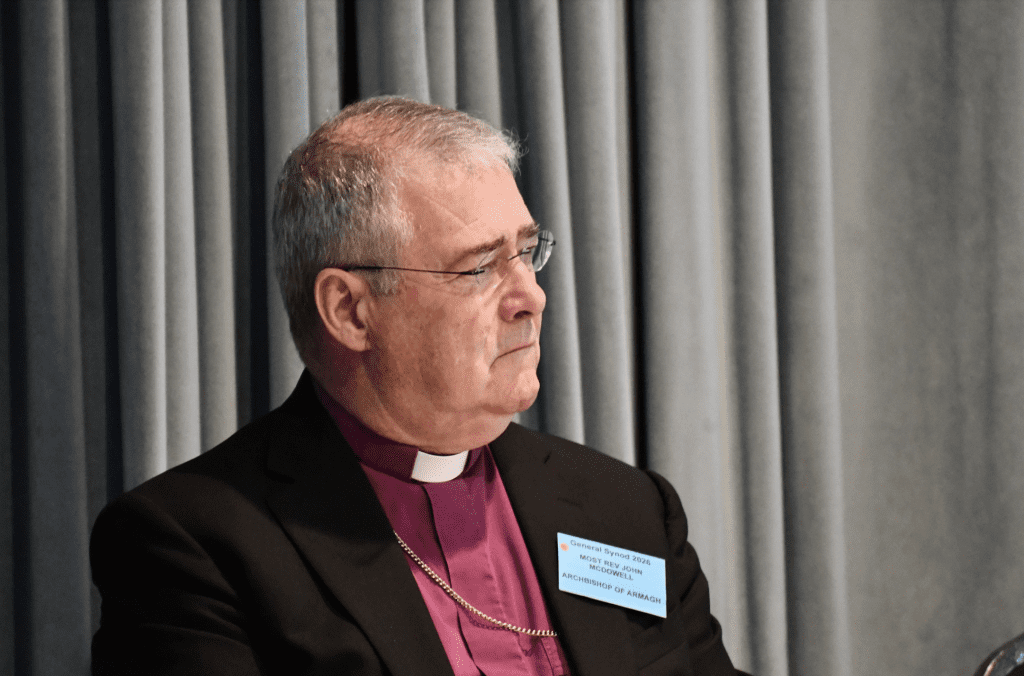
Archbishop McDowell speaks out against extreme right and ‘tech bros’

The Church of Ireland Archbishop of Armagh and Primate of all Ireland, The Most Rev’d John McDowell, has spoken out on the subject of the extreme right and violent opposition to migrants. Addressing 600 representatives at the Church of Ireland General Synod in Newcastle, the Archbishop also warned of the dangers posed by the so-called Christian Right.

In both Northern Ireland and the Republic of Ireland, official figures last year covering racist violence and racially motivated incidents showed worrying increases. Archbishop McDowell told General Synod: “It is my own view that our attitude to migration in Ireland, both north and south, is one of the great touchstones and tests of our Christian authenticity.

“… it seems to me that there is a fairly simple imperative when it comes to the ‘stranger that is in your midst’, and that is to welcome him or her and to care for him or her.

“It is also time to put a few myths to bed. Migration is not some form of organised conspiracy aimed at the colonial dispossession of the Irish people, as has been claimed by the extreme right in Ireland. Nor is it an attempt at creating a Muslim majority or a Muslim state, as has been called by many on the British extreme right.

“That increases in migration should be seized on by the extreme right who are bereft of any other ideas is not surprising, although it is less edifying when mainstream parties equivocate in the face of the horrendous violence which migrants suffer.

“However, from the Churches’ point of view, the more worrying development is the rise of the so-called Christian Right. These groups emphasise what they claim to be the undermining of ‘Christian civilisation’ or ‘Judeao-Christian’ values and the discrimination which they say Christians are subjected to. And they use the Cross – the very epitome of powerlessness, and what a very advanced ‘civilisation’ inflicted on Jesus – as some kind of symbol of their dominance and superiority.

“Exactly which aspect of discipleship in Jesus Christ is being exercised by baying outside a hostel while terrified children are inside? How is parading around the streets draped in a national flag representing the mind of the God of all the nations, who said: ‘For my thoughts are not your thoughts and my ways are not our ways… for as the heavens are higher than the earth, so are my ways higher than your ways and my thoughts than your thoughts.’

“Migrants to this island are motivated by exactly the same desires which motivated the Irish immigrants to the USA in the eighteenth century – a desire for civic and religious freedom – or which motivated many Irish people to the emigrate to the USA and Britain in the nineteenth century: hunger and destitution.

“Migrants to this island want what we all want-to bring up children in security and decency; to provide them with a good education and the chance of a stable future. And to contribute to the communities in which they live.

“They bring with them enormous energy and fortitude and very often scarce skills. For these, and other reasons, there is every rational reason to welcome them.”

On the march of AI, Archbishop McDowell questioned whether it was another great leap forward in the liberation of mankind. He told General Synod: “Artificial Intelligence may relay information to us based on incredible calculations of probability and suitability, but we should not allow efficiency and convenience to become the primary values against which we measure whether this information is worth the resources expended to generate it. The costs are human and social as well as environmental, of course.”